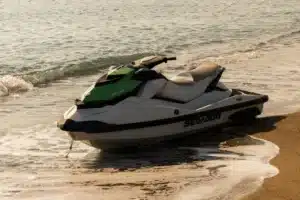
Jet ski storage typically costs between $30 and $200 or more per month in the United States, depending on the type of storage you choose and where you are located. The range is wide because outdoor storage and covered marina slips are fundamentally different products. This guide breaks down what each option actually costs, what the quoted price often leaves out, and how to estimate what you will pay in your specific market.
Jet Ski Storage Cost at a Glance
The table below gives you a starting point for comparing personal watercraft (PWC) storage options by type. These are realistic U.S. ranges based on current market pricing across warm-weather and inland markets. Actual rates in your area will vary based on location, facility amenities, and contract terms.
| Storage Type | Typical Monthly Cost | Typical Annual Cost | Best For |
| Outdoor Storage | $30 to $75 | $360 to $900 | Budget-focused owners in mild climates |
| Covered/Carport Storage | $60 to $120 | $720 to $1,440 | Seasonal owners wanting sun and rain protection |
| Indoor/Self-Storage Unit | $80 to $175 | $960 to $2,100 | Long-term or off-season storage, extreme climates |
| Marina Storage | $100 to $250+ | $1,200 to $3,000+ | Owners who want immediate on-water access |
These ranges assume trailer storage is not included. If you store your jet ski on a trailer, that add-on is a separate line item at most facilities. That cost is addressed in the Hidden Costs section below.
What makes jet ski storage cheaper or more expensive
Five variables move the price up or down more than anything else.
- Geographic location: Facilities near major waterways or in high-demand coastal markets charge more. Proximity to water drives up land costs and demand simultaneously.
- Storage type selected: The biggest single driver. Moving from outdoor to indoor can more than double your monthly storage cost.
- PWC size and trailer inclusion: Larger craft and jet ski trailers require more square footage, which increases the rate at facilities that price by space.
- Facility amenities: Gated access, surveillance cameras, lighting, and on-site staff all add to the operating cost that gets passed to renters.
- Contract length: Month-to-month rates run higher than prepaid annual storage rates. Committing to a full season or year typically saves 20 to 30%.
Outdoor vs. Covered vs. Indoor Storage: What You’re Actually Getting
The price difference between storage types reflects a real difference in protection. Understanding those trade-offs helps you match the right option to your situation rather than simply picking the cheapest number.
Outdoor storage
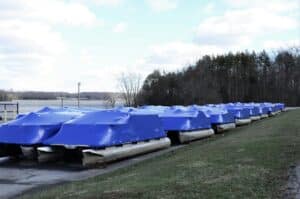
Outdoor storage is the most affordable PWC storage option, but it comes with exposure costs that do not show up on your monthly bill. UV radiation degrades gel coat finish over time, and repeated wet-dry cycles from rain and humidity accelerate hull wear. In climates with intense summer sun, like Arizona or South Florida, this process moves faster than most owners expect.
A quality jet ski cover ($50 to $150 as a one-time purchase) partially offsets these risks for outdoor-stored craft. It is not a complete substitute for overhead protection, but it meaningfully reduces direct UV and debris exposure between rides.
Best if: You ride frequently, you are in a mild climate with low UV intensity, and cost is your primary constraint.
Covered and carport storage
Covered storage provides overhead protection from sun and rain without the cost of a fully enclosed storage unit. For most seasonal jet ski owners in warm-weather states, this is the practical middle ground between leaving the craft fully exposed and paying for indoor storage year-round.
Covered and carport storage at dedicated vehicle storage facilities is designed specifically for this use case. The structure protects the top and sides of your craft from direct weather while keeping access easy and rates below indoor pricing.
Best if: You store seasonally, you want sun and rain protection without the cost of full enclosure, and your climate does not include hard freezes or extreme temperature swings.
Indoor storage
Indoor storage offers the best long-term protection for a jet ski, particularly during off-season storage periods exceeding three months. A fully enclosed storage unit shields the craft from UV, precipitation, temperature fluctuation, and airborne debris. For owners in regions with harsh winters or intense summer heat, this level of protection makes a measurable difference in long-term condition.
A standard jet ski on a trailer typically requires a 10×20 or 10×25 storage unit. Unit height clearance can also be a factor with taller trailers, so confirm exact dimensions with the facility before signing. Climate-controlled storage is rarely necessary for a jet ski, but may matter for electronics-heavy models or owners storing in climates with extreme humidity.
Best if: You are storing for an entire off-season, you have a newer or higher-value craft, or you are in a climate with significant weather extremes.
Marina Storage Costs: Why It’s the Most Expensive Option
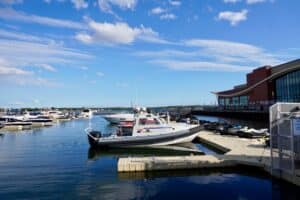
Marina storage rates often catch new jet ski owners off guard because the base rate does not reflect the total cost. Typical U.S. marina storage for a personal watercraft runs $100 to $250 or more per month depending on location and amenities. In high-demand markets like South Florida, rates at the upper end of that range are common.
Unlike a self-storage facility, marina facilities frequently charge separately for the services that make marina storage convenient. These add-ons are where the real cost accumulates.
What marina storage usually includes (and what it doesn’t)
The base marina rate typically covers the physical storage space, whether that is a dry dock storage rack, a covered slip, or an outdoor lot on marina property. What it usually does not cover:
- Launch and retrieval fees: Many marinas charge $25 to $75 per use to move your craft from storage to the water and back. For frequent riders, this adds up quickly.
- Fueling services: On-site fueling is convenient but billed separately at marina pump prices, which are typically higher than trailering to a public ramp and fueling elsewhere.
- Seasonal winterization or shrink-wrap: Some marinas bundle winterizing a jet ski into a seasonal contract. Others bill it as a separate service, often $150 to $400 depending on what is included.
- Minimum insurance requirements: Some marinas require proof of liability coverage as a condition of storage, which may require a standalone watercraft policy if your homeowner’s coverage is insufficient.
Some marinas bundle several of these into a seasonal contract at a package rate, which can make the total more predictable. Others bill each service individually, so the final annual cost is difficult to estimate upfront. Marina storage makes sense for owners who want immediate water access and full-service handling. For owners who trailer their own craft to the ramp, a covered or indoor storage option typically offers comparable security at a lower annual cost.
The Hidden Costs of Jet Ski Storage Most Guides Skip
Most jet ski storage guides stop at the monthly rate. The actual cost of storage includes a few line items that rarely appear in advertised pricing but can shift your annual total by several hundred dollars. To understand how much should you pay for storage across vehicle types, it helps to account for all of these upfront.
Trailer storage fees
Most jet ski owners transport on a jet ski trailer, and most facilities do not include trailer storage in the base unit price. The trailer is a separate item that occupies additional space. Many facilities charge $20 to $60 per month to store a trailer alongside the PWC. Over a full year, that adds $240 to $720 to your storage cost beyond the advertised rate.
When comparing quotes from multiple facilities, ask specifically whether the quoted price includes the trailer. The answer will often change how the options rank by total cost.
Insurance gaps when storing off-premises
Standard homeowner’s or renter’s insurance policies often cap watercraft coverage at $1,000 to $1,500 when the craft is stored off the primary property. According to the Insurance Information Institute’s guidance on personal watercraft coverage, a jet ski stored at a marina or a self-storage facility may require a standalone watercraft policy to be fully covered for theft, weather damage, or liability.
Before signing any storage contract, call your insurer to confirm that your coverage extends to the storage location and covers the full replacement value of the craft. Ask the storage facility whether they require proof of insurance as a condition of the rental agreement.
How storage type affects long-term resale value
The monthly price difference between outdoor and covered storage is often $30 to $60. Over three years, that difference is $1,080 to $2,160. Gel coat oxidation from UV exposure is a documented form of hull degradation that affects both appearance and resale price. The American Boat and Yacht Council publishes technical standards covering hull finish maintenance, and marine appraisers consistently note that sun-damaged gel coat is one of the most visible depreciation factors on used personal watercraft.
For owners who plan to keep the craft for three or more years, the cost difference between outdoor and covered storage is frequently recovered in better resale value. The cheapest monthly rate is not always the lowest total cost of ownership.
How to Estimate Jet Ski Storage Costs in Your Area
National ranges give you a benchmark, but your actual rate depends on local market conditions. Here is a four-step approach to estimating what you will pay.
- Identify the storage type you need. Use the table in the first section as your baseline. Start with the monthly range for outdoor, covered, indoor, or marina storage based on the level of protection you want.
- Apply a regional adjustment. Coastal and warm-weather markets (Florida, California, and coastal Texas) typically run 10 to 25% above the national average shown in the table. Inland and Midwest markets often run 10 to 15% below. If you are in a high-demand waterway market, use the upper end of the range.
- Add trailer storage cost if applicable. If you store on a jet ski trailer, add $20 to $60 per month to your estimate. This line item is missing from most quoted annual storage rates.
- Factor in insurance and add-on fees. If your current policy does not cover the craft at a storage facility, budget for a standalone watercraft policy. If you are considering marina storage, request an itemized list of all fees before comparing it to a self-storage quote.
Calling or visiting two to three local facilities to compare quotes is the most reliable way to confirm what the market actually charges in your zip code. RecNation operates vehicle storage facilities across Florida, Texas, Arizona, and other warm-weather states where jet ski ownership is highest, making it a practical starting point for owners in those markets who want a facility built specifically for recreational watercraft.
A note on seasonal vs. year-round storage contracts
Some facilities offer discounted annual storage rates for prepaid seasonal contracts, typically 20 to 30% less than month-to-month pricing. For owners in northern climates who need only winter storage, this can represent meaningful savings on a three-to-five-month storage period. For year-round riders in Florida or Texas, month-to-month flexibility may matter more than the discount, particularly if your ride frequency or home situation is likely to change.
Final Thoughts on Budgeting for Jet Ski Storage
If you have worked through the numbers and you are ready to find a spot for your jet ski, RecNation Storage offers covered and enclosed vehicle storage at facilities across Florida, Texas, Arizona, and beyond, with options built specifically around recreational watercraft rather than repurposed general storage units. Getting a quote takes a few minutes, and knowing your actual monthly cost makes the rest of the ownership math a lot easier.
Frequently Asked Questions
How much does it cost to store a jet ski per month?
Jet ski storage typically costs between $30 and $200 per month in the U.S., depending on storage type and location. Outdoor storage runs on the lower end at $30 to $75 per month, while indoor or enclosed units range from $80 to $175 per month. Marina storage is often the most expensive option, sometimes exceeding $200 per month when launch and retrieval fees are included. These figures generally do not include trailer storage, which may add $20 to $60 per month to the total.
Is it better to store a jet ski indoors or outdoors?
Indoor storage provides better long-term protection, especially during off-season periods longer than a few months. UV exposure and weather contact in uncovered outdoor storage can degrade gel coat finish and accelerate hull wear over time, which affects resale value. If cost is your primary concern, a covered carport space is a middle-ground option that shields your craft from sun and rain without the price of a fully enclosed unit. The right choice depends on your budget, your local climate, and how long you plan to store.
How much does marina storage cost for a jet ski?
Marina storage for a jet ski typically ranges from $100 to $250 or more per month depending on location and services included. Base marina rates are often quoted without accounting for launch and retrieval fees, fueling, or seasonal prep services, all of which are commonly billed separately at $25 to $75 or more per service visit. Marina storage makes the most sense for owners who want immediate water access and full-service handling. For owners who trailer their own craft to the water, a self-storage or covered storage facility usually offers comparable security at a lower annual cost.
Can I store a jet ski in a regular storage unit?
Yes, most standard storage units can accommodate a jet ski, but you need to confirm the unit dimensions fit your specific craft and trailer. A jet ski on a trailer typically requires a 10×20 or 10×25 storage unit, and height clearance can also be a factor with taller trailers. Not all self-storage facilities are designed for vehicle access, so look for a facility with wide drive aisles and ground-level unit access rather than elevator-access indoor buildings. Always verify dimensions with the facility before signing a contract.
How do I prepare my jet ski for long-term storage?
Winterizing a jet ski before long-term storage involves flushing the engine with fresh water, fogging the engine cylinders with storage oil, stabilizing the fuel, and disconnecting or removing the battery. You should also rinse the hull to remove salt, sand, or debris and apply a UV-protective jet ski cover if storing outdoors. For storage periods longer than three months, a marine technician should perform a full pre-storage inspection to catch any issues before they worsen in storage. Your owner’s manual storage checklist is the most reliable starting point for model-specific steps.