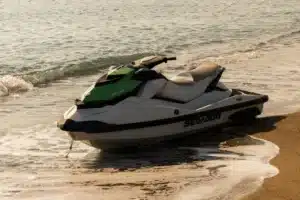
You can store a personal watercraft (PWC) without a trailer. Plenty of owners do it year-round, whether because they bought a used jet ski without one, sold the trailer separately, or simply don’t have room for the extra equipment.
The key is knowing what physically supports the hull instead, where the jet ski can safely live, and which prep steps change when a trailer isn’t in the picture. This guide covers all three.
What Supports a Jet Ski When There’s No Trailer
Without a trailer, the hull needs something rated for its weight and shaped to match its profile. Most sit-down jet skis weigh between 600 and 900 pounds dry, depending on the model. Set that weight down on the wrong surface and you risk hull deformation or cracked fiberglass.
Hull protection is a function of load distribution, not padding thickness. A flat concrete floor offers no flex, no contouring, and no forgiveness for a hull that curves at the bow and stern. The four options below go from most reliable to most improvised.
PWC Cradle Stands and Foam Block Sets
A purpose-built watercraft stand is the most reliable option for long-term jet ski storage. These freestanding frames are designed to contact the hull at its structural ribs, not at unsupported fiberglass panel midpoints. Sea-Doo, Yamaha WaveRunner, and Kawasaki all offer model-specific stands through their dealer networks. Aftermarket brands like Extreme Max and Suspenz make adjustable cradle stands that fit a range of hull widths. Expect to pay roughly $150 to $400 for a quality stand rated to your model’s weight.
Foam block sets are the next step down in cost. These are shaped or flat foam blocks that conform to the hull’s underside and distribute weight across a broader contact area. They work well for short-term or seasonal storage and run about $30 to $80 for a full set. They are not a permanent solution for multi-year storage, but they handle a single off-season without issue.
DIY Garage Floor Setups on a Budget
A carpet-covered wood frame is the budget option that gets the job done in a pinch. Build a simple rectangular frame from 2×6 lumber, sized to span the hull’s two natural flat sections near the bow and stern. The carpet layer prevents the wood from scratching the gelcoat and adds a small amount of cushioning.
Do not use bare 2×4 lumber. A 2×4 edge creates a pressure point, not a support surface, and will leave stress marks on a fiberglass hull over time. This setup works for one storage season, but it is not a substitute for a proper cradle if you plan to store the jet ski for multiple years.
Never store a jet ski directly on bare concrete or grass for more than a day or two. Concrete is harder than fiberglass. Grass traps moisture against the hull.
Where to Store a Jet Ski Without a Trailer
Support equipment answers what the jet ski sits on. The next question is where it actually lives. Each option below comes with trade-offs on access, cost, and protection level.
- Home garage storage is the best available option for most owners. A standard two-car garage fits a 10 to 12-foot PWC on a stand without occupying a full car bay if the hull is positioned lengthwise along one wall. Temperature stays relatively stable, UV exposure is zero, and access is immediate.
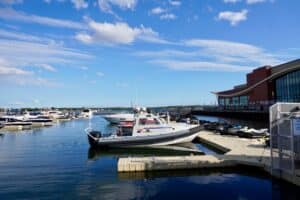
- Marina dry storage is the practical choice for owners who keep their jet ski near the water year-round. Most marinas offer rack or sling storage for bare hulls without requiring a trailer on-site. Marina storage fees typically run $50 to $150 per month depending on region, access frequency, and whether the space is covered or open rack.
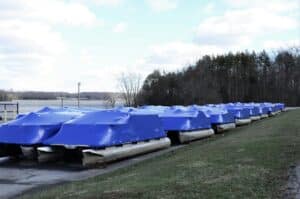
- Outdoor home storage is workable but comes with restrictions. A weather-resistant jet ski cover is not optional here; it is the minimum required to prevent sun damage, moisture intrusion, and debris accumulation inside the engine compartment.
HOA and Zoning Rules for Home Storage
Many homeowners association (HOA) covenants restrict outdoor recreational vehicle storage by sight-line, time limit, or location. Some CC&Rs allow no more than 24 to 48 hours of driveway storage for any recreational vehicle, including jet skis. Others prohibit front-yard or street-visible storage entirely.
Municipal codes in many jurisdictions classify PWCs as recreational vehicles under driveway storage or nuisance ordinances. This means local rules may layer on top of HOA restrictions. Check your CC&Rs and your city’s municipal code under “vehicle storage” or “recreational vehicle” before investing in a driveway setup.
Self-Storage Units for Bare-Hull Jet Skis
A self-storage unit sized for a bare hull is smaller than most people expect. Without a trailer, you only need to account for the hull itself. Most sit-down PWCs measure 9 to 12 feet long and 3 to 4 feet wide, which means a standard 10×10 unit handles a single hull comfortably. With a trailer, you would typically need a 10×15 or 10×20 to accommodate the tongue length.
Indoor storage units offer climate-adjacent protection for fuel systems and batteries during off-season storage. Facilities designed for large vehicles, like covered storage options at RecNation, offer indoor and covered options sized for personal watercraft with drive-up access that makes maneuvering a bare hull on a dolly practical. For more on what to budget, check our guide to how much storage can cost.
How to Move a Jet Ski Without a Trailer
Getting the jet ski from the water to a storage location without a trailer hitch requires one of three approaches. Each one suits a different situation.
Renting a Trailer for a One-Time Move
Many boat dealers and equipment rental locations offer PWC trailer rentals for around $50 to $100 per day. When renting, confirm the trailer is a PWC-specific model, not a modified boat trailer. You want a single-axle frame with hull bunks shaped for a PWC profile and a properly padded bow stop. Poorly fitted bunks can damage the gelcoat during transport, even on a short haul.
PWC Dock Dollies for Short-Distance Moves
A dock dolly or PWC launch cart solves the within-facility or within-marina logistics problem. Most models handle 600 to 1,000 pounds and roll on smooth concrete or composite dock surfaces. This is not a road transport solution. It is the right tool for moving a bare hull from a launch ramp to a storage rack or repositioning within a covered facility.
For longer seasonal moves from a lake cabin to a home garage, a boat transport service handles the haul without requiring the owner to own or rent a trailer. Short-haul PWC transport typically costs $1 to $3 per mile.
Preparing Your Jet Ski for Storage Without a Trailer
Winterizing a jet ski without a trailer changes a few standard steps. Most notably, you cannot drive the jet ski to a body of fresh water for the cooling flush. The steps below address that directly and cover everything else you need to close out the season correctly.
Flushing Without a Ramp or Trailer
Flushing the engine without access to a ramp is straightforward with a garden hose flush adapter. Most Yamaha WaveRunners, Sea-Doo models, and Kawasaki Jet Skis have a dedicated freshwater flushing port on the hull near the stern. Connect a standard garden hose to the port, start the engine, and run it for 90 seconds to 3 minutes to flush salt, minerals, and debris from the cooling system.
This step is also a regulatory requirement in some states, not just a maintenance best practice. Minnesota DNR Clean, Drain, Dry mandates flushing and draining before land storage to prevent the spread of invasive species. Minnesota, Wisconsin, and other Great Lakes states enforce similar protocols.
After flushing, tip the nose slightly forward if your stand allows for minor angle adjustment. This helps water drain through the stern drain plug rather than pooling inside the hull.
Fuel Stabilizer and Ethanol-Blend Risks
Ethanol in E10 and E15 gasoline absorbs ambient moisture over time, causing phase separation in the fuel tank. EPA Renewable Fuel Standard program documentation confirms that ethanol-blended fuels can begin to degrade within 30 days in a sealed system. Degraded fuel leaves varnish deposits in carburetors and fuel injectors that are expensive to clean.
Add a marine-grade fuel stabilizer rated for ethanol blends before storage. Products like Star Tron or Sta-Bil Marine are widely available and effective. Follow the manufacturer’s recommended ratio, then run the engine for 3 to 5 minutes to circulate the treated fuel through the system.
The remaining prep steps apply regardless of whether you have a trailer:
- Battery removal: Pull the battery and store it indoors on a trickle charger. Do not leave a battery unmonitored in a sealed storage unit for more than two weeks. Battery maintenance during storage prevents sulfation and extends service life.
- Covering the jet ski: A fitted jet ski cover rated for UV and weather is mandatory for both outdoor and indoor storage. Generic tarp covers trap moisture and accelerate corrosion inside the engine compartment.
Final Thoughts on Storing a Jet Ski Without a Trailer
If you are still sorting out where the jet ski will actually live this off-season, a dedicated vehicle storage facility takes the zoning worries, HOA restrictions, and weather exposure off the table entirely. RecNation’s facilities for storing your jet ski offer indoor and covered options sized for personal watercraft hulls, and no trailer is required to book a space or get your PWC secured for the season.
Frequently Asked Questions
Can you store a jet ski outside without a trailer?
Yes, you can store a jet ski outside without a trailer as long as it rests on a proper support: a PWC cradle stand or foam block set rated for your hull’s weight. A weather-resistant, UV-rated jet ski cover is required for any outdoor storage to prevent sun damage, moisture intrusion, and debris accumulation. Check your HOA documents and local municipal code first, since many jurisdictions restrict outdoor recreational vehicle storage on residential property by sight-line or time limit.
What is the best way to store a jet ski long term?
Indoor storage in a dedicated facility or private garage is the best option for long-term jet ski storage. It protects the hull, fuel system, and electrical components from UV exposure, temperature swings, and moisture. If indoor space is not available, covered dock storage or a marina rack system is the next best alternative. Regardless of environment, the jet ski should be supported on a proper cradle or stand, the fuel system treated with a marine-grade stabilizer, the battery removed, and the cooling system flushed before any extended storage period.
How do you winterize a jet ski without a trailer?
Winterizing a jet ski without a trailer is straightforward if you use a garden hose flush adapter connected to the PWC’s freshwater flushing port. This lets you flush the cooling system in a driveway or garage without transporting the jet ski to fresh water. After flushing, add a marine-grade fuel stabilizer rated for ethanol blends, run the engine for 3 to 5 minutes to circulate the treated fuel, remove and trickle-charge the battery, and cover the jet ski with a fitted, weather-rated jet ski cover.
Can you store a jet ski on a dock over winter?
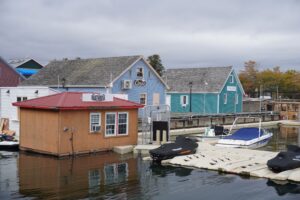
Storing a jet ski on a dock over winter is not recommended in cold climates. Fluctuating water levels, ice, and freeze-thaw cycles can damage the hull and dock hardware. In mild-weather regions, a floating PWC dock or dock-mounted jet ski lift system can work for year-round storage, but the jet ski should still be covered and the fuel system treated. Most marina operators in northern states remove PWCs from lift systems before winter and move them into covered dry storage.
How much does it cost to store a jet ski at a marina?
Marina storage costs for a personal watercraft typically run $50 to $150 per month depending on region, storage type, and launch access frequency. Year-round marina storage for a single jet ski can total $600 to $1,800 annually. Prices vary significantly between coastal marinas and inland lake facilities, and seasonal demand during summer months pushes rates higher in popular waterway areas.
What size storage unit do I need for a jet ski without a trailer?
Without a trailer, most sit-down personal watercraft measure 9 to 12 feet long and 3 to 4 feet wide, so a standard 10×10 storage unit is usually sufficient for a single hull. With a trailer, you typically need a 10×15 or 10×20 to accommodate the trailer tongue length. Measure your specific model before booking and confirm the unit has drive-up or roll-up access wide enough to maneuver the hull in on a dolly or cart.