The season is winding down, and you need to figure out where your jet ski goes and how to get it ready before it sits for months. The wrong call on either front can mean a cracked engine block, a dead battery, or a faded hull by spring.
This guide covers every jet ski storage option with enough detail to help you choose the right one, followed by a complete preparation protocol so your personal watercraft comes out of storage ready to ride.
What Are Your Jet Ski Storage Options?
Most personal watercraft owners have more options than they realize. The right choice depends on your climate, your budget, your available space, and whether your homeowners association (HOA) allows vehicle storage on the property. Here is a clear breakdown of each option.
Home Garage or Driveway Storage
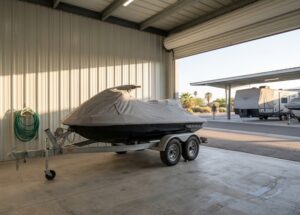
Home storage is the obvious first choice: it costs nothing and keeps the watercraft close. A standard jet ski on a trailer runs roughly 12 feet long and 4 to 5 feet wide, so you need a garage bay with enough depth to pull the trailer in and enough ceiling clearance for the PWC hull. If you don’t have a trailer at all, storing a jet ski without one requires a different approach to both support and transport. Driveway storage works in a pinch but leaves the watercraft exposed to UV radiation, rain, and temperature swings without a quality cover.
HOA rules are the most common barrier. Many HOAs and rental lease agreements prohibit trailer storage on residential property, which removes this option regardless of how much space you have. Check your HOA documents before assuming home storage is available to you.
Outdoor Storage Facility
Open-lot jet ski storage at a dedicated facility is typically the most affordable paid option, running roughly $30 to $75 per month. You drive in, park the jet ski trailer in an assigned space, and the facility handles security. This works well in mild climates where freeze risk is low and a quality jet ski cover handles UV and rain exposure.
In climates that see hard freezes or extended high humidity, outdoor storage adds meaningful seasonal risk. An uncovered hull sitting in standing water and freeze-thaw cycles can develop cracks that an enclosed unit would have prevented entirely.
Covered and Carport Storage
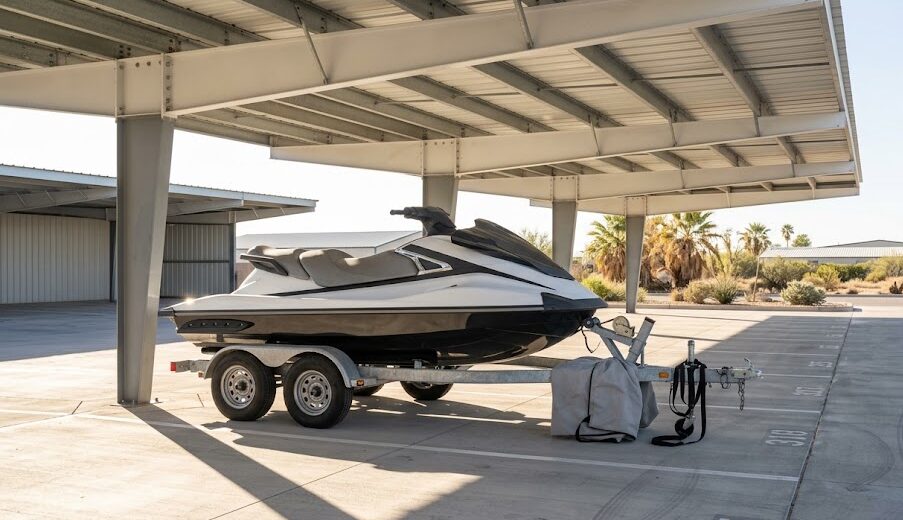
Covered carport storage sits between an open lot and a fully enclosed unit. A roof overhead blocks direct sun and rain without the cost of a walled space. For owners in warm climates who want to extend the life of their hull finish and cover, this is a practical mid-tier option that typically runs $50 to $100 per month.
It is not a freeze solution. If temperatures in your area drop below 32°F for extended periods, a covered lot still exposes the engine and hull to freeze risk. For mild-weather states like Florida and Southern California, it is often the most cost-efficient paid option available.
Indoor Self-Storage Unit
A 10×15 self-storage unit is the minimum size for a single jet ski on a trailer. Some larger or tandem rigs need a 10×20 unit. Indoor storage protects against UV, moisture, and freeze damage and is the strongest option for owners in colder climates or for high-value personal watercraft like Sea-Doo and Yamaha WaveRunner models worth $12,000 to $20,000 or more.
Dedicated vehicle storage facilities that specialize in RV and boat storage typically offer drive-up access with door clearances sized for trailers, which makes moving a PWC in and out straightforward. Climate-controlled indoor storage for jet skis adds humidity control on top of temperature protection and reduces the corrosion risk that standard unheated units do not address.
For owners who cannot store at home and want more than an open lot, RecNation offers covered and enclosed options specifically sized for personal watercraft on trailers across Florida, Texas, Arizona, and other Sun Belt states.
Marina and Dry Dock Storage
Marina storage keeps your PWC close to the water, which makes launch and retrieval easy. Dry rack storage eliminates trailer logistics entirely; the marina staff retrieve and launch your watercraft on request. The trade-off is cost: marina storage is typically the most expensive option at $100 to $250 or more per month, and availability at many facilities is seasonal or subject to a waitlist.
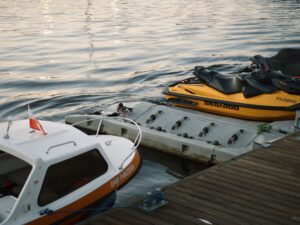
A lift storage system is a home-dock alternative for owners with waterfront property. PWC lifts and floating ramps keep the watercraft out of the water between uses, which reduces hull fouling and corrosion. If you’re weighing in-water mooring against a lift, leaving a jet ski in the water long-term carries mechanical risks worth understanding before you decide. This option requires waterfront access and an upfront equipment investment but eliminates ongoing facility fees.
How to Choose the Right Jet Ski Storage Option
Once you understand the options, the decision comes down to a handful of concrete factors. Work through each one and the right choice tends to become obvious.
Climate and Freeze Risk
This is the most important factor. Owners in Tennessee, Missouri, and Kansas face genuine freeze risk to the engine block, exhaust, and hull if water is left inside the system. Indoor storage is not optional in those climates; it is the minimum responsible choice.
Owners in Florida, Arizona, and Southern California can use covered or outdoor storage year-round with proper preparation. The risk profile in warm climates is UV degradation and moisture, not ice, and a quality cover addresses both.
Access Frequency During the Off-Season
If you plan to ride on warm winter days, factor in how far the storage facility is from the water and how easy trailer access is. Marina dry rack storage optimizes for speed of access. A self-storage unit optimizes for protection and cost, but retrieving the watercraft takes longer.
For most owners who store the PWC for a full off-season without touching it, access frequency is a minor consideration compared to price and protection level.
Space Constraints and HOA Rules
Many HOAs and lease agreements prohibit vehicle or trailer storage on residential property. If yours does, off-site storage is not optional regardless of how much driveway or garage space you have. Confirm your HOA rules in writing before assuming home storage is an option.
Even without HOA restrictions, a loaded jet ski trailer weighs between 1,000 and 1,800 lbs, which can exceed the rated load of a residential wooden deck and may damage soft asphalt parking pads in peak summer heat.
Registration and Facility Requirements
Most U.S. states require a personal watercraft to be registered with the state boating authority, administered through each state’s department of natural resources or equivalent agency under the federal numbering system. Some storage facilities and marinas require proof of current registration before accepting the vessel.
Florida requires all motorized vessels, including PWCs, to be registered with the Florida Fish and Wildlife Conservation Commission. If your registration is expired, renew it before committing to a facility-based storage option to avoid being turned away.
How to Prepare Your Jet Ski for Storage
Winterizing a jet ski properly is as important as where you store it. A well-prepped PWC sitting in outdoor storage will come out in better condition than an unprepped one sitting in a climate-controlled unit. Follow these steps in order.
Engine and Fuel System Preparation
Fuel system preparation is the highest-priority step. Ethanol-blended fuel (E10, the standard at most gas stations) begins to degrade in as little as 30 days and causes phase separation that can damage carburetors and fuel injectors. The NMMA’s boat winterization guidance recommends adding a marine-grade fuel stabilizer to a full tank before storage and running the engine for several minutes afterward so the stabilizer circulates through the entire fuel system.
Flushing the engine is the next step. Connect a garden hose to the flush port, run fresh water through the cooling system for the manufacturer-recommended time, and shut it off. This is especially critical after saltwater use, where salt residue accelerates internal corrosion.
Engine fogging completes the internal protection. With the engine running at idle, spray fogging oil through the air intake or spark plug ports until smoke appears from the exhaust. Then shut the engine off immediately so the fogging oil coats the cylinder walls. This provides corrosion protection for the duration of off-season storage.
Exterior, Hull, and Cover
Rinse the hull thoroughly with fresh water and let it dry completely before storage. A hull inspection at this stage matters: look for cracks, dings, or gel coat chips that water can work into over the off-season. Small repairs are far cheaper when caught before they become structural problems.
Apply a UV protectant to the hull if storing outdoors or in covered storage. Then fit a jet ski cover designed specifically for your model. A fitted PWC-specific cover outperforms a generic tarp because it prevents moisture pooling, reduces abrasion, and stays secure in wind. Do not consider shrink wrapping a DIY task; have a marine shop handle it if you want that level of protection.
Battery and Electrical Care
Disconnect the battery and remove it from the PWC. Store it in a cool, dry location connected to a battery tender or trickle charger. A battery left connected and discharged over several months will sulfate, which means it loses the ability to accept a charge and must be replaced.
A quality battery tender maintains a float charge without overcharging, keeping the battery ready for the first ride of the season. This is one of the simplest and least expensive steps in PWC maintenance and one of the most commonly skipped.
Trailer and Tie-Down Inspection
Storage affects the trailer as much as the watercraft.
- Tire pressure: Check before the trailer sits for the season. Tires left underinflated for months can develop flat spots that create vibration when towed again. Inflate to the trailer manufacturer’s recommended pressure before parking.
- Wheel bearings: Inspect and repack with grease if due for service.
- Tie-down straps: Check that they’re secure but not overtightened against the hull.
- Parking position: Park on a stable, level surface and confirm the trailer tongue jack is extended to take weight off the tow hitch.
Jet Ski Storage Costs: What to Budget
Storage pricing varies by market, facility type, and amenities. The table below gives you realistic ranges to compare across jet ski storage options before you start calling facilities. For broader context on how much storage should cost across vehicle types and unit sizes, that resource covers the full breakdown. However, be sure to check in with your local facility, as jet ski storage prices may differ slightly.
| Storage Type | Est. Monthly Cost | Best For |
| Open outdoor lot | $30 to $75 | Mild climates, budget-focused owners |
| Covered carport | $50 to $100 | Warm climates, hull protection priority |
| Indoor self-storage unit | $75 to $150 | Freeze climates, high-value PWCs |
| Marina dry rack | $100 to $250+ | Owners who prioritize water access |
| Home garage | $0 | Owners with space and no HOA restrictions |
When Indoor Storage Is Worth the Premium
The cost-benefit case for indoor or climate-controlled storage is straightforward in freeze climates. An owner paying $150 per month for an enclosed unit avoids a potential multi-thousand-dollar repair from freeze damage to the engine block or exhaust manifold. Over a four-month storage season, that is $600 in storage fees against a repair bill that can run $1,500 to $5,000 or more depending on the extent of the damage.
Owners with high-value personal watercraft have additional justification. A newer Sea-Doo or Yamaha WaveRunner represents a $12,000 to $20,000+ investment. Indoor storage that prevents UV fading, hull cracking, and corrosion damage protects resale value in a way that outdoor storage simply cannot match.
What Affects Jet Ski Storage Pricing
Location is the biggest pricing variable. Coastal markets and Sun Belt states with high PWC ownership density typically carry higher storage rates than inland markets. A covered spot in central Florida may cost more than the same space in rural Tennessee simply due to demand.
Amenities also affect price. Gated access, security cameras, on-site lighting, and climate control all add to the monthly rate. For most owners, gated access and camera coverage are worth prioritizing over climate control unless freeze risk is a genuine concern.
Final Thoughts on Storing Your Jet Ski
Finding the right place to store your jet ski is as important as the preparation work you put into it. A well-maintained PWC sitting in the wrong environment can still come out of storage with freeze damage, UV fading, or a dead battery. If you need a secure, covered, or enclosed option without the hassle of marina waitlists or HOA restrictions, RecNation’s jet ski storage facilities offer dedicated vehicle storage facilities across Florida, Texas, Arizona, and beyond, with space built for trailers and large recreational equipment.
Frequently Asked Questions About Jet Ski Storage
How do you store a jet ski for the winter?
Winterizing a jet ski before off-season storage involves several steps in sequence. Add a marine-grade fuel stabilizer to a full tank and run the engine for several minutes to circulate it through the fuel system. Flush the engine with fresh water through the flush port. Fog the cylinders with fogging oil to prevent internal corrosion. Disconnect the battery, remove it from the PWC, and connect it to a battery tender. Inspect and clean the hull, apply UV protectant if storing outdoors, and fit a quality jet ski cover. If you are in a freeze-prone climate, use an enclosed or indoor storage facility; an exposed hull and untreated engine block can crack if water freezes inside them.
Is it better to store a jet ski indoors or outdoors?
Indoor storage is better for PWC longevity, especially in climates that experience freezing temperatures or high UV exposure. An enclosed unit protects the hull finish, prevents freeze damage to the engine and exhaust, and reduces theft risk. Outdoor storage is a practical and cost-effective choice in mild climates when a high-quality, fitted jet ski cover is used consistently. The decision comes down to your climate, your budget, and how much risk you are comfortable accepting.
How much does it cost to store a jet ski?
Jet ski storage costs vary by type and location. Open outdoor lots at dedicated vehicle storage facilities typically run $30 to $75 per month. Covered or carport-style storage ranges from $50 to $100 per month. Indoor self-storage units sized for a PWC on a trailer generally cost $75 to $150 per month. Marina dry rack storage is usually the most expensive option at $100 to $250 or more per month depending on the facility and region. Compare local rates before committing, as pricing varies significantly by market.
Do you need to winterize a jet ski before storage?
Yes, even in mild climates. A jet ski sitting for more than 30 days without preparation can develop fuel system problems. Ethanol-blended fuel (E10) begins to degrade in as little as 30 days and can cause phase separation that damages carburetors and fuel injectors. Adding a fuel stabilizer, flushing the engine, fogging the cylinders, and maintaining the battery are the minimum steps before any extended storage period, regardless of whether temperatures drop below freezing.
Can you store a jet ski on a trailer long term?
Yes, storing a jet ski on its trailer is the most common long-term storage method and is safe with a few precautions. Check trailer tire pressure before the jet ski trailer sits for the season; tires left underinflated for months can develop flat spots. Inspect the wheel bearings and repack with grease if due. Make sure tie-down straps are secure but not overtightened against the hull, and park on a stable, level surface. Note that a loaded jet ski on a trailer can weigh 1,000 to 1,800 lbs, which may exceed the rated load of a residential wooden deck or damage soft asphalt in peak summer heat.
Can you store a jet ski in a storage unit?
Yes, a jet ski on a trailer fits in a 10×15 self-storage unit, which is the minimum size for a single personal watercraft. Larger or tandem rigs may need a 10×20 unit. Indoor storage units offer strong protection from UV, moisture, and freeze damage. Most dedicated vehicle storage facilities have drive-up access to accommodate trailer entry. Confirm the unit’s interior height and door clearance before reserving, and check whether the facility requires proof of current PWC registration before accepting the vessel.