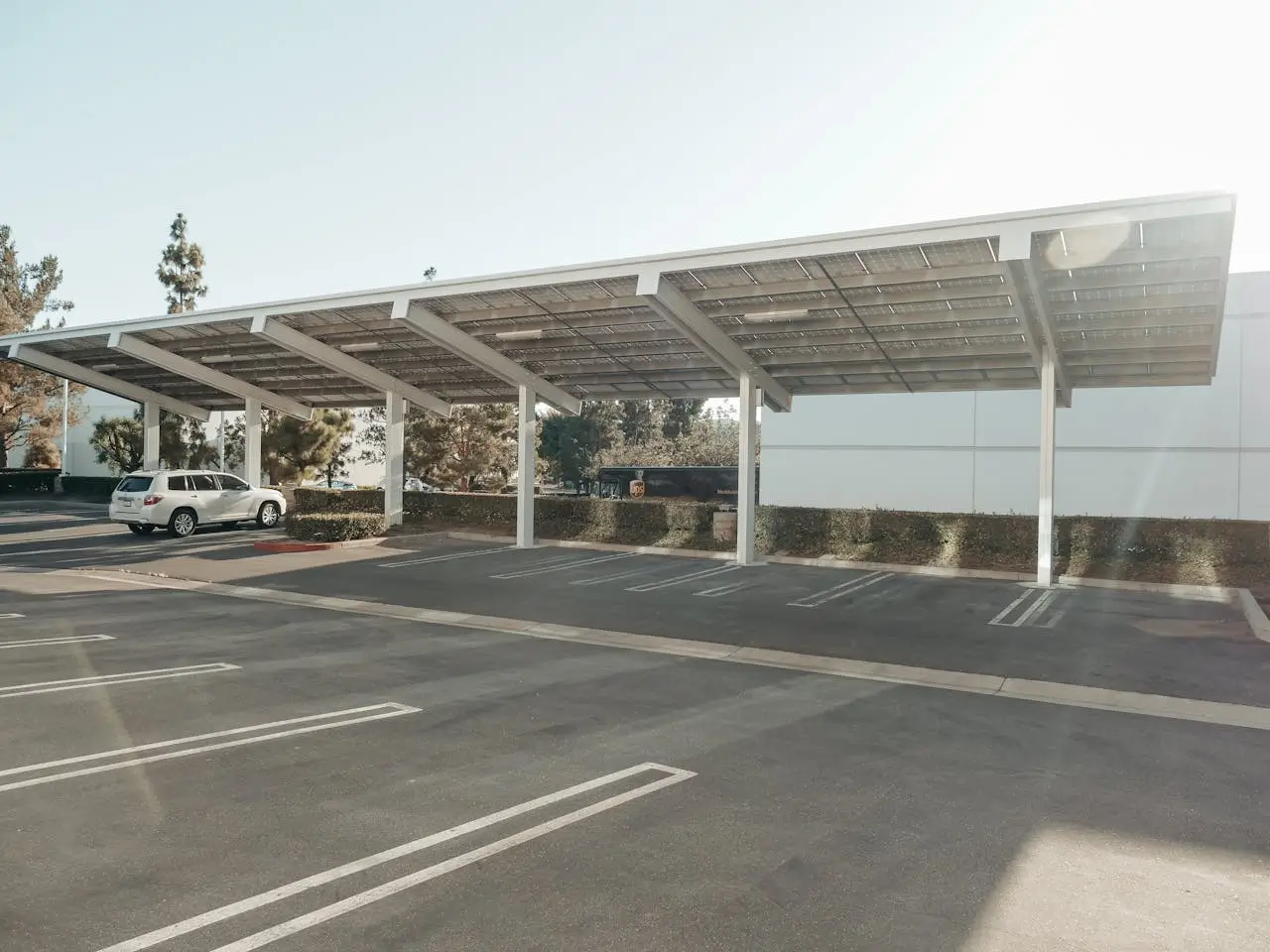
Covered car storage means a designated space with overhead protection that shields your vehicle from direct sun and precipitation, with options ranging from open-sided canopy spaces to fully enclosed indoor garages. If you are weighing whether a canopy space is enough or whether you need something fully enclosed, the answer depends on your vehicle, your climate, and what your insurer requires. This guide maps the three tiers, attaches real price ranges to each, and walks you through the decision.
What Covered Car Storage Actually Means
“Covered” is not a single standard. The word appears on facility listings to describe anything from a simple overhead roof to a fully walled garage unit, and the protection level depends on the specific structure at a given facility.
Most covered car storage facilities offer three tiers, and each provides meaningfully different protection at a different monthly price:
- Outdoor uncovered: An open space with no overhead structure.
- Canopy or carport: A roof overhead with open sides.
- Indoor enclosed: A fully walled garage space.
Understanding what separates them is the starting point for choosing correctly.
Canopy and Carport Spaces
A canopy or carport storage space has a roof overhead and open sides. Your vehicle is shielded from direct sun and rainfall but exposed on the flanks to wind, blowing rain, and ambient air. This is the most common meaning of “covered” in vehicle storage contexts, and it is a meaningfully different thing from an enclosed unit.
Indoor Enclosed Garage Spaces
Indoor vehicle storage in a garage space is fully enclosed, with four walls and a ceiling. It blocks weather and intrusion more completely than a canopy, but enclosed and climate-controlled are not synonyms: an indoor garage space does not regulate temperature or humidity. If you want more depth on what enclosed vehicle storage involves, that explainer is the next step.
How Much Covered Car Storage Costs
The right way to evaluate covered storage is to understand what each tier costs and what drives the price difference. The vehicle storage cost guide goes further for readers who want the full cost breakdown.
The table below shows RecNation’s monthly rates by tier as of October 2026:
| Storage type | Approximate monthly rate |
| Outdoor uncovered | $57 to $183 |
| Canopy | $99 to $351 (most $108 to $239) |
| Indoor enclosed garage | $114 to $216 for most sizes, up to about $701 for a 15 x 50 ft space |
These figures are estimates as of October 2026. Prices vary by location, size, and availability, so it helps to confirm current rates with the specific facility. Online web rates typically run about $20 a month below standard rates.
The canopy premium over uncovered parking reflects the overhead structure and its maintenance cost. The jump to an enclosed garage reflects the additional footprint and facility investment that enclosed units require.
Cost Per Square Foot by Storage Type
Cost per square foot is a useful comparison point when spaces vary in size across facilities. As of October 2026, outdoor uncovered runs approximately $0.32 per square foot per month, canopy runs approximately $0.58, and indoor enclosed garage runs approximately $0.63.
What Size Space Does a Car Need
Storage unit size for vehicles depends on the vehicle’s total length, and two ranges cover most cars:
- Under 20 ft: These spaces are available at select locations and are mostly uncovered. They fit compact and midsize cars, motorcycles, and all-terrain vehicles (ATVs).
- 20 to 25 ft: These spaces fit full-size cars, SUVs, and most pickups.
If your vehicle sits near the edge of a range, what size storage unit do I need to store a car goes into more detail.
What a Canopy Space Actually Protects Against
Understanding what a canopy does and does not block is what makes the tier decision concrete. A canopy is not a sealed environment.
UV and Weather Protection
A canopy space provides real, meaningful protection from weather for daily drivers and seasonal vehicles. Direct sun, rain falling from above, hail falling from above, bird droppings, and debris all meet the roof instead of your vehicle.
UV exposure fades paint and deteriorates rubber seals and trim over time, and a canopy addresses this directly. That makes UV damage prevention a practical reason to choose a canopy over open-air parking, and for seasonal vehicle storage or vehicles parked outside for months at a stretch, the protection has real value.
What a Canopy Cannot Block
A canopy is an open-sided structure, so four things still reach the vehicle:
- Wind-driven rain: Rain arrives at an angle and enters through the open sides of a canopy.
- Humidity: Humidity cycles freely through the space, which can contribute to underbody moisture and matters for rust and corrosion prevention over long storage periods.
- Temperature swings: An open-sided structure does not affect temperature swings.
- Ground moisture: Moisture from the paved or compacted surface beneath the vehicle is unaffected by an overhead canopy alone.
Owners in high-humidity climates or areas with severe winters should factor this in when choosing a tier.
A breathable car cover inside a canopy space can help with surface moisture, and should you cover a car in storage is worth settling before you book. Because a canopy leaves the car exposed on the sides, basic vehicle maintenance during storage, such as checking the cover and the exterior, matters more than it would in a sealed unit.
When to Choose a Canopy Space, and When to Go Enclosed
This is the decision the rest of the article has been building toward. The right tier depends on how the vehicle is used, where it lives, and what your insurance requires.
RecNation offers both canopy and enclosed garage spaces across 70 locations through its vehicle and car storage, so the tier decision comes down to your vehicle’s needs and your insurer’s requirements rather than what a given facility can accommodate.
Cases Where a Canopy Space Is Enough
A canopy space handles the everyday risks of sun, rain from above, and falling debris, so it is the right call when your vehicle does not need a sealed environment. These are the situations where that protection is enough:
- Daily drivers and regularly used vehicles: If you are retrieving the car regularly, a canopy provides meaningful protection without the cost of full enclosure.
- Seasonal storage under six months: A canopy handles sun, rain, and debris for a vehicle that will be back in use within a season.
- Mild climates: Owners in areas without extreme humidity or hard freezes face fewer of the conditions a canopy cannot block.
- Standard insurance policies: If your policy does not require enclosed storage as a coverage condition, a canopy can fit a standard car storage rental.
Cases Where Enclosed Storage Makes More Sense
An enclosed space blocks wind-driven rain, dust, and intrusion that an open-sided canopy cannot, but it does not regulate temperature or humidity. Some situations tip clearly toward indoor vehicle storage in an enclosed space, mainly where the vehicle is valuable, the climate is severe, or the storage period is long:
- Classic or collector cars: Agreed-value policies often call for enclosed, locked storage, and a canopy with open sides may not meet that condition. Confirm the requirement with your insurer before choosing a tier.
- Long-term car storage exceeding several months: Extended time in a canopy means more humidity exposure and temperature cycling, which matters more as the storage period grows.
- High-humidity or freeze-thaw climates: Moisture and humidity control matters more when conditions are severe, and those climates make full enclosure more valuable.
- Custom paint or significant cosmetic investment: Enclosed storage reduces exposure to windborne debris and bird droppings.
- Added security: A lockable enclosed storage unit adds security that an open-sided canopy does not.
If you’re still torn between the two formats, carport vs. garage compares them in more depth.
Covered Storage vs. Street Parking
Street parking is free, but it carries costs that show up over time rather than on a monthly invoice. The comparison is not only about weather protection.
A dedicated covered car storage facility addresses the UV, rain, and debris that street parking does not, and a gated facility with controlled access differs materially from an unsecured public street. Street parking may also carry permit restrictions, time limits, or seasonal bans depending on local ordinance, so your local rules decide what is allowed. If street parking is your main alternative, street parking for long-term storage covers that comparison in full.
Vehicle Storage Security
Vehicle storage security is one of the clearest differences between a facility and a public street. When evaluating any facility, ask about access hours, perimeter security, and lighting. A public street offers none of that by default.
Long-Term Wear from Street Exposure
The wear from street parking accumulates in ways a monthly-cost comparison tends to overlook. UV exposure builds up on paint and rubber, road spray reaches the undercarriage, and other vehicles can cause contact damage. Permit and time-limit pressure adds to the practical cost of “free” parking, which makes the monthly cost of a car storage rental easier to weigh against what street parking costs over time.
Finding the Right Tier for Your Vehicle
Whether a canopy space is the right call or a fully enclosed garage unit makes more sense for your vehicle, the starting point is finding a dedicated facility that offers both tiers at the size you need. RecNation’s vehicle and car storage spans 70 locations across eight states, with outdoor uncovered, canopy, and enclosed garage options for cars ranging from compact sedans to full-size SUVs and pickups. Checking availability and current web rates online takes a few minutes and shows you exactly what each tier costs at the nearest facility.
Frequently Asked Questions
What is the difference between covered and enclosed car storage?
Covered storage puts a roof over the vehicle with the sides open, while enclosed storage puts it inside a garage unit with four walls and a ceiling. The canopy blocks direct sun and rainfall but not wind, humidity, or blowing rain, and the enclosed unit adds protection from the elements and intrusion. Neither is climate-controlled storage, since neither regulates temperature or humidity.
How much does covered car storage cost per month?
Canopy spaces run about $99 to $351 a month as of October 2026, and most fall between $108 and $239. Outdoor uncovered spaces are cheaper at about $57 to $183, and indoor enclosed garages run about $114 to $216 for most sizes. Prices vary by location, size, and availability, and online web rates typically run about $20 a month below standard rates.
Is covered car storage enough to protect my vehicle from hail?
A solid overhead roof protects against hail falling straight down, which is a real advantage over open-air parking. Wind-driven hail that arrives at an angle can still reach the vehicle through the open sides, so protection depends on the structure’s design and the storm’s direction. In regions with frequent severe hail, a fully enclosed garage space gives more consistent protection.
What size space does a car need at a storage facility?
Most cars fit one of two ranges. Spaces under 20 ft, offered at select locations and mostly uncovered, suit compact and midsize cars along with motorcycles and ATVs, while 20 to 25 ft spaces suit full-size cars, SUVs, and most pickups. Measuring the vehicle’s total length first, and allowing room to open doors or reach the trunk, keeps the fit comfortable.
Does classic car storage require an enclosed space rather than a canopy?
Not always, but agreed-value policies for classic and collector cars often make enclosed, locked storage a condition of coverage, and a canopy with open sides may not meet it. Confirming the policy terms with your insurer before choosing a tier avoids surprises about whether a claim is honored. For long-term classic car storage, an indoor enclosed garage space is usually the safer choice for both vehicle condition and insurance compliance.
Can I store a car at a facility without keeping full insurance coverage?
Reducing coverage during storage depends on your state’s financial responsibility requirements and, for a financed vehicle, your lender’s terms. Some owners move to a comprehensive-only or storage-specific policy for extended storage, which can lower premiums while keeping protection against theft or weather damage. Your insurer and lender are the ones to confirm any change with before you adjust the policy.


