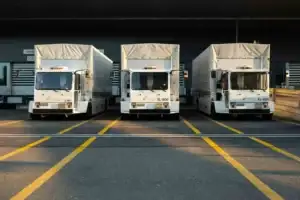
A laydown yard is open outdoor space used to store and stage equipment, materials, trailers, and vehicles during construction or industrial projects. This article covers what a laydown yard is used for, how divisible yard configurations work, what size and cost depend on, and the practical questions to ask before signing a lease.If you’ve seen the term in a project document, a lease offer, or a vendor conversation, this guide explains what you’re dealing with before you go further.
What a Laydown Yard Is
A laydown yard is a dedicated, open outdoor area used to store and stage materials, equipment, trailers, and vehicles during an active or upcoming project. The term is common in oil and gas, pipeline, utility, renewable energy, and heavy civil construction, where large, heavy, or oversized material cannot fit in a standard warehouse and must be accessible by trucks and heavy equipment.
Unlike a temporary staging area marked out on the job site, it is a separately leased or owned parcel, typically fenced and gated, with its own access route and controlled entry. A project team uses it as a supply base or material depot across multiple phases or crew rotations.
This distinction matters for construction site logistics because a laydown yard gives the project team independent control over material handling, inventory management, and equipment storage.
Laydown Yard vs. Staging Area
A staging area is typically a temporary zone marked out within the active construction site footprint, used to organize material for immediate use. It often shifts with the project and may be unmarked or unsecured.
A laydown yard is a separate, controlled parcel that works as a material staging area and supply depot for the whole project. It can sit some distance from the active work face and be used across multiple project phases, which is not practical for a temporary zone inside the site boundary.
What Gets Stored in a Laydown Yard
If your project handles material or equipment that is too large or too heavy to hold inside a warehouse, a laydown yard is the standard solution. These are the common categories:
- Pipe, conduit, and tubing: Pipe and steel storage is a core use, especially on pipeline projects with hundreds of pipe joints to organize and sequence.
- Structural steel and rebar: Heavy material that needs heavy equipment access for loading and unloading.
- Precast concrete components: Large pieces that need clear room to maneuver.
- Heavy equipment and machinery: Equipment held between mobilizations or during site preparation.
- Work trucks, service vehicles, and trailers: Fleet equipment that stays on hand for the project.
- Generators and temporary power equipment: Units that need an open outdoor footprint.
- Fabricated or prefabricated building components: Assemblies awaiting installation.
Laydown yards are most common in pipeline and utility installation, oil and gas construction, renewable energy (wind and solar) development, heavy civil and infrastructure work, and general contracting for large commercial builds.
Oil, Gas, and Pipeline Projects
Pipeline projects almost always require a dedicated laydown yard. The volume and length of pipe joints, the weight of valves and fittings, and the need for organized staging across long linear routes make a temporary material staging area inside the site boundary impractical.
A secure, fenced yard also solves the between-phase problem. When active installation pauses, equipment and remaining material must be held somewhere with controlled access.
Renewable Energy and Infrastructure Construction
Wind and solar projects generate a distinct laydown-yard demand. Turbine blades, tower sections, and solar panel pallets require very large clear areas with specific turning radii for specialized transport vehicles. This is a growing use case in infrastructure construction.
How a Divisible Laydown Yard Works
Not every project has the same footprint, and the right amount of yard depends on what the project actually stores. Two examples show the range:
- Small utility contractor: A few trailers, tools, and a mini-excavator held between jobs need far less yard than a pipeline crew.
- Oil and gas crew: Thousands of feet of pipe staged on site need far more space.
Leasing a fixed parcel sized for the larger operation means the smaller contractor pays for ground they will never use.
A Divisible Laydown Yard solves this in two ways:
- Right-sized space: The amount of open outdoor yard space is configured to match what the project actually needs, rather than committing to a fixed lot size.
- Room to spread out: The space can be divided to fit the operator’s requirements for equipment, materials, trailers, and vehicles.
RecNation offers industrial outdoor storage with a Divisible Laydown Yard option, letting operators configure the amount of space to their project’s footprint across its 70 locations.
Matching Yard Size to Project Phase
A project’s material-storage footprint changes over time. A pipeline crew may need maximum yard capacity during the pipe-receiving phase, then significantly less once active installation consumes that material. A divisible yard that can scale with the project phase is more efficient than a fixed-lot lease that locks in a size from day one.
Laydown Yard Size and Cost: What Determines Both
Laydown yard size and cost both depend on the location and the amount of space needed. There is no standard national rate and no standard parcel size, and quoting a price without knowing the project’s footprint and market is not meaningful.
Four variables drive the cost variation you will see from one yard to the next:
- Geographic market: Land values differ across markets, such as the Permian Basin versus rural Tennessee.
- Amenities: Fencing, a paved or compacted surface, and gated access all affect the rate.
- Lease duration: Project-length and month-to-month terms can be priced differently.
- Included space: Whether office or utility space comes with the yard is another factor.
Surface type is worth confirming with the facility before you sign. Compacted gravel, caliche, a concrete pad, and native soil differ in whether they can support loaded haul trucks without ground failure, and load-bearing capacity decides whether heavy equipment access is practical. Zoning and permitting questions also affect leasing decisions, and permits for industrial outdoor storage covers them in more depth.
Questions to Ask Before You Sign a Lease
These questions help you compare yards on the same terms before you commit to a lease agreement for a laydown yard, and each one can be answered by asking the facility directly:
- Zoning: Is the parcel zoned for outdoor industrial storage in that jurisdiction?
- Stormwater: Who holds the stormwater management obligation, the landlord or the tenant?
- Surface: What is the surface type, and what load-bearing conditions are confirmed?
- Access road: What are the access road dimensions and weight limits?
- Fencing and lighting: Are fencing and security features, gating, and lighting included, or are those tenant responsibilities?
- Environmental compliance: Who carries environmental compliance obligations under the lease?
- Lease terms: Are terms month-to-month, project-length, or longer-term only?
Who Uses a Laydown Yard
A wide range of operators use laydown yards as part of project logistics planning. The companion guide on who uses industrial outdoor storage gives the full breakdown by industry and use case, so this section stays brief. The core user types are:
- Pipeline and oilfield contractors: Volume pipe and steel storage across long linear project routes.
- Utility and infrastructure crews: Material handling for utility installation and infrastructure work.
- Renewable energy engineering, procurement, and construction (EPC) teams: Turbine and solar component staging with large clear-area requirements.
- Heavy civil contractors: Equipment storage and site preparation material between project phases.
- General contractors: Temporary storage facility use on large commercial builds, for material that cannot be held in a warehouse.
- Operators between mobilizations: Crews holding equipment and trailers until the next project starts.
Once you have a yard, making the most of outdoor storage space is a useful next read on organization and logistics.
Contractors Between Mobilizations
A contractor who has completed one project phase and is awaiting the next mobilization needs somewhere secure to hold equipment, trailers, and materials without paying active job-site rates or demobilizing fully. A laydown yard functions as a temporary storage facility and a hold point between phases.
For smaller-footprint between-jobs storage needs, contractor storage is a related product worth a look.
Find Outdoor Yard Space for Your Next Project
For operators who need open outdoor yard space that can be sized to their project rather than a fixed lot they may outgrow or underuse, RecNation’s industrial outdoor storage includes a Divisible Laydown Yard option for equipment, materials, trailers, and vehicles that need room to spread out. With 70 facilities across the US, RecNation can be a starting point for contractors and project teams evaluating laydown yard options before the next mobilization.
Frequently Asked Questions
What is a laydown yard in construction?
A laydown yard is the outdoor supply base for a construction project: a fenced, leased parcel apart from the job site that holds the materials, equipment, trailers, and vehicles a crew needs. Pipeline, oilfield, utility, and heavy civil projects rely on them most, because oversized material cannot sit in a warehouse. The project team controls the yard for a project phase or longer.
What is the difference between a laydown yard and a staging area?
The difference is control and location. A staging area is a temporary zone inside the active job site, while a laydown yard is a separately leased or owned parcel, often fenced and gated, that serves as a depot of its own.
How much does it cost to lease a laydown yard?
Lease cost for a laydown yard varies with the location and the amount of space needed, and no standard national rate exists. Facilities can quote an accurate figure once they know the project’s space requirements and timeline.
How do you set up a laydown yard for a pipeline project?
Setup starts with three checks: the parcel’s zoning for outdoor industrial storage, a surface that supports loaded haul trucks and pipe-handling equipment, and access roads that handle the longest and heaviest vehicles. Pipe joints and heavy material go in the sequence they will be needed, with access lanes kept clear for equipment, and the landlord or facility can confirm who handles drainage and stormwater management.
What are the typical requirements for a laydown yard?
Operational laydown yards are usually fenced and gated, with a compacted or stabilized surface for heavy vehicle traffic and clear turning room for trucks and equipment. Zoning classification, lease terms, and which party holds drainage and environmental compliance obligations are the main items to confirm before leasing.
What is a divisible laydown yard?
A divisible laydown yard is open outdoor yard space that can be split to suit each operator’s needs, so the lease is sized to the project instead of a fixed parcel. It suits projects whose needs change from phase to phase, since the lease can match the space actually in use.