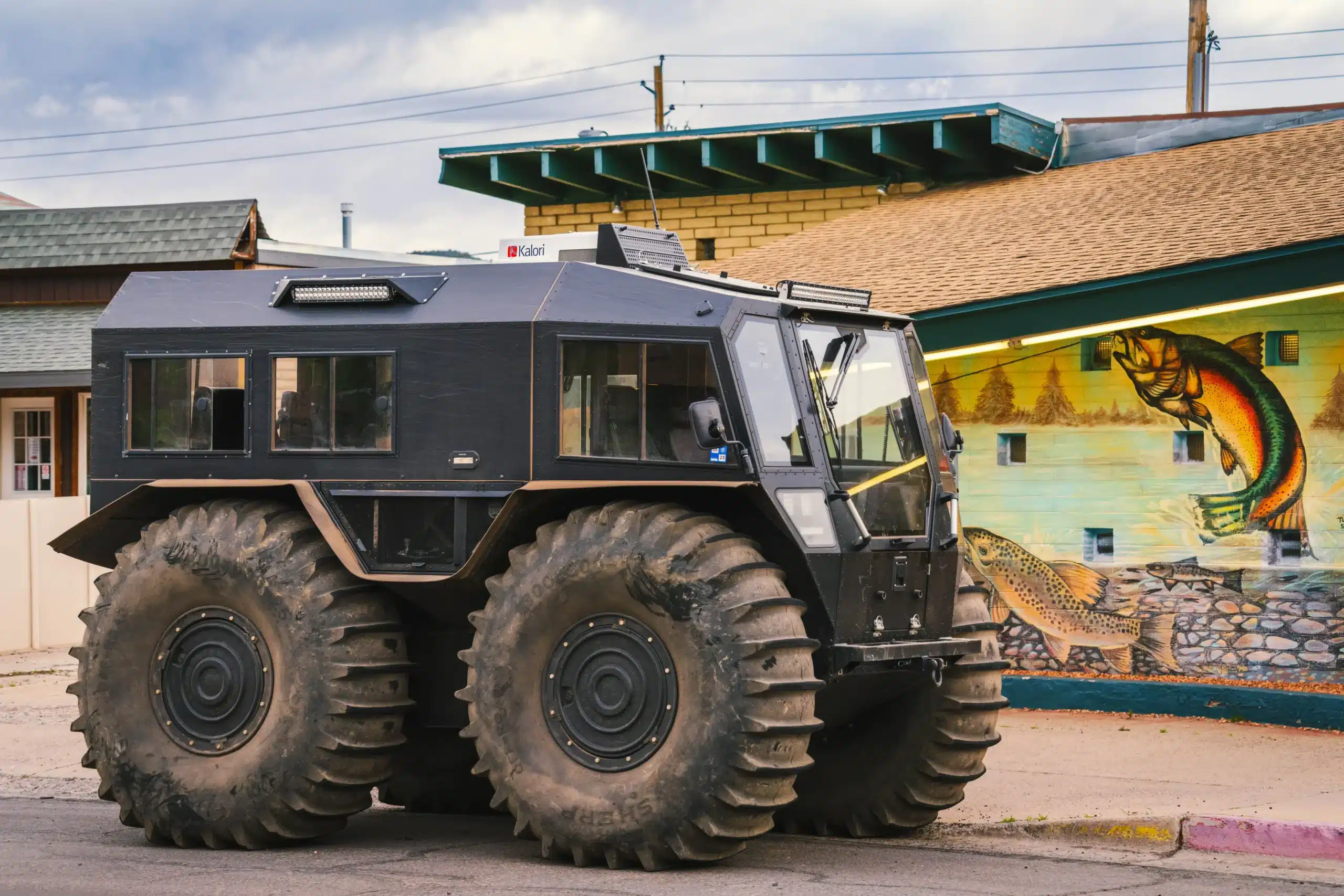
Covered storage is better than fully open outdoor storage for all-terrain vehicles (ATVs) in most climates, but how much better depends on where you live, how long the machine sits, and whether you are using any cover at all. If you cannot keep your ATV in a garage and are choosing between a covered carport space and leaving it on a gravel pad or driveway, that is a real decision with a real cost difference on both sides.
This article settles that question with specific damage mechanisms, honest protection limits, and a clear framework for deciding which option fits your situation.
What “Covered Storage” Actually Means for an ATV
Before comparing options, it helps to agree on what each one actually provides. The word “covered” gets used loosely. Sometimes it describes a carport, sometimes an enclosed unit, and sometimes just a tarp thrown over a machine. These are meaningfully different tiers of protection, and the cost difference between them reflects that. Searching for ATV storage facilities will typically surface all three tiers at varying price points, so understanding what each one delivers helps you avoid paying for more than you need, or settling for less than the machine requires.
Open Outdoor Storage
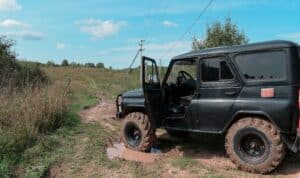
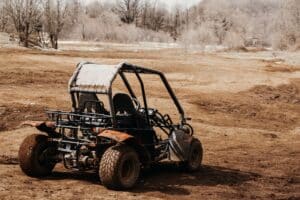
Open outdoor storage means no overhead structure. The ATV sits on a driveway, gravel pad, or bare ground, fully exposed to sun, rain, wind-driven debris, and temperature swings. The only protection layer available in this setup is a tarp or a fitted ATV cover placed over the machine. The cover quality and how consistently you use it determines almost everything about how well the ATV holds up.
Covered Outdoor Storage
Covered outdoor storage provides a roof overhead and, in many cases, partial side walls, but not a fully sealed enclosure. This is the carport or canopy-style setup common at vehicle storage facilities and the main middle-ground option between fully exposed parking and enclosed indoor storage. A roof overhead blocks direct precipitation and direct sun, reduces radiant heat accumulation on the ATV’s surfaces, and lowers the degree of temperature swing the machine experiences across a day or a season. What it does not do is seal the space against humidity, wind-driven rain, or ambient air temperature.
Enclosed Indoor Storage
Enclosed indoor storage places the ATV inside a fully walled and roofed space with a door, the highest protection tier available. This article’s main comparison is between open outdoor and covered outdoor storage, so this section is brief: enclosed storage costs more, provides the most stable environment, and is the better call for long-term storage in humid climates or for high-value machines. It is covered in more detail elsewhere, but it is worth knowing where it sits on the spectrum.
| Storage Tier | Roof | Walls | Sealed Against Humidity | Protection Level |
| Open outdoor | None | None | No | Lowest |
| Covered outdoor | Yes | Partial or none | No | Moderate |
| Enclosed indoor | Yes | Yes (four walls) | Better | Highest |
What Outdoor Exposure Actually Does to an ATV
Many ATV owners have stored their machine outside for a season and come back to find it starts fine and rides fine. That does not mean nothing happened. It means the damage is cumulative and often shows up in maintenance costs and component condition over time rather than in a single dramatic failure. Our guide to ATV storage covers preparation steps in full, but the specific risks of leaving an ATV unprotected outdoors come down to five concrete mechanisms.
Plastics, Bodywork, and Seat Vinyl
UV damage is the most visible consequence of outdoor ATV storage. Direct sunlight degrades the polymers in plastic bodywork and seat vinyl, causing fading first, then surface cracking, then brittleness. In high-UV states like Arizona, Texas, and Florida, this process moves faster than most owners expect. Color fading can begin within a single season of consistent direct sun exposure, and panels that were flexible and intact may become noticeably brittle within two seasons.
Research on UV degradation rates for polymer materials confirms that UV intensity in the Southwest accelerates material breakdown at rates significantly higher than in northern or coastal climates. Cosmetic damage on plastic bodywork is not just aesthetic. Brittle panels crack on impact and are expensive to replace.
Seat vinyl is similarly vulnerable. The combination of UV and heat causes vinyl to dry out, crack, and split along stress points. A replacement seat or reskin is a cost that covered storage largely prevents.
Engine Bay and Fuel System
Rain and dew create specific moisture intrusion risks in ATV engine components that do not apply when the machine is running. During a ride, airflow keeps the airbox dry and the carburetor warm. During storage, a rain event can introduce water into the airbox intake, where it sits in contact with the air filter and the carburetor or fuel injection system without the heat of operation to drive it off. Water in a carburetor bowl encourages rust formation inside the bowl and promotes fuel varnishing as the gasoline sitting in the bowl degrades over weeks or months.
Fuel tank vent lines are another entry point for moisture and debris in ATVs stored without overhead coverage. On carbureted machines, a clogged or moisture-compromised vent line causes fuel delivery issues that may not appear until the first start of the season. These are repair costs; carburetor cleaning, rebuild kits, or fuel system flushes, that covered storage reduces by eliminating the direct precipitation exposure that starts the problem.
Battery, Electrical, and Metal Components
The ATV battery is one of the most storage-sensitive components on the machine. All lead-acid and absorbed glass mat (AGM) batteries self-discharge over time, and temperature cycling accelerates the process. When a battery discharges past a threshold voltage and sits there, sulfation occurs. Lead sulfate crystals form on the battery plates and reduce charge capacity permanently.
According to Battery Council International, battery self-discharge rates increase with temperature, and sulfation risk rises sharply when a battery sits discharged for extended periods in fluctuating conditions. An ATV parked outdoors through temperature swings between warm days and cold nights experiences exactly that cycling.
Corrosion on exposed metal fasteners, exhaust components, and brake hardware is a secondary but compounding issue. Rain and dew leave moisture in contact with steel hardware, frame welds, and brake rotor surfaces. A full off-season of repeated wet-dry cycles without any protection builds surface rust on fasteners that makes future maintenance harder and accelerates wear on braking components.
CVT belt degradation is specific to side-by-sides and some ATV models with continuously variable transmissions. A CVT belt exposed to moisture and cold during a dormant season can develop micro-cracking as the rubber loses flexibility. Cold alone does not destroy a CVT belt, but the combination of moisture absorption and temperature cycling during outdoor storage shortens belt life and increases the chance of mid-ride failure at the start of the next season.
What Covered Storage Prevents – and What It Doesn’t
Covered outdoor storage addresses the most damaging elements of open air exposure, but it is not a sealed environment and should not be treated as one. Understanding the genuine limits of a covered carport space helps you decide whether it is sufficient for your climate and storage duration, or whether you need the additional step of an ATV cover inside the space or a fully enclosed unit.
Protection Covered Storage Reliably Provides
A solid roof overhead eliminates direct precipitation contact with the ATV. Rain no longer pools in the airbox intake, sits in the carburetor bowl, or runs along frame welds and brake hardware. That single change addresses the moisture intrusion mechanisms described above and meaningfully reduces corrosion risk over an off-season.
Covered outdoor storage also:
- Eliminates direct UV exposure: Shade from a solid roof reduces UV damage to plastic bodywork, seat vinyl, and rubber seals without requiring a cover to be installed and removed every time you access the machine.
- Reduces radiant heat accumulation: A machine sitting in full sun in Arizona or Texas in summer can reach surface temperatures that accelerate plastic and rubber degradation beyond what ambient temperature alone would cause. Shade significantly reduces that thermal load.
- Lowers debris settlement: Covered structures reduce the amount of dust, pollen, leaves, and bird debris that accumulates on the ATV over time, which cuts cleaning time and reduces the risk of abrasive particles working into seals.
Limitations to Keep in Mind
Covered outdoor storage does not seal the space against ambient humidity. In high-humidity states like Florida, South Carolina, and coastal Texas, a carport-style structure still allows moist air to circulate freely around the ATV. Condensation can form on metal components during temperature swings between warm days and cooler nights, which means corrosion risk is reduced but not eliminated in those climates. For owners in humid regions, pairing covered storage with an ATV cover inside the space adds a condensation buffer, particularly around electrical connections and battery terminals.
Open-sided covered structures also do not stop wind-driven rain. In areas with persistent directional wind and rain, rain can blow horizontally into a carport structure and reach the ATV. If the facility’s covered spaces are open on multiple sides, this is worth asking about before committing. A structure with a solid back wall and at least partial side coverage performs significantly better in wind-driven rain conditions than a simple overhead canopy.
When Outdoor Storage Is Acceptable for an ATV
Outdoor storage is not automatically a poor choice. Many ATV owners use it without significant problems for years, and in certain situations, the difference in protection it provides compared to a covered space does not justify the additional monthly cost.
If you are researching the broader context of ATV ownership decisions, including how to handle title paperwork before storing a machine, our article on transferring ATV ownership covers that process in full.
Dry Climates and Short-Term Exposure
The two factors that make outdoor storage most acceptable are low humidity and short storage duration. In dry inland climates, parts of Arizona, New Mexico, and inland California, annual rainfall is low, humidity is minimal, and UV is the primary risk rather than moisture. An ATV owner in Tucson storing a machine outside with a quality UV-resistant cover for six weeks between rides is in a different risk category than an owner in Orlando leaving the same machine uncovered for an entire off-season.
The damage accumulation from outdoor exposure is not linear. An ATV left outside for two weeks with a quality cover in a dry climate faces modest risk. The same machine left outside for five months without consistent cover use in a humid climate faces compounding risk across every damage category described above. Short, frequent storage periods in dry climates sit comfortably in the acceptable range for outdoor storage.
The conditions under which open outdoor storage is a reasonable trade-off include:
- Storage periods shorter than four to six weeks
- Dry climates with low annual rainfall and humidity (inland Southwest)
- Consistent use of a quality weatherproof ATV cover
- ATVs ridden frequently enough that they are not sitting through a full season
- Owners who perform pre-storage maintenance including fuel stabilizer, battery tender connection, and lubrication of exposed metal components
Using an ATV Cover as a Partial Solution
A quality ATV cover closes some of the gap between open outdoor and covered storage, but it does not fully replicate a solid roof. For maximum protection, look for covers made from UV-resistant polyester or Oxford fabric with a waterproof rating, a snug fit that does not allow pooling on the surface, and ventilation panels that reduce condensation buildup underneath. Polaris, Yamaha, and Honda all produce OEM-spec covers designed for their specific ATV models, and aftermarket options meeting these specs are widely available.
The limitation of a cover without overhead shelter is condensation. In humid climates, a sealed cover over an ATV traps moisture-laden air against the machine’s surfaces as temperatures drop overnight. That condensation collects on metal components, electrical connections, and brake hardware. A cover under a covered roof structure is the better combination. The roof handles rain and direct UV, and the cover manages the remaining condensation risk.
Covered Storage vs. Outdoor Storage: The Cost Comparison
The cost question is straightforward in structure even if the exact numbers vary by market. Open outdoor parking at a vehicle storage facility typically sits at the lower end of pricing, and carport and covered storage spaces run higher, usually in the range of $20 to $50 more per month depending on location, facility, and market. Urban markets and high-demand areas trend toward the top of that range; rural facilities often fall closer to the bottom.
What You Are Paying For
The monthly cost difference between open outdoor and covered outdoor storage is not just paying for a roof. You are paying to eliminate the UV exposure that degrades plastic bodywork and seat vinyl, the direct rain contact that introduces moisture into the airbox and carburetor, and the sustained moisture cycling that accelerates corrosion on metal hardware. Each of those damage categories carries a repair cost if it occurs: carburetor cleaning or rebuild, battery replacement, plastic restoration, or new seat vinyl.
Calculating Whether the Upgrade Is Worth It
The math for most seasonal storage situations favors covered storage once you account for deferred maintenance. If covered ATV storage costs add $30 per month over a five-month off-season, that is $150 in additional storage cost. A single carburetor cleaning at a shop runs $80 to $150. A replacement ATV battery runs $60 to $120. Seat vinyl repair or replacement typically starts at $150. A UV-faded plastic restoration kit runs $30 to $80 and takes several hours of labor.
You do not need to experience all of those costs in one season for covered storage to pay for itself. In high-UV, high-humidity states like Florida, Texas, and Arizona, where the damage mechanisms described above move faster, the return on covered storage comes earlier. In milder, drier climates with short storage periods, the math is closer, and outdoor storage with a quality cover may genuinely be adequate.
How to Choose the Right Covered Storage for Your ATV
Once you have decided that covered storage is the right level of protection, the next step is evaluating whether a specific facility actually delivers it. Not all covered spaces are equal, and the term “covered” can describe anything from a solid permanent carport to a lightweight canopy that partially shades one side of the ATV.
RecNation’s covered ATV storage spaces are designed with vehicle-specific dimensions in mind, including gated access and surveillance, details worth checking against any facility you evaluate.
Facility Checklist for Covered ATV Storage
When evaluating a facility, work through these criteria before committing:
- Roof quality and full coverage: Does the structure fully cover the ATV’s length and width, or does the roofline leave the front or rear exposed? A low canopy that only covers the center of a long side-by-side may not provide the protection you expect.
- Surface type: Concrete or sealed gravel is preferable to bare earth. Bare ground retains moisture that wicks upward and keeps the underside of the ATV in a humid environment even when it is not raining.
- Security and access control: Does the covered space sit within a gated facility with surveillance? Covered outdoor spaces vary widely in how secure they are. An open canopy in an unfenced lot offers no security advantage over a driveway.
- Access hours: Can you retrieve the ATV on short notice, or are hours restricted? If you ride on variable schedules, 24-hour or extended access matters.
- Spacing between vehicles: Is there enough room to load and unload the ATV from a trailer or back it into the space without risk of contact damage to adjacent machines?
- Insurance: Does the facility carry liability coverage, and does your ATV insurance policy cover the machine while in off-site storage? Confirm both before signing.
Questions to Ask Before You Commit
Before finalizing any covered storage arrangement, ask the facility directly:
- Are spaces reserved or rotational? A reserved space means your ATV always has the same spot. A rotational system means space availability may shift.
- What are the exact access hours? Some facilities restrict late-night or early-morning access even for long-term tenants.
- What security features cover the covered spaces specifically? Gating, camera coverage, and lighting vary significantly between facilities.
- What are the space dimensions? Confirm the width and length of the covered space accommodate your ATV, and if applicable, whether a trailer can be stored alongside or nearby.
If you’ve decided that covered storage is the right move for your ATV, the next step is finding a facility that actually delivers on it: proper overhead coverage, secure access, and dimensions that work with your machine. RecNation ATV storage offers covered outdoor and enclosed storage options across multiple states, including Arizona, Florida, Texas, and Tennessee, so your ATV stays protected whether you’re storing it for a season or an extended stretch between rides.
Frequently Asked Questions
Is it okay to store an ATV outside with just a cover?
A quality ATV cover provides meaningful protection against UV rays, rain, and debris, but it is not a complete substitute for covered overhead storage. In humid climates, covers can trap condensation underneath, which promotes corrosion on metal parts and electrical connections. For short storage periods in dry climates, a good cover is usually adequate. For seasonal storage of three months or more, covered or enclosed storage is a stronger choice.
How much does covered ATV storage cost per month?
Covered outdoor ATV storage at a vehicle storage facility typically costs more than open outdoor parking, with the difference ranging from roughly $20 to $50 per month depending on location, facility, and market. Urban and high-demand markets tend to run higher than rural areas. Prices vary significantly by state and facility, so it is worth contacting local facilities directly for current rates.
Does an ATV cover prevent UV damage?
A UV-resistant ATV cover does reduce UV exposure to plastics, seat vinyl, and rubber components, but only when it is consistently in place and fits correctly. Gaps, loose fit, or lightweight non-UV-rated materials reduce effectiveness. Covered storage with a solid overhead roof provides more consistent UV protection because it does not rely on the owner correctly installing and maintaining a cover.
How long can an ATV sit outside before it gets damaged?
There is no fixed threshold. Damage accumulates gradually based on climate, exposure intensity, and the condition of the ATV. In high-UV, high-humidity states like Florida or Texas, plastic fading and corrosion can begin to develop within a single off-season of unprotected outdoor exposure. In dry, mild climates, an ATV left outside for a few weeks with a proper cover typically shows no significant damage. The longer the storage period and the harsher the climate, the more meaningful the protection difference becomes.
Is covered storage worth it for an older ATV?
Yes, often more so than for a newer one. Older ATVs frequently have aging plastics, worn seals, and weaker electrical components that are more vulnerable to moisture and UV exposure. A single season of unprotected outdoor storage can accelerate deterioration that is difficult and expensive to reverse on a used machine. Covered storage is a cost-effective way to preserve an older ATV’s condition without committing to the higher cost of enclosed indoor storage.
What is the difference between covered outdoor storage and enclosed indoor storage for an ATV?
Covered outdoor storage provides a roof and sometimes partial walls, protecting the ATV from direct rain and sun while leaving it exposed to ambient air, humidity, and temperature changes. Enclosed indoor storage puts the ATV inside a fully walled and roofed space, which blocks humidity more effectively, maintains more stable temperatures, and offers greater security. Enclosed storage costs more but is the better option for long-term storage in humid climates or for high-value ATVs where maximum protection is a priority.