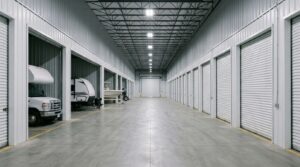
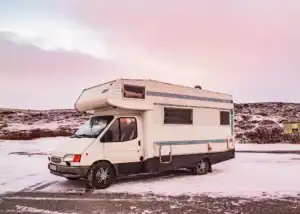
Indoor recreational vehicle (RV) storage places your rig inside a fully enclosed garage-style unit and costs more per month than outdoor or covered options, but it delivers the strongest protection from weather, ultraviolet (UV) damage, and pests. If you have already decided you need storage and are weighing whether indoor RV storage is worth the premium, this guide gives you a real cost benchmark, a sizing reference by RV class, and a checklist of features that facility listing pages rarely explain.
What Indoor RV Storage Actually Is
Indoor RV storage, also called enclosed RV storage, means your rig goes inside a structure with four walls, a roof, and a door, typically a large garage bay or warehouse unit built for recreational vehicle storage. Nothing about the rig is exposed to open air. That distinguishes it from the two alternatives most facilities offer.
If you are still deciding, comparing all three RV storage types is a good place to start before you commit.
Indoor vs. Covered vs. Outdoor: The Core Difference
- Outdoor uncovered: An open paved or gravel pad. No roof, no walls. The least expensive option and the least protective.
- Covered canopy: A roof overhead, but the sides remain open to wind, blowing rain, and airborne dust. A meaningful step up from bare outdoor exposure.
- Indoor enclosed: Four walls and a door. The rig is fully shielded from sun, rain, pests, and temperature swings. The highest-cost option and the strongest protection.
How Much Does Indoor RV Storage Cost?
The table below shows how monthly storage fees compare across all three storage types. Online reservations typically run about $20 a month below the standard walk-in rate, and the full breakdown of RV storage costs goes further into what you can expect to pay.
| Storage Type | Cost Per Sq Ft / Month | Typical Monthly Range | Most RV-Size Spaces |
| Outdoor uncovered | ~$0.32 | $57 to $183 | $78 to $126 |
| Covered canopy | ~$0.58 | $99 to $351 | $108 to $239 |
| Indoor garage | ~$0.63 | $114 to $216 (up to ~$701 for 15×50 ft) | varies by unit |
All figures are industry estimates as of October 2026. Prices vary by location, size, and availability, so it helps to confirm current rates with the specific facility before you book.
What Drives the Price Difference
Enclosed structures cost more to build and maintain than open lots or canopy frames. Facilities pass those construction and upkeep costs into the monthly rate, alongside land costs and the premium for full weather protection. The result is a rate roughly double that of outdoor uncovered storage on a per-square-foot basis.
What Size Space Does Your RV Need?
RV storage spaces start at 20 feet in length. The right length depends on your rig type. For indoor storage specifically, length is only one of three measurements that determine whether your rig actually fits, which makes sizing more involved than it is for open outdoor lots.
Before you book any indoor unit, it helps to see how RV dimensions compare to standard garage openings, since door and ceiling limits apply to indoor units in a way they do not on an open lot.
Use the storage unit sizes below as a starting point, then confirm against your own measurements.
| RV Type | Typical Space Length |
| Teardrop, pop-up camper, camper van | 20 to 25 ft |
| Travel trailer and Class C motorhome | 25 to 35 ft |
| Large fifth wheel | 40 ft or more |
| Class A motorhome (commonly 35 to 45 ft long) | 40 ft or more |
| Class A motorhome | 30 to 45 ft |
It helps to measure your rig with the hitch or tow vehicle attached before you contact any facility.
Length, Height, and Width: The Three Measurements That Matter
Each measurement below affects a different part of the decision, so it helps to confirm all three with the facility.
- Length: Length determines which space size fits your rig. It helps to measure with any attached tow vehicle, hitch, or bumper-mounted equipment included.
- Height: Height determines whether you clear the door frame and ceiling. Many RVs with rooftop air conditioning (A/C) units or roof racks run taller than the bare body height, so it helps to ask for the door opening height, not just the ceiling height, since these can differ.
- Width: Width determines whether you can open slideouts or walk around the rig once it is inside. A unit that fits the rig body may leave no room to extend slides, which matters if you plan to access the interior during storage.
Pull-Through vs. Drive-In Units
A pull-through unit lets you drive in one end and exit the other, so no reversing is needed. A drive-in bay requires you to back your rig in and pull forward when leaving.
For Class A motorhome storage and large fifth wheel and travel trailer storage, the difference matters a great deal. Backing a 40 ft rig into a tight bay is demanding, and not every facility has the maneuvering room on its internal roads to make it manageable. It helps to ask whether the available unit is pull-through or drive-in before you book.
The Real Benefits of Indoor RV Storage
The core case for indoor storage comes down to what continuous outdoor exposure does to an RV over months or years. UV radiation is a leading cause of rubber seal degradation, roof membrane cracking, and exterior fading, and enclosed storage eliminates that exposure entirely. Owners in warmer climates see the effect fastest, which is why protecting an RV from heat and UV damage matters most there.
The concrete benefits of enclosed RV storage include:
- UV damage prevention: Direct sun breaks down rubber roof membranes and sidewall graphics over time. Keeping the rig out of the sun removes that source of wear.
- Water pooling eliminated: Flat or low-slope roof sections on many motorhomes can collect standing water after rain. Inside a dry building, that risk disappears.
- Pest and rodent protection: Enclosed structures have fewer entry points than open lots or canopy spaces, reducing the risk of nesting inside the rig during long storage periods.
- Exterior fading reduced: Sidewalls, awning fabric, and exterior graphics hold their color longer without repeated sun and rain cycles.
When Indoor Storage Is Worth the Premium
Indoor storage earns its higher monthly cost in a few specific situations. These four scenarios are where the premium tends to pay off.
- High-value rigs: Class A diesel pushers and luxury fifth wheels represent a significant financial investment. The monthly cost difference between indoor and covered storage is small relative to the resale value protected.
- Hot-climate and coastal storage: UV intensity and salt air in coastal and southern US markets accelerate the same failure modes that indoor storage prevents. Vehicle protection from weather is most valuable where the weather is most aggressive.
- Year-round storage with no active-use periods: A rig sitting for eight to twelve months gains far more from full enclosure than one retrieved every six weeks.
- Insurance or financing requirements: It helps to check your insurance policy and any loan terms for enclosed-storage requirements before assuming outdoor storage will satisfy them.
When Covered or Outdoor Storage May Be Enough
Covered canopy storage is a reasonable middle ground for owners in mild climates storing a rig for one season, particularly if the rig is relatively new and the budget is a constraint. If you are weighing the lowest-cost route, it helps to read when outdoor storage is an acceptable option before you rule it out.
Outdoor storage works best for owners who retrieve the rig frequently and are not leaving it exposed for more than a few weeks between uses. The honest trade-off in outdoor vs indoor storage is cost versus protection, and for lower-value rigs or frequent-use patterns, the indoor premium may not be justified.
What to Look for When Choosing an Indoor RV Storage Facility
Facility listing pages can tell you a location exists. What they rarely explain is what separates a facility that works for your rig from one that creates problems after you sign. These are the questions to ask before you commit to any indoor RV storage facility.
RecNation operates 70 facilities across eight states, with indoor garage units running about $0.63 per square foot per month as of October 2026. Prices vary by location, size, and availability, so use that figure as a benchmark when comparing what any facility charges for comparable RV storage options.
Physical Fit Checklist
These measurements decide whether your rig fits an indoor unit at all. It helps to work through them in order before you book.
- Door height: Ask for the actual door opening height, not the ceiling height. These differ in many facilities, and a low door frame can block entry even when the ceiling clears.
- Ceiling clearance: Confirm that roof-mounted A/C units, antennas, or vents clear the ceiling with the door fully open.
- Bay width: Confirm whether you can open slideouts or walk alongside the rig inside the unit.
- Unit length: Measure your rig with the hitch and any bumper-mounted equipment included, then match that number to the unit length the facility quotes.
- Pull-through availability: Confirm whether pull-through units are available, especially for Class A motorhomes and large fifth wheels.
Access and Convenience
Access rules and site layout decide how easy it is to get a large rig in and out. These three points are worth confirming before you sign.
- Hours of access: Some facilities offer keypad or gate-code access outside staffed hours; others restrict entry to business hours. If you plan to depart early or return late, confirm that the access window matches your use patterns.
- Internal road width: Ask whether the facility’s internal roads and turning areas can handle your rig’s length. A facility with tight turns between buildings can make a large motorhome nearly impossible to maneuver without assistance.
- Entry and exit lanes: Facilities with dedicated entry and exit lanes reduce the risk of locking your rig in behind another vehicle during peak retrieval times.
Security Features Worth Asking About
Security features vary considerably across indoor RV storage facilities. The right questions to ask include:
- Perimeter fencing: Is the entire property fenced, and is the fencing monitored or simply a physical barrier?
- Gated access: Does the facility use a gated access system requiring a unique code or credential per customer, or a single code shared across all tenants?
- 24-hour surveillance cameras: Ask where cameras are positioned, specifically whether the bays and internal roads are covered, not just the main entrance.
- On-site staff or management: Confirm whether staff are present during all operating hours or only part of the day.
Contract Terms and Insurance
RV storage insurance requirements are easy to overlook in a storage contract. Comprehensive RV coverage can apply differently when a rig is stored long-term at a third-party facility than when it sits at your home.
- Proof-of-insurance requirements: Many facilities require proof of RV insurance before they will issue access credentials. It helps to have your declarations page ready.
- What your policy covers: It helps to call your insurer before signing and ask specifically whether comprehensive coverage applies during long-term storage or whether a stored-vehicle endorsement is needed.
- Payment terms: Confirm the billing cycle, any late-payment grace period, and what the facility’s lien policy is if a payment is missed.
Preparing Your RV for Indoor Storage
Putting a rig into an enclosed space without preparation can trap moisture and create conditions for mold on soft surfaces, seals, and upholstery. These steps protect the rig once the door closes.
If your rig will sit through cold months, RV winterization and storage go hand in hand, and step-by-step RV winterization covers each system in order.
Before You Store
Each step below targets moisture, pests, or wear that builds up while the rig sits. It helps to complete them in order before you drop the rig at the facility.
- Wash and dry the exterior thoroughly. Dirt and moisture sealed inside an enclosed bay can cause mold on awnings, roof edges, and slide seals. Dry the roof and slide toppers completely before closing.
- Winterize the water system if storing through cold months. Drain holding tanks, water lines, and the water heater, then add antifreeze to traps and low points.
- Check and inflate tires to the manufacturer’s recommended pressure. Tires lose pressure during long idle periods; starting at the correct pressure slows that loss.
- Place the rig on leveling blocks or stabilizers to reduce stress on the suspension and tires during storage.
- Unplug and disconnect shore power cords before moving in. Power hookups are available only at select locations, so do not assume the unit will have power.
- Remove all food and perishables. Even in an enclosed space, food odors attract pests. Remove everything from cabinets, the refrigerator, and any exterior storage bays.
Before You Retrieve
A short check when you pick the rig up catches problems before you are on the road. It helps to run through these four steps before you leave the facility.
- Check tire pressure before moving the rig. Pressure may have dropped during storage and low tires stress sidewalls when the vehicle is first loaded and moved.
- Reconnect any disconnected systems, including battery connections, water lines, and propane, before attempting to start or operate the rig.
- Do a walk-around for moisture or pest evidence. Look at seals, roof edges, and interior soft surfaces before leaving the facility.
- Confirm the rig is road-ready before exiting. Check lights, slides, and any tow connections before pulling onto the road.
Ready to Find an Indoor Space?
Indoor RV storage costs more per month than covered or outdoor options, and it earns that premium for high-value rigs, hot or coastal climates, and year-round motorhome storage. Everything else comes down to confirming the fit, access, security, and contract terms before you sign.
If you have worked through these criteria and are ready to find a space, RecNation offers indoor and outdoor RV storage at 70 facilities across Arizona, California, Florida, Kansas, Missouri, South Carolina, Tennessee, and Texas, with indoor garage units available at select locations. Booking online typically returns a rate about $20 a month lower than the standard price, so it is worth reserving through the website once you have confirmed the unit dimensions fit your rig.
Frequently Asked Questions
How much does indoor RV storage cost per month?
Indoor RV storage runs about $114 to $216 a month for most unit sizes as of October 2026. Larger units cost more, reaching roughly $701 for a 15 x 50 ft space at some facilities, and prices vary by location and availability.
What is the difference between indoor and outdoor RV storage?
Indoor RV storage keeps your rig inside a fully enclosed structure, outdoor storage leaves it on an open pad with no roof, and covered storage adds a roof but keeps the sides open. Indoor costs the most of the three and gives the most complete protection from weather, UV exposure, and pests.
Is climate-controlled storage worth it for an RV?
Indoor RV units are generally not climate controlled, so ask before you book if you need temperature regulation. RVs are built to tolerate a wide temperature range, and for most owners full enclosure from direct sun, rain, and wind matters more. If your rig has lithium batteries with low-temperature cutoffs, check the manufacturer’s minimum storage temperature.
What size storage unit do I need for an RV?
The right RV storage unit size depends on your rig type. Teardrops, pop-up campers, and camper vans typically fit 20 to 25 ft spaces, most travel trailers and Class C motorhomes need 25 to 35 ft, and Class A motorhomes or large fifth wheels often require 40 ft or more. Indoor units also have door height and ceiling clearance limits, so it helps to confirm both alongside the length.
What should I do to prepare my RV for indoor storage?
Clean and thoroughly dry the exterior before closing the rig inside an enclosed space, since trapped moisture can cause mold on seals and soft surfaces. Winterize the water system if storing through cold months, check and inflate tires to the recommended pressure, remove all food and perishables, and disconnect shore power if the unit does not have an electrical hookup.
What questions should I ask an indoor RV storage facility before booking?
Ask for the unit’s door height and ceiling clearance (not just the floor length), whether the bay is pull-through or requires backing in, what the access hours are, whether proof of insurance is required, and what the payment and lien policy is if a payment is missed. These questions catch fit and contract problems before you sign rather than after.