A car cover is worth using in some storage situations and actively counterproductive in others. The environment, the cover material, and the condition of the paint surface before you cover it all determine which way it goes.
If you’re preparing to store a car and deciding whether to buy a cover or use the one sitting in your garage, this guide gives you a scenario-specific answer rather than a one-size-fits-all recommendation.
The Short Answer: It Depends on Where You’re Storing It
Not every storage situation calls for a car cover. The right call depends on three scenarios: outdoor exposure, garage or unheated indoor storage, and climate-controlled storage, the same three-way split covered from a broader angle in garage vs. outdoor storage.
Outdoor Storage
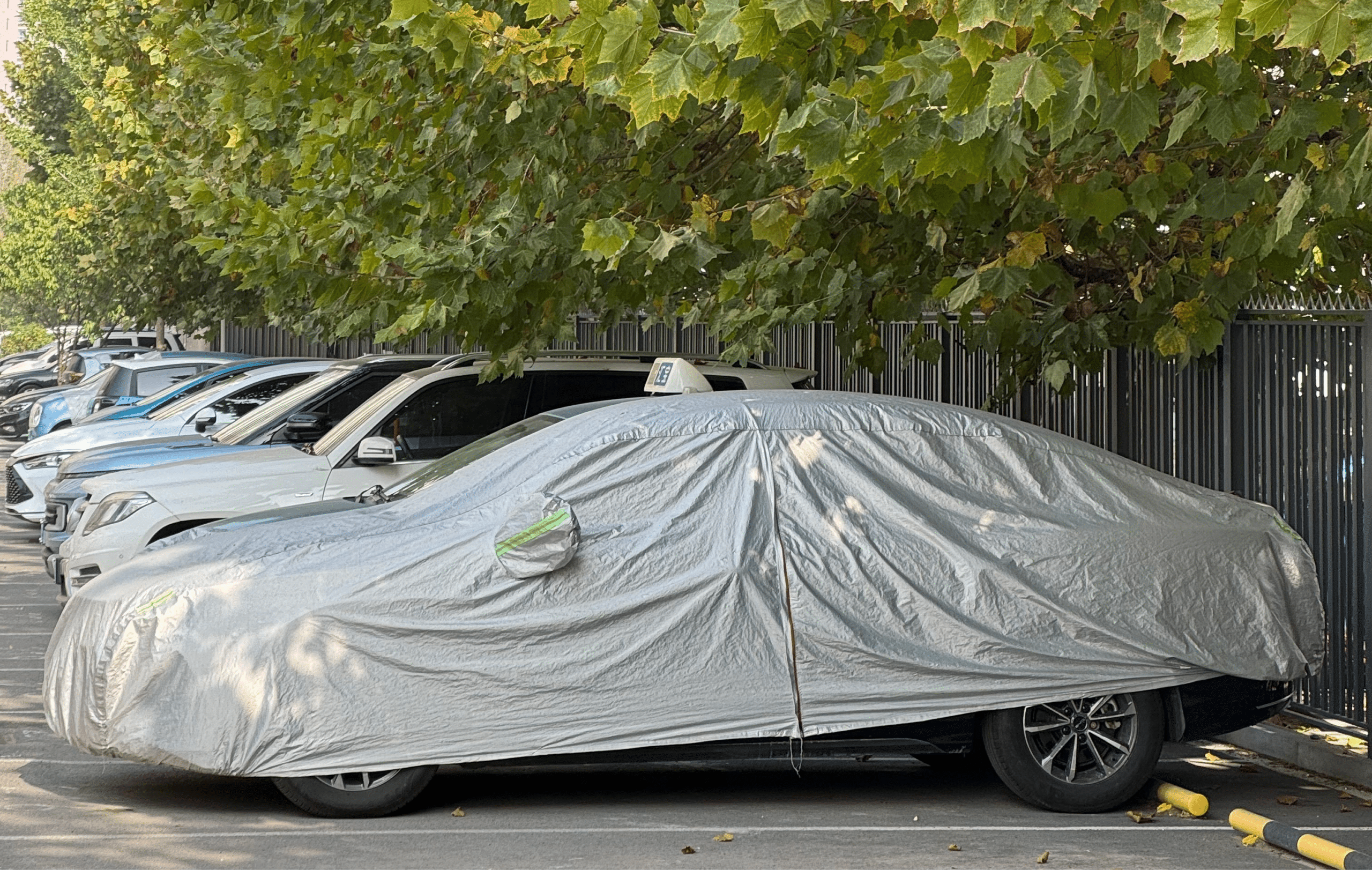
UV rays, acid rain, bird droppings, and tree sap cause cumulative paint damage over a season outdoors. A quality breathable car cover provides real protection against all of these.
The cover must be properly secured; a loose waterproof cover that traps moisture underneath is worse than no cover at all. If you’re deciding between a covered structure and a fully enclosed one instead of relying on a cover alone, carport vs. garage breaks down that tradeoff.
Garage and Home Indoor Storage
A good indoor cover blocks dust and minor abrasion, which is useful. A poor-quality or non-breathable cover in a closed garage, however, traps humidity against the paint. This is where most cover-related damage actually occurs. The section on cover materials below explains how to choose correctly.
Climate-Controlled Storage Unit
In a stable, clean, climate-controlled environment, a car cover is often unnecessary and sometimes counterproductive. This is especially true for vehicles with ceramic coatings or paint protection film (PPF). Leaving the car uncovered is a valid and often superior choice in this setting.
Why the Wrong Car Cover Does More Damage Than No Cover
Most cover failures come down to two distinct mechanisms: moisture trapping and abrasion. Understanding exactly how each one damages paint helps you treat this as a real decision rather than a harmless default.
Moisture Trapping and Condensation Risk
A waterproof cover placed over a car in a closed garage creates a sealed microclimate. As temperatures fluctuate, condensation forms on the paint surface with no path for vapor to escape. The outcomes are specific: rust at existing chip sites, paint blistering on panels, and water spotting on glass and chrome.
ASTM B117 humidity testing standards establish that trapped moisture environments accelerate oxidation significantly compared to open-air exposure. SAE International’s guidance on corrosion in enclosed automotive environments supports the same mechanism. Over multi-month or seasonal storage, the duration amplifies the effect considerably.
The risk is highest when:
- The cover is fully waterproof with no moisture vapor transmission rating
- The garage or storage space is sealed and unventilated
- The vehicle sits covered for more than a few weeks
Cover Abrasion and Paint Scratching
A car cover cannot be cleaner than the surface beneath it. Microscopic grit trapped between the cover and the paint moves with any flex of the fabric. Wind, vibration from nearby vehicles, or simply removing the cover drags those particles across the finish.
This risk is independent of cover material quality. Even a soft flannel cover on a dirty car will cause fine swirl marks and scratches and abrasions over time. Paint correction is the only way to remove them. Cleaning the paint surface before covering is not optional.
How to Choose the Right Car Cover for Your Storage Situation
Breathability is the most important specification to understand before buying a cover. ASTM E96 defines moisture vapor transmission rate (MVTR) as the measurable property that determines how well a fabric allows water vapor to pass through while blocking liquid water. A high MVTR is what you need for indoor or garage storage; a lower MVTR with UV-resistant outer layers is appropriate outdoors.
| Material | Best Environment | Breathability | Key Benefit | Key Risk |
| Woven polypropylene | Indoor/garage | High | Lightweight, allows vapor escape | Minimal UV protection |
| Non-woven spunbond | Indoor/garage | High | Soft, dust-blocking | Not suitable for outdoor use |
| Multi-layer laminate | Outdoor | Medium | UV and weather resistance | Varies by construction quality |
| Waterproof polyester | Short-term outdoor only | Low | Rain protection | Traps moisture over extended use |
Indoor Covers: What to Look For
Indoor car covers should be lightweight, breathable, and soft-lined:
- Material: Polypropylene or polyester in a woven or non-woven spunbond construction.
- Primary job: Blocking dust and debris, not weatherproofing.
- Inner lining: Satin or flannel reduces the risk of micro-scratches from incidental cover contact.
Waterproofing is irrelevant for indoor storage and may introduce moisture risk. If the label says “100% waterproof” and carries no breathability rating, it belongs outdoors for short-term rain protection, not inside a closed space for months.
Outdoor Covers: What to Look For
Outdoor covers need a few specific things:
- UV resistance and multi-layer construction.
- Breathability, enough to prevent condensation pooling under the fabric. A fully waterproof outer layer is fine as long as the cover has a breathable inner layer that allows vapor transmission.
- Custom fit over universal, since it reduces wind-induced movement and abrasion against the paint.
Covers marketed as “100% waterproof” with no breathability rating protect against a single rain shower. They are not suitable for extended outdoor storage.
Pre-Cover Prep: Why You Should Never Cover a Dirty Car
A car cover applied over a dirty car is worse than no cover at all. The cover locks in whatever contaminants are present and turns them into abrasives, an effect that compounds the longer the vehicle stays covered, in any storage environment.
If you’re weighing a professional storage facility against home garage storage, how much storage costs is a practical starting point for that comparison.
Washing and Decontamination Before Storage
Follow this sequence before covering any car for storage:
- Full hand wash to remove surface dirt and loose debris.
- Clay bar or chemical decontamination to remove bonded contaminants like iron fallout and tar. A standard wash alone will not remove these. If the paint feels rough after washing, bonded contamination is still present.
- Rinse and dry completely. Surface moisture trapped under a cover contributes directly to condensation risk.
- Apply paint sealant or carnauba wax to create a physical barrier between the paint surface and the cover material.
- Inspect the cover itself. A dirty or damp cover should be washed and fully dried before reuse.
Drying and Sealing Before You Cover
A fully dry surface matters more than most owners expect. Moisture in door jambs, under trim, and in panel gaps can contribute to trapped humidity under a cover. A coat of paint sealant or wax before storage slows oxidation at any existing paint chips and provides a barrier between the clean car surface and the cover material.
Long-Term vs. Seasonal vs. Short-Term: Does Duration Change the Answer?
Duration changes the risk calculation significantly. A cover decision that carries negligible risk over two weeks can cause real damage over six months.
Short-Term (Days to Weeks)
Cover risk is low over short durations. The main benefit is blocking dust and debris. Material quality matters less over days or a few weeks than it does over months. No cover is also a reasonable option in a clean indoor environment.
Seasonal Storage (One to Six Months)
This is the scenario where prep, material, and environment combine to either protect or damage the car:
- Storing outdoors for a season: Use a multi-layer breathable car cover over a clean, sealed surface.
- Storing in a garage: Evaluate whether a cover adds meaningful benefit over a clean, dry, enclosed space.
For owners storing a car away from home during this period, whether a classic or collector car parked during winter or a second vehicle sitting unused, a climate-controlled storage unit removes the primary environmental stressors a cover is meant to address. RecNation’s covered storage options are designed for exactly this use case, keeping vehicles in stable conditions without asking a cover to do the work of a controlled environment.
Long-Term Storage (Six Months or More)
Any cover shortcut over a long duration compounds. In a climate-controlled facility with stable humidity and clean air, no cover is often the better choice. Many professional restorers working with classic or collector cars recommend skipping the cover entirely in a clean, controlled environment, relying instead on a quality dehumidifier and periodic inspection.
If a cover is desired for long-term storage, it needs to check every box:
- Breathable
- Clean
- Custom-fit
- Applied to a fully prepped surface
A non-breathable cover in any environment over six months is a meaningful risk to both paint protection and the underlying metal.
One important note for owners with ceramic coatings or PPF: several major coating installers, including Gyeon and IGL Coatings, address car cover use in their warranty documentation, in some cases listing cover-related scratching as an excluded damage type. Contact your installer before using any cover, since certain materials in contact with coated surfaces can affect warranty terms.
Final Thoughts on Car Covers and Storage
If you’re storing a car for more than a few weeks and want to reduce the variables around cover choice, prep protocol, and humidity risk, the storage environment itself matters more than any cover decision.
RecNation car storage offers climate-controlled and covered storage options designed for vehicles that need more than a driveway can provide. Getting the environment right means the cover question largely takes care of itself.
Frequently Asked Questions
Is it better to store a car with or without a cover?
It depends on the storage environment. In a climate-controlled indoor storage unit with clean, stable air, leaving the car uncovered is often the better choice, particularly for vehicles with ceramic coatings or PPF. In outdoor or unheated garage storage, a quality breathable car cover provides meaningful protection from UV rays, dust and debris, and environmental contaminants. The storage environment determines whether a cover adds protection or introduces new risk.
Should you use a car cover in a garage?
A car cover in a garage can be useful for blocking dust, but only if the cover is breathable and the car surface is clean before covering. A non-breathable cover in a closed garage traps humidity against the paint, which can accelerate rust and corrosion over multi-month storage. If you use an indoor cover, look for a lightweight woven polypropylene or non-woven spunbond material with a soft inner lining, not a fully waterproof outdoor cover.
Can a car cover cause rust or paint damage?
Yes. A non-breathable car cover traps moisture and condensation against the paint and any exposed metal, creating a humid microclimate that accelerates oxidation and paint blistering over time. Separately, a cover applied over a dirty surface traps grit particles that act as abrasives and cause fine scratches whenever the cover moves. Both types of damage are preventable with the right cover material and proper pre-cover surface preparation.
What type of car cover is best for long-term storage?
For long-term indoor storage, a breathable cover made from woven polypropylene or non-woven spunbond with a soft flannel or satin lining is the appropriate choice. For long-term outdoor storage, a multi-layer cover with UV-resistant outer layers and sufficient breathability to allow moisture vapor to escape is correct. Fully waterproof covers without a breathable inner layer are not suitable for extended use. In either case, a custom-fit cover is preferable to a universal cover because it reduces wind-induced movement and abrasion.
Should you put a car cover on a wet car?
No. Covering a wet car traps moisture directly against the paint and undercarriage, creating ideal conditions for rust and corrosion to develop, especially during seasonal storage when weeks or months may pass before the cover is removed. Always wash, decontaminate, and completely dry the car before applying a cover. This applies to both indoor and outdoor storage situations.