If you boat on Lake Ray Hubbard and live in or near Rockwall, your two main storage categories are marina slip storage and land-based dry or covered storage. Each fits a different usage pattern and budget.
This guide compares the real options near the lake’s eastern shore so you can match the right choice to how often you actually go out.
Your Storage Options Near Lake Ray Hubbard at a Glance
Before diving into the details, here is a quick look at the main facilities serving Rockwall-area boaters. (If cost is still the open question for you rather than location, is vehicle storage worth it breaks down that math separately.)
| Facility | Location | Storage Type(s) | Best For |
| Captain’s Cove | Garland (west shore) | Marina slip, covered/uncovered slip, dry stack storage | Frequent boaters wanting on-water access |
| Chandler’s Landing | Rockwall (east shore) | Marina slip | Rockwall boaters wanting water-side convenience |
| Party Barn | Wylie | Covered, enclosed, uncovered | Seasonal boaters between Lake Lavon and Lake Ray Hubbard |
| RecNation (Wylie) | Wylie, ~6 mi from Rockwall | Covered, enclosed dry storage | East-shore boaters wanting secure land-based storage within a short trailer haul |
Rockwall boaters launching from Chandler’s Landing Park or the Rockwall Harbor area are well-positioned for land-based storage within a short trailer haul. Facilities within five to ten miles of those ramps keep your rig close without requiring a long drive every time you want to go out.
Boaters who want to be on the water the moment they arrive should weigh the marina slip premium carefully. For everyone else, land-based covered or enclosed storage offers better hull protection and lower monthly storage rates.
Marina Slip vs. Dry Storage: Which Fits How Often You Boat?
The usage-frequency rule is straightforward. How often you’re actually on the water decides which option wins:
- Two or three times per week or more: A slip saves you the time and hassle of trailering on every trip.
- Weekends or a handful of times per month: Land-based covered or enclosed storage typically costs less and keeps the hull out of the water between sessions.
Prolonged water exposure accelerates hull growth and corrosion on both fiberglass and aluminum hulls, so infrequent boaters often come out ahead with dry stack storage even after factoring in trailer fuel.
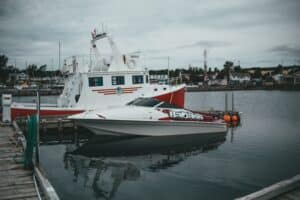
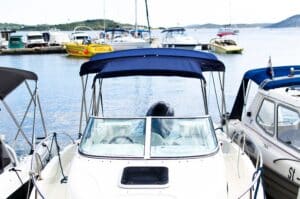
Marina Slip Storage at Captain’s Cove and Chandler’s Landing
For Rockwall-area boaters who want immediate boat launch access, two marina storage options bookend the lake.
Captain’s Cove (5965 Marina Dr, Garland) sits on the western shore and offers the most comprehensive marina storage package on Lake Ray Hubbard. According to the Captain’s Cove amenities page, slip rentals range from 22 to 50 feet in both covered and uncovered configurations, with wet and dry storage available. On-site amenities include a boat launch, fuel dock, pump-out station, and a marine store.
Chandler’s Landing (1 Harborview Dr, Rockwall) is the east-shore option and the most convenient marina for Rockwall residents by geography alone. Its Rockwall address eliminates the cross-lake drive required to reach Captain’s Cove in Garland and Rowlett territory. Slip pricing at both facilities is not publicly listed and requires a direct inquiry.
There’s a real trade-off to understand here: a wet slip keeps the hull in constant contact with water, and that contact comes at a cost. Algae growth, zebra mussel attachment in affected Texas waters, and electrolytic corrosion around metal fittings all become ongoing concerns, and all of them mean more frequent maintenance than dry storage requires.
What to Ask Before Booking a Marina Slip
A slip is a bigger monthly commitment than land-based storage, and it’s harder to walk back once you’ve signed. Before committing to one, get clear answers on the following:
- Slip dimensions: Confirm the slip length and beam clearance match your boat’s overall size, including any swim platforms or outboard motors.
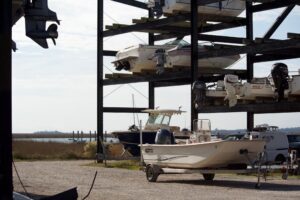
- Dry storage availability: Ask whether the marina offers dry stack storage as a backup when the slip is not in use seasonally.
- Insurance coverage: Clarify whether the marina’s liability policy covers your vessel or only the dock and common areas.
- Fuel dock hours: Confirm whether the fuel dock is open year-round or only during peak season.
Land-Based Boat Storage Near Rockwall: Covered, Enclosed, and Uncovered
Land-based RV and boat storage near Rockwall comes in three tiers, and picking the right one comes down to how much North Texas weather you’re willing to let your boat sit through.
Uncovered Outdoor Storage
It’s the cheapest option on the list, but that low price tag comes with real exposure in this climate:
- UV damage: North Texas summers bring a UV index that regularly exceeds 10, which accelerates gel coat oxidation on fiberglass hulls left uncovered.
- Hail risk: Hail events are common in Rockwall County and can cause surface damage to exposed fiberglass, canvas, and electronics.
Uncovered outdoor boat storage is most appropriate for aluminum hulls or boats stored on a properly strapped trailer with a well-fitted cover. Keep in mind that facility liability policies do not typically cover hail or weather damage to individual vessels, so your marine insurance must remain active.
Covered Storage
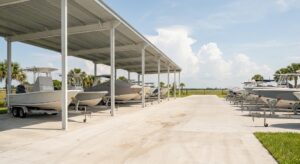
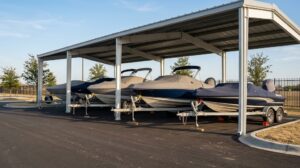
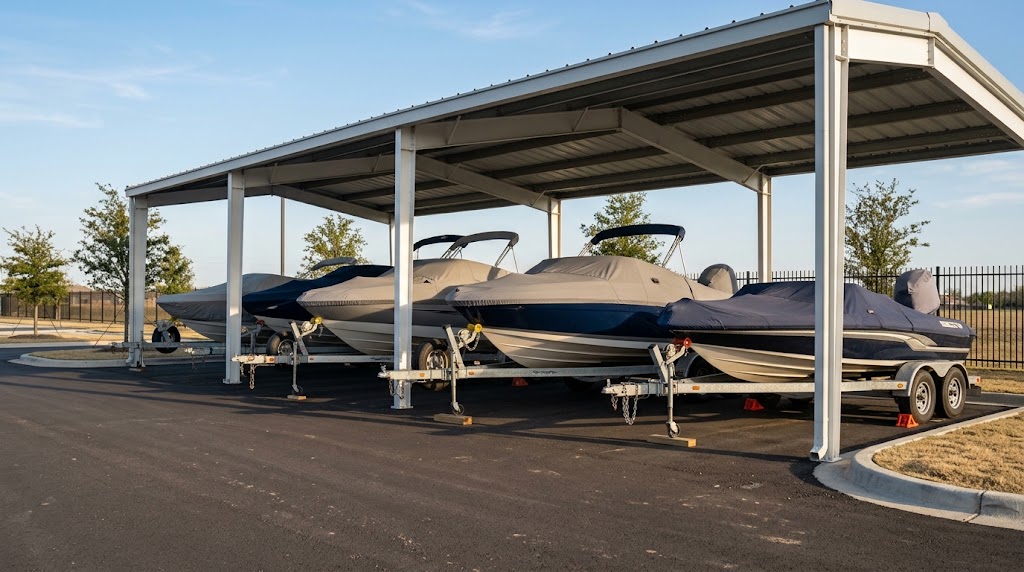
For most Rockwall-area boaters storing between spring and fall, this is the sweet spot. A roof blocks the worst of the sun and rain without sealing the boat off entirely.
- Ventilation matters: Trapped moisture under a cover without airflow can accelerate mildew on canvas and upholstery.
- Best fit: The carport and covered storage format works well for fiberglass hulls on trailers with a seasonal storage window, balancing cost with meaningful protection.
Party Barn in Wylie offers covered storage as one of its tiers for boaters storing between Lake Lavon and Lake Ray Hubbard.
Enclosed Storage
If you want your boat to come out of storage looking the way it went in, this is the tier that actually delivers on that:
- Full weather isolation: No UV exposure, no hail risk, and no temperature-driven expansion and contraction stress on hull fittings and through-hull components.
- Industry backing: The American Boat and Yacht Council (ABYC) recommends controlled storage conditions for boats with significant electronics investments and wood accents specifically to reduce moisture-related degradation.
- Best for: Higher-value vessels and pontoon and bass boat storage when the boat carries a significant electronics package.
Enclosed storage typically costs more per month, but it reduces annual detailing, boat winterization, and maintenance expenses for owners with higher-value vessels.
RecNation’s nearest facility, about 6 miles away in Wylie, offers covered and enclosed storage for boats and trailers, with gated access and 24-hour security surveillance, making it one of the closer land-based options to the lake’s eastern launch ramps.
What Texas Law Requires Before You Store Your Boat
Two legal obligations affect Rockwall boaters entering a storage contract, and neither shows up on a facility’s listing page: registration compliance and lien risk.
Registration Renewal for Stored Vessels
Your paperwork matters before you even call a facility. The Texas Parks and Wildlife Department requires all motorized boats operated or launched in Texas to maintain current registration under Texas Parks and Wildlife Code Chapter 31, and many boat storage facilities request proof of current registration before issuing a long-term contract.
If your registration has lapsed, renew it through TPWD’s online portal before approaching any facility. Having current paperwork ready also speeds up the contract process and prevents delays when you’re ready to move the boat.
Protecting Your Boat from Storage Lien Risk
This is the risk most boaters never think about until it’s too late. Under Texas Property Code Chapter 59, the Self-Service Storage Facility Liens statute, a storage facility can place a lien on a stored vessel after a defined nonpayment period. If the debt goes unpaid, the facility can ultimately auction the boat to recover what’s owed. For a boat valued between $20,000 and $100,000, this is a real financial risk, not a hypothetical.
The fix is simple contract hygiene, not vigilance:
- Set up auto-pay when you sign the contract.
- If you travel or spend extended time away, notify the facility in writing.
- Keep the facility’s contact information saved somewhere you can access it remotely.
Boat Insurance During Storage: What Your Policy Actually Covers
Most boat owners assume their existing coverage just carries over into storage, and that assumption is exactly where the gap opens up. Most standard homeowner’s policies either exclude trailered watercraft above a certain hull value or limit coverage to a fraction of the boat’s actual cash value, according to boat insurance and safety guidelines. A dedicated marine policy should remain active during storage, not just during the boating season, so confirm this with your insurer before signing a storage contract.
Storage facility liability coverage, where it exists, typically covers only the facility’s premises and third-party bodily injury. It does not extend to damage to individual vessels stored on site. The Texas Department of Insurance publishes consumer guides on boat and personal watercraft coverage for owners comparing marine policy options.
What Facility Liability Coverage Does and Doesn’t Include
Most gated storage facilities carry general liability insurance covering the property itself, not the vehicles or vessels stored there. Assuming your boat is covered simply because it’s inside a secured, fenced yard is a common and costly mistake.
Before finalizing a storage contract, call your insurer and confirm three things:
- Whether your coverage continues during land storage.
- Whether deductibles or limits change outside the boating season.
- Whether the facility address needs to be added as a storage location on your policy.
Some boat storage facility operators require proof of the owner’s marine insurance as a contract condition.
Where That Comparison Actually Lands for Most Rockwall Boaters
For Rockwall boaters who want their vessel stored close to the lake without paying marina slip prices, RecNation boat storage near Rockwall offers covered and enclosed options with gated access and 24-hour security surveillance within practical trailering distance of Lake Ray Hubbard’s eastern ramps. It’s a straightforward solution for seasonal boaters who want to protect their investment without the ongoing cost and hull-maintenance demands of a wet slip.
Frequently Asked Questions About Boat Storage Near Lake Ray Hubbard
What is the best boat storage option near Lake Ray Hubbard?
The right choice depends on how often you use the boat. If you’re on the water several times a week, a marina slip at Chandler’s Landing in Rockwall or Captain’s Cove in Garland gives you immediate water access without trailering. For weekend or seasonal boaters, land-based covered or enclosed storage near Rockwall typically costs less per month and protects the hull from UV damage and prolonged water exposure. Most recreational boaters launching from the lake’s eastern ramps find covered dry storage the most practical and cost-effective arrangement.
How much does boat storage cost near Rockwall, Texas?
Boat storage near Rockwall costs vary by storage type and facility. Uncovered outdoor storage is the most affordable tier, typically ranging from $50 to $100 per month depending on boat size and location. Covered storage generally runs $100 to $200 per month, while enclosed storage can reach $200 to $400 or more for larger vessels, and marina slip rental pricing at Captain’s Cove and Chandler’s Landing is not publicly listed and requires a direct inquiry. Have your vessel’s overall length including the trailer ready before contacting any facility, since monthly storage rates vary by boat length.
Can I store my boat trailer at a facility near Lake Ray Hubbard?
Yes. Most land-based boat storage facilities in the Rockwall area accommodate boats on trailers, storing the trailer as part of the overall unit. Spaces typically fit larger pontoons and cabin cruisers, but confirm your rig’s specific length and width before booking, since dimensions vary by facility and storage tier. Marina facilities like Captain’s Cove also offer boat trailer storage separately, for owners using wet slips.
What should I look for when choosing a boat storage facility in Rockwall?
When choosing a boat storage facility in Rockwall, prioritize proximity to your preferred Lake Ray Hubbard launch ramp, available storage type, gated security with 24-hour surveillance, and flexible payment options. Verify that the facility accepts proof of current Texas boat registration, a requirement under Texas Parks and Wildlife Code Chapter 31. Check whether your marine insurance policy needs to list the storage address, and ask about the facility’s lien policy under Texas Property Code Chapter 70 so you understand the timeline if a payment is ever missed.
Is there covered or indoor boat storage near Lake Ray Hubbard?
Yes, several land-based facilities on the east side of the lake offer covered and enclosed storage tiers within practical trailering distance of Chandler’s Landing and the Rockwall Harbor launch areas. For on-water marina storage, Captain’s Cove in Garland provides covered and uncovered slip rentals ranging from 22 to 50 feet. Contact each facility directly for current availability and pricing, as covered and enclosed spaces fill faster than uncovered spots, especially heading into spring.