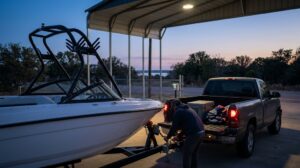
Cape Coral boat owners have several solid storage options near Pine Island Sound and the Gulf. The right one depends on where you actually launch, how often you go out, and what kind of boat you’re running. Maybe you’ve already ruled out keeping the vessel at home, HOA restrictions, no driveway room, or just not wanting it sitting exposed in a residential neighborhood.
If so, the Pine Island Road corridor is where most of your options sit. This guide compares storage types and nearby facilities through the lens of how you actually use the water, not just which lot is cheapest or closest to your house.
Where Cape Coral Boat Owners Actually Launch and Why Storage Location Follows
The geography here matters more than most people realize when they start shopping for storage. A boat stored five miles closer to the water you fish every weekend is worth more than a unit that’s slightly cheaper but adds forty minutes to your Saturday morning.
Cape Coral’s waterway access breaks into two distinct routes, depending on which side of the city you launch from. The northern and western portions of the city connect through Matlacha Pass and onto Pine Island, with SR-78 (Pine Island Road) as the primary corridor. The southern and western sides of Cape Coral access the Caloosahatchee River, which runs west toward the Gulf’s nearshore corridors past Fort Myers Beach and Sanibel.
The Matlacha Pass Corridor
Matlacha Pass is the main navigable route from northern Cape Coral into Pine Island Sound. Trailerable boats staging on Pine Island or in Matlacha can reach open Sound water in minutes after launching. The ramps at Bokeelia, Pineland, and Pine Island Center all feed directly into the Sound, putting you within reach of Cayo Costa State Park and Boca Grande Pass without a long run through congested waterways. If these are the areas you fish or cruise most, storage positioned along the Pine Island Road corridor compresses your door-to-water time significantly.
Gulf Access from Cape Coral’s Southwest Waterways
Not every Cape Coral boater runs Pine Island Sound. Some owners prefer the Caloosahatchee route instead, heading southwest toward Gulf of Mexico access points near Sanibel or Fort Myers Beach. For those owners, storage on the southern or western side of Cape Coral often serves them better than anything on Pine Island.
The trade-off is honest: Pine Island storage is ideal for Sound-focused trips. But it adds unnecessary tow time if your regular destination is offshore via the Caloosahatchee. Know your primary water before you commit to a storage location.
Types of Boat Storage Available Near Pine Island Sound
Before evaluating specific facilities, it helps to understand the three storage formats you’ll actually encounter in this corridor. Each involves a different trade-off between cost, protection, and convenience for the owner.
Outdoor Uncovered Trailer Storage
Outdoor uncovered boat storage is the most widely available format in the Pine Island and Cape Coral area, and it sits at the lowest cost tier. You retain your trailer, haul the boat yourself, and launch on your own schedule with no facility coordination required. The downside in a coastal Gulf environment is real. UV exposure degrades gel coat and upholstery faster than most owners expect. Salt air drives corrosion into metal fittings, hardware, and outboard components year-round. A quality, properly fitted boat cover is the minimum protection layer for any vessel stored outside in Lee County.
Covered and Carport-Style Storage
Covered boat storage shields your vessel from direct sun and rain while keeping trailer ownership and maintenance your responsibility. The protection benefit is meaningful in Southwest Florida’s UV intensity, but covered storage near the water is less available than open-lot space in this corridor, so inventory is tighter. Before reserving a covered slip, confirm the facility’s height and length clearances against your boat’s actual dimensions. These constraints vary by facility and are rarely posted clearly online.
Dry Stack Storage
Dry stack storage racks your boat inside a covered or enclosed structure. The facility launches and retrieves it for you on request, which eliminates trailer ownership entirely. This format suits powerboats generally under 35 feet and works well for owners who plan trips in advance rather than deciding to go at 5 a.m. because the forecast looks good. If spontaneous launches around early tides or calm-wind windows matter to you, the scheduling requirement of dry stack storage is a real constraint worth weighing before committing.
What to Look for in a Facility Before You Sign
Once you’ve narrowed down a storage type, evaluating a specific vehicle storage facility on substance rather than price alone protects you from problems that only surface after a storm or a damage claim. Work through these points before signing any monthly agreement.
- Insurance and liability coverage: Ask whether the facility carries bailee’s insurance or whether damage liability falls entirely on your own marine policy. Florida does not require commercial storage operators to hold bailee’s liability coverage, so verify this point directly.
- Storm tie-down protocol: Ask whether the facility has a documented procedure for securing vessels before a named storm, what triggers it (a watch or a warning), and what the rental agreement requires of you.
- Gate access hours: For boaters launching at first light around tides or calm-wind windows, 24/7 gate access matters more than office hours. Confirm whether access is available around the clock or only during posted times.
- Security infrastructure: Ask about camera coverage and gate security specifics. A general “we have security” answer is not sufficient.
- Vessel size confirmation: Verify maximum length, beam, and height clearances against your actual boat dimensions before reserving. Facilities rarely post these constraints clearly on their websites.
If you’re still working through which format fits your situation, RecNation offers boat storage in Fort Myers, about 9 miles from Cape Coral, for owners who want a dedicated vehicle storage specialist rather than a general self-storage operator.
Insurance and Liability Gaps at Boat Storage Facilities
Florida does not require commercial boat storage operators to carry bailee’s liability coverage. That means if your vessel is damaged on a facility’s property by another vehicle, a falling tree, or a security failure, your own marine insurance policy typically bears the claim, not the facility’s.
The Florida Department of Financial Services provides guidance on commercial insurance obligations; reviewing it before you sign a storage agreement tells you exactly what coverage the operator is and is not required to carry. Ask for a copy of the facility’s insurance certificate, and confirm with your own marine insurer what protection extends to a vessel stored at a commercial lot.
Storm Preparedness: What to Ask Before Hurricane Season
Lee County sits in one of the most frequently impacted hurricane corridors in the continental United States. This isn’t a minor risk. According to NOAA’s National Hurricane Center, Southwest Florida’s Gulf Coast has a documented history of direct and near-direct storm impacts.
Pine Island itself sustained severe damage during Hurricane Ian in 2022. Before committing to any facility, ask three things: does it have documented tie-down procedures for stored boats, what storm event triggers those procedures, and who the rental agreement holds responsible for securing your vessel. This is not an edge case in Lee County. It’s a standard part of evaluating a storage location.
Nearby Storage Options in the Pine Island Sound Corridor
The Pine Island Sound corridor supports a range of RV and boat storage facilities, from marina-affiliated operations to standalone outdoor lots. The three facilities that competitors most consistently surface for this area each serve a slightly different boater profile.
Four Winds Marina: Bokeelia, Pine Island
Four Winds Marina sits at the northern tip of Pine Island in Bokeelia, which positions it as close to Cayo Costa State Park and Boca Grande Pass access as any facility in this corridor. As a marina operation, it may offer wet slip marina options in addition to trailer storage, though storage-specific offerings and current availability should be confirmed directly with the facility. Boaters whose primary destinations are the northern Sound channels, Cayo Costa, or offshore runs through Boca Grande Pass will find Bokeelia’s location genuinely advantageous in terms of minimizing tow and launch time.
Sunset Dreams Marine Center: Pine Island Road
Sunset Dreams Marine Center sits on Pine Island Road between Matlacha and Pine Island Center, making it accessible directly off the SR-78 corridor that most Cape Coral boaters already travel to reach the Sound. The facility offers outdoor boat and trailer storage, a wash-down station, and 24/7 surveillance.
The wash-down station is a practical feature for saltwater users who want to rinse down after every outing. The genuine differentiator here is an on-site mechanic. Owners can arrange service between trips without towing to a separate yard, which saves both time and hassle during a busy season. Specific boat storage monthly rates should be confirmed directly with the facility, as pricing varies by vessel size.
24/7 Store It: St. James, Pine Island
Located at Doug Taylor Circle in St. James at the southern end of Pine Island, 24/7 Store It offers outdoor trailer boat storage with around-the-clock gate access. The 24/7 access is the primary differentiator here. For owners who make launch decisions based on tide windows and early-morning forecasts rather than a fixed weekly schedule, uninterrupted gate access matters. St. James sits just off Pine Island Road, keeping the drive from Cape Coral straightforward for owners already heading west on SR-78.
Seasonal and Tidal Factors Cape Coral Owners Should Plan Around
Two realities shape the storage decision for Cape Coral boat owners beyond simple proximity: the shallow-water character of Pine Island Sound, and the June-through-November hurricane season that affects every vessel left in outdoor coastal storage.
Tidal Access at Pine Island Sound Ramps
Pine Island Sound is a shallow-water estuary, and depths vary considerably by channel and by ramp. A boat with a deeper draft can find itself waiting for the tide even after reaching the ramp. If you’re storing near a specific launch point, check that ramp’s low-water depth against your boat’s draft before assuming you can launch on any schedule. NOAA nautical charts are the most current and practical resource for checking real depths at a specific channel or ramp.
Hurricane Season Storage Decisions
Hurricane season runs June through November in Southwest Florida, and Lee County’s position in the Gulf storm corridor makes this a practical planning issue, not an abstract one. Per NOAA Atlantic hurricane track data, the frequency of Gulf Coast storm tracks affecting Lee County is among the highest in the continental United States. Some Cape Coral boat owners move vessels to inland storage or arrange a haul-out before peak season in August and September. Leaving a trailered boat in open coastal storage through those months is a risk decision, and it should be treated as one rather than a default.
Store Near the Water You Actually Use
Most boat owners pick storage based on which lot they drove past last week. You’ve done something different: worked through launch routes, storage formats, insurance gaps most facilities won’t volunteer, and what hurricane season actually demands of a stored vessel.
RecNation’s nearest facility, about 9 miles away in Fort Myers, specializes in vehicle storage rather than general self-storage. The setup, from drive-up access to trailer-sized bays, is built around exactly the use pattern you’ve been planning for. Availability and sizing are worth a direct conversation now, while you still have options ahead of the season.
Frequently Asked Questions About Boat Storage Near Pine Island Sound
What are the best boat storage options near Pine Island Sound for Cape Coral residents?
It depends mainly on which water you’re headed to and how you launch. The Pine Island Road corridor offers outdoor uncovered trailer storage, covered carport-style storage, and marina-affiliated facilities with wet slip or dry stack options. Sound-focused boaters, or those heading to Cayo Costa, get the shortest tow from storage near Pine Island itself; owners running the Gulf via the Caloosahatchee often do better storing elsewhere in Cape Coral.
How much does boat storage cost near Cape Coral and Pine Island Sound?
Outdoor uncovered storage is the cheapest tier here, covered storage costs more, and dry stack with on-demand launch service runs highest. Rates shift by vessel size and season, a 22-foot center console won’t price the same as a 28-foot cabin cruiser at the same facility, so contact facilities directly for current numbers rather than relying on a posted range.
What is the difference between dry stack and wet slip storage in Southwest Florida?
The short version: dry stack keeps your boat out of the water on a rack until you call ahead for a launch; a wet slip keeps it in the water full-time at a dock. Dry stack means no trailer to own or maintain, but you’re planning trips around the facility’s launch schedule instead of your own. A wet slip trades that planning requirement for constant saltwater immersion, which brings its own hull maintenance and corrosion costs over time.
Are there hurricane-rated boat storage facilities near Pine Island Sound?
There’s no such thing, officially, at least not in Florida. No storage facility carries a government “hurricane-rated” certification, so the label means nothing on its own. What actually protects your boat is whether the facility has a written tie-down plan, knows what triggers it, and spells out your responsibilities in the lease, questions worth asking directly, especially in a county that’s taken direct hits as recently as Hurricane Ian in 2022.
How do I get my boat from Cape Coral storage to Pine Island Sound quickly?
West on Pine Island Road (SR-78) through the Matlacha bridge is the most direct route for most Cape Coral boaters, landing you at ramps in Bokeelia, Pineland, or Pine Island Center. Storing along that corridor, or on the island itself, cuts out the drive through Cape Coral traffic before you even reach the bridge, which is usually the biggest time variable in an early-morning launch.