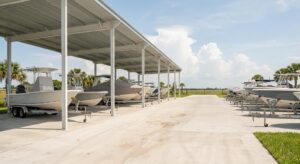
Frisco boat owners have real, accessible storage options near both Lewisville Lake and Lavon Lake, and the right choice depends on which water you use and how often you launch. If you’re trailering the boat back to Frisco after every trip, you’re adding time and mileage you don’t need.
This guide covers the main storage formats available near each lake, with enough geographic and practical detail to help you make a decision without making phone calls blind.
Which Lake Makes More Sense for Frisco Boat Owners
Most Frisco residents default to Lewisville Lake, and the geography supports that choice. The lake sits to the southwest of Frisco, and from central Frisco you’re typically looking at 20 to 30 minutes depending on traffic and which ramp you’re headed to. That’s a manageable drive, especially if your boat is already stored near the water rather than sitting in a neighborhood where homeowners association (HOA) rules may make that impossible anyway.
Lavon Lake is the alternative that most storage guides miss entirely. It sits roughly 20 to 25 miles east of Frisco, in the direction of Wylie and Lavon.
If you live on the east side of Frisco or commute that direction, Lavon Lake can actually be the more convenient choice. The tradeoff is that storage infrastructure near Lavon is less developed, which means fewer options and sometimes less availability.
Getting to Lewisville Lake from Frisco
The Little Elm Park boat launch ramp on the western shoreline of Lewisville Lake is one of the most accessible entry points for Frisco owners. From central Frisco, expect roughly 20 to 30 minutes under normal traffic conditions, on the shorter end if traffic is light. Storing your boat near that ramp rather than at home removes a significant portion of that drive from your trip entirely.
Lavon Lake as an Eastern Alternative
Collin Park and the East Fork area give east-side Frisco owners boat launch ramp access on Lavon Lake. Storage options nearby are fewer than on the Lewisville side, so pricing and availability can be tighter. If you use Lavon Lake regularly, call facilities in the Wylie and Lavon areas directly rather than assuming your only option is the longer drive west.
Types of Boat Storage Available Near Both Lakes
The North Texas lakes region offers several distinct storage formats, and calling a facility without knowing which type you’re asking about wastes time on both sides. Many facilities near these North Texas lakes serve RV and boat storage customers across multiple vehicle types, so confirming what’s available for your specific boat size and setup matters before you commit.
Marina Slip Rentals on Lake Lewisville
Marina storage at Lake Lewisville means your boat stays in the water at a dock slip, which is the most convenient option if you’re launching multiple times per week. Cottonwood Creek Marina in Little Elm is a real, operating example of this format: it offers covered and open slip options, HydroHoist lifts for select slips, and dock amenities including fuel access.
The catch is the contract structure. Marina slips at Lake Lewisville typically require 12-month non-refundable contracts. That means you’re paying for the full year regardless of how often you use the boat.
They also require a minimum liability insurance policy, often $300,000 or more. Standard homeowner’s policies in Texas frequently exclude watercraft above a certain horsepower or length, according to the Texas Department of Insurance. A separate marine liability policy may be required as a result.
Confirm the insurance requirement before you sign anything. And if you’re leaning toward Lavon Lake, keep in mind marina slips are harder to come by there, since the east side simply has fewer developed facilities than Lewisville.
Dry Stack Storage Near the Water
Dry stack storage is a racked indoor system typically found at larger marina operations. Your boat is stored on a rack in a warehouse structure near the water. When you’re ready to launch, you call ahead, and the facility retrieves your boat by forklift and has it ready at the water. You come back in, and they rack it again.
It eliminates the need to own or manage a trailer, and it reduces the time between arrival and being on the water. The tradeoff is cost: dry stack storage runs higher than covered outdoor storage at a dedicated facility. It’s also not widely available near Lavon Lake, so this format is largely a Lewisville-side option.
Covered and Enclosed Storage at Dedicated Facilities
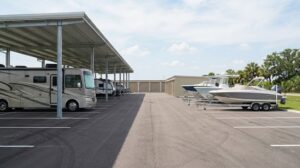
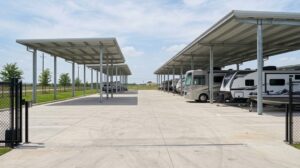
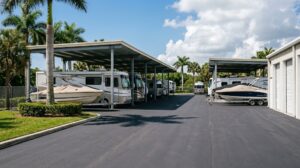
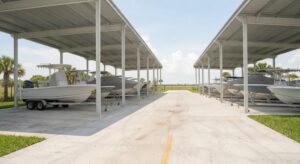
Dedicated boat storage facilities away from the marina, often marketed as a self-storage facility for large vehicles, offer a practical middle ground for owners who don’t need daily water access. Here’s what this format typically includes:
- Overhead protection: Carport and covered storage shields your boat from the Texas sun and UV.
- Security: Gated access keeps the facility secured, unlike an open marina lot.
- Trailer storage: Space to store your boat on its trailer in the same spot, so you’re not paying separately for trailer parking.
- Contract terms: Month-to-month agreements are common here, a contrast to the 12-month commitments marina slips require.
- Pricing: Covered storage typically runs $80 to $200 per month for a standard recreational boat in the North Texas area. Enclosed or indoor storage costs more but adds full weather protection, worth it for boats with sensitive electronics or finished interiors. Rates vary by facility and unit size, so confirm current pricing directly before signing.
- Seasonal fit: For seasonal boat storage between fall and spring, this format offers flexibility marina contracts don’t.
RecNation’s nearest facility, approximately 28 miles away in Wylie, offers covered and enclosed boat storage options for Frisco owners with gated security access and space for your trailer in the same spot. Its location on the east side of the metro puts it closer to Lavon Lake than to Lewisville Lake, so factor that into your drive time. Pricing should be confirmed directly with the facility.
What to Look for in a Boat Storage Facility Near Frisco
Once you’ve decided a dedicated vehicle storage facility is the right fit over a marina slip, the next step is evaluating specific options near Lewisville or Lavon Lake. Not all facilities are set up equally for boats, and asking the right questions before signing saves a frustrating call on a Saturday morning.
Security Features That Matter for Boat Storage
Real security at a boat storage facility means more than a locked gate. Here’s what to check before you sign:
- Gated entry: Confirm whether the gate uses individual access codes or a shared code. Individual codes create an access log; shared codes do not.
- Camera coverage: Ask whether cameras cover both the perimeter and the interior drive lanes, not just the entrance.
- On-site management: Find out whether the facility is staffed during access hours or monitored remotely.
- Perimeter fencing: Check whether the fencing extends around the full property, including any back or side areas where covered units back up to an exterior boundary.
Access Hours and Drive-Up Convenience
Early-morning launch days are a real use case for boat storage, and access hours can make or break the convenience of a facility. Here’s what to confirm:
- Staffed vs. gate hours: Some facilities advertise extended hours but keep staffed-only access for the gate or office on weekends and holidays, so ask about both separately.
- Weekend and holiday access: Confirm that weekend and holiday hours match the times you’ll actually want to retrieve your boat.
- Drive-up clearance: Confirm the facility can accommodate your boat’s total length, including the trailer tongue and the outboard motor in the tilted position; many owners underestimate their true storage footprint when the motor is raised for trailering.
- Trailer storage terms: Ask whether boat trailer storage is included in the spot or priced as a separate add-on.
Texas Registration Requirements During Boat Storage
Under the Texas Water Code (Chapter 31), all motorized vessels operated on Texas public waters must carry a valid Texas Parks and Wildlife Department (TPWD) Certificate of Number. The registration clock keeps running while the boat sits in a facility.
What Happens If Your Registration Lapses While the Boat Is in Storage
If your TPWD certificate expires during a storage period, you cannot legally re-launch without renewing first. That’s the straightforward consequence. The less obvious one is insurance: some boat insurance policies condition coverage on the vessel maintaining a current registration. A lapse during storage can create a coverage gap even while the boat isn’t on the water and isn’t being used.
The fix is simple. Set a calendar reminder before your certificate’s expiration date. Renew through TPWD before the deadline rather than assuming storage means the clock stops. A late renewal may also carry a fee, which is an easy cost to avoid with a timely reminder. Storage facility staff cannot advise on registration compliance, so this is entirely the owner’s responsibility.
Flood Risk and Facility Location Near Lake Lewisville
Proximity to the water is convenient for launching. It can also mean proximity to a mapped flood zone, which affects your stored boat’s insurance coverage in ways a marina contract won’t warn you about.
Lake Lewisville is managed by the U.S. Army Corps of Engineers, Fort Worth District, which controls the lake’s pool elevation and releases water during heavy rainfall events. That matters if you’re storing near the shoreline: some facilities sit within Federal Emergency Management Agency (FEMA)-mapped 100-year Special Flood Hazard Areas covering Denton and Dallas counties.
Standard commercial storage contracts usually cover the structure, not what’s inside it, so your boat’s coverage in a flood event comes down to your own marine insurance policy, not the facility’s.
How to Check Whether a Storage Facility Is in a Flood Zone
Checking if a facility floods takes almost no effort. Two steps are enough to rule it out before you sign anything:
- Look up the facility’s street address at the FEMA Flood Map Service Center, which shows whether the address falls within a designated Special Flood Hazard Area.
- Ask the facility manager directly whether the property has had any flood-related incidents and what the storage contract says about contents coverage.
This isn’t an alarmist check. Lewisville Lake flooding of storage areas is not a regular event. It’s a five-minute step that a careful owner should take before signing, and no competitor-ranking page covers it.
Storing Your Boat Near the Lakes You Actually Use
Frisco boat owners are choosing between marina slips with 12-month contracts, dry stack storage limited mostly to the Lewisville side, and dedicated covered or indoor boat storage with more flexible terms. The right format depends on how often you launch, which lake you use, and how much you need waterside convenience versus secure, weatherproof protection during the long stretches between trips. Boat winterization and seasonal storage between fall and spring also factor into that decision, since a covered or enclosed unit protects against UV and temperature extremes far better than an open lot.
Once you’ve made that call, don’t let your boat sit exposed while you figure out the details. RecNation’s nearest boat facility is about 28 miles away in Wylie, with covered and enclosed storage, gated access, and room for your trailer. Your boat stays protected and ready for the next trip to Lewisville Lake or Lavon Lake. Reach out directly to check availability, unit sizes, and current pricing.
Frequently Asked Questions
What is the closest boat storage facility to Lewisville Lake for Frisco residents?
The closest boat storage options to Lewisville Lake sit in the Little Elm and Lewisville areas, roughly 20 to 30 minutes from central Frisco depending on traffic. Cottonwood Creek Marina in Little Elm offers on-water slip rentals for owners who want waterside access, while dedicated vehicle storage facilities serving the Frisco market provide covered and enclosed alternatives for those who don’t need a dock slip year-round. Contact facilities directly to confirm current availability and whether boat trailer storage is included.
How much does boat storage near Lewisville Lake cost per month?
Covered boat storage near Lewisville Lake typically runs $80 to $200 per month for a standard recreational boat, with enclosed units priced higher. Marina slip rentals at Lake Lewisville run on annual contracts instead, with monthly rates set by slip size and whether it’s covered. Rates vary by facility and season, so confirm current pricing directly before signing.
Is there indoor or climate-controlled boat storage near Frisco, Texas?
Yes, enclosed and covered boat storage is available near Frisco, Texas, including around Lewisville Lake. Fully climate-controlled storage is less common for boats than for cars or motorcycles, but enclosed indoor units that protect against UV, rain, and temperature swings are offered at dedicated vehicle storage facilities in the area. Contact facilities directly to confirm unit dimensions and full enclosure availability.
What is the difference between dry stack storage and covered boat storage?
Dry stack storage racks your boat indoors near the water and retrieves it by forklift when you call ahead to launch, eliminating the need for a trailer. Covered boat storage keeps your boat on its own trailer under a roof, and you drive it in and out yourself. Dry stack costs more and is mostly limited to larger marina operations near Lewisville Lake, while covered storage is more flexible on contract terms and more widely available.
Can I store my boat trailer at facilities near Lewisville Lake or Lavon Lake?
Yes, most dedicated boat storage facilities near Lewisville Lake and Lavon Lake include trailer storage as part of the arrangement, with your boat staying on its trailer in the same covered or open spot. Some facilities price trailer storage separately or set aside distinct areas for trailers, so confirm this before signing. Marina slip rentals, like those at Cottonwood Creek Marina, typically treat trailer storage as its own product, priced apart from the slip.
Do I need to renew my Texas boat registration while my boat is in storage?
Yes, Texas requires a valid TPWD Certificate of Number on every motorized vessel, regardless of whether it’s on the water or sitting in seasonal storage. Letting the registration lapse means you can’t legally relaunch until you renew, and it can also create a coverage gap with insurers that condition coverage on current registration. Renew through the Texas Parks and Wildlife Department before the expiration date to avoid both problems.