Fort Lauderdale boat owners have solid options for storage close to both the Intracoastal Waterway (ICW) and the Atlantic Ocean, with facilities ranging from valet dry stack to secured trailer lots within a few miles of Port Everglades Inlet. The decision isn’t whether to store your boat. It’s which type fits how often you actually get out, and how far you’re willing to go to launch it. This guide compares dry stack, wet slips, and trailer lots by access and proximity to the water, not by price alone.
Why Location-to-Water Matters More Than the Storage Rate
If your storage facility is 20 miles from the 17th Street Causeway, a half-day trip turns into a full-day commitment once you factor in tow time, ramp wait, and rigging time at the launch. The true cost of boat storage is time plus money, not just the monthly rate.
- Time cost: That cost is real, and it compounds every time you go out.
- Local pricing: Community-reported figures from Broward County boaters put trailer lot parking near the Intracoastal at around $600 per month on the low end.
- The premium: That premium exists because proximity to the water commands it.
- The risk: Price-shopping without factoring in location often leads you to a facility that adds an hour of logistics to every outing.
How Far Are You Actually Storing From the Intracoastal?
Fort Lauderdale’s Intracoastal Waterway runs north-south through Broward County, linking dozens of marinas and ramps along the way. What actually matters isn’t how many miles away your storage is, it’s how long it takes to hook up, drive, and launch.
The ramps Fort Lauderdale boaters rely on most are Cooley’s Landing on the New River, the public ramps near State Road 84, and Port Everglades Inlet, where the Intracoastal Waterway (ICW) opens into the Atlantic. If you’re towing your own boat, easy vehicle access to one of these ramps matters more than the storage facility’s monthly rate. Facilities south of downtown generally cut that drive down the most, offering the shortest run to Port Everglades Inlet and open water.
Storage Types Available Near the Fort Lauderdale Intracoastal
The three main formats for RV and boat storage near Fort Lauderdale are valet dry stack, wet slip marina berths, and trailer lot outdoor storage. Each produces a different launch experience.
The right choice depends on how often you boat and what your vessel requires, not on which option sounds most convenient on paper.
Valet Dry Stack Storage
Valet dry stack storage keeps your boat on an indoor rack inside an enclosed or covered structure. When you want to go out, you call ahead, the facility staff uses a forklift to retrieve the vessel, and the boat is launched and waiting at the dock when you arrive. Some facilities also include washdown and engine flush on return.
The main tradeoff is the advance-notice requirement, which typically runs from 30 minutes to as much as 24 hours depending on the facility. That window works fine if your trips follow a routine schedule, but it means you can’t just decide to go out on a whim. Port 32 Fort Lauderdale operates this model, with dry stack storage capped at 55 feet and full boat maintenance and repair services available on-site.
Valet dry stack pros and cons:
- Access flexibility: Locked to facility operating hours and an advance-notice window every time you want to go out.
- Launch steps: Call ahead, arrive at the dock, board, and go. No trailer or tow vehicle needed.
- Hull protection: Indoor boat storage provides strong protection from UV exposure and salt air.
- Size limits: Most South Florida dry stack facilities cap vessels at 55 feet.
Wet Slip Marina Access
A wet slip marina keeps your boat in the water in an assigned berth. You board and depart without involving facility staff, which makes this the most flexible option for spontaneous trips. Fuel dock access and on-site amenities are common at full-service Fort Lauderdale marina locations.
However, Wet slip availability is constrained by permit caps. Facilities operating on the Intracoastal Waterway in Broward County must hold FDEP (Florida Department of Environmental Protection) Environmental Resource Permits and may also require U.S. Army Corps of Engineers Section 10 authorization, which limits the number of slips a facility can expand to.
For vessels over 30 feet, availability is particularly tight. F3 Marina is a Fort Lauderdale marina operating wet slip berths, including liveaboard slip options if you want regular on-board access.
Wet slip pros and cons:
- Access flexibility: Highest available. No advance notice, no staff involvement.
- Launch steps: Board and go. The boat is already in the water.
- Monthly storage rates: Highest of the three options for comparable vessel sizes.
- Availability: Limited for larger vessels due to permit caps on many Intracoastal facilities, so open slips aren’t always there when you want one.
Trailer Lot and Covered Outdoor Storage
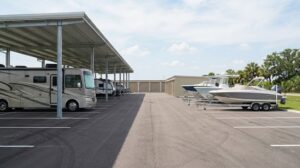
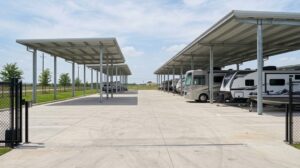
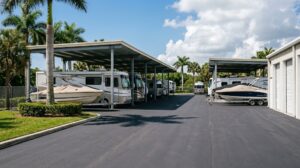
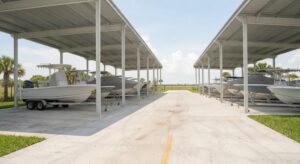
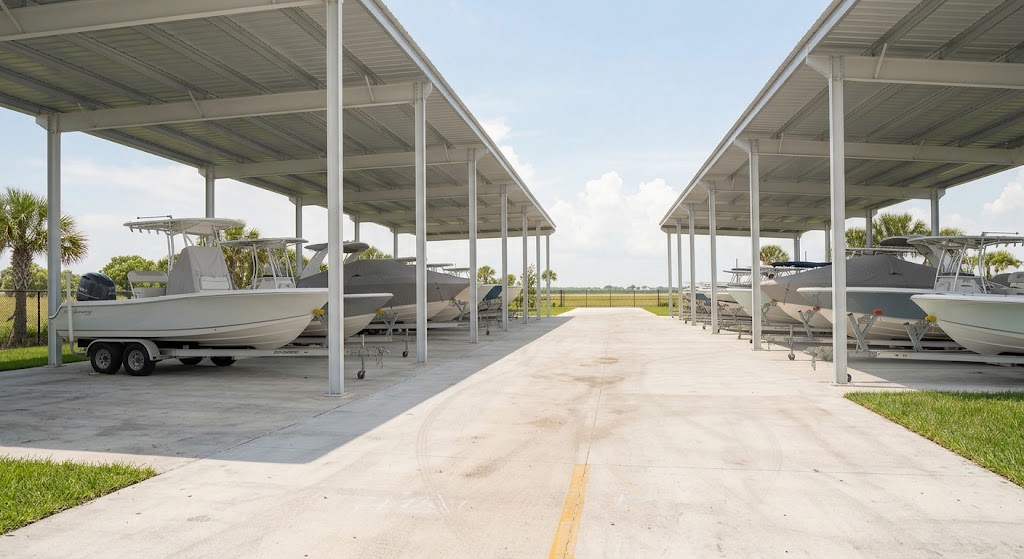
Trailer lot storage means your boat sits on a trailer in a secured lot. There’s no advance-notice window and no permit-capped waitlist, you retrieve it with your own tow vehicle whenever the lot is open and take it to a public launch ramp. This is the most widely available outdoor boat storage format in Fort Lauderdale, with no size cap and none of the scarcity that limits wet slip access for larger vessels.
In South Florida, covered boat storage matters year-round, not just seasonally. UV exposure and salt air are constant, and a vessel stored uncovered for months will show it. Covered carport-style storage provides a meaningful step up in protection without the access restrictions of a fully enclosed dry stack facility.
Trailer lot pros and cons:
- Access flexibility: High. Retrieve your boat whenever the lot is open; no advance notice or facility staff required.
- Launch steps: Hook up the trailer, tow to the ramp, launch, and go.
- Size: No length restrictions typical of dry stack facilities and no permit-driven availability limits like wet slip.
- Weather exposure: Uncovered lots leave the hull exposed to South Florida’s UV and salt environment; covered options close that gap.
Hurricane Season and What It Should Change About Your Storage Decision
Fort Lauderdale’s hurricane season runs June through November, which overlaps heavily with peak boating months. A direct hit or even a near-miss surge event can total a boat stored in an open lot without tie-down infrastructure, which is why the storage decision carries more weight during those months than the rest of the year.
The National Hurricane Center, part of the National Oceanic and Atmospheric Administration (NOAA), places South Florida in a direct-impact risk zone, and the vehicle storage decision looks different once you factor that in.
Not every storage facility offers the same level of hurricane storage protection. A formal storm program typically involves enclosed or reinforced structures, documented tie-down procedures, and written protocols for named storm events.
A standard trailer lot may have a perimeter fence and leave the rest to you. Port 32 Fort Lauderdale lists hurricane storage explicitly under its boatyard services, which signals a formal program rather than informal preparation.
For trailer lot owners, the boat is typically your responsibility during a storm event unless the storage contract includes a specific storm preparation service. Knowing that before June matters.
What Fort Lauderdale Boat Owners Should Ask Before Hurricane Season
The difference between a formal storm program and a fenced lot with no plan isn’t always obvious from a facility’s marketing. Before signing any storage agreement, ask these questions directly:
- Does the facility have a written storm protocol, or is preparation left to the owner?
- Is the storage structure rated for wind loads, and at what category?
- Does your marine insurance require you to evacuate the vessel before a named storm?
- Will the facility assist with or restrict access during a hurricane watch or warning?
- For trailer lot storage, does the facility offer tie-down service as part of the contract or as an add-on?
Marine Insurance and the Storage Transition Most Owners Overlook
Most boat owners check whether their marine insurance covers the vessel while it is stored. Fewer check whether coverage extends to the transition period when a third party is moving the vessel.
Many marine insurance policies include navigation warranty clauses that may limit coverage during valet launch and retrieval operations. If a forklift operator damages the hull, or the vessel is involved in an incident during the launch window, coverage may not respond the way you expect.
This applies to policies written to BoatUS standards and to agreed-value policies under Florida insurance law. It is not a reason to avoid valet dry stack storage. It is a reason to verify your policy language before signing a storage agreement.
Questions to Ask Your Marine Insurer Before Choosing Valet Storage
Whether your policy actually covers that gap isn’t something you can assume; it has to be confirmed in writing. Put these questions to your insurance agent before committing to a valet dry stack arrangement:
- Does my policy extend coverage when facility staff operate the forklift or launch and retrieve the vessel?
- Is there a coverage gap between the rack and the water during the valet window?
- Does my policy require me to notify the insurer when I change my storage location or type?
- Does my policy cover physical damage that occurs while the vessel is in the care, custody, and control of a third-party storage operator?
Comparing Your Options: What Fits How You Actually Boat
By now, you know what each storage type actually costs you in access, weather protection, and insurance risk. The table below puts those trade-offs side by side, so you can match a format to how often you actually get on the water, not to whichever option looks cheapest on paper.
| Storage Type | Access Flexibility | How You Launch | Best For |
| Valet Dry Stack | Moderate. Advance notice required. Hours-limited. | Call ahead, arrive at dock, board. | Frequent boaters with predictable schedules. |
| Wet Slip Marina | Highest. Board and go, any time. | Step aboard and depart. | Frequent boaters, liveaboard slip users, larger vessels. |
| Trailer Lot | High. Retrieve during lot hours; no notice needed. | Hook up, tow to ramp, launch. | Occasional boaters storing between long idle periods; owners who tow their own vessel. |
If You Boat Multiple Times Per Month
Frequent boaters get the most value from a wet slip or valet dry stack arrangement. A wet slip gives you the highest access flexibility with no scheduling friction. Dry stack storage is workable if your trips follow a routine pattern, but the advance-notice window becomes a real inconvenience on spontaneous days.
If You Boat a Few Times Per Year
Occasional boaters need protection during the long stretches the boat sits unused, not just a low monthly rate. Trailer lot storage fits that pattern, and the lower rate reflects the lower access frequency rather than a lesser service. South Florida’s UV exposure and salt air don’t pause between outings, which is what makes covered boat storage options a worthwhile upgrade during those gaps.
For Fort Lauderdale owners who boat a handful of times per year or own a vessel that exceeds dry stack size limits, RecNation’s nearest facility is in Boynton Beach, about 25-30 miles north, and offers covered and secured outdoor boat storage worth weighing against the drive time from your specific launch point.
Ready to Store Your Boat Near the Fort Lauderdale Intracoastal?
If you’re storing a boat in or around South Florida and want a secured facility with covered and uncovered trailer-lot options, RecNation’s Boynton Beach facility is worth comparing against the Broward County options this guide covers, particularly if the roughly 25-30 mile drive fits your storage-vs-access tradeoff. Reserve online or contact the facility directly to check current availability for your vessel’s dimensions.
Frequently Asked Questions About Boat Storage Near the Fort Lauderdale Intracoastal
What is the average cost of boat storage near the Intracoastal in Fort Lauderdale?
Boat storage near the Fort Lauderdale Intracoastal starts around $600 a month for basic outdoor trailer lot parking, the entry-level figure Broward County boaters commonly report. Rates climb from there for covered spaces, larger vessels, and valet dry stack storage and wet slip marina berths run significantly higher depending on vessel size and facility amenities. Covered storage typically costs more than uncovered. Contact individual facilities for current rates, since South Florida’s boat storage market shifts seasonally.
What is the difference between dry stack storage and a wet slip marina in Fort Lauderdale?
Dry stack storage and a wet slip marina in Fort Lauderdale differ mainly in where the boat lives and who handles the launch. Dry stack keeps your boat indoors on a rack, and staff retrieves and launches it by forklift once you call ahead. A wet slip marina keeps your boat in the water in an assigned berth, so you board and depart yourself with no staff involvement or waiting period.
Wet slips offer more spontaneous access but carry higher monthly costs and limited availability for larger vessels, while dry stack storage is generally more cost-effective and provides better hull protection from UV and salt air.
Are there indoor boat storage facilities near the Fort Lauderdale Intracoastal Waterway?
Yes, enclosed dry stack facilities operate near the Fort Lauderdale Intracoastal, storing boats on indoor racks with forklift access. Port 32 Fort Lauderdale is one example, offering valet dry stack service with a maximum vessel length of 55 feet. Compared to open trailer lots or wet slips, indoor storage provides the strongest protection against South Florida’s UV exposure, salt air, and hurricane-season weather.
How do I find boat storage with easy Atlantic Ocean access in Fort Lauderdale?
The closest route from Intracoastal storage to the Atlantic runs through Port Everglades Inlet, which connects the ICW to open ocean near the 17th Street Causeway area. When evaluating facilities, ask how far the location is from a public ramp or marina with direct Intracoastal channel access, and factor in tow time and ramp transit to the inlet, since that transit time matters more than straight-line distance on a map.
Do Fort Lauderdale boat storage facilities offer hurricane protection for vessels?
Some Fort Lauderdale boat storage facilities offer hurricane protection for vessels, but not all do. Full-service facilities like Port 32 Fort Lauderdale list hurricane storage as a formal boatyard service, which typically involves enclosed storage and documented storm protocols. Standard trailer lots may provide a perimeter fence but leave storm preparation to the owner. Before signing any storage agreement, ask whether the facility has a written storm protocol, what the tie-down or evacuation policy is during a hurricane watch or warning, and whether your marine insurance requires specific action before a named storm.
Can I sleep aboard my boat while it’s stored at a Fort Lauderdale storage facility?
Most boat storage facilities, including dry stack and trailer lot operations, do not permit liveaboard or overnight occupancy. Florida Statute 327.60 allows local governments to regulate liveaboard activity, and Broward County ordinances restrict continuous occupancy at many storage and marina facilities. If regular on-board access or overnight stays matter to you, a wet slip marina with an explicit liveaboard policy is the more appropriate option. Confirm liveaboard permissions directly with any facility before signing a lease.