Where you store your boat in Sarasota matters less than where it puts you relative to the water you actually use. This guide covers Sarasota Bay and Gulf of Mexico access separately because those are different logistics problems with different storage solutions. If your homeowners association (HOA) has already made the decision for you, or your garage won’t clear the T-top, you’re in the right place.
Why Storage Location Matters More Than It Seems in Sarasota
Sarasota has two distinct boating environments, and they don’t share much infrastructure. Sarasota Bay runs inshore, calmer and shallower, with popular access points at Centennial Park and Ken Thompson Park on City Island. The Gulf of Mexico is a different trip entirely, typically routed through the Intracoastal Waterway (ICW) via Stickney Point or the Nokomis Beach ramp for anglers and larger vessels heading offshore.
A storage facility that saves you ten minutes of drive time but adds 45 minutes of towing through Sarasota’s weekend traffic is a net loss on every trip. The math on that compounds fast over a full season.
Sarasota Bay vs. Gulf Access: Different Water, Different Logistics
Bay boating means shorter runs, lower-clearance bridges, and inshore species. Gulf boating means navigating the ICW, dealing with bridge schedules, and running offshore in larger vessels.
If your preferred ramp is at Ken Thompson Park, a facility on the south end of the county adds towing time in the wrong direction. If you fish the Gulf out of Stickney Point, Bay-side storage near the causeway puts you towing back through city traffic every time.
The HOA Problem Most Sarasota Owners Already Know About
Many Sarasota boat owners aren’t searching for storage because they want to. Sarasota County residential codes and most community association rules prohibit visible boat trailer storage in front yards or driveways. For a large number of owners, storage is a compliance requirement, not a preference.
If you’re dealing with that situation, RV and boat storage options at a dedicated facility resolve the problem cleanly. The boat is off your property, HOA-compliant, and often better protected than it would be in a driveway.
Types of Boat Storage Available Near Sarasota
Knowing your options before you call any facility saves time and helps you self-qualify on cost. The table below gives you a quick orientation, with more detail in each section below.
| Storage Type | Best For | Typical Monthly Cost | Key Trade-Off |
| Dry stack (indoor rack) | Boats up to 40 ft, frequent users | $250 to $600 | Highest protection, capacity fills fast |
| Wet slip | Large vessels, daily users | $400 to $800+ | Antifouling required, biofouling risk |
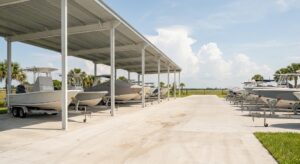
| Covered outdoor | Center consoles, bay boats | $100 to $250 | UV/bird protection, limited storm coverage |
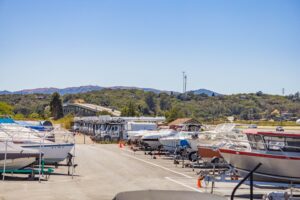
| Open outdoor trailered | Short-term, budget-conscious | $50 to $150 | Fully exposed, lowest cost |
Note: These are market ranges. Contact individual facilities for current availability and pricing.
Dry Stack Storage: Convenient but Capacity-Limited
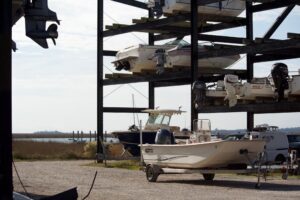
Dry stack storage keeps your boat elevated on a rack inside an enclosed building, launched by forklift when you’re ready to go. You schedule the launch via app, platforms like BoatCloud are common at Sarasota-area marinas, and the facility crew pulls your boat and has it in the water when you arrive.
Here’s what that setup actually gets you:
- Post-launch service: Typically includes hull washing and engine flushing, which directly reduces saltwater corrosion over time.
- Elevated storage: Limits moisture exposure and keeps pests off the hull.
- Size limit: Most indoor boat storage facilities in Sarasota County accommodate vessels up to 40 feet.
Capacity fills during peak season (November through April), so if you’re planning winter storage, don’t wait until October.
Wet Slips: Best for Frequent Boaters with Larger Vessels
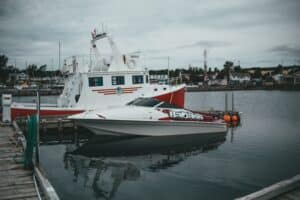
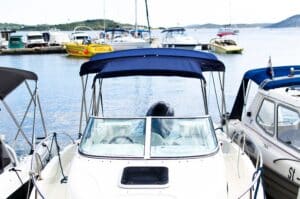
A wet slip trades convenience for maintenance: it keeps your boat in the water at a dock, which makes access immediate but shifts the maintenance burden to you.
- Biofouling: Sarasota Bay’s warm, brackish water accelerates it significantly compared to a dry rack environment, expect to need active antifouling bottom paint and more frequent hull inspections.
- Electrical hookup: Smaller vessels typically run on 30-amp service; anything over 30 feet often needs 50-amp.
- Best fit: Boaters going out multiple times per week. For seasonal storage or any absence longer than a few weeks, dry stack or trailered storage protects the hull better.
Covered and Outdoor Trailered Storage: The Budget-Friendly Middle Ground
For center console and bay boat owners under 24 feet who launch regularly, trailered outdoor storage is usually the most practical option:
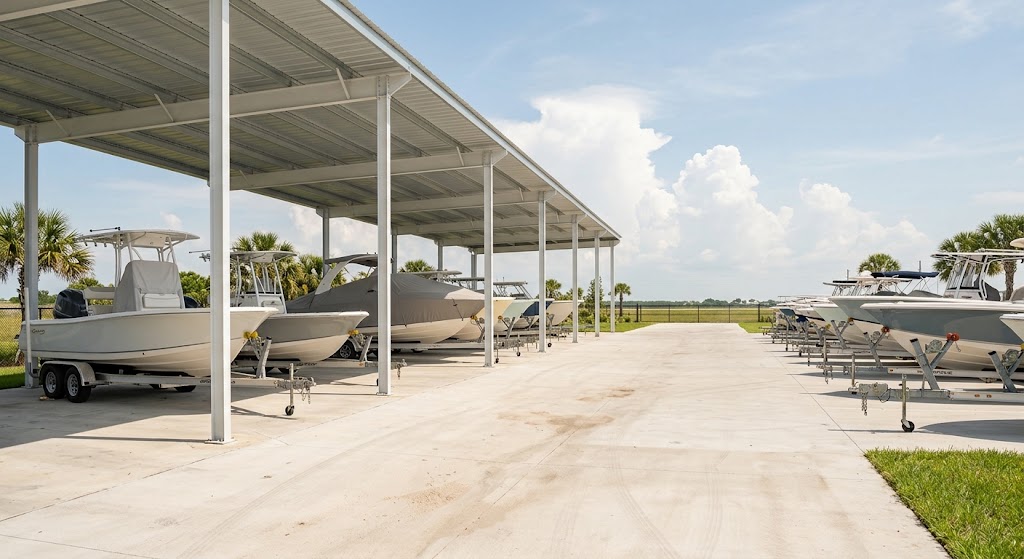
- Covered: Under a carport structure, protects against UV and bird damage, but won’t stop wind-driven rain.
- Open: The most affordable format, works fine for short-term storage or owners with quality trailer covers.
Southwest Florida carries one of the highest year-round UV indices in the country, so even under a carport structure, a well-fitted cover matters. For covered storage for your boat and trailer, choose a facility within a short haul of your preferred launch ramp to minimize tow time on busy mornings.
For trailered boats that don’t need a slip, RecNation boat storage in Sarasota offers secured outdoor storage with facility standards and access hours that dedicated storage yards are built around.
What to Look for in a Sarasota Boat Storage Facility
Once you have a shortlist, these are the questions worth asking before you sign anything. They apply to any boat storage facility you’re evaluating in Sarasota County.
- Hurricane wind load rating: Get the structure’s specific rating before you commit. Florida Building Code coastal high-wind zone standards set the bar for enclosed facilities, requiring a rating for significant sustained wind speeds. Sarasota County falls under the 2023 code’s minimum design wind speed requirements. At the top end, the best enclosed facilities carry a 130 mph rating or higher, covering Category 4 storm conditions.
- Insurance requirements: Most facilities require a certificate of insurance naming them as an additional interested party, so check that your existing policy actually covers the vessel while it’s stored on a rack or trailer, not just while it’s in use.
- Security infrastructure: Gated access, surveillance cameras, and facility lighting should be the baseline, not the upsell. Find out whether access runs 24/7 or is restricted to business hours.
- Proximity to your launch ramp: Map the route from the facility to your preferred ramp, and picture what that drive actually looks like on a Saturday morning in January, not a quiet Tuesday afternoon.
- Scheduling systems: If you’re a dry stack user, find out whether the facility runs BoatCloud or a comparable app-based reservation system, calling in during peak hours wastes time on both ends.
- On-site boat maintenance services: Hull wash, engine flush, and fueling on-site mean fewer stops before and after a day on the water.
Insurance Requirements You Should Verify Before Signing
Florida doesn’t require boat insurance by law, but virtually every storage facility does under their lease terms, and the distinction that matters most is between actual cash value (ACV) and agreed value policies:
- Actual cash value (ACV): Pays depreciated value at the time of loss, which can leave a stored vessel significantly underinsured.
- Agreed value: Pays the amount you and the insurer agreed on at the policy’s start.
Before signing any facility agreement, review your current policy’s storage clause. Some policies require notification when a vessel changes from active-use to stored status. The Florida Department of Financial Services provides guidance on marine insurance policy types for Florida boat owners.
Stormwater and Environmental Standards at Outdoor Facilities
Outdoor storage facilities in Sarasota County are subject to stormwater and impervious surface requirements under county land development regulations. This affects how fuel runoff, bilge drainage, and hull cleaning chemicals are managed on-site. If you store near the Bay or ICW, ask whether the facility has a stormwater management plan and whether hull washing runoff is collected or drains through a permeable surface.
Cost of Boat Storage Near Sarasota: What to Expect
Boat length is the biggest single driver of monthly storage rates, followed by storage type, then location relative to the water. To understand how much it costs to store a vehicle across different formats, the ranges introduced in the comparison table above reflect Sarasota market conditions.
Dry stack pricing typically bundles post-launch services (engine flush, hull wash) that a trailered outdoor owner would budget for separately. If you’re comparing dry stack quotes against outdoor trailered quotes, factor that in before deciding the gap is smaller than it looks.
Storage agreement terms in Florida are typically month-to-month or annual. Annual contracts sometimes include a rate discount. Confirm the term structure before signing.
What’s Included in the Monthly Rate (and What Isn’t)
Base dry stack or wet slip rates often exclude fuel, ice, detailing, mechanical service, and sometimes launch fees beyond a set monthly allotment. Outdoor trailered storage rates are typically all-in for the space but exclude every service. Get the full picture from each facility before comparing quotes side by side.
Seasonal Demand and Availability in Sarasota County
Sarasota’s peak boating season runs November through April, which is also when seasonal boat storage capacity is tightest. Owners buying a boat in late fall or relocating to Sarasota for the winter should plan to secure storage well before arrival. Facilities near Gulf access points south of Sarasota, particularly near Nokomis and Venice, can fill months in advance.
Practical Tips for Sarasota Boat Owners Before Choosing Storage
These steps apply to any storage decision in Sarasota County. Work through them before you commit to a facility.
- Drive the towing route from your candidate facility to your preferred launch ramp on a Saturday morning between 7 and 9 a.m. in season. That’s the trip you’ll actually be making, not the midweek version Google Maps shows you.
- Check your HOA governing documents or Sarasota County residential code before assuming short-term driveway staging is allowed between trips. Even temporary storage can trigger a violation notice.
- Confirm height, length, and weight clearances for your specific boat and trailer with the facility before reserving a space. Don’t assume.
- Ask any wet slip facility what their hurricane preparedness protocol looks like. What happens to your boat if a storm approaches while it’s in the water?
- Review your boat insurance policy’s storage clause before signing a facility agreement. Notification requirements vary by policy.
- If you use the Stickney Point or Centennial Park ramps regularly, confirm with the facility whether you’ll return to their yard after a day out or whether they accommodate launches from a separate ramp.
Checking Storage Facility Reviews and Licensing in Florida
Florida doesn’t run a state licensing program for boat storage facilities specifically, so there’s no single registry to check. What does exist: marina operators handling activities that affect waterways need permits from the Florida Department of Environmental Protection, and that permit history is searchable online. For a read on day-to-day facility reputation, Google Reviews is the more useful source, it reflects recent, real conditions at specific locations rather than a formal record.
The Question That Actually Decides This
Choosing where to store your boat in Sarasota comes down to one practical question: how quickly can you get from your storage space to the water you actually use? For trailered boats heading to Sarasota Bay or the Gulf, RecNation boat storage in Sarasota gives owners a secured, dedicated facility designed specifically for recreational vehicles. If you’ve been storing at home and running into HOA or space limitations, it’s a straightforward option worth comparing against the marina alternatives this guide covers.
Frequently Asked Questions About Boat Storage Near Sarasota
How much does boat storage cost near Sarasota, FL?
Boat storage near Sarasota costs vary by storage type and boat size. Outdoor trailered storage typically runs $50 to $150 per month, covered outdoor storage ranges from $100 to $250 per month, and dry stack storage at a full-service marina commonly runs $250 to $600 per month for boats in the 20 to 30 foot range. Wet slip rates start at $400 or more monthly for a 25-foot slip at a well-located Sarasota marina. These are market ranges; contact individual facilities for current pricing and availability.
What is the difference between dry stack and wet slip boat storage?
Dry stack and wet slip boat storage differ mainly in whether the boat stays in the water. Dry stack storage keeps your boat on an indoor rack and uses a forklift to launch it when you’re ready, so it stays out of the water between uses, reducing biofouling and saltwater exposure. Wet slip storage keeps the boat in the water at a dock, making access immediate but requiring ongoing antifouling maintenance. In Sarasota’s warm, brackish Bay water, wet storage accelerates hull growth significantly compared to a dry rack environment.
Are there indoor boat storage facilities near Sarasota Bay?
Yes, several facilities near Sarasota Bay offer enclosed dry stack storage for boats up to 40 feet. These typically include hurricane-rated structures, post-launch hull washing, engine flushing, and app-based scheduling. Indoor boat storage near the Bay is in high demand during peak season (November through April), so owners planning winter storage should secure a space well in advance.
What should I look for in a boat storage facility near the Gulf of Mexico?
Prioritize hurricane wind load ratings first when evaluating a boat storage facility near the Gulf of Mexico. Enclosed facilities in Sarasota County should meet Florida Building Code coastal high-wind zone standards, with the best facilities rated at 130 mph or higher. Evaluate proximity to your preferred Gulf launch ramp, the facility’s security infrastructure, and whether the monthly rate includes post-launch services like hull washing and engine flushing.
Do Sarasota boat storage facilities offer hurricane-rated protection?
Some do and some don’t. Enclosed dry stack facilities built to Florida Building Code coastal standards offer the strongest protection, and the best in Sarasota County are rated for 130 mph sustained winds, covering Category 4 storm conditions. Outdoor trailered storage and covered carport-style facilities offer little structural protection in a major storm. Ask any facility for their specific wind load rating before signing.
Does it matter which side of Sarasota I store my boat, Bay side or Gulf side?
Yes, it matters more than most people expect which side of Sarasota you store your boat. Bay-side boaters fishing or cruising around City Island launch most efficiently from Centennial Park or Ken Thompson Park, so storage near those ramps saves real time. Gulf-bound offshore anglers running out of Stickney Point or Nokomis do better with a facility positioned south of the city. Choose storage based on where you actually launch, not how close the facility is to your home address.