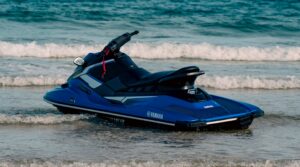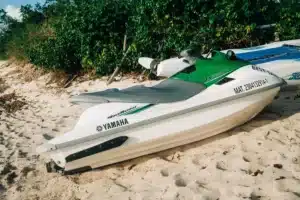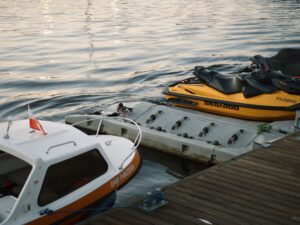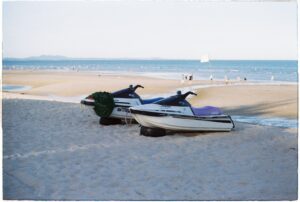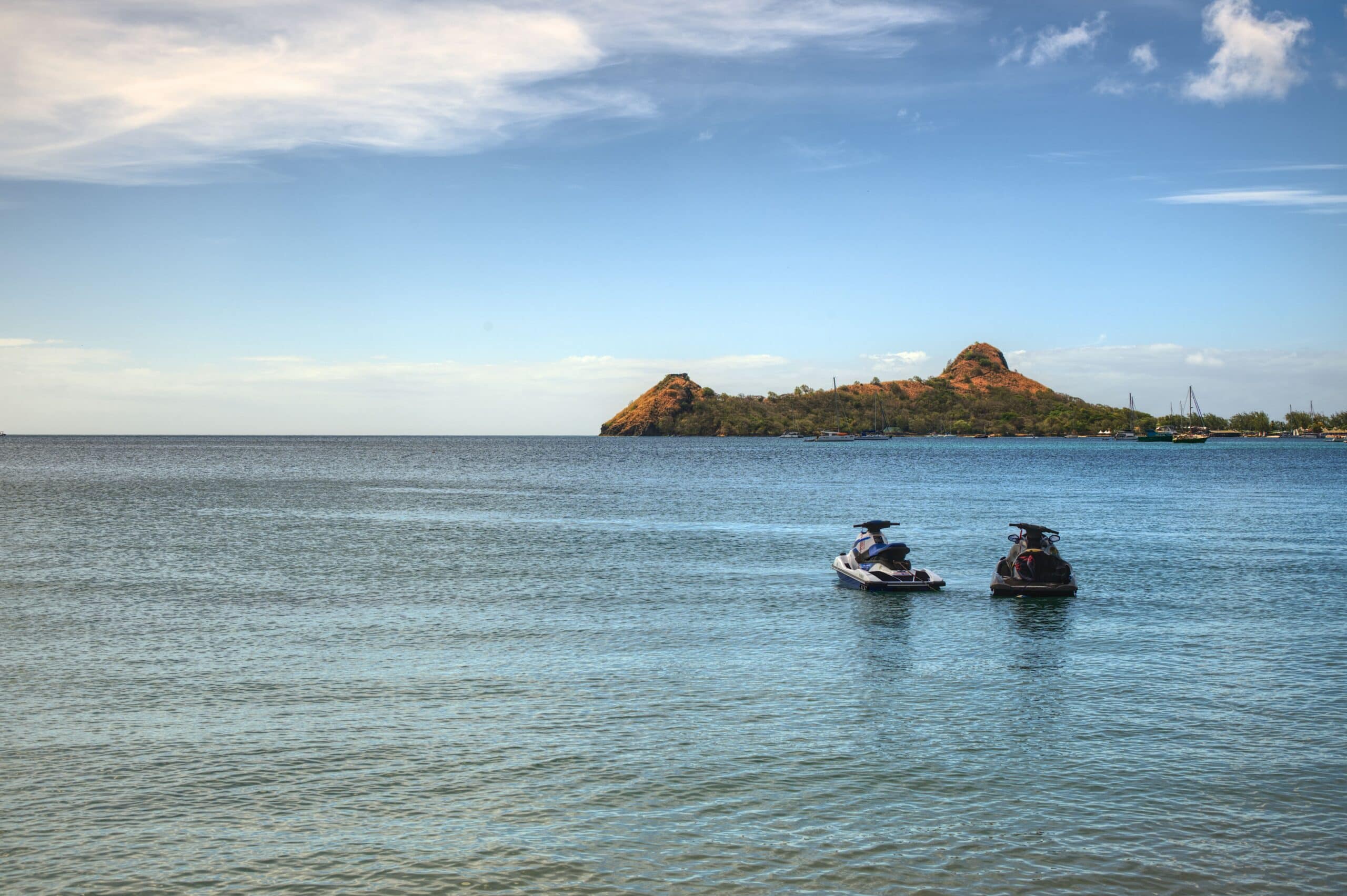
The short answer is no. Leaving a jet ski or any personal watercraft (PWC) in the water for more than a few days causes real, compounding mechanical damage, and saltwater accelerates every part of that process. The risks are not vague or theoretical. They include carbon ring seal failure, hull fouling, corrosion and rust on metal components, and potential gaps in your insurance coverage.
This article breaks down exactly what happens at each time threshold, how freshwater and saltwater environments differ, what your manufacturer actually recommends, and what to do instead.
The Short Answer: No, and Here’s Why It Matters
Jet skis are designed to be launched, ridden, and retrieved. Their hulls, seals, and mechanical systems assume regular removal from the water, not continuous submersion. Leaving one in the water for days or weeks puts stress on systems that were never built to handle static, prolonged water exposure.
The risks fall into three categories:
- Mechanical: Carbon seal failure and impeller damage.
- Structural: Gelcoat damage, hull fouling, and water absorption.
- Financial: Insurance and warranty implications.
Each category is covered in detail below, so you can make a storage decision with a full picture of what is actually at stake.
What “Long-Term” Actually Means for a PWC
Three time thresholds apply throughout this guide:
- Overnight to three days: Short-term, generally low-risk in calm freshwater.
- One to two weeks: Medium-term, where real mechanical risk begins.
- Beyond two weeks: Long-term, where significant and potentially irreversible damage becomes likely.
When you see “extended” or “prolonged” below, it refers to the two-week-plus range.
What Happens to a Jet Ski Left in the Water, By Time Threshold
Vague warnings about “too long” and “corrosion risk” don’t tell you anything useful. Here’s what actually happens at each stage, and to which specific systems.
Overnight to a Few Days
A short in-water stay in calm freshwater is manageable, provided the hull is properly sealed and your bilge pump is functional. The risk of meaningful water intrusion at this stage is low. Before you leave the craft in the water, confirm the hull drain plug is seated correctly and test the bilge pump. Check the storage compartment when you return for any unusual water accumulation.
Even at this short duration, saltwater requires a different approach. Any saltwater exposure should be followed by a thorough freshwater rinse of the hull, jet intake, and engine compartment when you retrieve the craft. Skipping that step allows salt residue to begin corroding metal fittings immediately.
One to Two Weeks
This is where the damage becomes real. The carbon ring seal is the primary concern. It is designed to work when the engine runs and the driveshaft spins, maintaining contact and function through movement. Under continuous static submersion without engine operation, the seal can deform, absorb water, or fail to reseat correctly when you next start the engine.
Hull fouling and algae accumulation begin within the first week in most freshwater environments. Gelcoat oxidation accelerates with continuous water contact, and metal fittings, exhaust components, and fasteners start showing the early signs of corrosion.
Most manufacturer maintenance schedules assume the craft is trailered or lifted between uses. Continuous in-water mooring during this window is already outside what those schedules are designed to accommodate.
Key risks at one to two weeks:
- Carbon ring seal: Can deform under prolonged static submersion, leading to water intrusion into the engine compartment on next start.
- Hull fouling: Algae and organic matter begin accumulating on the hull surface, affecting performance and appearance.
- Gelcoat damage: Oxidation and surface degradation accelerate with continuous water exposure.
- Metal components: Corrosion and rust begin on exposed fittings, exhaust connections, and brackets.
A Month or More
At this point, the answer is a clear no. Fiberglass and sheet molding compound (SMC) hulls absorb measurable water under continuous submersion, consistent with ASTM D570 water absorption standards for plastic composites. Over time, that absorption leads to hull blistering, delamination, and structural compromise that requires expensive professional repair.
Antifouling paint is sometimes mentioned as a workaround, but it is generally not recommended for PWC hulls. The application process and the PWC’s smaller waterline footprint make it impractical, and the chemicals in most antifouling coatings can damage gelcoat.
In freshwater lakes where invasive species are present, zebra mussels pose an additional risk. They can attach to the hull and clog the jet intake, causing impeller damage and requiring extensive cleaning or replacement.
Freshwater vs. Saltwater: The Damage Isn’t the Same
Where you are moored changes how quickly every risk above applies. Saltwater accelerates corrosion, fouling, and gelcoat degradation significantly faster than freshwater. The time thresholds from the previous section are conservative estimates for freshwater. In saltwater, cut each threshold roughly in half.
Freshwater Storage Risks
Freshwater causes slower corrosion, but it is not harmless. Hull fouling from algae and organic matter builds up steadily, and metal fittings still corrode over time. In inland waterways where zebra mussels are established, the risk of hull and intake attachment is real. Treat two weeks as the practical upper limit for in-water stays in freshwater without a lift or full retrieval.
Saltwater Storage Risks
Saltwater is faster and more severe across every damage category. The components most vulnerable are the metal exhaust fittings, impeller housing, jet pump components, and any exposed fasteners or brackets. Treat four to seven days as the practical upper limit for unattended in-water mooring in a saltwater marina slip. Every retrieval should include a freshwater rinse of the hull, jet intake, and engine compartment.
The comparison below summarizes the key differences:
| Risk Factor | Freshwater | Saltwater |
| Corrosion rate | Slow, builds over weeks | Two to five times faster than freshwater |
| Hull fouling speed | Moderate, begins within one week | Faster, accelerated by organic content |
| Metal degradation | Present but gradual | Severe, affects fittings and pump housing quickly |
| Recommended max in-water duration | Up to two weeks | Four to seven days |
What Manufacturers Actually Say About In-Water Storage
BRP (Sea-Doo), Yamaha (WaveRunner), and Kawasaki (Jet Ski) all design their craft for retrieval and trailering between uses. Their maintenance schedules assume the craft comes out of the water regularly, so seals can be inspected and impellers checked; continuous in-water mooring makes those intervals harder to track and easier to miss early signs of seal degradation or water intrusion.
Prolonged in-water storage can also affect warranty coverage. If hull blistering, water ingestion damage, or carbon ring seal failure occurs and the manufacturer determines the storage method contributed, coverage may be denied, so consult your owner’s manual and contact the manufacturer’s customer service line if you’re uncertain.
The Carbon Ring Seal Problem
The carbon ring seal is the most cited mechanical failure mode for PWCs left in water. Its job is to prevent water from entering the engine compartment through the driveshaft. It works by maintaining contact with a stainless ring, and that contact is sustained through shaft rotation when the engine runs.
When the craft sits static in the water for an extended period without engine operation, the seal can deform, take on a water set, or fail to reseat correctly the next time the engine starts. The result is water intrusion into the engine compartment, which can cause serious and expensive damage. This is not a worst-case scenario. It is the predictable outcome of using a dynamic seal in conditions it was not designed for.
Insurance and Marina Rules You Should Know
The mechanical risks are real, but the financial and legal implications are the part most PWC owners have not considered before they dock and walk away.
What to Ask Your Insurer
Standard PWC insurance policies, including those offered by watercraft specialists like SkiSafe and Markel, define coverage conditions that may distinguish between active use and a stored or moored state. A craft left unattended in the water for an extended period may fall into a coverage gap if damage occurs during that time. Before committing to in-water mooring for more than a few days, make a five-minute call to your insurer and ask three specific questions:
- Does my policy cover hull damage that occurs while the craft is moored unattended for more than a set number of days?
- Does my policy define a maximum consecutive days-in-water threshold?
- Does my policy require the craft to be stored on a trailer or lift during the off-season to maintain coverage?
The answers could prevent a denied claim from an otherwise straightforward situation.
Marina Slip Agreements and PWC Mooring Rules
Marina slip agreements vary widely, but many restrict long-term PWC mooring in slips sized for larger vessels, require the vessel to be actively registered, or limit consecutive unattended days. These restrictions come from the marina’s own private lease terms, not from any single federal standard, so the specific language always depends on the individual facility. Violating slip terms can result in removal fees, loss of slip access, or liability if the craft damages an adjacent vessel.
Review your slip lease before assuming long-term mooring is permitted. If you are unsure, call the marina office directly.
Before committing to extended in-water storage for your jet ski, verify:
- Your slip agreement permits PWC mooring for the intended duration.
- Your insurance covers the craft while moored unattended.
- The craft is actively registered and insured as required by the slip agreement.
- You understand the marina’s policy on removal for non-compliant mooring.
Better Alternatives to Leaving Your Jet Ski in the Water
Once you understand the mechanical, financial, and legal risks, the question becomes practical: what should you do instead? The cost of alternatives varies, and how much you should expect to pay for storage depends on the option and your location. Three options suit different use patterns and dock situations.
PWC Lifts and Dock Ports
A PWC lift or dock port keeps the hull out of the water between uses, which eliminates hull fouling, the carbon ring seal degradation risk, and corrosion from continuous submersion. It provides the convenience of water-adjacent storage without the mechanical consequences of leaving the craft at the surface.
Basic lifts run roughly $1,000 to $4,000 depending on capacity and brand. This option suits owners who already have dock access and use their PWC frequently enough to want immediate launch capability.
The limitation is infrastructure. A lift requires an existing dock and the physical space to install it. For renters or owners at marinas without dock lift options, it may not be available.
Marina Dry Storage Racks
Many marinas offer rack storage where the craft is stored on a stacked rack system and launched by forklift on request. This keeps the hull completely dry between uses and gives you quick water access without trailering. It is a practical middle option for owners who ride frequently and want to avoid the risks of in-water mooring.
The trade-offs are availability and lead time. Not all marinas offer rack storage, and those that do typically require advance notice for launch. Costs vary significantly by region and marina capacity.
Off-Site Dry Storage
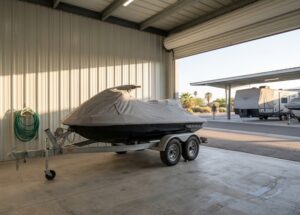
Off-site dry storage is the most protective option for owners who do not use their PWC every week, or who live in regions with a defined riding season. A covered or enclosed facility keeps the hull completely dry, protects against UV and weather damage, and gives you the flexibility to schedule maintenance on your own timeline.
Covered storage for recreational vehicles is typically more affordable per month than a marina slip, and it eliminates every risk associated with in-water mooring.
Final Thoughts on In-Water Jet Ski Storage
For owners in Florida, Texas, or Tennessee, jet ski storage at RecNation offers covered and enclosed options designed for personal watercraft and other recreational vehicles. Regardless of which storage option you choose, the PWC should go through proper winterization before any extended storage period to prevent fuel system damage and seal deterioration.
Frequently Asked Questions
How long can you leave a jet ski in the water?
In calm freshwater, a jet ski can generally stay in the water for two to three days without significant risk, provided the hull is properly sealed and the bilge pump is functional. Beyond one to two weeks, the risk of carbon ring seal damage, hull fouling, and corrosion increases meaningfully. In saltwater, those thresholds shorten considerably. Most marine mechanics recommend retrieving a PWC from saltwater within four to seven days to prevent accelerated metal corrosion and gelcoat damage.
Is it bad to keep a jet ski in saltwater?
Yes. Saltwater accelerates every damage mechanism that affects a PWC, including corrosion of metal fittings, impeller housing, and exhaust components, as well as gelcoat oxidation and hull fouling. A jet ski left in a saltwater marina slip for two weeks may sustain corrosion damage equivalent to several months in a freshwater lake. If you must leave your PWC in saltwater temporarily, rinse the hull, jet intake, and engine compartment thoroughly with fresh water every time you retrieve it.
What happens if you leave a jet ski in the water too long?
Extended in-water storage leads to a predictable sequence of damage: hull fouling and algae accumulation, gelcoat oxidation, corrosion and rust on metal components, and eventual carbon ring seal failure that allows water intrusion into the engine compartment. In freshwater lakes with invasive species, zebra mussels can attach to the hull and clog the jet intake. In severe cases, prolonged submersion causes hull blistering, delamination, and structural damage that requires expensive professional repair.
Should you store a jet ski on a lift or in the water?
A PWC lift is significantly better for the craft than leaving it in the water. A lift keeps the hull dry between uses, which eliminates hull fouling, corrosion, and the carbon ring seal degradation that comes with continuous submersion. For owners with dock access, a boat lift is the best middle-ground option. It provides the convenience of water-adjacent storage without the mechanical risks of mooring at the surface.
How do you properly store a jet ski at a marina?
The safest approach is a PWC lift, a dock port, or the marina’s dry storage rack system, not a surface slip. If your marina offers rack storage, the craft is retrieved and launched by forklift and stays completely out of the water between uses. If you are using a slip, review your slip agreement for restrictions on long-term PWC mooring, confirm your insurance covers the craft while moored unattended, and plan to retrieve the PWC within a few days rather than leaving it indefinitely.
Does leaving a jet ski in the water void the warranty?
It can, depending on the manufacturer and the specific type of damage. BRP, Yamaha, and Kawasaki all design their PWC hulls for retrieval and trailering between uses. If hull blistering, water ingestion damage, or carbon ring seal failure occurs and the manufacturer determines the storage method contributed, warranty coverage may be denied. Consult your specific owner’s manual and contact the manufacturer’s customer service line with questions about your coverage before committing to an extended in-water mooring arrangement.