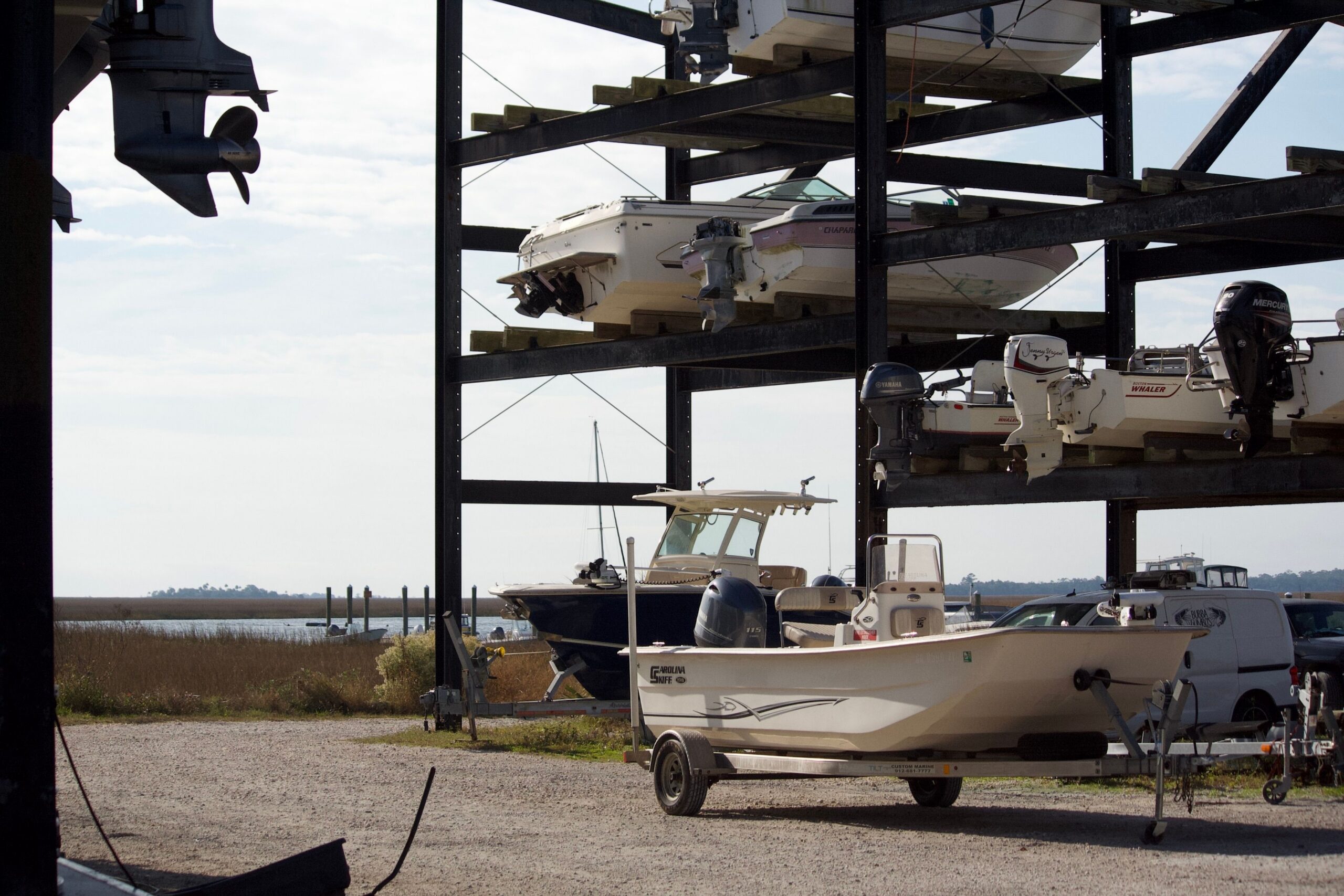
Winterizing a boat means draining water from every system that can freeze, treating the fuel, and protecting the engine and hull before cold weather arrives. The exact steps depend on whether your boat has an outboard, inboard, or sterndrive engine, and following the wrong procedure can leave water trapped where it will freeze and crack.
This guide walks through every system, with specific instructions for each engine type, so you can complete the job confidently before the season closes.
What Winterizing a Boat Actually Does
Water expands when it freezes. Any trapped water in the engine block, raw-water cooling circuit, water lines, or bilge will crack whatever contains it. A cracked engine block or split manifold is not a minor repair.
Ethanol-blend fuel (E10) degrades faster than pure gasoline. Boats stored without fuel treatment frequently develop corroded carburetors or injectors by spring. The damage is preventable, but only if you act before the fuel breaks down.
A full winterization typically takes two to four hours for a first-timer. Skipping even one step, such as the raw-water cooling system flush on an inboard, can result in repair costs that far exceed what a professional winterization service would have cost.
When to Winterize
Winterize before temperatures consistently drop below 32°F. Do not wait for the first hard freeze. For most northern states, mid-October through early November is the window. For readers in Florida or Texas, winterization may not be required annually, but it should still be completed if the boat will sit unused for more than 90 days.
What You’ll Need Before You Start
Gather everything before you begin. A mid-job trip to the hardware store wastes time and breaks your workflow.
- Propylene glycol RV/marine antifreeze: Not automotive antifreeze, and not pre-diluted. Check the label for burst-protection rated at least 10°F below your lowest expected storage temperature.
- Marine fuel stabilizer: Rated for ethanol-blend (E10) fuel.
- Fogging oil: Corrosion-inhibiting spray for internal cylinder surfaces.
- Fresh engine oil and oil filter: Check your owner manual for the correct specification.
- Gear lube: Required for outboard and sterndrive engines.
- Spark plugs: Replace if due per your service schedule.
- Flushing muffs or garden hose: For flushing outboard motors with fresh water.
- Bilge pump: To fully evacuate the bilge before storage.
- Desiccant packs or a dehumidifier: For covered storage to prevent mildew.
- Quality boat cover or shrink wrap: Shrink wrap provides superior protection for boats stored outdoors over multiple months. See our guide to the different types of boat covers if you’re deciding between options.
Your boat’s owner manual is the authoritative reference for engine-specific fluid volumes, drain plug locations, and antifreeze quantities. Many manufacturers specify exactly how many gallons are needed to fully displace raw water from the cooling circuit.
Antifreeze: RV/Marine Grade Only
Propylene glycol is the correct choice for boat winterization. It is non-toxic to aquatic ecosystems, which matters when antifreeze drains near waterways. It is also safe for the rubber hoses and seals found throughout marine cooling systems.
Ethylene glycol (automotive antifreeze) is toxic and can damage marine rubber components. The NMMA service guidelines and most engine manufacturers specify propylene glycol for this reason. Check the label for a burst-protection rating at least 10°F below your lowest expected storage temperature. For climates that reach 0°F, use a product rated to at least -10°F.
How to Winterize a Boat Engine, By Engine Type
The winterization process differs by engine configuration. Following the wrong procedure can leave water trapped in the cooling system, where it will freeze and crack manifolds or the engine block. Find your engine type below and follow those steps exactly.
Winterizing an Outboard Motor
- Attach flushing muffs to a garden hose, connect to the lower unit water inlets, and run the engine at idle for 5 to 10 minutes to flush the cooling system with fresh water.
- Change the gear lube. Inspect the old fluid for a milky appearance, which signals water contamination and a seal failure that needs immediate attention.
- On four-stroke outboards, change the engine oil and filter.
- With the engine running, spray fogging oil into the carburetor or air intake until the engine begins to smoke slightly, then shut it off. Remove each spark plug and spray fogging oil directly into the cylinder holes.
- Tilt the motor briefly to the full down position to drain remaining water from the lower unit, then return it to the upright storage position. If you’re unsure which position is correct for long-term storage, our guide on whether to store your boat with the motor up or down covers the tradeoffs in more depth.
- Add fuel stabilizer to a near-full tank and run the engine for 10 minutes to distribute it through the entire fuel system.
Winterizing a Sterndrive (I/O) Engine
- Flush the raw-water cooling system with fresh water.
- Drain the block and manifolds using the drain plugs specific to your engine model. Consult your owner manual for exact plug locations.
- Pump propylene glycol antifreeze through the raw-water intake until it runs pink from the exhaust outlet. Do not skip this step and assume a freshwater flush is sufficient; water left in manifolds will freeze and crack them.
- Change the sterndrive gear lube. Inspect the bellows carefully. Cracked bellows allow water intrusion into the engine compartment and are a common cause of serious damage.
- Change engine oil and filter.
- Fog the cylinders as described in the outboard steps above.
- Stabilize the fuel per the instructions in the next section.
Winterizing an Inboard Boat Engine
- Flush the raw-water cooling system with fresh water.
- Locate and remove all raw-water circuit drain plugs: block, manifolds, heat exchanger, and strainer. Your owner manual will show exact locations.
- Pump propylene glycol antifreeze through the raw-water system until it runs pink from the exhaust outlet. This is the step that prevents manifold cracking. It is not optional.
- Inspect the raw-water pump impeller. Replace it if it is cracked or stiff. A failed impeller on spring startup will overheat the engine within minutes.
- Change engine oil and filter.
- Fog the cylinders.
- Stabilize the fuel.
Fuel System Winterization
Fuel treatment applies to every engine type. Handle it as a separate step so nothing gets missed.
- Fill the tank to 90 to 95% capacity. A near-full tank reduces the air space where condensation forms, one of several reasons covered in our breakdown of whether to store a boat with a full or empty tank.
- Add a marine-grade fuel stabilizer rated for ethanol-blend fuel, following the product’s dosage instructions.
- Run the engine at idle for 10 to 15 minutes to distribute the stabilizer through the entire fuel system, including the carburetor or injectors.
- Replace the water-separating fuel filter.
According to U.S. EPA Renewable Fuel Standard documentation, virtually all retail gasoline in the U.S. contains up to 10% ethanol (E10), which begins phase-separating within 30 to 90 days without stabilizer. Once separation occurs, the ethanol layer drops to the bottom of the tank carrying absorbed water with it, and that layer reaches the engine first on spring startup, corroding carburetor jets, injector tips, and rubber fuel lines.
Adding stabilizer after phase separation has already occurred does not reverse it. Most marine fuel stabilizers protect for 12 to 24 months, so boats stored for more than one season should have the tank drained and refilled at the start of the second year.
Can You Leave Gas in a Boat Over Winter?
Yes, with a fuel stabilizer added and the tank filled to 90 to 95%. A near-full tank reduces condensation. Without stabilizer, E10 fuel degrades within 30 to 90 days and can damage the fuel system. Never leave a carburetor-equipped engine with an empty or untreated fuel bowl over winter.
The residue left behind as fuel evaporates varnishes the carburetor passages and jets, and cleaning it out in the spring is tedious work that a $10 bottle of stabilizer would have prevented.
Hull, Bilge, and Storage Prep
With the engine and fuel handled, finish the job by preparing the hull, interior, and electrical systems.
- Remove the drain plug and allow the bilge to drain completely. If trailering home, leave the plug out during transport so water drains freely. Reinsert before the next launch.
- Clean and dry the bilge, then spray with a bilge cleaner to prevent mildew from forming over the off-season.
- Flush and dry the livewell, baitwell, and any other water-holding compartments.
- Remove and store all electronics, safety gear, PFDs, and valuables from the boat.
- Disconnect the battery or connect it to a maintenance charger. A battery left discharged over winter can fail entirely before spring.
- Inspect belts and hoses for cracking or wear. Cold storage accelerates existing deterioration, and spring is the wrong time to discover a cracked raw-water hose.
- Apply a quality boat cover or shrink wrap. Shrink wrap provides superior protection against wind, UV, and precipitation for boats stored outdoors over multiple months.
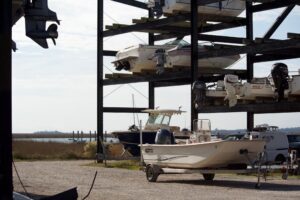
Place desiccant packs in the cabin and storage compartments to reduce mildew buildup during long storage. Once the boat is covered, decide where it will spend the off-season. If you don’t have space at home, boat and RV storage at a dedicated RecNation facility keeps it off the street and out of the weather.
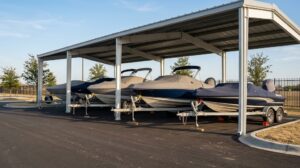
For boats that need a roof overhead but not a fully enclosed space, covered storage is a practical middle ground between outdoor and fully enclosed options.
Storing a Pontoon Boat for Winter
Pontoon boat winterization follows the same outboard motor steps described above. The pontoon-specific additions are straightforward:
- Inspect the aluminum logs for dents or damage where water could pool and freeze inside the tubes.
- Remove all deck furniture and store it separately so it doesn’t trap moisture or warp under a cover.
- Secure the deck cover tightly so snow and water don’t accumulate and warp the decking over several months of storage.
Final Thoughts on Winterizing Your Boat
Once your boat is fully winterized, engine fogged, fuel stabilized, bilge dry, and hull covered, the last decision is where it spends the off-season. RecNation boat and RV storage offers covered and uncovered options sized for trailered boats across facilities in Florida, Texas, Tennessee, and beyond. A properly winterized boat in a secure, dedicated storage facility arrives at spring launch in the same condition it left the water.
Frequently Asked Questions About Winterizing a Boat
Do You Leave Antifreeze in a Boat Engine Over Winter?
For inboard and sterndrive engines, yes. Propylene glycol antifreeze is pumped through the raw-water cooling circuit and left in place for the full duration of winter storage. It stays in the system until spring, when it is flushed out before the first launch. For outboard motors, the cooling system is self-draining when the motor is stored upright, so antifreeze is typically not required unless your manufacturer specifies otherwise.
How Long Does It Take to Winterize a Boat?
A complete DIY winterization typically takes two to four hours, depending on engine type and how familiar you are with the process. First-timers should plan for the full four hours and gather all supplies before starting. Stopping mid-job to buy antifreeze or a new oil filter adds time and breaks concentration.
Can You Winterize a Boat Yourself?
Yes. Most recreational boat owners with basic mechanical confidence can complete a full winterization without professional help. You need the boat’s owner manual, the supplies listed in this guide, and a clear afternoon. Professional winterization at a dealer typically runs $300 to $700 or more depending on engine type and services performed. DIY costs are usually $50 to $150 in supplies. If you want to understand how much should you pay for storage and other off-season expenses, that guide breaks down the full picture, and our breakdown of how much it costs to winterize and store a boat combines both expenses into one annual off-season budget.
How Do You Winterize a Pontoon Boat?
Winterizing a pontoon boat follows the same engine steps as any outboard motor: fresh water flush, gear lube change, fogging oil, and fuel stabilization. The pontoon-specific additions are inspecting the aluminum logs for dents where water could pool and freeze, removing all deck furniture for separate storage, and securing the deck cover tightly to prevent snow and water from warping the decking over winter.
What Happens If You Don’t Winterize a Boat?
Water trapped in the engine block, manifolds, raw-water cooling lines, or bilge expands when it freezes and cracks whatever contains it. Cracked engine blocks, split manifolds, and burst water lines are common results of skipping winterization in freezing climates. Repair costs for freeze damage can run from several hundred to several thousand dollars, significantly more than the cost of a proper boat winterization completed in an afternoon.