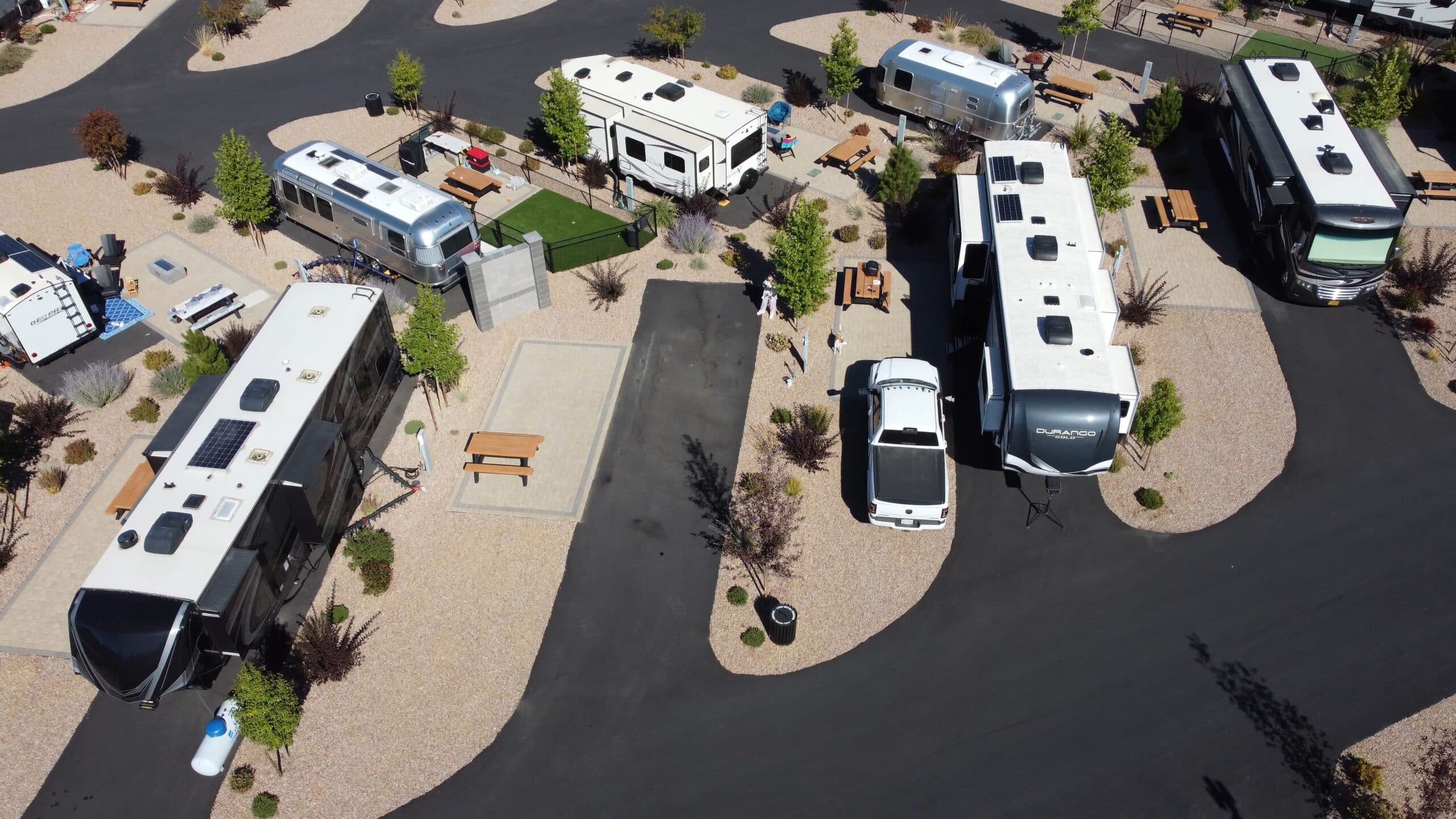
Most recreational vehicles (RVs) need between 200W and 800W of solar panels, but that range is only a starting point. The right number for your specific rig depends on four variables: your daily power consumption, the peak sun hours available in your travel region, the size of your battery bank, and the physical roof space your RV can actually accommodate.
This article walks through each variable in order, so you can calculate your own answer rather than guess from a generic figure.
Start With Your Daily Power Consumption
Solar sizing always begins with your load, not with a panel count. Before you can determine how many panels you need, you need to know how many watt-hours per day your RV actually consumes. The calculation is straightforward: multiply each appliance’s wattage by the number of hours it runs daily, then add up the totals.
Your daily energy usage will vary depending on which RV appliances you run and for how long. Newer 12V-native appliances draw significantly less power than older 120V appliances run through an inverter, so the age and efficiency of your equipment matters as much as the appliance category itself.
| Appliance | Wattage | Daily Runtime | Daily Wh |
| 12V refrigerator | 40 to 60W | 12 hrs | 480 to 720Wh |
| LED lighting | 20W | 4 hrs | 80Wh |
| Roof vent fan | 20 to 45W | 4 hrs | 80 to 180Wh |
| Laptop | 45 to 65W | 3 hrs | 135 to 195Wh |
| Phone charging | 10W | 2 hrs | 20Wh |
| Water pump | 50W | 0.5 hrs | 25Wh |
| Rooftop AC unit | 1,200 to 1,500W | 4 hrs | 4,800 to 6,000Wh |
Sample Daily Load Calculation
Take a weekend camper running a 12V fridge, two LED lights, a vent fan, and phone charging. Here is the math:
- 12V fridge: 50W x 12 hours = 600Wh
- LED lighting: 20W x 4 hours = 80Wh
- Vent fan: 30W x 4 hours = 120Wh
- Phone charging: 10W x 2 hours = 20Wh
- Total: 820Wh per day
That 820Wh figure becomes your starting input for the panel calculation in the next section. Run through the same exercise for your own rig and write down your number before moving on.
How Running a Rooftop AC Changes Everything
A single rooftop AC unit adds 4,800 to 6,000Wh per day to your load, which is roughly six times the consumption of everything else in the example above combined. That single appliance typically pushes the required solar panel wattage beyond what most RV roofs can physically support.
Running AC on solar is possible, but it almost always requires a hybrid approach. Solar handles your baseline loads, while a generator or shore power covers the AC during peak demand. Plan your system around that reality from the start.
How to Calculate the Number of Solar Panels You Need
Once you have your daily watt-hour total, converting it to a panel count takes three steps. The formula accounts for real-world losses that generic sizing guides often skip.
Step 1: Divide your daily watt-hours by your peak sun hours.
Use 4 hours as a conservative default for most of the continental US. If your daily total is 820Wh, divide by 4 to get 205W of panel output required.
Step 2: Add 25% for system efficiency losses.
Heat, wiring resistance, and charge controller losses reduce what your panels actually deliver. Multiply your Step 1 figure by 1.25. Using the example: 205W x 1.25 = 256W.
Step 3: Divide by your chosen panel wattage to get panel count.
A 256W requirement means two 100-watt solar panels won’t quite cover it. Two 200-watt solar panels (400W total) gives you comfortable headroom. Three 100W panels gets you to 300W, which works if your sun hours run higher than 4. Round up, not down.
This formula assumes an MPPT charge controller. If you’re using a PWM controller, add 20 to 30% to your wattage requirement before Step 3.
What Are Peak Sun Hours and Why They Matter
Peak sun hours measure the equivalent number of hours per day when sunlight intensity averages 1,000 watts per square meter. Four hours is a reasonable average for much of the continental US, but the actual figure varies substantially by location and season.
The Southwest averages 5.5 to 6.5 peak sun hours. The Pacific Northwest drops to 3 to 4 hours in winter. A snowbird traveling from the Midwest to Florida spans nearly that full range across a single season. The NREL National Solar Radiation Database provides location-specific data by region and month, and checking it for your actual travel route will sharpen your calculation considerably.
MPPT vs. PWM Charge Controllers: Why the Type You Choose Changes Your Panel Count
The charge controller sits between your panels and your battery bank, and the type you install directly affects how much of your panels’ output you actually use.
| MPPT Controller | PWM Controller | |
| How it works | Converts excess panel voltage into usable current | Clips panel voltage down to match the battery |
| Efficiency | Harvests 20 to 30% more power from the same panels | Loses the excess voltage as unused potential |
| Panel count impact | Matches the standard sizing formula as-is | Requires adding roughly one extra 200W panel to compensate |
A reader who follows the standard three-step formula above but installs a PWM controller will be undersupplied by that same margin. If budget limits you to a PWM controller, add one additional 200-watt solar panel to your calculated array to compensate.
This is not a product recommendation, it’s a calculation adjustment that prevents a common undersizing mistake.
Your RV Roof Is a Hard Limit: Check It Before You Calculate
Calculating your ideal wattage is only half the problem. Vents, AC shrouds, antennas, skylights, and fans all occupy fixed mounting area on your roof, and those obstacles cannot move.
If your calculation says you need 1,200W but your 24-foot travel trailer tops out at 300 to 400W of usable roof space, no panel upgrade solves that. Check your available roof space before finalizing any system design.
Roof load ratings matter too. RV roofs have structural weight limits, and mounting multiple heavy panels without checking manufacturer payload specifications can void warranties or create safety concerns. The Recreation Vehicle Industry Association sets construction and payload standards that govern what your roof can structurally support.
For RVs sitting between trips, covered storage protects the roof and any existing panel mounts from UV and weather damage: storing an RV outside without protection accelerates the roof wear that complicates a future install.
| RV Type | Approximate Usable Roof Space | Max Solar Capacity |
| Class A motorhome | Large, open deck | 600 to 800W |
| Class C motorhome | Moderate, cab overhang adds area | 400 to 600W |
| Fifth wheel | Front cap plus main roof | 400 to 600W |
| Travel trailer under 25 ft | Limited by length | 200 to 400W |
| Pop-up or teardrop | Minimal flat surface | 100 to 200W |
What to Do When Your Roof Can’t Fit Enough Panels
When roof space is the binding constraint, you have three practical paths forward. None of them require abandoning your solar goals entirely.
- Reduce your load. Switching to 12V-native appliances cuts consumption at the source. A 12V compressor fridge draws a fraction of what a residential unit converted through an inverter requires.
- Add a portable ground-deploy panel. A portable solar panel kit supplements your rooftop solar array when you’re parked and can be stowed during travel. It doesn’t solve the roof space problem, but it closes the gap.
- Accept a hybrid system. Solar handles your baseline daily loads. A generator or shore power covers peak demand from the AC unit or microwave. This is the most common real-world solution for full-timers who run high-draw appliances.
Solar Panel Requirements by RV Use Case
If you want a quick reference before running the full calculation, the three profiles below cover the most common RV lifestyles. These are starting points, not substitutes for your own load audit.
Profile 1: Weekend Warrior (2 to 4 days off-grid)
Typical loads include a 12V fridge, LED lighting, a vent fan, and phone charging. Rooftop AC is not expected. A 200 to 400W solar panel system handles this load comfortably under normal sun conditions. Pair it with a 100 to 200Ah battery bank. A basic MPPT charge controller is worthwhile even here. An inverter is optional unless you run 120V appliances.
Profile 2: Seasonal Camper (1 to 3 week trips, occasional hookup access)
Moderate loads with possible laptop use and small appliances. A 400 to 600W solar array covers most days, with shore power available as backup. Pair with a 200 to 300Ah battery bank. An MPPT charge controller and a modest inverter (1,000W) are recommended at this level.
Profile 3: Full-Time Liveaboard or Boondocker
Full residential fridge, laptop, extended off-grid camping, and possible AC use. This profile typically needs 800 to 1,200W or more of solar panel wattage, subject to roof space limits. A 400Ah or larger lithium battery bank and a 2,000W+ inverter are standard. If your RV is currently in storage between trips while you plan or upgrade your solar setup, factor that into your off-season routine.
RecNation RV and boat storage protects the vehicle from sun and weather damage during the planning period. You may also want to check how much should you pay for storage while budgeting for the build.
| Use Case | Solar Wattage | Battery Bank | Charge Controller | Inverter Needed |
| Weekend Warrior | 200 to 400W | 100 to 200Ah | MPPT recommended | Optional |
| Seasonal Camper | 400 to 600W | 200 to 300Ah | MPPT | Yes (1,000W) |
| Full-Time Liveaboard | 800 to 1,200W+ | 400Ah+ lithium | MPPT | Yes (2,000W+) |
A Note on Battery Bank Sizing
Your battery bank should carry you through 1 to 2 days without any solar input, covering cloudy days and travel days when your panels aren’t fully exposed. The formula: daily watt-hours x 2 days, divided by your system voltage (12V), gives you the amp-hours needed.
A reader consuming 500Wh per day needs a minimum of approximately 42Ah for a single day of reserve (500Wh divided by 12V). In practice, a 200Ah bank is more comfortable and allows for real-world variation. One critical difference: lithium batteries can be safely discharged to 80 to 90% of capacity, while lead-acid batteries should not go below 50%. A 100Ah lead-acid battery delivers roughly 50Ah usable. A 100Ah lithium battery delivers 80 to 90Ah.
That difference affects how large a bank you actually need and justifies the higher upfront cost of lithium batteries for full-timers. How you handle charging between trips matters too: our guide on whether to leave your RV plugged in during storage covers how that decision affects the battery bank you’re sizing here.
Do You Need an Inverter?
An inverter converts 12V DC power from your battery bank into 120V AC power for standard household appliances. You only need one if you plan to run 120V devices like a microwave, hair dryer, or standard coffee maker. If all your loads are 12V-native, an inverter is optional.
Size the inverter to your highest single-draw appliance with some headroom for startup surge. A 1,000W microwave needs at minimum a 1,000W inverter, with 1,500W recommended. Running a rooftop AC unit requires a 2,000W or higher inverter, a soft-start kit to reduce the startup surge, and a battery bank large enough to sustain that draw.
Putting the Full System Together
A solar panel system only works as well as its weakest component. Panels sized correctly for your load won’t help you if your battery bank is too small to carry you through two cloudy days. A well-sized battery bank won’t perform if your charge controller can’t efficiently harvest the available power. An undersized inverter will trip under load or damage connected equipment.
Follow this order when sizing your system:
- Calculate your daily load in watt-hours.
- Determine peak sun hours for your travel region.
- Size your solar array using the three-step formula above.
- Size your battery bank for 1 to 2 days of reserve.
- Choose an MPPT charge controller rated for your panel array’s total output.
- Size an inverter only if you need 120V appliances.
The energy storage capacity of your bank and the solar array output need to be matched to each other, not just to your daily consumption figure in isolation. If you plan to expand your system later, account for that now. Adding wiring and mounting points after the initial installation is significantly more expensive than doing it once correctly.
When to Call a Professional Installer
Basic rooftop panel installation is within reach for many DIY-capable RV owners. Certain situations, however, warrant a certified installer: complex roof penetrations, 48V system wiring, high-amperage load connections, or adding solar to a motorhome with existing chassis electrical integration. Monocrystalline solar panels on high-voltage arrays carry real risk if wired incorrectly.
The National Electrical Code Article 690 governs solar PV system wiring and is the standard a certified installer will follow. Improper wiring is both a safety risk and a potential insurance issue. If your system design involves anything beyond a straightforward rooftop install, get a professional involved before you start cutting wire.
If the build is going to stretch across multiple weekends, it’s also worth reading up on how to store an RV long term, since a mid-build RV often sits longer than owners initially plan for.
Final Thoughts on Sizing Your RV Solar System
Planning a solar setup is one of the more involved upgrades an RV owner takes on, and it often happens while the rig sits parked for weeks during the planning and equipment phase. If your RV is between trips or in the middle of an extended build project, RecNation offers RV and boat storage with covered and enclosed options that shield your roof-mounted panels and exposed wiring from weather damage between installation sessions. A secure, protected storage environment makes the build process easier to manage on your own schedule.
Frequently Asked Questions
How many watts of solar power do I need to run an RV air conditioner?
A standard RV rooftop air conditioner draws 1,200 to 1,500 watts while running and may surge to 2,000 or more watts on startup. To run it on solar, you typically need at least 1,200 to 2,000W of panels, a lithium battery bank of 400Ah or more, and a 2,000W or higher inverter. Most RV owners who run AC on solar also install a soft-start kit to reduce the startup surge and pair their solar array with a generator for peak demand periods.
Can you run an RV entirely on solar power?
Yes, but with realistic expectations. A full-time solar-only setup works well for modest loads including lighting, a 12V refrigerator, fans, and device charging. Running high-draw appliances like a rooftop AC unit on solar alone requires a large array of 1,000W or more, a substantial battery bank, and reliable sun conditions. Most full-time RVers who do extensive boondocking use solar as their primary source but keep a generator available or plan around shore power for heavy-demand situations.
How many solar panels does it take to charge a 100Ah RV battery?
A single 100-watt solar panel produces approximately 30 amp-hours per day under average conditions with 4 peak sun hours. To fully recharge a 100Ah lead-acid battery discharged to 50% (meaning 50Ah needs replacing), one 100W panel in good sun can do it in a day. For a 100Ah lithium battery discharged to 20%, you need closer to 80Ah of recharge, which may take one 100W panel 2 to 3 days or require a second panel for reliable single-day recovery.
What size solar panel kit do I need for full-time RV living?
Full-time RV living without regular hookups typically requires 600 to 1,200W of solar, depending on your appliances and how often you run air conditioning. A practical starting point for a full-timer with a residential-style setup is 800W of panels paired with a 300 to 400Ah lithium battery bank. Always calculate your actual daily load first. The right solar panel wattage is determined by your personal power consumption, not a generic recommendation.
How long does it take solar panels to charge an RV battery?
Charge time depends on the battery’s state of depletion, the panel wattage, and the available peak sun hours that day. A 200-watt solar panel producing roughly 60Ah per day in good sun can recharge a 100Ah lithium battery depleted to 20% in approximately 1.5 to 2 days, or in a single day if the battery is only partially discharged. An MPPT charge controller recovers power 20 to 30% faster than a PWM controller from the same panel output.
Is 400 watts of solar enough for an RV?
For most weekend campers and moderate seasonal users, 400W is a solid and sufficient system. It handles a 12V refrigerator, LED lighting, a vent fan, device charging, and a laptop without issue on most days. For full-time liveaboards or anyone planning to run a rooftop AC unit on solar, 400W will fall short. If your total daily consumption is under 800Wh and you have at least 4 peak sun hours, a 400W solar panel system can keep pace with your load.