Brentwood, Tennessee winters are mild enough to tempt you into skipping winterization and cold enough to crack your water lines if you do. Overnight temperatures in Williamson County regularly fall below 32°F from December through February, and the daily swing between a sunny afternoon in the 50s and a clear-sky night in the 20s creates repeated freeze-thaw stress on water lines, roof seals, and slide-out gaskets.
This is not a Minnesota deep freeze, but it is enough to cause serious damage to an unprepared recreational vehicle (RV). This checklist covers every system you need to address before your rig goes into storage for the season.
Why Brentwood Winters Require Real Winterization
If you’re searching for RV and boat storage options in the area, you’ll find plenty of facilities near Brentwood, Tennessee. What you won’t find is much guidance on what to do before you drop the rig off. That gap is what gets RVs into trouble.
The Freeze-Thaw Cycle Is the Real Threat
The danger in Brentwood is not sustained sub-zero cold. It is the cycling. National Weather Service data for the Nashville forecast area shows Williamson County averaging nighttime lows in the upper 20s to low 30s from December through February, with daytime highs frequently climbing back into the 50s. That 20 to 30 degree swing, repeated over weeks, works stress into any seal or joint that holds water. Tennessee winter climate considerations matter here precisely because the moderate pattern fools owners into thinking the cold is not serious enough to act on.
What Gets Damaged If You Skip Winterization
Skipping winterization doesn’t cause vague, general wear. It causes three specific, predictable failures, and each one comes with a real cost attached:
- Water lines crack or split: Residual water freezes and expands inside PVC or flexible tubing, and repair typically runs $500 to $2,000 or more depending on access and extent.
- Roof seals deteriorate: Freeze-thaw cycling opens micro-gaps in lap sealant, letting Brentwood’s wet winter rain work into the substrate over weeks.
- Batteries sulfate: Left connected and idle in cold conditions, a battery undergoes a chemical process that permanently reduces capacity and often kills it entirely before spring.
Step 1: Drain and Protect the Water System
Water system antifreeze is the most important product you will use in this entire process. Get it right here and you prevent the single costliest category of winter storage damage. The Recreation Vehicle Industry Association notes that documented failure to winterize a water system is the most common basis for denying freeze-damage warranty claims from manufacturers including Thor, Winnebago, and Forest River.
Follow these steps in order:
- Drain the fresh water tank completely using the tank’s drain valve. Do not rely on running faucets to empty it.
- Drain and flush your RV holding tanks, black and gray. Use a tank flush wand to rinse them clean, then let them drain fully before closing the valves.
- Bypass the water heater using the bypass valve or kit. The heater has its own drain plug and must be drained independently with the anode rod removed.
- Open every faucet, both hot and cold, plus the showerhead and any exterior shower. Run the water pump briefly to push remaining water out of the lines, then turn the pump off.
- Add non-toxic propylene glycol RV antifreeze through the system using a pump bypass kit or a hand pump. Run water system antifreeze through until pink fluid appears at every faucet, the toilet valve, and any exterior outlet.
Don’t Forget the Water Heater
The water heater is the step most owners miss. It has a separate drain plug at the bottom of the tank that is independent of the main line drains. Remove the anode rod, let the tank drain fully, and leave it open during storage. Leaving even a quart of water sitting in the heater tank defeats everything else you did to the lines.
Running Antifreeze Through the Lines
The pump bypass kit method is the easiest approach. It routes antifreeze directly into your water pump intake so the pump pushes it through every line. RV water pump winterizing is part of this step, so run the pump briefly with antifreeze at the intake so the pump head itself gets treated, not just the downstream lines. If your RV doesn’t have a bypass kit, a handheld pump sprayer connected to the fresh water inlet works as an alternative.
Either way, use non-toxic propylene glycol sold specifically as RV and marine antifreeze, not automotive antifreeze, which contains ethylene glycol and is toxic in potable water systems.
Step 2: Battery Disconnection and Storage
A battery left connected and idle in a cold, parked RV will self-discharge faster than most owners expect. Cold temperatures reduce a lead-acid battery’s effective capacity, and Brentwood’s overnight lows accelerate the discharge rate. A battery dropped below 80% charge repeatedly will sulfate, a process that permanently reduces its ability to hold a charge. A fully dead battery stored in cold conditions may not recover at all.
Your options for battery disconnection and storage, in order of best practice:
- Remove the battery and store it in a climate-controlled space on a battery tender or trickle charger. Check it monthly and keep it above 80% charge.
- Leave the battery in the RV connected to a maintenance charger via a shore power hookup if the storage facility provides one.
- Disconnect the negative terminal to stop parasitic drain. This is the least protective option but better than leaving the battery connected with no charge source.
Lithium iron phosphate (LiFePO4) batteries handle cold better than lead-acid, but they should not go into storage fully discharged either. Charge to about 50 to 60% before a long storage period.
Trickle Chargers vs. Full Disconnection
A battery on a maintenance charger stays at float voltage all winter. Come spring, it’s at full capacity with no lost cycle life. A disconnected battery tells a different story: it still self-discharges slowly through natural chemical processes, about 5 to 10% per month at room temperature, faster in the cold. Over a four-month storage period, that’s enough to drop it into the sulfation zone without a single wire drawing from it.
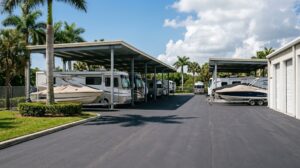
If your storage facility offers covered spaces with electrical hookups, that’s the lowest-friction way to keep a battery healthy all winter. RecNation’s nearest facility, in Nashville, includes covered storage configurations built for exactly this kind of setup. Check availability at RV storage in Brentwood.
Step 3: Roof Inspection, Seals, and Exterior Protection
Brentwood averages 4 to 5 inches of rain in January and February. An open seam in your roof sealant is a direct path for water into the interior substrate during that period. Roof inspection and sealing is not an optional step before winter storage. If you are weighing covered storage for your RV as an option, completing the exterior checks below still matters, because even a covered facility does not stop driving rain from reaching unsealed seams on the sides and roof edges.
Checking Seals Before Brentwood’s Wet Winter Months
Walk every inch of your roof and inspect these points:
- Roof vents and skylight frames: Look for cracked, lifted, or missing lap sealant around the perimeter. Any gap gets manufacturer-recommended lap sealant before storage.
- Antenna and solar panel penetrations: These are high-failure points because the hardware flexes slightly with temperature. Reseal if the sealant is cracked or pulling away.
- Slide-out seams: Extend each slide, wipe the rubber gaskets with a clean cloth, and apply a rubber conditioner (silicone-based, not petroleum-based). Retract the slides before storage. Slide-out maintenance keeps the gaskets pliable through the temperature swings ahead.
Tire and Suspension Care During Storage
Tire flat-spotting prevention matters any time an RV sits stationary for more than 30 days. Cold temperatures cause tire pressure to drop and rubber compounds to stiffen, which concentrates load stress on one contact patch. Inflate tires to the manufacturer’s maximum cold-weather specification before storage. If the rig will sit for more than a month, use leveling blocks to take weight off the tires, or move the RV slightly forward or backward once every 30 days to shift the contact patch. Place UV-rated tire covers on each wheel to slow sidewall cracking from ambient light exposure, even in winter.
Step 4: Interior Prep, Pest Prevention, and Moisture Control
Interior moisture and mold prevention is where many owners fall short after completing all the mechanical steps. A sealed RV in Brentwood’s humid winter environment generates condensation on interior surfaces repeatedly. Mold can establish on upholstery or wood paneling within two to three weeks given the right conditions. Work through these steps before you leave the rig:
- Remove every food item from the interior, including packaged dry goods, condiments, paper products, and anything stored in cabinets. Rodents do not need much.
- Clean and dry the refrigerator completely. Leave the doors propped open with a box of baking soda inside to absorb residual odor.
- Open all cabinet doors and drawers slightly to allow air to circulate and prevent moisture pockets from forming against surfaces.
- Place desiccant moisture absorbers (such as DampRid) in each room. Replace any that are already saturated before closing up.
- Partially open roof vents or install rain-rated vent covers that allow airflow while blocking precipitation.
Rodent Prevention in Middle Tennessee
Brentwood’s suburban-rural fringe is active rodent territory in winter as mice seek warmth. Rodent and pest prevention is not optional here. The most common entry points are gaps around water line penetrations through the floor and walls, wheel well openings, and loose seams in underbelly insulation. Pack steel wool tightly into any opening larger than a quarter inch. Place commercial rodent deterrent packs or sealed dryer sheets inside cabinets and under the chassis as a secondary deterrent.
Propane System Shutdown
Close the main propane valve at the tank before storage. Check the regulator for corrosion or cracking, and inspect the hose connection for wear. Propane system shutdown also means confirming that tanks remain outside any fully enclosed storage unit per fire code. If you are considering an indoor or fully enclosed storage option, verify with the facility that external propane storage is accommodated in their setup.
Step 5: Generator Prep and Final Walk-Through
Generator prep is the most commonly skipped step in pre-storage RV winterization. A tank of untreated summer fuel left sitting through winter forms varnish deposits in the carburetor. An empty tank rusts from the inside. Neither condition makes for an easy spring startup.
Fuel Stabilizer: Why It Matters for a Winter Storage Period
Untreated gasoline begins to degrade in as little as 30 days. Add a generator fuel stabilizer to a full tank of fresh fuel at a ratio of roughly 1 oz per gallon, following the product label. Run the generator for 10 to 15 minutes after adding stabilizer so the treated fuel circulates through the carburetor and fuel lines. If an oil change interval is approaching, do it before storage rather than after. Old oil contains combustion byproducts that accelerate internal corrosion over an idle winter.
Your Final Pre-Storage Checklist
Before you leave your vehicle storage facility, run through this pre-storage RV inspection checklist and photograph each item as confirmation:
- Fresh water tank drained completely
- Black and gray water tanks flushed and drained
- Water heater bypassed and drained
- Water system antifreeze run through all lines, faucets, showerhead, and toilet
- Battery removed or connected to a maintenance charger
- All food and perishables removed from interior
- Roof seals and vent frames inspected and resealed where needed
- Slide-outs retracted with gaskets conditioned
- Tires inflated to maximum cold-weather spec, tire covers installed
- Leveling blocks or movement schedule in place for flat-spotting prevention
- Propane valve closed and regulator inspected
- Interior moisture absorbers placed in each room
- Roof vents cracked or covered with rain-rated covers
- Generator run with stabilized fuel, oil changed if due
Williamson County storage regulations for residential RV parking also factor in here. Brentwood’s zoning ordinance addresses driveway and yard storage, so if home storage was the plan, check with the city before assuming the driveway is a legal option.
Ready to Store Your RV This Season?
You’ve worked through the water system, battery, exterior seals, interior prep, and generator. The rig is ready. The last step is choosing where it goes. Most winter storage facilities in the area expect this kind of prep completed before move-in, and skipping it can shift liability for freeze damage from the facility to you.
Don’t undo months of prep with the wrong storage choice. Covered and enclosed RV storage or climate-controlled storage handles exactly this kind of seasonal lay-up, keeping your rig protected from Brentwood’s freeze-thaw cycles, wet winters, and UV exposure all winter long. RecNation’s nearest facility, in Nashville, offers both. Check current availability and lock in your spot before the season fills up.
Frequently Asked Questions
When should I start winterizing my RV in Brentwood, Tennessee?
Plan to have everything done by mid-November at the latest. Brentwood’s first hard freezes typically show up in late November, but it’s not unusual for overnight temperatures to dip below 32°F as early as October. Give yourself two to three weeks before your expected first frost so you can work through each system without rushing, and still have time for a second pass if something gets missed.
What antifreeze should I use to winterize my RV water system?
Stick with non-toxic propylene glycol antifreeze made specifically for RV potable water systems; it’s usually sold in pink jugs labeled “RV and marine antifreeze.” Automotive antifreeze is a hard no here, since it contains ethylene glycol and stays toxic if any residue is left in your drinking water come spring. Most RV water systems need two to three gallons to fully treat all the lines, the toilet valve, and any exterior faucets.
Should I remove my RV battery before putting it in winter storage?
For a multi-month lay-up, removing the battery and putting it on a trickle charger in a climate-controlled space is your best bet. Left connected in a cold, parked RV, a lead-acid battery will self-discharge and can sulfate permanently within 60 to 90 days. If pulling the battery isn’t practical, the next best thing is connecting it to a maintenance charger through a shore power hookup and checking on it monthly.
How do I prevent rodents from getting into my RV during winter storage?
Start with the food. Remove every last bit of it, including packaged dry goods and paper products, since that’s what draws rodents in first. Next, block their entry points. Water line penetrations, wheel wells, and gaps in the underbelly insulation are the usual culprits, and steel wool packed tightly into anything larger than a quarter inch does the job. Commercial rodent deterrent packs or sealed dryer sheets in cabinets and near the chassis add a second layer. Brentwood’s suburban-rural fringe means mice are actively hunting for warm, enclosed spaces come winter, so this isn’t a step to skip.
Are there covered RV storage options near Brentwood, TN?
Yes. A covered structure protects against Brentwood’s winter rain and frost without the cost of a fully enclosed indoor unit, and for most seasonal storage, that’s enough. RecNation offers RV storage near Brentwood; check with them directly to confirm what protection levels are available and whether electrical hookups for battery maintenance are included.
Do I need to keep insurance on my RV during winter storage?
Yes. Dropping your insurance entirely leaves you exposed to theft, vandalism, and weather damage. None of those require the RV to actually be moving to become a problem. A lot of owners switch to a comprehensive-only or storage endorsement policy for the lay-up period instead.
It covers non-collision risks at a lower premium, a distinction the Insurance Information Institute covers in its guidance on stored-vehicle coverage. Before storage begins, confirm two things with your insurer: that coverage extends to a parked, non-operational vehicle, and that no winterization documentation requirement is buried in your policy.