Summer in Rockwall isn’t just hot, it’s sustained triple-digit heat, UV levels that sit at ‘extreme’ for weeks on end, and a storm season that runs right through the months your RV will be sitting in storage. Most guides don’t account for any of that. So here’s one that does, a system-by-system checklist that covers every part of your rig before you walk away for the season.
Can You Store an RV in Rockwall Without a Storage Facility?
Before you spend an afternoon prepping your rig, it’s worth confirming whether you can legally park it at home. Rockwall, Texas, is a dense DFW suburb with a high concentration of homeowners association (HOA)-governed neighborhoods, and many residents cannot store an RV on their property at all.
If driveway storage turns out not to be an option, a dedicated RV and boat storage facility is the practical solution. The prep checklist below applies regardless of where your rig ends up parked.
What the City of Rockwall Says About RV Storage
The City of Rockwall Code of Ordinances, Chapter 26, Article VII, doesn’t ban RV storage outright, but it does set real conditions. Your rig has to sit behind or beside the house, at least 10 feet back from the front corner of the structure, unless it’s under 6 feet tall, in which case that setback doesn’t apply.
On lots under 1.5 acres, it also needs to be screened from the street with a 6-foot solid fence or equivalent landscaping, and parked on an approved surface, concrete, asphalt, stabilized gravel, or pavers, not bare dirt or grass. Measure your setback and check your lot size against the full code text before assuming your driveway qualifies.
How HOA Rules Typically Restrict RV Parking in DFW Suburbs
HOA covenants, conditions, and restrictions (CC&Rs) frequently go further than city code. Many Rockwall-area subdivisions, including communities in Heath and McLendon-Chisholm adjacent neighborhoods, prohibit any RV that is visible from the street. Some ban driveway storage entirely, regardless of screening.
Locate your HOA’s vehicle storage policy before storage season starts. If the CC&Rs are unclear, contact the management company directly. A violation notice mid-summer is harder to deal with than confirming the rules beforehand.
Rockwall Summer Storage Conditions: What Your RV Is Actually Up Against
North Texas summers don’t leave much margin for a generic storage plan, and the numbers back that up. Here’s what your RV is actually sitting through for months at a time:
- 100°F+ days: Dallas-Fort Worth averages 20 days per year above 100°F over the 1991-2020 climate normal, and recent summers have run well above that, 2023 alone saw 55 days at or above the century mark. That’s not a heat wave, that’s the baseline.
- Surface temperatures: Asphalt and concrete regularly exceed 140°F on peak days, which matters directly for your tires.
- UV index: The EPA UV Index scale classifies a UV index of 8 and above as “very high” and 11+ as “extreme.” North Texas routinely hits 10 to 11 from June through August.
Those numbers translate to specific failure modes, not just generic sun damage. UV at index 10+ degrades EPDM and TPO roof membranes measurably within a single season without a UV protectant applied before storage, and North Texas storm season overlaps with the same window, adding hail and high-wind exposure on top of the heat.
Interior Heat Buildup and What It Damages
A sealed RV parked in direct sun acts like a greenhouse, and interior temperatures can reach 150°F to 160°F on peak Texas heat days. At those temperatures:
- PVC trim and laminate cabinetry delaminate.
- Upholstery cracks.
- Adhesives soften and release.
- Electronics suffer permanent battery capacity loss.
Slide-out mechanisms are just as vulnerable; the seals and lubrication that keep them moving can dry out and harden under sustained heat.
UV Exposure and Exterior Degradation in North Texas
EPDM and TPO are the two most common RV roof materials, and both degrade under direct UV exposure without a protective coating:
- EPDM (Ethylene Propylene Diene Monomer): A synthetic rubber membrane that develops surface chalking and micro-cracks that allow water intrusion.
- TPO (Thermoplastic Polyolefin): A newer, seam-welded membrane that can delaminate at those seams under sustained UV stress.
A roof inspection before storage lets you catch existing separations before summer heat makes them worse. Paint and gel coat oxidize under sustained UV index 10+ conditions, accelerating a dull, chalky finish that takes compounding to restore.
The System-by-System Summer Storage Checklist
Here’s the checklist, broken down one subsystem at a time. If you want the bigger picture on vehicle prep beyond just summer, the ultimate guide to vehicle storage is worth a look, too.
Roof, Seals, and Exterior
Your roof takes the most direct UV hit of anything on the rig, and small problems now turn into bigger ones after a summer of heat cycling. Walk it carefully and check for:
- Cracks, separations, or bubbles in the EPDM or TPO membrane.
- Compromised caulk around vents, skylights, A/C units, and slide-out edges. Re-seal anything that shows cracking or gaps.
- Apply a UV protectant rated for your specific roof membrane type. Do not skip this step for uncovered outdoor storage.
- Wash and wax the exterior sidewalls and fiberglass surfaces.
- Lubricate all slide-out seals with a rubber-safe conditioner before retraction.
Interior
Whatever you leave inside becomes fuel for the heat, food draws pests, moisture turns to mold, and electronics don’t survive the swings. Here’s what to handle before you close the door:
- Remove all food, paper products, cardboard, and organic materials without exception.
- Wipe down every surface, including inside cabinets, the refrigerator, and the microwave.
- Leave all interior cabinet doors open to allow air circulation.
- Remove electronics that are sensitive to high heat, or store them in a cushioned bag away from direct sun through windows.
- Place a moisture absorber such as a dehumidifier product (DampRid or equivalent) in enclosed spaces to reduce humidity buildup that promotes mold in sealed, hot spaces.
Water System and Tanks
Black and grey tanks left with any residue will bake over a North Texas summer, and the bacteria and odor that result are much harder to clear after months in the heat than after a cool-weather storage stretch. A complete sewage system flush isn’t optional here.
- Flush and sanitize the fresh water tank completely. Leave it dry, not full.
- Drain and flush the black tank. Use a tank rinser wand until the water runs clear.
- Drain and flush the grey tank with clean water.
- Clean tank sensors with a sensor-safe treatment to prevent false readings after storage.
- Leave all holding tank valves in the manufacturer-recommended storage position.
- Leave faucets slightly open to relieve any residual pressure in the water system.
Note: This is not a winterization process. Do not add antifreeze for freeze protection. The goal here is eliminating residual moisture that will grow mold in sustained heat.
Electrical and Battery
Heat drains a battery faster than cold ever will, and skipping maintenance here means coming back to one that’s already past the recovery threshold.
- Check the battery state of health before storage. If it is already near the end of its life, replace it now.
- Disconnect the battery, or connect it to a maintenance tender rated for your battery chemistry. AGM, lithium, and flooded lead-acid batteries each have different maintenance requirements.
- Turn off all 12V loads and breakers inside the RV.
- If the storage location has no shade, cover solar panels or disconnect them to prevent overcharging a disconnected battery bank.
Tires and Wheels
Tires sitting still on superheated Rockwall concrete can develop flat-spotting and ozone cracking in a single summer, which is exactly why the Tire Industry Association has specific guidelines for static loads in high-heat conditions.
- Check and adjust tire pressure to the manufacturer’s recommended cold inflation pressure. Do not over-inflate or under-inflate.
- Install tire cradles to distribute the load and reduce flat-spot formation.
- If cradles are not available, move the RV forward or backward by 6 inches every four to six weeks during storage.
- Cover all tires with UV-rated covers rated for at least 99% UV blockage.
- Park off bare blacktop where possible. Concrete or a paved covered surface runs cooler than open asphalt.
Fuel System and Generator
Ethanol-blended fuel (E10 and E15), standard at Texas pumps, starts degrading in as few as 30 days in summer heat without a stabilizer, that’s not a rule of thumb, it’s a documented timeline from fuel stabilizer manufacturer testing.
- Add a fuel stabilizer rated for ethanol-blended fuel to the generator tank.
- Run the generator to operating temperature, then run it for 10 additional minutes after adding the stabilizer to distribute it through the system.
- Shut down the generator and do not run it again until you return.
- Turn off the propane at the tank valve. Do not leave propane tanks pressurized at the regulator during long-term storage.
- Inspect propane connections and the regulator for wear or cracking before closing the valve.
Covered vs. Uncovered Storage in Rockwall Summer Heat: What Changes in Your Prep
Your storage type changes which risks are most acute, not whether the prep checklist applies. Here is how the key risks compare across the three common storage options in the Rockwall area.
| Risk Category | Uncovered Outdoor | Covered Outdoor | Fully Enclosed |
| UV exposure (roof membrane, tires) | Highest | Reduced | Eliminated |
| Interior heat buildup | Highest | Moderate | Lowest |
| Hail exposure | Highest | Reduced or eliminated | Eliminated |
| Pest access | High | High | Lower, facility-dependent |
| Tire sidewall degradation | Fastest | Slower | Slowest |
Under uncovered direct sun, roof membrane and tire sidewall degradation compress from a multi-year timeline to within one season. A single roof repair typically costs more than the price difference between covered and uncovered storage for an entire summer.
When Uncovered Outdoor Storage Requires Extra Prep
Parking outside uncovered means the roof and tire sections of the checklist above matter more than anything else. On top of that:
- Use a full RV cover with a documented UV blockage rating, ventilated covers reduce interior moisture buildup compared to solid-panel covers.
- Tire covers aren’t optional here, they’re mandatory for uncovered outdoor storage in a Rockwall summer.
- Check in more often. A monthly walk-around catches seal failures, pest entry, or tire issues before they compound.
What Covered Storage Actually Protects Against
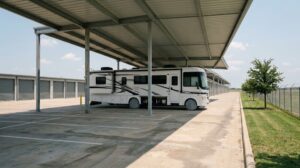
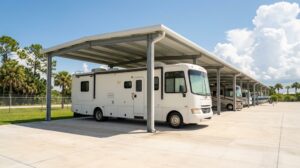
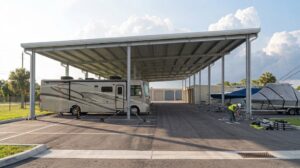
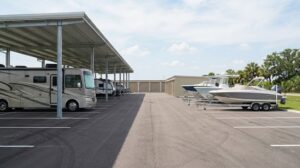
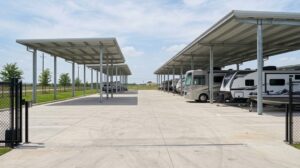
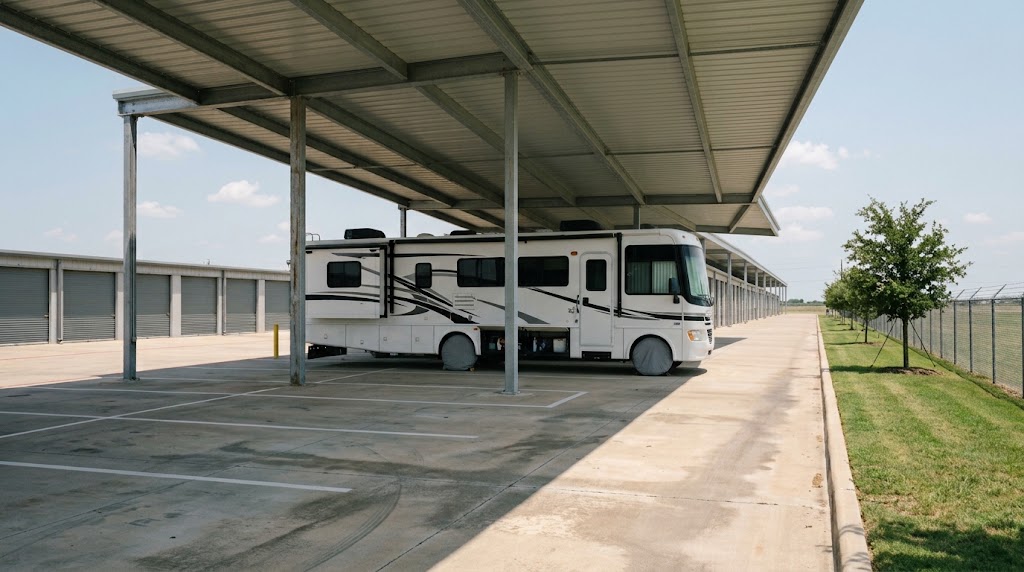
Covered storage reduces UV exposure on the roof membrane, cuts interior heat buildup to a meaningful degree, and provides hail protection during North Texas storm season. It does not eliminate pest risk, condensation, or battery drain, the prep steps for electrical, pest exclusion, and water systems still apply fully regardless of cover type.
That’s the calculation worth making before choosing a facility: covered buys you real protection on the risks that compress fastest in direct sun, without solving everything. For owners weighing carport and covered storage options, RecNation’s nearest facility, about 6.3 miles away in Wylie, offers dedicated vehicle storage spaces sized for full-size rigs, including a covered configuration.
Pest Prevention for North Texas Summer Storage
Generic advice to “seal your entry points” doesn’t cover what Rockwall-area storage actually requires. Two pests dominate the threat profile here: roof rats (Rattus rattus) and American cockroaches.
Roof rats are actively expanding across the DFW urban corridor, per Texas A&M AgriLife Extension urban pest management research, and they’re exceptional climbers, able to reach an RV from overhanging trees, nearby fences, or adjacent structures. Cockroaches, on the other hand, follow moisture: any residual tank water, plumbing condensation, or food trace your interior cleaning missed is enough to draw them in.
Roof Rat Prevention Specific to DFW Storage
- Identify and seal all exterior gaps 1/4 inch or larger. Roof rats can compress through surprisingly small openings.
- Use steel wool or metal mesh for gap sealing. Foam alone is not sufficient; rats chew through it.
- Park away from overhanging trees and fences if your storage location allows any flexibility in positioning.
- Place rodent deterrent pouches inside the RV, including in storage bays, the wet bay, and the cab area.
- Remove all nesting-attractive materials from the interior: paper towels, cloth products, and loose insulation materials.
- Avoid mothballs. They are regulated as pesticides in Texas and are ineffective for rodent deterrence in outdoor storage conditions.
Cockroach and Insect Prevention in Summer Storage
The most effective cockroach prevention is eliminating moisture. If the water system steps in the checklist above were done correctly, you have removed the primary attractant. Add these targeted measures:
- Place boric acid bait stations near the water heater bay, the wet bay, and tank access panels.
- Bait stations outperform sprays in summer storage scenarios because they remain active over weeks, not hours.
- Check and re-apply bait stations on any check-in visit during the storage period.
Ready to Store Your RV in Rockwall This Summer?
You’ve just spent a chunk of your weekend going through this whole checklist, tanks flushed, tires covered, battery tended, roof inspected. That’s real work, and it deserves somewhere decent to sit for the next few months. If storing it yourself isn’t in the cards, RecNation’s nearest facility, about 6.3 miles away in Wylie, fits full-length rigs, with the access and security to make a summer-long stay one less thing on your mind.
Frequently Asked Questions About Summer RV Storage in Rockwall
What steps should I take to prepare my RV for summer storage in Texas?
Preparing an RV for summer storage in Texas means working through every major system before you park it: inspect and reseal the roof, drain and flush all water tanks completely, add fuel stabilizer to the generator, disconnect or tender the battery, set tires to the correct cold inflation pressure and cover them, remove all food and organic materials from the interior, and seal any exterior gaps larger than 1/4 inch. Texas summer heat accelerates every form of storage damage. What takes two seasons in a mild climate can happen in one North Texas summer.
How do I protect my RV from heat damage during summer storage?
The most effective way to protect an RV from heat damage during storage is shade. Covered or enclosed storage keeps interior temperatures significantly lower than parking in direct sun, where interior temps can reach 150°F or higher. If covered storage isn’t available, a ventilated RV cover with a documented UV blockage rating is the next best option. Inside the RV, leave cabinet doors open for air circulation, remove heat-sensitive electronics, and place moisture absorbers to reduce humidity that promotes mold in hot, sealed spaces.
Should I disconnect my RV battery when putting it in summer storage?
Yes, disconnecting or tending your RV’s battery is necessary before summer storage, since heat accelerates battery self-discharge, and a battery left connected with no charge source can fall below the recovery threshold within weeks in a Texas summer. Either disconnect the battery and store it somewhere cool with periodic charging, or connect it to a maintenance tender rated for your battery type; a charger sized for flooded lead-acid can overcharge an AGM or lithium pack if you use the wrong setting. Check the battery’s state of health before storage so you aren’t returning to one that was already near end of life.
How do I keep pests out of my RV during summer storage in Rockwall?
Keeping pests out of an RV during summer storage in Rockwall starts with eliminating attractants: remove all food, wipe down every surface, and flush the black and grey tanks until no residue remains. Seal all exterior gaps 1/4 inch or larger with steel wool or metal mesh. Place rodent deterrent pouches inside and position boric acid bait stations near wet bays and tank access panels. Park away from overhanging trees if possible, since roof rats commonly use branches to access parked vehicles.
What is the best way to store an RV in a hot climate like Rockwall, Texas?
Covered or enclosed storage is the best way to store an RV in a hot climate like Rockwall, Texas, because it reduces direct UV exposure on the roof membrane, cuts interior heat buildup, and provides hail protection during North Texas storm season. If covered storage isn’t available, a full RV cover with a documented UV blockage rating is the minimum for a summer-long period. Regardless of storage type, the prep checklist still matters; no storage location fully compensates for tanks that weren’t flushed, tires that weren’t covered, or a battery that wasn’t maintained.
Is covered RV storage worth the extra cost over uncovered outdoor storage in Texas?
For a summer-long storage period in North Texas, covered storage is worth the extra cost over uncovered outdoor storage for most owners. UV degradation of roof membranes, tire sidewall ozone cracking, and interior damage from extreme heat all progress faster under direct sun than in shade, and those repair bills add up fast on an older unit. If the RV is older or the roof and tires are already showing age, the case for covered storage is stronger.