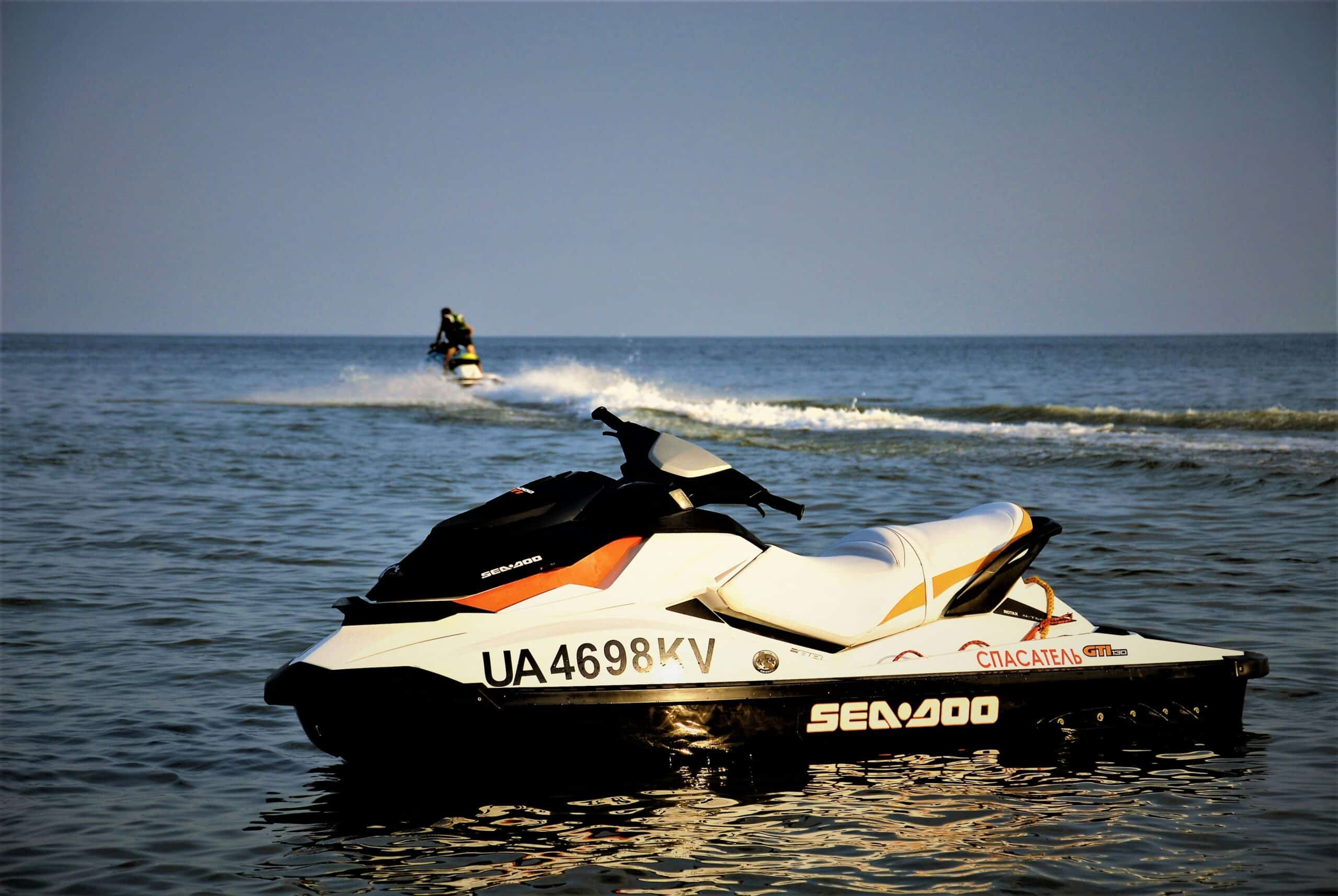
Buying a jet ski is the easy part. The owners who get the most out of theirs are the ones who understand what comes after the purchase: registration, break-in, routine care, and how to properly store the watercraft when the season ends.
This guide covers the full arc of personal watercraft ownership, from what you’ll actually spend in year one through step-by-step winterization and spring recommissioning, so you have one complete reference instead of five half-answers.
What It Actually Costs to Own a Jet Ski
The sticker price is only part of the story. A new personal watercraft comes with a range of costs that can push your first-year total well past the dealership number on the window.
Entry-level rec-lite models from brands like Sea-Doo and Yamaha WaveRunner start around $8,500 to $10,000. Mid-range recreation models with more power and features run $10,000 to $15,000. Luxury touring and performance PWCs start near $17,000 and can exceed $20,000 before options. Those are pre-tax, pre-freight numbers.
Layer in the real first-year cost stack and the picture changes quickly. Here is what to budget beyond the base price:
- Trailer: $1,500 to $3,500 depending on capacity and features
- Freight and dealer prep: $500 to $1,000, often non-negotiable at franchised dealers
- Registration and titling: Varies by state; typically $50 to $150 at initial registration
- Insurance: $150 to $500 per year for recreational coverage
- Safety gear: Life jackets, a fire extinguisher, and a sound-producing device are required by U.S. Coast Guard safety requirements for each operator
- Annual maintenance: $300 to $600 for routine PWC maintenance on a recreational schedule
Total first-year cost for a mid-range new PWC typically lands between $14,000 and $18,000 all-in. That number is not meant to discourage you. It is meant to help you plan accurately.
New vs. Used: What You Give Up and What You Gain
A new jet ski gives you a factory warranty, a break-in period starting at zero hours, and no question marks about its history. A used unit may save you $3,000 to $6,000 upfront, but you inherit whatever the previous owner did or skipped.
| New | Used | |
| Warranty | Factory warranty included | None, unless transferable |
| History | No question marks | Unknown unless documented |
| Upfront savings | None | $3,000 to $6,000 |
| What to inspect | N/A | Hull cracks and impact damage, engine hours, service records, impeller and wear ring, trailer frame condition |
| Financing terms | Typically more favorable | Typically less favorable |
Before buying used, inspect the hull for cracks and impact damage, check the engine hours, ask for service records, and look closely at the impeller and wear ring for scoring or debris damage. Trailer condition matters too, since a corroded frame can add replacement costs immediately, and financing terms are also typically more favorable on new units, which is worth factoring into total cost of ownership comparisons.
Ongoing Annual Costs to Budget For
Fuel is the cost most new owners underestimate. Personal watercraft consume 3 to 4 gallons per hour at moderate throttle, so a full day on the water adds up fast. Annual service typically costs $300 to $600 for a recreational rider following the manufacturer’s schedule. Add insurance renewal, storage fees, and registration renewal, and a realistic annual operating budget for someone riding 30 to 50 hours per year runs $1,000 to $2,000. Total cost of ownership is the right frame for evaluating whether a jet ski fits your budget long-term.
Registration, Certification, and Legal Requirements Before You Ride
A jet ski cannot legally go in the water the day it arrives without some paperwork behind it. Under the Federal Numbering System established by the U.S. Coast Guard under 33 CFR Part 174, a personal watercraft is classified as a Class A motorized vessel and must be registered in the state where it is primarily used. Most states require registration within 15 to 30 days of purchase.
Watercraft registration is not optional during storage months, either. A lapsed registration during the off-season does not reset your renewal timeline. Your registration documentation must stay current even when the jet ski is sitting covered in a facility. Keep registration papers on the watercraft during operation as required by law.
Coast Guard safety requirements also mandate specific onboard equipment: a properly rated personal flotation device for each rider, a fire extinguisher, and a sound-producing device. These are not suggestions. They are federal minimums, and many states impose additional requirements on top of them.
Boater Education Requirements by State
At least 36 states require completion of a NASBLA-approved boater education course before legally operating a personal watercraft. The requirement often depends on the operator’s age, the vessel’s horsepower, or a universal PWC mandate regardless of age.
Owners in Florida, Texas, California, Tennessee, South Carolina, Missouri, Kansas, and Arizona should verify current requirements with their state’s wildlife or boating authority before the first ride. NASBLA maintains a state-by-state database at nasbla.org. Do not assume the requirement does not apply to you based on age or experience. Several states have closed those exemptions in recent years.
Insurance Coverage: What Changes When the Jet Ski Is in Storage
Most standard PWC insurance policies include a layup endorsement or off-season clause that modifies coverage during extended storage. An owner who assumes their active-season policy fully covers theft or storm damage during six months of storage may find out otherwise at the worst possible time.
Call your insurer before placing the jet ski in storage. Ask specifically whether the layup clause modifies theft or weather damage coverage, and confirm whether the storage facility requires a minimum liability policy. The Insurance Information Institute notes that specialty watercraft policies often contain seasonal coverage conditions that differ significantly from standard auto or homeowner policies. Understanding this before you store protects you from coverage gaps that are entirely avoidable.
Routine PWC Maintenance: What You Need to Do and When
Owning a jet ski means committing to a maintenance schedule, not just an annual tune-up. The annual service checklist most manufacturers publish covers three tiers of care: after every use, monthly, and annually.
After every use: Flush the engine with fresh water for 90 seconds to remove salt, debris, and sand from the cooling system. Check the hull, intake grate, and impeller for debris before and after each ride. This step is non-negotiable for saltwater and brackish water riders.
Monthly or every 25 hours: Check oil levels on four-stroke models, inspect the jet pump, test the battery charge, and check the hull for hairline cracks or abrasion. Corrosion protection is an ongoing concern for saltwater riders, and monthly inspections catch problems before they become expensive.
Annually or per manufacturer schedule: Replace spark plugs, inspect the fuel filter, check the impeller and wear ring for wear or debris, inspect throttle and steering cables for corrosion, and complete any manufacturer-specified service interval. Yamaha WaveRunner and Sea-Doo both recommend professional service every 50 hours or annually, whichever comes first.
Skipping the annual service checklist is one of the leading causes of preventable engine damage. Most issues caught at an annual service would have been minor repairs. Left unaddressed, they become engine replacements.
Understanding the Break-In Period on a New Jet Ski
The break-in period on a new personal watercraft covers the first 10 hours of operation. During that window, avoid sustained full-throttle running, vary your RPMs regularly, and follow the manufacturer’s specific warm-up and cool-down protocol. Violating break-in guidelines can void the warranty and accelerate engine wear before the machine has ever been properly used.
Do You Need to Flush a Jet Ski After Every Use?
Yes. Flushing the engine after every saltwater or brackish water ride is required to prevent internal corrosion. For freshwater riders, flushing is still recommended after rides where debris or sediment may have entered the cooling system.
The correct process: connect a garden hose to the flush port, start the engine, let it idle for 60 to 90 seconds, then shut off the engine before disconnecting the hose. Never run the engine dry without a water supply connected, and never disconnect the hose while the engine is running. Those are the two most common flushing mistakes, and both cause immediate damage.
How to Winterize a Jet Ski: The Complete Off-Season Checklist
Winterization is not a single step. It is a sequence, and the order matters. Skipping one item or doing them out of order can undo the steps that came before it. Follow this process every time the jet ski goes into off-season storage.
- Add fuel stabilizer to a full tank and run the engine for five minutes to circulate it through the fuel system. Do this before the final flush. Untreated fuel begins to varnish carburetors and fuel injectors within 30 to 60 days of sitting unused.
- Flush the engine one final time with fresh water after the stabilizer has been run through the system.
- Fog the engine by injecting fogging oil into the throttle body or air intake while the engine is running, then shut it down. Fogging oil coats internal metal surfaces and prevents rust during storage.
- Change the oil and oil filter on four-stroke models before storage. Used oil contains combustion acids that degrade engine components if left in over winter.
- Remove and inspect the battery. Charge it fully and connect it to a battery tender rated for the battery type. Store the battery in a climate-controlled space, not on a cold concrete floor.
- Inspect the hull for cracks, chips, and UV damage. Apply a UV protectant to gelcoat surfaces.
- Inspect the jet pump, impeller, and wear ring for debris or damage before the watercraft goes away for the season.
- Rinse and dry the interior bilge completely to prevent mold and mildew growth during storage.
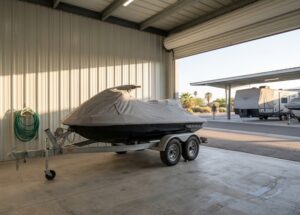
- Cover the jet ski with a fitted jet ski storage cover designed for your specific model. A tarp is not a substitute.
- If storing on a jet ski trailer, ensure the trailer is level and that the PWC is properly secured before the storage period begins.
Each step in the winterization process is there for a reason. Fogging protects the engine internally. The oil change removes acids that damage seals. The fuel stabilizer prevents the fuel system from varnishing. Skipping any one of them creates a problem you will find in spring, not in fall.
Battery Maintenance During Storage
Battery failure during winter storage is the most common reason a jet ski will not start in spring.
- Check resting voltage before storage. A healthy 12V battery should read 12.6V or higher.
- Connect a smart trickle charger or battery tender to maintain that charge across the storage period.
- Never store a depleted battery. Sulfation begins within weeks of a dead battery sitting uncharged, and a sulfated battery typically cannot be recovered.
- In an unheated facility, either choose a battery rated for cold temperatures or remove the battery and bring it inside for the winter.
Indoor vs. Outdoor Jet Ski Storage: What Each Option Costs Your Watercraft
Indoor storage eliminates UV degradation, freeze-thaw stress, and weather-related gelcoat damage. ABYC composite material guidelines document that prolonged UV exposure and repeated freeze-thaw cycles are the leading environmental causes of hull cracking and delamination over time.
| Indoor Storage | Outdoor Storage (Fitted Cover) | |
| Suitable climates | All | Mild climates only |
| UV protection | Complete | Requires UV-resistant cover |
| Moisture protection | Complete | Requires moisture barrier if on grass or bare ground |
| Surface requirements | N/A | Must be level and stable |
| Below 20°F risk | None | Residual water in the cooling system can freeze and crack the engine block, even after a proper flush |
Indoor, climate-controlled storage is the recommended standard for extended off-season periods.
De-Winterization: Getting Your Jet Ski Ready for the Season
De-winterization is not “take the cover off and launch.” It is a systematic recommissioning that protects the engine and confirms the watercraft is safe and legal to operate. Follow this sequence every spring before the first ride.
- Inspect the hull for any cracks, chips, or damage that occurred during storage. Hull inspection is easier on land than in the water.
- Reinstall or reconnect the battery. Verify resting voltage is 12.6V or above. If below 12.0V, charge before use. If the battery is more than three years old and will not hold charge, replace it.
- Check the fuel system for leaks, varnishing, or unusual smell indicating stale fuel. If fuel stabilizer was not used before storage, drain the tank and replace the fuel before starting the engine.
- Check and refill oil and coolant on four-stroke models before the first start.
- Inspect the impeller and wear ring for debris that may have entered during storage.
- Test the throttle, steering, and emergency lanyard before launch. These are safety systems, not afterthoughts.
- Run the engine on a flushing adapter connected to a garden hose before the first water launch. Confirm the engine starts cleanly and the cooling system circulates.
- Verify watercraft registration is current and all Coast Guard required safety equipment is onboard before the watercraft touches the water.
Following this recommissioning protocol each spring extends engine life and prevents the most common post-storage mechanical failures. The time invested on land pays for itself the first time you avoid a breakdown on the water.
How Long Should a Jet Ski Last With Proper Storage?
A well-maintained personal watercraft with proper annual winterization and storage typically reaches 300 to 500 engine hours before needing major mechanical attention. Some owners reach 700-plus hours on four-stroke models. In practical terms, that translates to 10 to 20 years for a recreational owner riding 30 to 50 hours per year.
The single largest variable is storage quality. PWCs stored outdoors without covers, in extreme cold, or with untreated fuel systems fail significantly earlier. Everything this article covers about the winterization process directly affects that service life number.
Jet Ski Storage Options: Choosing the Right Setup
Once you understand what proper off-season care requires, the next decision is where the jet ski actually lives between seasons. Three main options exist, and each has real tradeoffs.
- Home or garage storage is the most cost-effective choice if you have covered, climate-controlled space and a jet ski trailer that fits. Most residential garages accommodate a standard PWC on a trailer without modification. The catch is that homeowners association (HOA) restrictions and local zoning ordinances in many suburban communities prohibit outdoor residential storage of watercraft on trailers, even temporarily. This is not a rare edge case. It is a documented restriction in many of the neighborhoods where jet ski owners live. Check your HOA CC&Rs and municipal code before assuming the driveway works.
- Marina or dock storage is convenient for regular riders who want the watercraft close to the water. Lift storage removes the PWC from the water entirely and is preferred for long-term marina storage over a wet slip. If wet-slip storage is used during the season, dock lines and fenders are required equipment for protecting the hull from dock contact. Marina storage tends to cost more annually than home or facility storage, and winterization services may be available at extra cost or not at all.
- Professional vehicle storage facilities are the right answer for owners who lack covered home space or live in regions with harsh winters. Dedicated RV and boat storage facilities are sized for PWCs on trailers, offer meaningful security, and typically provide electrical access for battery maintenance during storage. Temperature, humidity, and UV exposure are controllable in a professional facility in a way they are not in a residential driveway or open marina.
For owners exploring covered storage options for recreational vehicles, covered and enclosed unit options protect against weather and UV damage through the full off-season. RecNation Storage offers enclosed and covered boat and jet ski storage at facilities across Florida, Texas, Tennessee, South Carolina, and other states where PWC ownership is highest, with unit sizes designed to accommodate a personal watercraft on a trailer and access features that support proper off-season care.
| Storage Type | Protection Level | Typical Annual Cost | Best For |
| Home/Garage | High (if enclosed) | $0 (owned space) | Owners with covered, zoning-compliant space |
| Marina/Dock | Moderate | $800 to $2,500+ | Regular riders near water |
| Professional Facility | High | $500 to $1,500 | Owners without covered home space |
What to Look for in a Jet Ski Storage Facility
Not every storage facility is designed to handle a personal watercraft on a trailer. A standard self-storage unit may have weight limits, height restrictions, or ceiling clearance issues that make it unsuitable. Look for a purpose-built vehicle storage provider instead of a general self-storage operation.
A quality facility should offer:
- Unit size: A minimum of 10×20 feet to accommodate most PWC and trailer combinations, with 10×30 available for larger setups
- Security: Gated access, surveillance cameras, and adequate lighting throughout the property
- Electrical access: Power in or near the unit for battery tender use during the storage period
- Climate options: Enclosed or climate-controlled units for owners in freeze-risk climates
- Proximity: Reasonable distance to launch ramps if you want seasonal access without a long drive
For a realistic sense of how much you should expect to pay for storage, costs vary by region, unit type, and facility features. Enclosed units cost more than open carport spaces, and climate-controlled options carry a further premium, but the protection they offer against hull and engine damage is worth comparing against the cost of a post-winter repair bill.
HOA and Zoning Restrictions on Residential Jet Ski Storage
Many HOA communities and municipal zoning codes prohibit storing watercraft on trailers in driveways or on residential lots for more than a defined period, often as short as 24 to 72 hours. The restriction may apply to the street, the driveway, and the side yard depending on the local ordinance.
Review your HOA CC&Rs and local municipal code before the jet ski arrives home. If residential storage is restricted, a professional storage facility is not just a preference; it is a practical requirement. Addressing this before the first season avoids HOA fines and the cost of moving the watercraft mid-winter under less favorable conditions.
Final Thoughts on Jet Ski Ownership and Storage
Proper off-season storage is one of the most important decisions you make as a jet ski owner. It determines how your engine, hull, and electrical system come back in spring. If you don’t have covered, secure space at home, RecNation boat and jet ski storage provides purpose-built facilities designed for personal watercraft, with the security, access, and covered unit options that protect your investment between seasons.
Frequently Asked Questions About Jet Ski Ownership and Storage
How do you properly store a jet ski for the winter?
Proper jet ski winter storage involves a complete winterization process before the PWC goes away for the season. Add fuel stabilizer to a full tank and run the engine for five minutes to circulate it, then flush the engine with fresh water, fog the engine with fogging oil, change the oil on four-stroke models, remove and charge the battery, and cover the jet ski with a fitted jet ski storage cover. Store the PWC in a covered, climate-controlled environment where possible. Extreme cold can crack the engine block if residual water remains in the cooling system.
What maintenance does a jet ski need before storage?
Before storing a jet ski for the off-season, treat the fuel system with stabilizer, flush and fog the engine, change the oil and filter on four-stroke models, fully charge and remove the battery, and inspect the hull for cracks or UV damage. Also check the impeller and wear ring for debris, and clean and dry the interior bilge to prevent mold. Skipping the fuel stabilizer step is one of the most common causes of post-storage engine problems, since untreated fuel begins to varnish fuel injectors and carburetors within 30 to 60 days.
How much does it cost to own and maintain a jet ski annually?
Total annual operating costs for a recreational jet ski owner riding 30 to 50 hours per year typically run $1,000 to $2,000, covering fuel, annual service, insurance, and storage. Fuel consumption averages 3 to 4 gallons per hour at moderate throttle. Professional service intervals cost $300 to $600 per year for routine maintenance. Storage adds $500 to $1,500 annually depending on facility type and region. Total cost of ownership in year one, including the purchase, trailer, registration, gear, and setup, commonly runs $14,000 to $18,000 for a mid-range new PWC.
Do you need to flush a jet ski after every use?
Yes. Flushing the engine after every use is strongly recommended for saltwater and brackish water riders, and beneficial for freshwater riders as well. Salt and mineral deposits left in the cooling system accelerate internal corrosion and can cause significant engine damage over time. Connect a garden hose to the flush port, start the engine, run it at idle for 60 to 90 seconds, then shut off the engine before disconnecting the hose. Never disconnect the hose while the engine is running or run the engine dry without a water supply connected.
What is the best way to store a jet ski outside long-term?
If outdoor storage is the only option, use a UV-resistant, fitted jet ski storage cover designed for your specific model. Position the jet ski on a stable, level jet ski trailer on a surface that allows drainage and air circulation, and place a moisture barrier under the hull if the unit will sit on grass or bare ground. Apply a UV protectant to gelcoat surfaces before covering. In climates where temperatures drop below 20 degrees Fahrenheit, complete full winterization including engine fogging and battery removal regardless of storage location.
Do jet skis need to be registered when they are in storage?
Yes. A jet ski classified as a motorized vessel under the Federal Numbering System must maintain current state registration regardless of whether it is in active use or in off-season storage. Registration does not pause during the storage period, and a lapse during the off-season does not reset your renewal timeline. Most states require annual renewal. Contact your state’s boating or wildlife agency to confirm renewal requirements and whether the storage address affects registration jurisdiction.