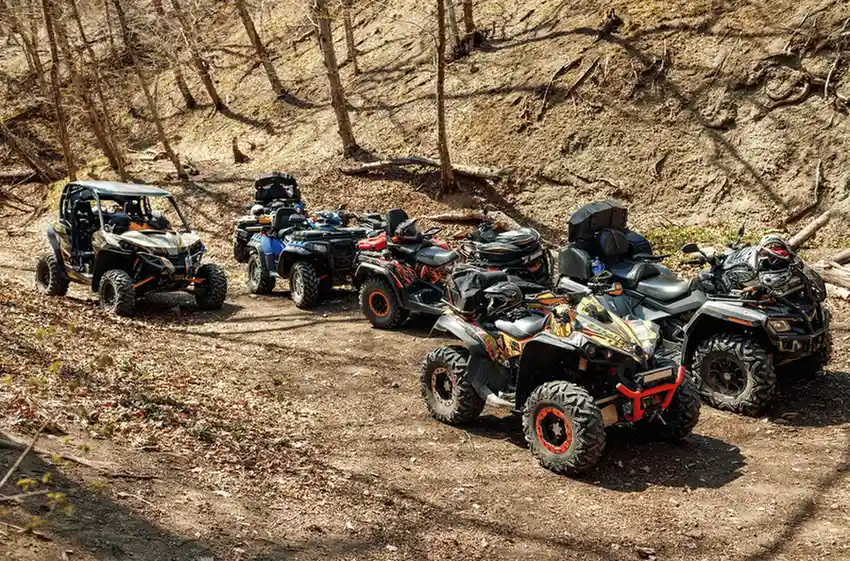
Quads are fun to ride, but they are still regulated in many states. Before taking one onto public trails, state land, riding parks, or approved road sections, you may need registration, a trail permit, a decal, or other proof that the vehicle is allowed there.
The requirement depends on where you ride and how the quad is used. A quad kept only on private land may be treated differently from one used on public trails, shared access roads, or managed off-road areas.
This guide explains when quad registration is usually required, when it may not be needed, and what owners should check before riding.
Do All Quads Require Registration?
Not every quad needs registration in every situation. A quad used only on private property may not need the same paperwork as one used on public trails, state land, riding parks, or approved road routes. Before riding outside private property, check whether your state requires registration, a decal, trail permit, insurance, or road-use equipment, and keep those records ready if the quad will later be moved, sold, or placed in ATV storage.
When Registration Is Required
Not all quads require registration, but it is commonly needed when the vehicle is used in places such as:
- Public land or government-managed riding areas
- State ATV or OHV trails
- Off-road parks or managed trail systems
- Roads where limited ATV use is legally permitted
States may require registration decals, permits, or registration cards to show that the quad is approved for use in those locations.
If a quad is allowed on certain roads, additional requirements may also apply, including:
- Headlights and taillights
- Mirrors
- A horn
- Insurance
- A license plate or road-use permit
When Registration May Not Be Required
In some states, registration may not be required when a quad is:
- Used only on private property
- Operated with the landowner’s permission
- Driven exclusively on farmland or ranch land
- Used for agricultural, industrial, or work-related tasks on private property
Even when registration is not required, owners should still keep proof of ownership documents such as:
- A bill of sale
- Registration records
- A dealer invoice
- Previous ownership paperwork
These documents can help with resale, insurance, theft recovery, storage disputes, or future ownership transfers.
Common Registration Exemptions
Registration exemptions are usually limited and depend on how and where the quad is used. Common exemptions may apply to quads that are:
- Used only on private property
- Operated for farming or ranch work
- Used for commercial or industrial tasks on private job sites
- Classified as special-use vehicles that do not meet the state’s definition of a registrable off-highway vehicle
These exemptions do not always apply once the quad is used on:
- Public trails
- Roads or streets
- State parks
- Managed riding areas
Always check local laws before relying on a registration exemption
How State Laws Affect Quad Registration
Quad registration rules are not the same everywhere. One state may require a title, registration card, and decal, while another may require only a trail permit for certain public riding areas.
Before riding, check your state motor vehicle agency, natural resources department, or off-highway vehicle office. Confirm whether your quad needs registration, a decal, a trail permit, a license plate, insurance, or added equipment based on where you plan to ride.
What Determines Whether A Quad Must Be Registered
Quad registration depends on where you ride, how the vehicle is used, and what proof of ownership you have. A quad used only on private land may follow different rules than one used on public trails, roads, parks, or managed riding areas.
Public Land Vs Private Property Use
The riding location is one of the biggest factors. Quads used on public land, state trails, parks, forests, or managed off-road areas usually need registration, a permit, or a visible decal.
Private property use may be different, especially when the quad stays on land you own or where you have permission to ride. Still, some counties or states may have their own rules, so private land use does not always mean registration is unnecessary.
Recreational Vs Street-Legal Use
Most quads are built for off-road recreation, not regular road use. If you ride only on approved trails or off-highway areas, your state may require an OHV registration, trail permit, or decal.
Street use is usually more restricted. If your state allows quads on certain roads, you may need extra equipment, insurance, a license plate, and a different type of registration before the vehicle can be operated legally.
Ownership And Titling Status
A quad usually cannot be registered unless you can prove legal ownership. A title is the strongest proof, but some states may also accept a bill of sale, prior registration, or manufacturer’s certificate of origin.
Before buying a used quad, make sure the seller gives you clear paperwork that matches the VIN on the vehicle. Clean ownership records make registration easier and help avoid problems with resale, insurance, storage, or future transfer.
States That Require Quad Registration
Every state in the U.S. has its own rules for registering ATVs and off-road machines. It’s important to know these laws to stay legal while exploring public lands. Whether you live locally or are traveling, knowing the rules for your machine is crucial.
Registration Requirements For Off-Road Vehicles
Most places require off-highway vehicles to be registered to use public land. When you register, you get a certificate and decals. These decals must be placed correctly so law enforcement can see them.
In many areas, you need two decals on both sides of your machine. In others, a plate goes on the back. The key is to make sure the registration number is easy to see.
States With Limited Or Conditional Registration Rules
Some states have special rules for where you can ride. For example, you might need a public use registration for state trails but not for private land. You might also have to pay a county tax or buy a trail pass.
The rules can change based on your vehicle’s size or use. Make sure you know if you need a plate or just a decal. Keep your documents safe to avoid trouble during inspections.
Temporary And Non-Resident Registration Situations
If you’re visiting from another state, you might wonder about registration. Many states accept your home state’s registration. But, some might ask for a temporary permit if you’re staying for a while.
- Check if your home state registration is valid at your destination.
- Look for a temporary operating receipt issued by local authorities if needed.
- Ensure all out-of-state permits are displayed according to local guidelines.
- Review registration fees before you arrive to avoid unexpected costs.
Always check the latest rules before you go. This way, you can enjoy the trails without worrying about legal issues.
What Documents Are Usually Required To Register A Quad
Registering a quad is easier when your paperwork is ready before you visit the state office or submit an application online. Most states ask for proof of ownership, buyer identification, a bill of sale, and vehicle details that confirm the quad matches the records.
Title Or Proof Of Ownership
The title is usually the main document needed to register a quad because it proves legal ownership. If the quad was bought new, the manufacturer’s statement of origin may be used instead of a title.
For used quads, the buyer should make sure the seller’s name, VIN, and vehicle details match the paperwork. If the quad does not have a title, the state may ask for prior registration, a notarized bill of sale, or another approved ownership document.
Bill Of Sale And Identification Documents
A bill of sale gives the state a clear record of the transaction. It should include the buyer’s name, seller’s name, sale date, purchase price, quad details, VIN, and both signatures.
The buyer will also need a valid government-issued photo ID when applying for registration. Some states may ask for proof of insurance, tax payment, or additional forms depending on where and how the quad will be used.
VIN Verification And Compliance Requirements
The VIN may need to be checked before registration is approved. This helps confirm that the quad matches the paperwork and has not been reported stolen or registered under incorrect details.
Some states may also require safety or equipment checks, especially if the quad will be used on approved roads or public riding areas. After approval, the state may issue a registration card, decal, plate, or permit that should be kept with your records.
What Happens If A Quad Is Not Registered When Required
Skipping registration can create bigger problems than a missed form or unpaid fee. If your state requires registration for public trails, roads, parks, or managed riding areas, riding without it can lead to fines, access issues, insurance problems, or trouble proving ownership later.
Fines And Legal Penalties
If registration is required and you cannot show proof, a law enforcement officer may issue a citation. In some areas, the fine can cost more than the registration itself, especially if the quad is being used on public land or restricted routes.
Some states may also allow the vehicle to be impounded if the rider cannot prove registration, ownership, or legal use. Carrying your registration card, decal, permit, or other required document helps avoid problems during a trail stop or inspection.
Restrictions On Riding Areas
Many public trails, off-highway vehicle parks, state forests, and managed riding areas require valid registration or a trail permit. Without it, you may be denied entry, turned around at the trailhead, or fined after an inspection.
This can limit where you are allowed to ride. In some cases, an unregistered quad may only be used on private property with permission, depending on state and local rules.
Problems With Ownership And Insurance
Registration can help support your ownership record, especially when you need to sell, transfer, insure, or recover the quad after theft. Without proper registration, it may be harder to prove that the vehicle legally belongs to you.
Insurance can also become complicated if the quad was supposed to be registered but was not. After an accident, theft, or damage claim, the insurer may ask for ownership records, registration details, or proof that the vehicle was being used legally.
Situations Where Registration Rules Become Complicated
Quad registration is not always simple, especially when the vehicle has missing paperwork, unclear ownership history, or unusual construction details. These situations may require extra forms, inspections, affidavits, or state approval before the quad can be registered.
Quads Without Titles
A quad without a title can be harder to register because the state still needs proof that you legally own it. Some states may accept a bill of sale, prior registration, manufacturer’s certificate of origin, or other ownership record.
If the paperwork is incomplete, the DMV or motor vehicle agency may require a bonded title, affidavit, or VIN inspection. It is best to confirm the requirements before buying a no-title quad so you do not get stuck with a vehicle you cannot register.
Older Or Homemade Quads
Older or homemade quads may not have the same paperwork as newer factory-built models. Some may have missing VINs, unclear build records, or parts from different vehicles.
In these cases, the state may require an inspection before registration is approved. Homemade quads may also need an assigned VIN, construction affidavit, safety review, or proof that the vehicle meets local requirements.
Recently Purchased Or Inherited Vehicles
Recently purchased or inherited quads may need quick action because many states set deadlines for registration or ownership transfer. Missing the deadline can lead to late fees, delayed paperwork, or problems proving legal ownership.
Inherited quads may also require extra documents, such as a death certificate, will, probate record, or signed transfer form. Before using or storing the quad long-term, make sure the ownership record is updated correctly.
Common Mistakes Quad Owners Make About Registration
Quad registration mistakes usually happen when owners assume the rules are simple or the same everywhere. A quad may not be used like a car, but it can still need registration, decals, permits, or ownership records depending on where and how it is used.
Assuming Off-Road Vehicles Never Need Registration
Many owners assume a quad does not need registration because it is built for off-road use. That can be risky because public trails, state parks, forests, and managed riding areas often require registration or a valid trail permit.
Private land use may be different, but public access usually comes with rules. Before riding outside your own property, check whether your state requires a decal, permit, or registration card.
Ignoring State-Specific Rules
Quad registration rules change from state to state, and sometimes even by county or riding area. What is allowed in one state may not be accepted in another.
Check your state motor vehicle agency or off-highway vehicle website before you ride. This helps you confirm whether your quad needs a title, registration, decal, license plate, insurance, or special permit.
Confusing Registration With Ownership Transfer
Ownership transfer and registration are not the same thing. A title or bill of sale helps prove who owns the quad, while registration usually gives permission to operate it in certain approved areas.
A buyer may complete an ownership transfer but still need to register the quad separately. Without the right registration, decal, or permit, the vehicle may still be restricted from public trails, roads, or riding areas.
Final Thoughts
Quad registration depends on where you ride, how the vehicle is used, and what your state requires for public trails, roads, parks, or managed riding areas. Before taking your quad beyond private property, check the correct agency rules and keep your title, bill of sale, VIN details, registration card, decals, and permits organized.
Once the paperwork is handled, storage becomes the next part of responsible ATV ownership.
RecNation gives quad and ATV owners a secure place to store their vehicles between rides, helping protect them from weather, theft risks, and long idle periods while keeping them ready for the next trip.
FAQ
Does my all-terrain vehicle need to be registered if I only ride on my own property?
In many states, an ATV or UTV used only on private property may not need standard registration. Still, registration can help create a clear vehicle ID record and proof of ownership if you later sell, insure, store, or move the quad.
What documents do I need to register an ATV or UTV?
You may need a manufacturer’s statement of origin, prior registration card, bill of sale, valid ID, and the vehicle’s VIN or ID number. Some states may also require proof of tax payment, insurance, or a completed registration application.
How and where should I display my registration decals?
Registration decals should be placed where your state requires them and must stay visible while riding. Some states issue decals for both sides of the quad, while others may require a rear plate, tag, or permit display.
Are there any exemptions for registering an ATV?
Some states offer registration exemptions for ATVs used only for farming, ranching, or private-property work. These exemptions are limited, so check your state rules before assuming your quad does not need registration.
Can I ride my off-highway vehicle on public roads if it is registered?
Registration alone does not always make an off-highway vehicle legal for road use. Some states require extra equipment, insurance, a license plate, and a valid driver license before an ATV or UTV can be used on approved roads.