For contractors, organization and security are vital to smooth operations and profitability. Job sites rarely offer dependable storage, and leaving expensive gear overnight exposes it to theft, damage, or weather risks.
That’s why many professionals now rely on self storage units as a secure, affordable alternative. Modern facilities feature 24/7 gated access, wide drive aisles, and flexible leases, making them ideal for storing tools, materials, and vehicles between projects.
A self storage unit serves as a centralized operations hub, a place where teams can safely store, load, and access equipment without the overhead of a warehouse. It’s a practical solution that helps contractors stay efficient, protect assets, and adapt to changing workloads.
Why Contractors Rely on Storage Units for Tool and Equipment Storage
Contractors rely on contractor storage and self storage because it bridges the gap between security, convenience, and cost efficiency. Instead of scattering materials between vehicles, garages, or job sites, they can keep all tools in one accessible location.
This setup not only protects valuable assets but also streamlines logistics, helping crews spend more time on the job and less time managing inventory.
Storage units also make it easier to standardize operations across multiple crews. Foremen can assign tools, track equipment usage, and coordinate deliveries from a single point. For small and mid-sized contractors, this professionalizes day-to-day management without requiring long-term real estate investments.
Common Industries That Benefit (Construction, Landscaping, Electrical, Plumbing)
Here’s how various contractor industries use self storage to manage tools, vehicles, and materials efficiently:
| Industry | Typical Items Stored | Key Benefits |
| Construction & Renovation | Power tools, scaffolding, lumber, generators, jobsite materials | Keeps high-value tools and materials secure between projects |
| Landscaping | Mowers, trimmers, leaf blowers, fertilizers, seasonal equipment | Protects machinery from rust, moisture, and theft |
| Electrical & HVAC | Wiring, drills, meters, ducting, replacement parts | Centralized organization for faster setup and response times |
| Plumbing & Maintenance | Pipes, fittings, pumps, repair tools | Frees up van and garage space; simplifies inventory management |
Self storage gives these professionals the flexibility to scale with demand, expanding storage during busy seasons or downsizing in slower months.
Whether it’s a construction firm with a rotating fleet of trailers or a local landscaper managing seasonal inventory, storage units help maintain security, consistency, and operational control without adding long-term facility costs.
Benefits of Contractor Storage Units for Daily Operations
Contractor storage units play a central role in improving daily workflow, protecting assets, and cutting unnecessary costs. Whether managing multiple projects or a single site, organized storage helps contractors operate more efficiently, reduce downtime, and maintain professional standards.
Improving Equipment Longevity and Maintenance Efficiency
Proper storage is the first step toward extending tool lifespan. Keeping equipment in dry, enclosed environments prevents rust, corrosion, and weather damage that often occur when tools are left on-site.
- Climate-controlled units help regulate temperature and humidity for sensitive tools and materials.
- Battery-powered and precision instruments such as drills, meters, and laser levels last longer in stable conditions.
- Storing tools off-site also supports scheduled maintenance and calibration by keeping items organized and easy to track.
Reducing Jobsite Clutter and Theft or Vandalism Risk
Leaving tools and materials unattended can lead to significant losses, with industry reports estimating that construction site theft costs U.S. businesses between $300 million and $1 billion each year.
Contractor storage units provide a secure alternative with controlled access and constant surveillance. Key benefits include:
- Protection from theft: Secure gates, cameras, and coded entry systems restrict unauthorized access.
- Cleaner worksites: Removing bulky gear after hours keeps sites organized and compliant with safety standards.
- Reduced liability: Properly secured equipment lowers the risk of accidents or insurance claims.
Saving Time with Centralized, Off-Site Equipment Access
A well-located storage unit functions as a central hub between job sites. Crews can load equipment in the morning, return tools after shifts, and avoid wasting time transporting gear across multiple locations. This system:
- Simplifies logistics for multi-crew operations.
- Reduces fuel use and time spent locating shared tools.
- Prevents loss by keeping inventory centralized and accounted for.
A Cost-Effective Alternative to Warehouses and On-Site Containers
Self storage offers the same benefits as warehouse space, without the overhead, and provides greater flexibility than on-site containers.
| Option | Average Cost | Flexibility | Security |
| Warehouse Lease | High | Low | Moderate |
| On-Site Container | Medium | Moderate | Low |
| Self Storage Unit | Low–Moderate | High | High |
By combining professional-grade security, accessibility, and scalability, self storage gives contractors the functionality of a warehouse at a fraction of the cost, ideal for growing businesses or seasonal workloads.
Types of Storage Units Contractors Use
Contractors choose storage units based on the size, sensitivity, and mobility of their tools, materials, and vehicles. The right combination of unit types ensures equipment is protected, easy to access, and stored efficiently between jobs.
Most facilities offer a range of unit styles that can meet varying contractor needs, from heavy equipment storage to climate-controlled environments for precision tools.
Outdoor and Vehicle Storage Options for Trailers or Machinery
Outdoor parking areas are ideal for trailers, skid steers, excavators, and service trucks that don’t require indoor protection. These open lots are designed for durability and maneuverability, featuring:
- Reinforced driveways and wide turning lanes for easy access.
- Designated vehicle or trailer spaces for contractors managing multiple fleets.
- Fenced and gated perimeters to protect valuable machinery from theft or vandalism.
Outdoor storage is often the most cost-effective solution for contractors who need frequent access to large equipment or vehicles.
Standard Self Storage Units for General Tools and Materials
Standard self storage units remain the most versatile option for contractors. Medium-sized spaces like 10×10 or 10×15 provide enough room for common items contractors can store, such as:
- Hand tools, power drills, and generators.
- Ladders, cords, fasteners, and boxed supplies.
- Safety gear, uniforms, and smaller spare parts.
These units are usually non-climate-controlled but fully enclosed, offering dependable protection from rain, dust, and unauthorized entry.
Climate-Controlled Storage Units for Electronics and Precision Tools
When working with sensitive or high-value equipment, climate-controlled units are the best choice. They maintain consistent temperature and humidity levels to prevent corrosion, rust, and battery degradation. Ideal for storing:
- Laser levels, digital meters, and measuring devices.
- Battery-powered tools that fail under heat or cold.
- Finishing materials and adhesives that can warp or harden in fluctuating conditions.
Though slightly higher in cost, climate control pays off by protecting specialized equipment that supports accuracy and safety on the job.
Drive-Up Storage Units for Easy Loading and Large Equipment
For contractors handling frequent heavy loads, drive-up access units offer unmatched convenience. These garage-style units allow direct vehicle access, contractors can back their trucks right up to the door for fast loading and unloading. Drive-up units are ideal for:
- Compressors, generators, and tool chests.
- Bulk materials and large boxed inventory.
- Day-to-day loading operations for field teams with tight schedules.
By cutting down on manual lifting and transport time, drive-up units streamline daily logistics and reduce physical strain on workers.
Contractor Storage Unit Types
Here’s a quick comparison to help contractors identify which storage type best fits their operational needs:
| Storage Type | Ideal For | Key Features | Accessibility |
| Outdoor / Vehicle Storage | Trailers, heavy machinery, fleet trucks | Open parking lots, reinforced pavement, fenced and gated | High (24/7 gate access) |
| Standard Self Storage | Tools, ladders, materials, safety gear | Enclosed, non-climate-controlled, secure door locks | Moderate |
| Climate-Controlled Units | Electronics, precision tools, adhesives | Temperature & humidity regulation, indoor environment | Moderate |
| Drive-Up Storage Units | Heavy tools, large equipment, daily use inventory | Direct truck access, roll-up doors, ground-level loading | Very High |
Final Note: Choosing the right contractor storage unit depends on your workflow and priorities. Outdoor spaces provide affordable access for large equipment, while indoor and climate-controlled units protect sensitive tools and materials.
Drive-up storage combines both convenience and protection, making it ideal for busy contractors who need frequent access to gear.
Organizing Tools and Equipment in a Contractor Storage Unit
A well-organized storage unit is essential for keeping operations efficient. When every tool has a designated place, crews spend less time searching, equipment lasts longer, and projects run on schedule. Good organization also minimizes accidents and supports accurate inventory management across multiple teams.
Inventory Tracking and Digital Equipment Logs
An accurate inventory system ensures accountability and prevents tool loss, a common source of hidden costs for contractors. To streamline equipment tracking:
- Use inventory management software or shared spreadsheets to log all tools and materials.
- Assign barcodes or QR codes to expensive assets for quick digital check-ins and check-outs.
- Keep logs accessible to team leads so that usage and maintenance records stay up to date.
Digital tracking creates transparency across crews and makes it easier to verify who has which tools at any time.
Shelving, Racks, and Labelling Systems for Tool Organization
The right layout turns a standard storage unit into a professional-grade workspace. Contractors can improve visibility and accessibility by:
- Installing heavy-duty shelving along the walls for tools and small parts.
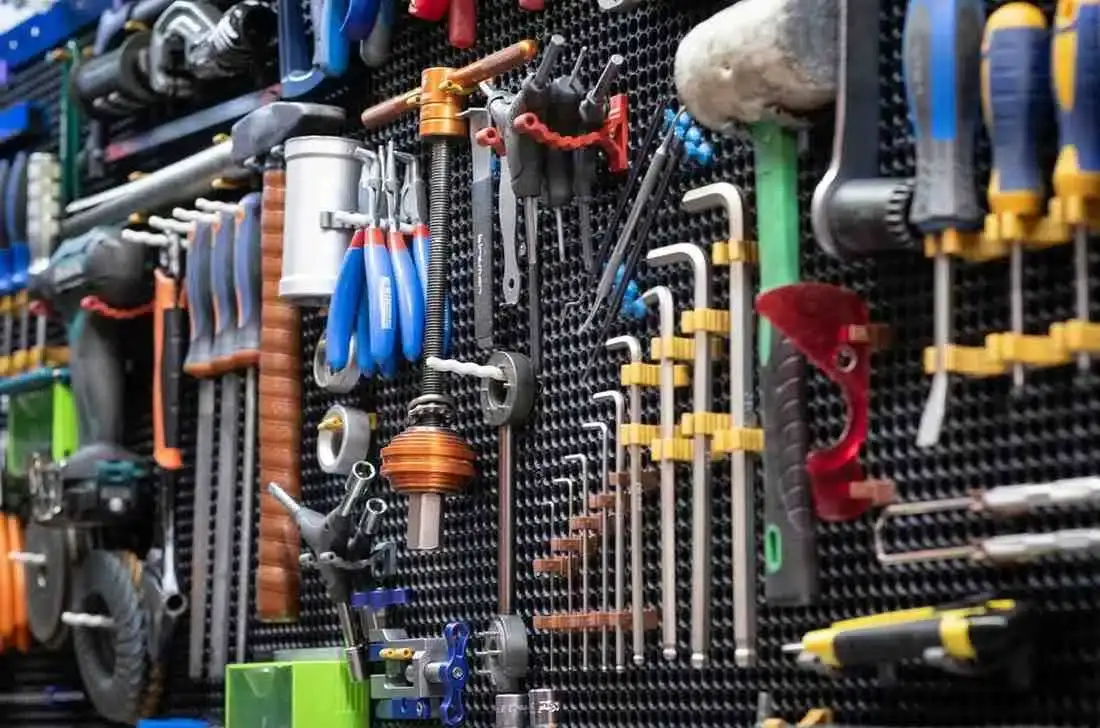
- Using pegboards for hanging hand tools in plain sight.
- Labeling each section by project, trade, or crew for quick retrieval.
- Placing frequently used items near the front and less-used gear toward the back.
A structured layout not only saves time but also helps prevent damage to delicate or expensive equipment.
Securing High-Value Power Tools with Lock Boxes or Cabinets
For tools that represent a significant investment, such as cordless drills, saws, or generators, additional internal protection is a must. Effective options include:
- Steel lockboxes or bolted cabinets mounted to the floor or wall inside the unit.
- Heavy-duty padlocks or smart locks for authorized access only.
- Separate storage sections for insured or high-risk items, ensuring they’re fully covered under policy terms.
Adding layered security within the unit complements the facility’s own surveillance and gate systems.
Storing Large Equipment, Trailers, and Vehicles Safely
Large equipment and vehicles require extra safety precautions for long-term storage. Contractors should:
- Use wheel chocks to prevent movement.
- Disconnect batteries and cover exposed metal components to prevent corrosion.
- Apply protective tarps or fitted covers to shield vehicles from dust, debris, and sunlight.
- Ensure outdoor storage areas have proper drainage and firm pavement to support heavy loads.
These steps reduce wear and keep vehicles and machinery in ready-to-use condition, minimizing costly repairs when work resumes.
Security Features Contractors Need in Storage Facilities
For contractors, security is the top priority when storing valuable tools, vehicles, and materials. Theft, vandalism, or accidental loss can disrupt schedules and lead to expensive setbacks.
Choosing a facility with strong, layered protection is essential for peace of mind and business continuity. When evaluating potential storage providers, look for facilities that include the following features:
- 24/7 Video Surveillance and Digital Access Control continuous monitoring across driveways, gates, and units deters theft and allows quick investigation of any incident. Digital access logs track who enters and exits, providing a record of all activity.
- Individual Keypad Codes or Smart Locks personalized gate codes or mobile-enabled smart locks ensure that only authorized personnel can access your unit. This eliminates shared-key risks common on job sites.
- Bright LED Lighting and Fenced Perimeters well-lit facilities improve visibility at night and enhance safety for after-hours access. Secure fencing and limited entry points help prevent unauthorized entry and vandalism.
- Alarmed Units or On-Site Management individual unit alarms and on-site staff add another layer of protection. Having personnel present during business hours also helps quickly address maintenance or access concerns.
- Insurance Options and Clear Documentation Policies even with top security, insurance is crucial. Look for facilities that offer tenant insurance programs or accept proof of business coverage. Ensure you understand documentation requirements for claims or audits.
Together, these security measures ensure your tools, vehicles, and materials remain protected, even when you’re off-site. Choosing a facility with comprehensive safeguards not only protects your investment but also builds long-term reliability into your business operations.
Costs of Contractor Storage Units
Self storage units give contractors a secure, professional-grade space for tools and vehicles, at a fraction of the cost of leasing or maintaining a warehouse. Understanding the cost of contractor storage helps businesses budget effectively while balancing location, security, and access needs. Monthly rates vary by size, features, and location, but the savings compared to commercial leases are substantial.
Average Monthly Costs for Different Unit Sizes
Below is a general comparison of average prices across the most common storage types used by contractors:
| Unit Size | Ideal For | Average Monthly Cost |
| 10×10 | Hand tools, boxes, small materials | $100–$150 |
| 10×15 | Power tools and moderate inventory | $125–$200 |
| 10×20 | Vehicles, machinery, or large stock | $150–$300 |
| Outdoor Parking | Trucks, trailers, or heavy equipment | $75–$200 |
Note: Prices vary based on region, amenities, and demand. Climate-controlled or urban facilities tend to fall at the higher end of these ranges.
Factors That Affect Pricing
Several factors influence how much you’ll pay each month. Understanding them helps contractors choose the best balance between cost and convenience:
- Location: Urban and suburban areas with higher land values typically charge more than rural zones.
- Security: Facilities offering 24/7 surveillance, keypad access, and on-site management may cost slightly more, but reduce the risk of theft or downtime.
- Climate Control: Adding temperature and humidity regulation can increase rates by 15–30%, but it protects sensitive tools and electronics.
- Accessibility: 24-hour access, ground-floor units, or drive-up convenience add modest premiums for the added flexibility.
Balancing Cost and Convenience for ROI
A slightly higher monthly cost can pay off if it saves hours of travel or reduces wear on vehicles. For many contractors, location efficiency and security provide greater long-term value than minimal savings on rent. Choosing a facility closer to your main work area improves ROI by:
- Reducing fuel and transportation costs.
- Allowing faster morning loadouts and end-of-day returns.
- Minimizing lost tools and downtime between projects.
The best investment isn’t always the cheapest unit, it’s the one that keeps your team organized, secure, and productive every day.
Common Mistakes Contractors Make When Using Storage Units
Even the best storage plan can fail if a few key practices are overlooked. These common mistakes can reduce efficiency, compromise security, or shorten the lifespan of your tools. Use the following checks under each item to fine-tune your operations and protect your investment.
Overcrowding or Poor Organization
Cramming too much into one unit leads to lost time, damaged equipment, and safety hazards. To prevent it:
- Pack to a plan: place heavy items on the bottom, fast-grab tools near the entrance, and keep clear walkways (24–30 inches).
- Add structure: use shelving, pegboards, and labeled bins; group items by trade, crew, or job number.
- Schedule maintenance: perform a monthly reset to declutter, check tool conditions, and update layout as needs evolve.
A tidy, well-zoned space saves hours of searching and reduces accidents.
Ignoring Climate Control for Sensitive Tools
Skipping climate control can quickly damage tools and materials that rely on stable conditions. Storing a lithium-ion battery at temperatures above 86°F (30°C) can accelerate capacity loss, and for many Li-ion systems, heat exposure at that level leads to significant degradation within a year. To safeguard sensitive assets:
- Use climate-controlled units for items like batteries, meters, adhesives, and hardwoods.
- Add desiccant packs or sealed bins to manage humidity.
- Keep gear off the floor with pallets or shelving to prevent condensation damage.
Temperature swings can shorten the life of adhesives, corrode metal parts, and reduce battery performance, costs that add up over time.
Not Updating Insurance or Inventory Records
Without current records, recovering losses from theft or fire becomes nearly impossible. Stay prepared by:
- Keeping a living inventory with serial numbers, photos, and receipts.
- Updating Certificates of Insurance (COIs), tool values, and assigned custodians after every purchase or loss.
- Storing one digital copy in the cloud and another printed version inside a lockbox within the unit.
Accurate documentation ensures quick claims processing and keeps your financial books audit-ready.
24/7 Surveillance, Access Control, and Alarm Systems
Some contractors underestimate the importance of continuous monitoring. Avoid this by:
- Selecting facilities with 24/7 video coverage, unique keypad codes, or app-based smart access.
- Ensuring each unit has its own alarm system or is tied into the facility’s security network.
- Requesting camera placements or access logs if disputes or theft incidents occur.
Without these safeguards, recovery chances drop and liability increases.
Perimeter Fencing, Lighting, and On-Site Staff Presence
Basic physical security is often taken for granted, but it’s the first line of defense. Before renting, confirm that the site includes:
- Full perimeter fencing and limited gate entry points.
- Bright LED lighting across aisles and driveways.
- Visible staff or patrols, especially at larger facilities.
- Visit after dark to check for blind spots or dim zones before signing a lease.
These measures deter unauthorized access and improve personal safety during off-hours.
Insurance Requirements, Documentation, and Asset Protection Practices
One of the costliest assumptions is believing the facility’s insurance covers your equipment, it usually doesn’t, so contractors should confirm the right storage insurance. To stay protected:
- Carry an inland marine or business property policy that covers off-site tools.
- Confirm tool categories, coverage limits, and exclusions with your insurer.
- Use internal lockboxes, welded hasps, and dual-lock setups for high-value power tools.
Proper documentation and layered protection are the only true safeguards for expensive assets.
Storage Units vs. On-Site Containers: Which Is Better for Contractors?
Both self storage units and on-site containers serve a purpose, the right choice depends on your project type, duration, and security needs. On-site containers are convenient for short-term use when teams need immediate access throughout the workday.
However, self storage units provide better long-term protection, scalability, and professional-grade security, making them ideal for contractors managing multiple crews or ongoing operations.
| Feature | Self Storage Unit | On-Site Container |
| Security | High: gated entry, cameras, access logs, and alarmed units | Variable: depends on jobsite and neighborhood conditions |
| Climate Control | Available for sensitive tools and electronics | Rarely available; subject to temperature swings |
| Accessibility | Extended or 24-hour access for multiple authorized users | Immediate access only at that jobsite |
| Scalability | Easy to upsize, downsize, or add additional units as projects expand | Fixed capacity per site, limited flexibility |
| Cleanliness & Upkeep | Professionally managed facilities with pest control and maintenance | Exposed to weather, dust, mud, and potential vandalism |
| Typical Use | Central hub for tools, vehicles, and long-term inventory | Temporary staging area for active construction sites |
Quick Take: For contractors who manage multiple job sites or long-term operations, self storage units offer better security, organization, and cost efficiency. They serve as a centralized operations base for tools, equipment, and materials.
On-site containers, by contrast, are best for short-term mobilizations or projects that require constant, same-day tool access at a single location.
Long-Term Value and ROI of Storage Units for Contractors and Small Businesses
A smart, well-managed storage strategy does far more than organize tools and equipment, it creates measurable savings, supports scalability, and drives business growth.
For contractors and small businesses, using self storage units helps reduce downtime, protect assets, and expand operations efficiently. Over time, these advantages translate into stronger profit margins, better resource management, and long-term operational reliability.
Reducing Equipment Replacement Costs Over Time
Proper storage facilities protect tools and materials from damage, theft, and exposure , extending their lifespan and preserving investment value. A secure storage unit helps contractors store their gear in an environment designed to minimize risk and reduce the need for costly replacements:
- Climate-controlled self storage units prevent rust, corrosion, and electronic failure in valuable tools and power equipment.
- Modern self storage locations offer 24/7 surveillance, lighting, and gated entry, reducing theft and vandalism that often occur on unsecured job sites.
- Smart locks and digital logs help organize your storage and track equipment, preventing “tool drift” between crews.
By investing in the right storage, contractors can protect their expensive tools, avoid unnecessary repairs, and keep projects running on budget.
Improving Operational Efficiency and Scheduling
A centralized self-storage unit gives teams easy access to equipment and supplies, cutting down on wasted time and disorganization. With a well-structured storage space, contractors can store materials efficiently, manage crews better, and maintain consistent productivity:
- Centralized storage facilities reduce travel between job sites for loading and unloading.
- Organized layouts make it simple for any worker to locate tools and materials, even across shifts.
- Controlled access with keys or codes keeps tools and equipment secure while improving accountability.
These efficiencies compound across multiple projects, helping contractors save time, money, and frustration, all while maximizing ROI.
Scalability for Growing Teams and Fleets
Self storage provides unmatched flexibility as your business evolves. Whether you need to store seasonal equipment, expand during peak construction months, or downsize between contracts, renting a storage unit lets you scale seamlessly without heavy capital costs.
- Flexible footprint: Adjust or expand your storage units to fit your current storage needs.
- Month-to-month rent: Change, relocate, or resize units quickly without long leases.
- Mixed-use storage setup: Combine different unit types for optimal efficiency,
- Climate-controlled: storage space for delicate tools and materials
- Drive-up self storage: units for heavy machinery or pallets
- Outdoor secure: storage for trailers, vehicles, and job equipment
This flexible approach ensures every contractor maintains secure storage, organization, and cost control, achieving long-term value while meeting immediate project demands.
Whether you’re a general contractor managing fleets or a small crew needing extra storage space, the right storage solution helps protect your assets, improve operations, and strengthen ROI year after year.
Final Thoughts: What Contractor Storage Can Offer Your Business
Contractor storage has become an essential solution for professionals who need secure, flexible space without the high cost or permanence of a warehouse. From small tradesmen managing tools between jobs to growing crews handling multiple sites, self storage provides the right balance of accessibility, organization, and protection.
By choosing the right mix of units, from climate-controlled spaces for precision tools to drive-up access for heavy gear or outdoor parking for fleets, contractors can create a system that fits their workflow, budget, and operational pace. A well-managed facility with gated entry, surveillance, and responsive staff ensures your equipment stays safe while remaining easy to access whenever needed.
For contractors seeking a professional, long-term partner, RecNation offers secure, contractor storage solutions across multiple locations. With wide drive aisles, advanced security, and flexible unit options, RecNation facilities are built to support the tools, vehicles, and materials that keep your business moving.
Frequently Asked Questions
Why do contractors use self storage units?
Contractors use self storage units to store tools, vehicles, and materials securely between projects, helping reduce theft and keep the job site organized.
What size storage unit do most contractors need?
Small contractors usually rent a 10×10 or 10×15 unit, while larger crews may need a 10×20 unit or outdoor vehicle storage options for trucks and trailers.
Are storage units safe for power tools and electronics?
Yes. Climate-controlled storage units protect tools and equipment from rust, moisture, and temperature changes, keeping expensive tools in good condition.
Can contractors store vehicles or trailers in a storage facility?
Yes, many self storage locations offer outdoor or covered parking for trucks, trailers, and machinery with gated, 24/7 secure storage access.
How much does contractor storage usually cost?
Contractor storage units typically cost $100–$300 per month, while outdoor vehicle storage averages $75–$200, depending on size and location.
What should contractors look for in a storage facility?
Choose a reliable storage facility with 24/7 security, lighting, gated access, and insurance options to protect tools and materials effectively.


