For short-term moves under 30 days, a portable storage pod can make financial sense. For anything beyond 60 days of pure local storage, a traditional storage unit is almost always the cheaper option once delivery and pickup fees are factored in.
This guide models the real total cost at 1, 3, 6, and 12 months, breaks down pricing by provider rather than blending them into a misleading average, and gives you a clear recommendation based on your specific situation.
What Is the Actual Difference Between a Pod and a Storage Unit?
The core difference comes down to who moves the container and where your belongings live. A portable storage container is delivered to your location, you load it on your own schedule, and the company either leaves it on-site or hauls it to their facility. A self-storage unit is a fixed space at a managed facility that you drive to yourself.
What Is a Portable Storage Pod?
A storage pod is a ground-level steel or wood container delivered by a company truck. Standard sizes run 7 feet, 12 feet, or 16 feet in length. The three dominant providers are PODS (the brand), U-Haul U-Box, and 1-800-PACK-RAT. Their pricing logic differs significantly, and this article treats them separately.
What Is a Self-Storage Unit?
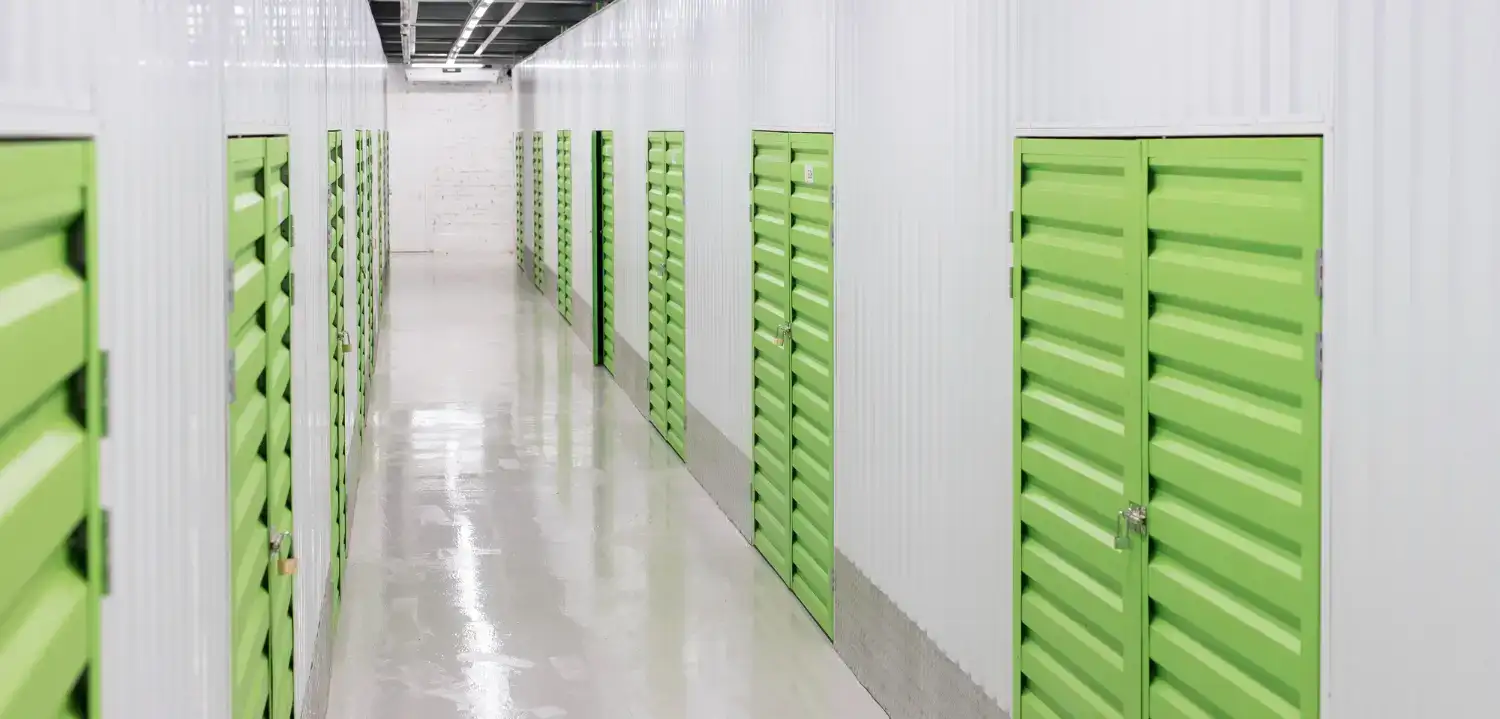
A self-storage unit is a rented space inside a managed storage facility. Sizes range from 5×5 feet to 10×30 feet or larger; if you’re not sure which size fits your situation, choosing the right self storage unit size walks through it in more depth. Units come in indoor climate-controlled and outdoor drive-up formats.
Access is via your own lock and keypad, with many facilities offering 24/7 entry, though what you can and can’t store varies by facility and is worth checking before you commit to a unit.
| Feature | Portable Storage Pod | Self-Storage Unit |
| Location | Delivered to your property or company yard | Fixed facility you drive to |
| Who transports | The provider | You |
| Loading flexibility | Load at your own pace on-site | Drive to facility each visit |
| Access | Limited if stored at company yard | 24/7 at most facilities |
| Typical sizes | 7 ft, 12 ft, 16 ft | 5×5 to 10×30 ft |
| Best use case | Moving and short-term on-site storage | Long-term local storage |
Pod vs. Storage Unit Cost Comparison by Provider and Size
Monthly base rates are only part of what you will pay. Before you commit to any option, it helps to understand how much you should pay for storage based on unit type and region. Prices below reflect 2026 national averages from provider published rates. Urban markets in coastal California, South Florida, and metro Texas typically run 20 to 40% above these midpoints.
PODS Pricing, Monthly Rates and Fees
PODS carries a national brand premium. Their rates are the highest among the major pod providers.
| Container Size | Monthly Rate | Delivery Fee | Pickup Fee |
| 7-foot | $149 to $189 | $75 to $150 | $75 to $150 |
| 12-foot | $189 to $249 | $75 to $150 | $75 to $150 |
| 16-foot | $219 to $360 | $75 to $150 | $75 to $150 |
PODS charges separately depending on whether the container stays at your property or moves to one of their storage facilities. Long-distance transport is quoted separately and is not included in the monthly rate.
U-Haul U-Box and 1-800-PACK-RAT Pricing
U-Box is the most affordable pod option at $89 to $120 per month per container, with a $100 to $200 transportation fee. The trade-off is capacity: each U-Box container measures just 8x5x7.5 feet. A full household move often requires multiple U-Box units, which narrows the price gap quickly. 1-800-PACK-RAT sits in the middle at $180 to $280 per month for their largest container.
Self-Storage Unit Pricing by Size
The Self Storage Association reports a national average of approximately $107 per month for a 10×10 unit, consistent with the ranges in our own breakdown of what a self storage unit costs.
| Unit Size | Standard Monthly Rate | Climate-Controlled Add-On |
| 5×10 | $50 to $100 | +$20 to $50 |
| 10×10 | $75 to $150 | +$20 to $50 |
| 10×15 | $100 to $180 | +$20 to $50 |
| 10×20 | $130 to $220 | +$20 to $50 |
Total Cost of Ownership, Pods vs. Storage Units Over 1, 3, 6, and 12 Months
The monthly rate comparison is where most readers get misled. Delivery and pickup fees are one-time charges that must be added to your total cost calculation. The table below uses a mid-range example: a 16-foot PODS container versus a 10×15 climate-controlled self-storage unit.
| Timeframe | 16-ft PODS Container (total) | 10×15 Climate-Controlled Unit (total) |
| 1 month | $369 to $660 | $120 to $230 |
| 3 months | $807 to $1,380 | $360 to $690 |
| 6 months | $1,464 to $2,460 | $720 to $1,380 |
| 12 months | $2,778 to $4,620 | $1,440 to $2,760 |
Pod totals include one delivery fee, one pickup fee, and monthly storage. Storage unit totals include monthly rent only, with no per-trip charges.
Why the Monthly Rate Comparison Misleads Most Readers
Delivery and pickup fees are fixed costs that hit hardest on short rental periods. A $149/month pod with a $150 delivery fee and $150 pickup fee has an effective one-month cost of $449. That is more than three times the headline rate.
When Pods Become Cost-Competitive
The math changes when a long-distance move is involved. A moving truck rental for an interstate move averages $800 to $2,500. A pod that serves as both the moving container and temporary storage eliminates that cost entirely.
Two months of pod storage:
- Base cost: $400/month × 2 = $800
- Plus delivery and pickup fees: $150 to $300
- Total: roughly $950 to $1,100
Compared to $1,500 to $2,500 for the truck alone, that’s the one scenario where pod storage genuinely competes on cost.
Hidden Fees That Change the Cost Comparison
Quoted prices rarely reflect what you will actually pay. Commercial operators who need fixed storage without delivery logistics should also look at truck and oversized parking as an alternative to portable container solutions, or, for tools and equipment specifically, what size storage unit a contractor needs.
Pod hidden fees to watch for:
- Fuel surcharges: $20 to $75 depending on provider and distance, added to delivery and pickup invoices.
- Relocation fees: Charged if your container is moved between company yards during your rental period.
- Late return fees: Applied if you reschedule a pickup after the original date.
- Lock purchase requirements: Some providers require you to buy their proprietary lock rather than use your own.
Storage unit hidden fees to watch for:
- Administrative or setup fees: $15 to $30 charged at move-in, not included in the advertised monthly rate.
- Mandatory insurance add-ons: Some storage facilities require their own coverage at $10 to $20 per month.
- Late payment fees: Typically $10 to $25 or 10 to 15% of monthly rent, depending on the operator.
- Rate increase clauses: Month-to-month leases allow operators to raise rates with 30 days’ notice. National operators have raised rates 5 to 15% annually in recent years.
Insurance Coverage Differences Between Pods and Storage Units
Insurance is one of the most financially consequential differences between these two options, and it’s almost never covered in cost comparison articles. Under a standard homeowner’s or renter’s insurance policy (ISO HO-3 form), personal property stored off-premises is typically covered at only 10% of your Coverage C limit. A renter with $30,000 in personal property coverage has only $3,000 in coverage for items sitting in a driveway pod.
A few things follow from that gap:
- Items stored at a self-storage facility may require a separate inland marine or storage-specific rider to be fully covered.
- Both pod companies and storage facilities offer their own insurance add-ons at $10 to $20 per month, but coverage limits and exclusions vary.
- Review your policy’s off-premises sublimit before assuming you’re covered.
The NAIC’s consumer guidance on homeowners insurance is the clearest public-facing resource on this specific gap.
Zoning Rules and Permit Requirements for Driveway Pods
Before you compare costs, you need to confirm a pod is even allowed on your property. Municipal zoning ordinances and homeowners association (HOA) covenants govern where portable storage containers can sit and for how long. These restrictions can eliminate the pod option entirely before cost becomes relevant.
Several major cities restrict street placement to short-term permits. Los Angeles requires a temporary use permit for storage containers under LAMC 62.45, which caps total placement at 14 days regardless of location. Chicago has comparable restrictions. A reader budgeting a pod for three months of driveway storage in one of these cities may face forced removal or daily fines within the first week.
HOA Rules and Portable Storage Containers
HOA covenants frequently restrict temporary structures, commercial vehicles, and storage containers from being visible on driveways or streets for more than 24 to 72 hours. These rules are enforceable under state property law.
If your property is governed by an HOA, review your CC&Rs before booking a pod. The Community Associations Institute is a reliable resource for understanding your rights and restrictions under community governance rules.
When Zoning Restrictions Make a Storage Unit the Only Practical Option
If local rules limit pod placement to under 72 hours, a pod is only viable as a moving tool with rapid turnaround. It cannot serve as a storage solution at all. In that case, a fixed self-storage facility is not just cheaper; it is the only compliant option available to you.
When a Pod Is Cheaper and When a Storage Unit Wins, A Decision Framework
At this point, the data points in one clear direction for most readers. Here is how to apply it to your situation.
Choose a pod when:
- You are making a long-distance move and the pod replaces a moving truck rental.
- Your storage need is under 30 days and you have a valid driveway with no HOA or zoning restrictions.
- You are renovating a single room and want on-site access without driving to a facility.
Choose a storage unit when:
- Your storage need exceeds 60 days.
- You are storing items locally without a move involved.
- You want 24/7 drive-up access to your belongings.
- You are budget-constrained and need the lowest monthly rate.
For pure storage without a move component, a traditional storage unit is almost always the lower-cost option at any horizon beyond one month. The decision framework is straightforward once you remove the moving-truck replacement scenario from the equation.
The One Scenario Where a Pod Always Wins on Cost
Long-distance moves are the one case where pod storage genuinely outperforms a storage unit on total cost. Replacing a $1,500 interstate moving truck rental with a pod at $400 per month for two months produces a total cost of roughly $950 to $1,100 including delivery and pickup. That is $400 to $550 less than renting a truck separately while also paying for storage. The saving is real and significant, but it only exists when you are moving.
Why Storage Units Win for Anything Beyond a Short-Term Move
Once the moving-truck replacement calculation is removed, fixed storage facilities outperform pods at every horizon past 30 days:
- At 12 months, a 16-foot PODS container totals $2,778 to $4,620.
- A 10×15 climate-controlled storage unit totals $1,440 to $2,760 over the same period.
- That gap does not close.
Final Thoughts on Pods vs. Storage Units
If you have worked out that a fixed storage facility fits your budget and timeline better than a portable pod, finding the right unit size at the right monthly rate is the next step. RecNation personal storage facilities offer drive-up units in a range of sizes with month-to-month rental terms, so you are not locked into a long-term contract when your storage needs change.
Locations across Arizona, California, Florida, Texas, and several other states make it a practical option whether you are between homes, clearing space for a renovation, or looking for somewhere to keep overflow belongings without paying for more unit than you need.
Frequently Asked Questions
How much does a 20-foot pod cost to rent?
PODS does not offer a 20-foot container. Their largest standard size is 16 feet, which rents for $219 to $360 per month depending on your location and season. Delivery and pickup fees of $75 to $150 each way are added on top of the monthly rate. If you need more capacity than a 16-foot container, you can rent multiple pods or move to a 10×20 self-storage unit, which averages $130 to $220 per month with no delivery fee.
Is there a cheaper option than PODS for portable storage?
Yes. U-Haul U-Box is typically the lowest-cost portable storage option, averaging $89 to $120 per month per container, compared to PODS at $149 to $360 per month depending on size. The trade-off is capacity: a U-Box container measures 8x5x7.5 feet, so a full household move may require multiple units, which narrows the price gap. 1-800-PACK-RAT sits between the two on price, averaging $180 to $280 per month for their largest container.
What are the downsides of using PODS?
The primary downside is total cost. Delivery and pickup fees of $75 to $150 each direction mean a one-month PODS rental effectively costs $330 to $660 once all charges are included, compared to $100 to $180 for a comparable self-storage unit. Placement restrictions are a second major downside: many municipalities limit street placement to 72 hours, and HOAs frequently prohibit pods on driveways entirely. Access is also limited if PODS transports your container to their storage facility rather than leaving it on your property.
What is the cheapest method of storage?
For pure storage without a move component, a standard drive-up self-storage unit is consistently the lowest-cost option. A 10×10 unit averages $75 to $150 per month nationally, with no delivery or pickup fees. Climate-controlled units add $20 to $50 per month. Portable storage pods carry delivery and pickup fees that make them more expensive than a storage unit for any rental period beyond approximately 30 days, unless the pod is also serving as the moving container for a long-distance relocation.
Can I rent a storage unit for a short period?
Most self-storage facilities offer month-to-month leases with no minimum term beyond the first month, making short-term rental straightforward. You pay the first month upfront and can vacate at the end of any billing period with appropriate notice, typically 10 to 30 days depending on the facility’s lease terms. Some facilities charge a one-time administrative fee of $15 to $30 at move-in, but most operators do not require a long-term contract.
What is the average cost of renting a pod versus a storage unit?
A mid-size portable storage pod (16-foot PODS container) averages $219 to $360 per month before delivery and pickup fees. A comparable self-storage unit (10×15, climate-controlled) averages $100 to $180 per month with no additional per-trip fees. Over three months of local storage, the pod totals approximately $807 to $1,380 including delivery and pickup once, while a comparable climate-controlled storage unit totals $360 to $690. That difference of $117 to $1,020 does not appear in a monthly rate comparison alone.


