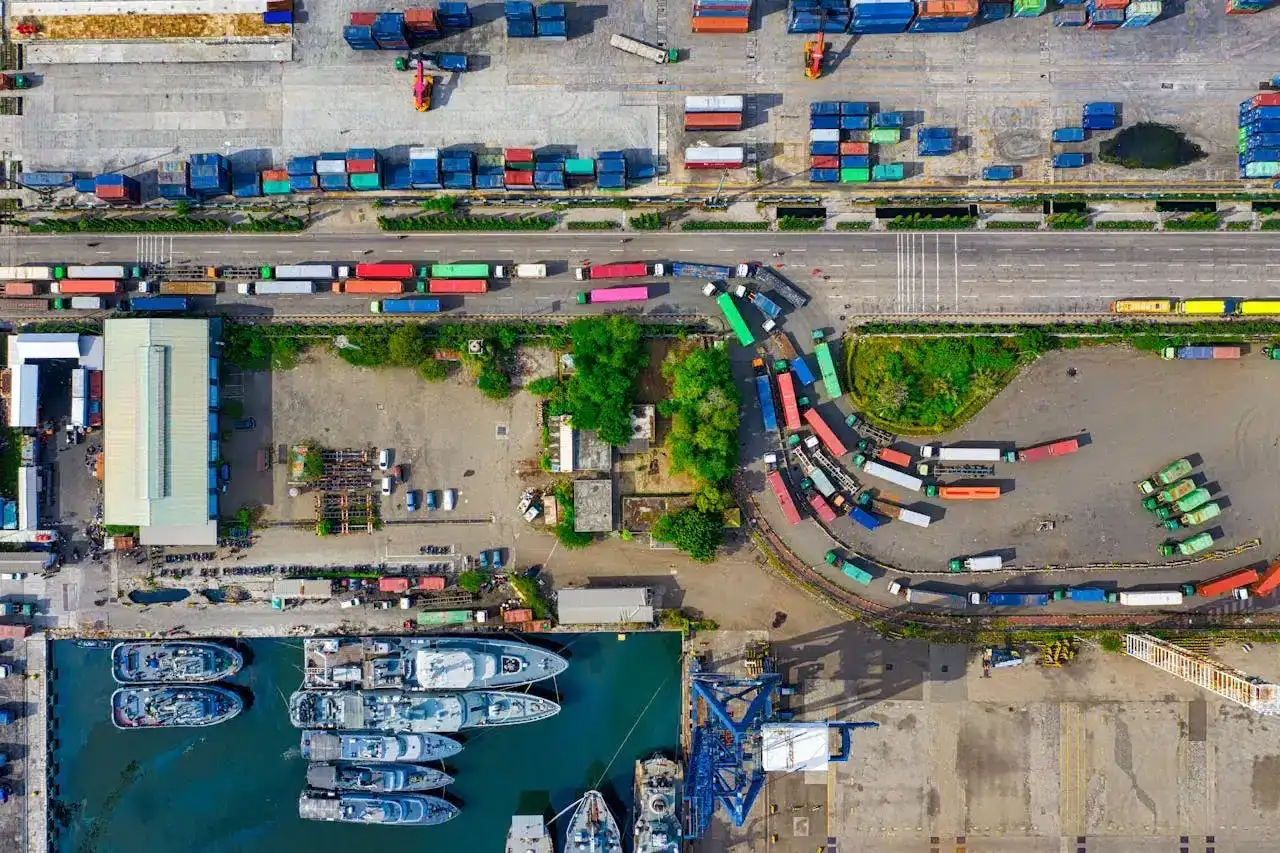
The industrial outdoor storage (IOS) market has rapidly evolved from a niche real estate category into one of the most in-demand segments in commercial real estate. As of 2025, IOS is no longer seen as just a functional laydown area; it is a critical asset class supporting logistics, e-commerce, construction, utilities, and infrastructure expansion.
This market’s momentum is driven by rising land constraints, changing supply chain dynamics, and a shift away from rigid warehouse models. As users prioritize accessibility, scalability, and security, the role of the IOS site continues to grow across both urban infill zones and secondary metros.
Understanding the market’s size, segmentation, and future trajectory helps investors, developers, and operators align their strategies to capture long-term value. In this analysis, we explore how the IOS market is defined, measured, and where it’s headed in 2025 and beyond.
Defining the Industrial Outdoor Storage Market
The industrial outdoor storage market includes secured, open-air facilities designed to store vehicles, trailers, containers, heavy equipment, and bulk materials. These are not simple vacant lots they are purpose-built IOS properties featuring:
- Fencing, access-controlled gates, and surveillance systems.
- Graveled or paved surfaces for load-bearing performance.
- Zoned layouts for fleet parking, material staging, or asset segregation.
- Infrastructure like lighting, security cabling, and drainage controls.
What sets IOS apart from traditional industrial space is the absence of enclosed, climate-controlled buildings. Instead, these sites are optimized for outdoor operation, low overhead, and high utility making them ideal for industries that operate on tight deployment schedules or work with rugged, mobile assets.
IOS can be standalone parcels or part of larger mixed-use industrial campuses. They may range from a half-acre staging yard near a port to a 50-acre facility supporting multi-tenant fleet operations. This variety in scale and use cases reflects the growing sophistication of the commercial real estate community toward IOS as a high-performing property type.
How Industrial Outdoor Storage Market Size Is Measured: Revenue vs. Acreage vs. Demand
Measuring the size of the IOS market requires a multidimensional approach. No single metric gives a full picture, which is why sophisticated investors and developers evaluate three key indicators together:
1. Revenue
Revenue reflects total rent collected, ancillary income (e.g., trailer parking fees, access control systems), and value-added services like lighting, signage, or mobile office setup. In institutional portfolios, revenue growth signals the financial maturity of IOS properties as an investment vehicle.
2. Acreage
Acreage measures the physical footprint of IOS across national and regional markets. While total land area matters, so does location infill sites near ports or metro highways command higher rents due to scarcity. With limited zoned land available for IOS sites, this metric shows supply-side pressure.
3. Demand
Demand reflects real-world user needs across transportation, construction, energy, retail, and public sectors. As new users adopt IOS (e.g., modular housing, film production, renewable energy), demand continues to outpace supply especially in Tier 1 and Tier 2 metros. Use FHWA’s Jason’s Law and state truck-parking surveys to convert local freight metrics.
| Metric | What It Measures | Why It Matters |
| Revenue | Total rent collected, plus ancillary income (e.g., trailer parking, lighting, access control). | Shows income potential and financial maturity of IOS in institutional portfolios. |
| Acreage | Total land area used for IOS, especially in key regions. | Infill acreage near ports or highways commands higher rents; signals supply-side constraints. |
| Demand | End-user needs across industries like logistics, construction, energy, and film. | Reflects real-world adoption; use tools like FHWA’s Jason’s Law to assess freight-related needs. |
By evaluating all three, stakeholders can differentiate between raw land with potential and true income-producing IOS properties that deliver long-term value.
Current Size of the Industrial Outdoor Storage Market
As of Q1 2024 and accelerating into 2025, the IOS market has shown consistent growth across all major U.S. regions. Meta’s March 2025 market report estimates the global IOS market at roughly $22.13 billion in 2025 and projects growth to about $35.06 billion by 2032, a compound annual growth rate of 6.9% (2025–2032).
Rising need for trailer storage, laydown yards, and short-term fleet staging has pushed operators and developers to build or reposition land into functional IOS.
Key market characteristics include:
- Strong tenant demand from logistics, construction, and e-commerce sectors.
- Limited supply of zoned, well-located IOS land in high-barrier-to-entry markets.
- Increased lease rates, particularly near highway interchanges and ports.
- Redevelopment of underutilized traditional industrial parcels into high-yield IOS yards.
- Growing interest from institutional capital seeking exposure to this underpenetrated property type.
The market is becoming more formalized, with professional management, digital access control, and multi-tenant leasing now common across high-traffic corridors. IOS is no longer viewed as a placeholder; it’s become a durable infrastructure layer in the industrial supply chain.
Key Drivers of Growth in the Industrial Outdoor Storage Industry
The following trends are fueling sustained growth in the IOS market into 2025:
1. Logistics Expansion
The need for trailer storage, container drop lots, and chassis pools continues to grow as same-day and next-day delivery expectations rise. IOS yards near distribution centers and highways reduce detention charges and shorten turnaround time.
2. Construction and Infrastructure Cycles
Public and private construction projects require staging areas for cranes, formwork, heavy vehicles, and building materials. IOS sites provide a flexible alternative to renting space inside enclosed warehouses especially for oversized or weather-tolerant assets.
3. E-Commerce Surge
Retailers and 3PLs use IOS as overflow for seasonal volume, cross-docking, or last-mile fleet parking. With urban warehouse space constrained and expensive, IOS helps maintain delivery speed while controlling costs.
4. Land Scarcity in Urban Cores
In top-tier metros, the lack of zoned industrial land has made IOS land increasingly valuable. This scarcity is shifting focus to suburban and secondary markets where land is more available and zoning is more favorable.
5. Rising Interest from Institutional Investors
As IOS proves its value in operational resilience and cash flow, more institutional capital is flowing into the space. Investors see IOS as a stable alternative to traditional industrial investments, with lower capex and higher lease flexibility.
These forces combined are pushing IOS from a tactical solution to a strategic cornerstone of the industrial real estate ecosystem.
Regional Outlook: How Big Is the Outdoor Storage Market Across the U.S.?
The U.S. industrial outdoor storage (IOS) market continues to expand across regions, fueled by evolving supply chain demands, infrastructure investment, and the widespread need for flexible storage space. Performance varies based on regional industrial activity, land constraints, zoning conditions, and transportation infrastructure.
Major coastal metros and inland freight hubs still dominate in overall volume, but 2023 marked a turning point as suburban and secondary markets gained traction. With limited supply and rising demand in core areas, investors and users are increasingly pursuing decentralized strategies to secure high-utility IOS assets where barriers to entry are lower.
This diversification is expected to continue through 2025 and beyond, especially as users adapt to hybrid distribution networks that require multiple touchpoints between warehouses, job sites, and delivery zones.
Growth in Major Metropolitan Areas
Top-tier metros such as New York, Los Angeles, and Chicago maintain strong momentum in the IOS sector due to concentrated logistics, dense construction activity, and high throughput at ports and rail terminals.
However, these markets face challenges: land is scarce, entitlement is difficult, and redevelopment is costly. These factors contribute to stronger rent growth, higher asset valuation, and reduced vacancy for IOS-ready parcels.
The IOS market in these metros remains intensely competitive, with institutional investors favoring infill properties for their resilience and long-term appreciation. Many such assets are positioned near drayage corridors or as part of larger industrial clusters with shared access to intermodal nodes.
| Metropolitan Area | Market Size (sq. ft) | Growth Rate (%) |
| New York | ~168.3 million | 5.0% |
| Los Angeles | ~1.572 billion | 4.5% |
| Chicago | ~1.167 billion | +17.0% |
While top-line rent metrics remain strong, the fragment nature of ownership in these markets means aggregation and consolidation play a growing role particularly as institutional capital continues to enter the space with scale-driven strategies.
Trends in Suburban and Secondary Markets
As core industrial zones experience tightening availability and soaring land values, suburban and secondary markets are emerging as highly viable options for IOS site development.
According to the Urban Land Institute, IOS is increasingly expanding into suburban extensions of major industrial hubs as core land becomes too expensive and constrained. In 2023, these areas saw a marked uptick in land absorption, new leasing activity, and speculative builds especially near key interstate corridors, airports, and cross-dock logistics hubs.
Users priced out of urban cores now look to outer-ring submarkets where:
- Entitlements are faster
- Land costs are lower
- Zoning for outdoor storage space is more flexible
- Access to labor and freight corridors remains strong
Phased construction has become a common approach in these areas, allowing investors to align capital deployment with leasing velocity.
Sites are often acquired raw and improved incrementally, with gravel surfacing, fencing, gates, and lighting added as occupancy grows, all factors that determine how much it costs to develop an IOS site. This flexible model reduces risk while capturing upside as demand expands.
These trends are expected to continue, particularly as more industries embrace outdoor staging models post-pandemic, and as macro conditions push users toward cost-effective space solutions.
Market Segments Within Industrial Outdoor Storage
The IOS market is not monolithic. It is composed of several distinct segments based on user needs, asset types, and operational models. Understanding these segments is critical to designing sites that attract stable tenants and justify long-term investment.
Contractor and Equipment Storage
This segment serves construction, infrastructure, and specialty trade users who store:
- Excavators, lifts, backhoes, and utility vehicles
- Temporary jobsite trailers or containers
- Pallets of pipe, concrete forms, scaffolding, and fencing
Key site features include secure fencing, wide access lanes, and reinforced pads for heavy equipment. These tenants value location near project corridors and may operate on seasonal or rotational lease terms.
Fleet, Truck, and Trailer Parking
Logistics and transportation companies rely on IOS assets to park and dispatch:
- Tractors and trailers
- Last-mile delivery vans and service vehicles
- Empty containers staged for cross-docking
These users require marked stalls, lighting, overnight security, and efficient ingress/egress. Proximity to highways and ports is essential, as is 24/7 access for rotating shifts.
Materials and Container Storage
Manufacturing, distribution, and retail operators use IOS to stage:
- Bulk inventory that doesn’t require climate control
- Shipping containers with overflow product
- Construction materials waiting for pickup or installation
For these tenants, pad capacity, surfacing quality, and inventory visibility are essential.Efficient circulation patterns reduce dwell time, and digital yard management systems add further value, showing how to maximize space in IOS yards.
| Segment | Primary Users | Key Features |
| Contractor and Equipment Storage | Construction firms, utility contractors | Heavy load surfaces, secured zones, flexible lease terms |
| Fleet, Truck, and Trailer Parking | 3PLs, carriers, last-mile fleets | Marked stalls, lighting, fast gate entry |
| Materials and Container Storage | Manufacturers, e-commerce, wholesalers | High-capacity pads, stacking zones, short-turn layouts |
The market’s segmentation helps define underwriting standards and valuation expectations for different types of IOS properties, which is increasingly important as investors seek to quantify risks and revenue potential across varied asset profiles.
Investment Trends in the Industrial Outdoor Storage Market
As the IOS market matures, it is drawing more attention from private equity groups, institutional capital, and REITs aiming to scale portfolios in underbuilt but high-demand asset classes. In 2023, these entities increased acquisition activity and began implementing standardized leasing, branding, and property management practices across IOS holdings.
Many investment strategies now focus on aggregation acquiring smaller or fragment parcels and combining them into regional or national portfolios. These roll-up plays support improved operating margins, yield stability, and platform-level exit strategies, enhancing the overall profitability of IOS as a scalable investment model.
Institutional Capital & REIT Involvement
REITs and institutional players favor IOS assets that offer:
- Entitled land with industrial zoning and surface improvements
- Proximity to major logistics corridors or ports
- Existing in-place tenants with stable lease terms
- Potential for rent escalations and operational upside
They also bring professional systems for lease administration, insurance compliance, lighting and security upgrades, and environmental risk mitigation. By doing so, they raise valuation standards and liquidity in what was historically an overlooked property type.
This wave of formalization is expected to continue as IOS becomes a more widely understood and respected segment within commercial real estate. Market transparency, rent benchmarking, and improved data will further unlock institutional investment and long-term value creation.
Future Outlook: How Fast Is the Outdoor Storage Market Growing?
The industrial outdoor storage (IOS) market is evolving rapidly, with accelerating growth driven by technology, sustainability, and changing tenant demands. As innovation reshapes the way sites are designed, operated, and monetized, IOS properties are becoming essential components of modern industrial infrastructure.
Smarter Sites Through Technology and Automation
New technology is transforming site operations and risk management:
- AI-powered security cameras, license plate recognition (LPR), and digital yard mapping boost site safety, reduce theft, and improve accountability.
- The broader Industrial IoT (IIoT) paradigm; deploying sensors, gateways, and analytics enables automated instrumentation, real-time data collection, and decision making at scale.
- Real-time data on traffic flow, asset movement, and tenant usage enables operators to optimize layouts and schedule predictive maintenance.
- Enhanced visibility into how space is used leads to better utilization and smarter pricing.
Frictionless Tenant Experience with Digital Tools
Tenant-facing technology is also advancing:
- Online leasing, automated billing, and digital check-ins streamline operations for both tenants and operators.
- These features are especially valuable for short-term users, contractors, or fleet-based tenants who require flexible access.
- Reducing manual paperwork lowers admin overhead and enhances the overall customer experience.
Sustainability Is Driving Operational Value
Eco-friendly features are becoming standard across modern IOS facilities:
- Solar-powered lighting systems are increasingly used in industrial outdoor settings, cutting operating costs and avoiding utility infrastructure costs.
- These upgrades make IOS sites more resilient to weather events, more compliant with regulations, and more attractive to municipalities and institutional investors.
A Maturing Market with Long-Term Upside
These trends point to a maturing market with durable growth potential:
- As tenant expectations evolve, IOS operators must meet rising standards in tech, sustainability, and efficiency.
- Facilities that embrace these changes will see stronger tenant retention, higher asset value, and more stable, long-term leases.
Growth in the IOS sector is no longer speculative, it’s structural. Operators investing in future-ready solutions are positioned to lead in a rapidly professionalizing space.
Final Thoughts: Understanding the Size and Potential of the Industrial Outdoor Storage Market
The industrial outdoor storage (IOS) market is no longer a niche; it’s a core part of modern commercial real estate. In 2025, IOS facilities are in high demand across logistics, construction, utilities, and retail, driven by rising storage space needs, limited industrial land, and increasing operational flexibility.
As a property type, IOS offers scalable layouts, faster development timelines, and resilient rent growth compared to traditional industrial real estate. For investors, the combination of strong fundamentals and institutional capital makes IOS one of the most promising sectors in today’s fragmented market.
At RecNation, we specialize in purpose-built industrial outdoor storage sites designed to meet the daily needs of contractors, carriers, fleet operators, and infrastructure teams. Our secure facilities are located near key transport corridors and built with durability, access, and uptime in mind.
FAQ
How is the size of the industrial outdoor storage market measured?
It is measured by revenue, acreage, and demand to capture financial, physical, and user activity. Using all three gives a more accurate view than any one metric.
What are the different segments within the industrial outdoor storage market?
Major segments include contractor and equipment storage, fleet and trailer parking, and materials and container storage. Each segment values security, access, and efficient layouts.
How is the industrial outdoor storage market expected to grow in the future?
The market is expected to expand with technology, automation, and sustainability upgrades. Continued demand from logistics, construction, and e-commerce supports that trajectory.
What is the role of institutional capital and REITs in the industrial outdoor storage market?
Institutional investors and REITs fund acquisitions and improvements and bring professional management. Their participation supports scale, liquidity, and consistent standards.
How does the industrial outdoor storage market vary across different regions in the United States?
Major metros show high demand and tighter supply, while suburban and secondary markets offer more land and access. Performance depends on transport links, zoning, and local industry.
What are the benefits of industrial outdoor storage facilities?
They offer flexible, secure space at a lower cost than enclosed buildings. This helps users handle overflow, stage projects, and park fleets efficiently.


