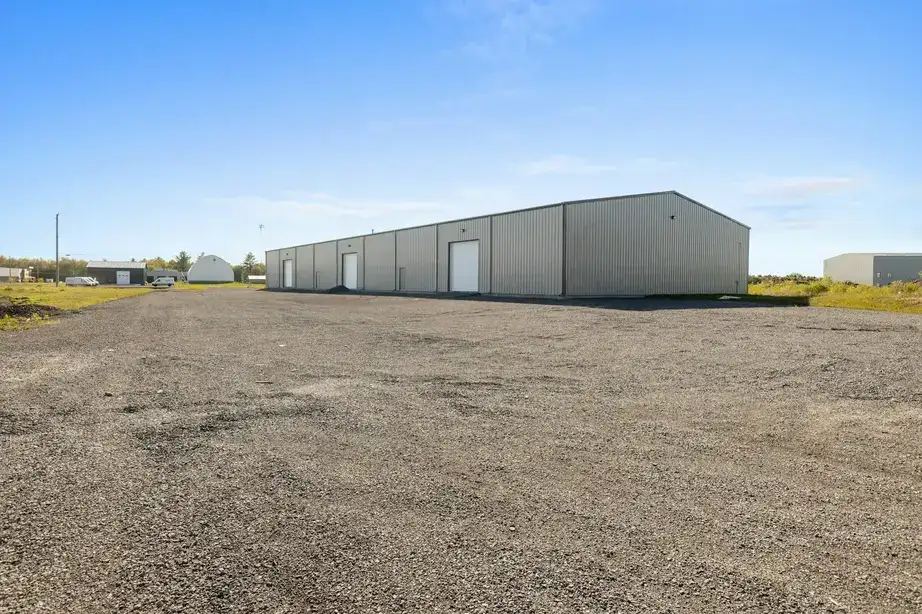
Are you thinking about investing in industrial outdoor storage facilities? You might be wondering how profitable these properties can be. Understanding the Return on Investment (ROI) is essential for making informed decisions.
Industrial outdoor storage, or IOS, has become a strong performer in commercial real estate, often delivering attractive returns.
Investing in IOS can generate consistent income through rental yields. Demand continues to rise from industries like logistics, construction, and manufacturing. In this article, we explain what affects ROI and how investors can make the most of their industrial outdoor storage assets.
Understanding ROI in Industrial Outdoor Storage Investments
When evaluating industrial outdoor storage investments, ROI helps you assess whether a project aligns with your financial goals. It’s a key measure for understanding profitability and investment performance.
What ROI Means for Industrial Real Estate Investors
In industrial real estate, ROI measures how effectively an asset generates profit after accounting for total costs, including acquisition, financing, and ongoing operations. It gives investors a clear view of the property’s ability to generate both short-term income and long-term value appreciation.
For IOS investors, ROI captures the financial benefit of efficient land utilization. Most outdoor storage sites require minimal capital expenditure beyond fencing, grading, and lighting. Due to this the barrier to entry is lower and net income can represent a larger percentage of total value.
Key inputs include:
- Purchase price: The cost of acquiring the property or land parcel.
- Operating expenses: Ongoing costs like maintenance, insurance, and property taxes.
- Net operating income (NOI): The income remaining after operational expenses but before debt service.
- Capital improvements: Investments in grading, drainage, or access roads that increase long-term property value.
By calculating ROI as:
(Net Profit ÷ Total Investment)
Investors can determine whether a site performs efficiently compared to other industrial real estate opportunities.
How ROI Differs From Cap Rate and Cash-on-Cash Return
While ROI provides a big-picture perspective, cap rate and cash-on-cash return are often used alongside it to refine analysis.
- Cap rate measures return based on net operating income divided by property value, offering insight into performance before considering financing. It helps compare market-based yields between properties.
- Cash-on-cash return measures annual pre-tax cash flow divided by actual cash invested, focusing on investor-specific returns after financing.
In essence:
- ROI = overall investment performance, including capital growth.
- Cap rate = property income yield at purchase or current market value.
- Cash-on-cash = investor’s real return on equity deployed.
| Metric | Definition | Formula | Focus Area | Best Used For |
| ROI (Return on Investment) | Measures the overall profitability of an investment over time. | (Total Profit ÷ Total Investment) × 100 | Long-term performance | Evaluating total gain or loss, including appreciation and operating income. |
| Cap Rate (Capitalization Rate) | Calculates return based on property income relative to its value, excluding financing. | (Net Operating Income ÷ Property Value) × 100 | Property yield | Comparing investment potential between similar properties. |
| Cash-on-Cash Return | Measures the annual cash flow earned on the actual cash invested. | (Annual Pre-Tax Cash Flow ÷ Total Cash Invested) × 100 | Cash efficiency | Assessing short-term return after financing and expenses. |
Together, these three metrics provide a full picture of both the property’s earning potential and how efficiently your capital is working for you. For IOS facilities, cap rates often align closely with ROI because operational costs are relatively low and income is steady.
Typical ROI Range for Industrial Outdoor Storage Assets
Returns for industrial outdoor storage assets vary based on location, demand, infrastructure quality, tenant stability, and the cost to develop an IOS facility. Well-located IOS facilities, especially those near logistics hubs, major highways, or ports, tend to achieve higher rental rates and occupancy, resulting in stronger returns.
In most U.S. markets, IOS investments deliver ROI in the range of 8% to 12% annually, with some tertiary or emerging areas reaching even higher yields. Because the upfront cost to develop an IOS site is significantly lower than constructing a warehouse or flex industrial property, investors can achieve faster payback periods and better leverage ratios.
Moreover, as industrial outdoor storage becomes institutionalized, with REITs and private equity groups entering the space, cap rate compression in prime markets has slightly reduced headline ROI but improved liquidity and long-term value stability.
Factors That Influence ROI for Industrial Outdoor Storage Facilities
Multiple variables determine how profitable an industrial outdoor storage (IOS) investment can be. Understanding each factor allows investors to accurately forecast performance, mitigate risks, and make smarter acquisition or development decisions.
Land Acquisition, Entitlement, and Site Prep Costs
Land acquisition is the first, and often most decisive, factor in an IOS project’s overall ROI. The price of land depends on location, parcel size, and zoning status.
Properties already zoned for industrial uses generally command a premium, but they also minimize entitlement risk and reduce development timelines.
Infrastructure, Utilities, and Construction Expenses
Infrastructure and utilities play a crucial role in determining both a site’s marketability and its long-term profitability.
Even though IOS properties generally have lower construction costs compared to enclosed industrial buildings, well-built infrastructure remains a competitive differentiator. Key infrastructure investments include:
- Roads and truck lanes: Wide, reinforced drive aisles to accommodate large commercial vehicles and minimize congestion.
- Lighting and fencing: Proper illumination and security fencing increase safety, reduce liability, and enhance property value.
- Utilities: Access to water, drainage, and electricity supports multiple industrial uses, such as fleet storage, trailer parking, or equipment maintenance.
Location Quality, Market Demand, and Tenant Mix
Location remains the single biggest driver of ROI in industrial outdoor storage. The closer a property is to major highways, airports, ports, or logistics centers, the more valuable it becomes.
Accessibility directly influences both rental rates and occupancy levels, as tenants seek yards that minimize travel distance and fuel costs.
The strongest-performing IOS properties are those that are strategically located within high-demand industrial zones serving transportation, construction, and logistics sectors.
These areas act as operational nodes within the national supply chain, enabling faster delivery times and efficient fleet movement.
Financing Costs and Capital Structure
Financing remains a pivotal factor in determining overall ROI for IOS properties. Because many of these facilities are land-focused and have minimal building improvements, lenders may apply different underwriting criteria than for traditional industrial developments. Key financial strategies include:
- Fixed-rate loans: Protect against interest rate volatility and maintain consistent cash flow.
- Equity partnerships: Enable portfolio scaling across multiple strategically located assets.
- Debt optimization: Align loan terms with lease maturities to match income stability.
Revenue Streams From Industrial Outdoor Storage
Understanding all revenue opportunities helps maximize ROI from your industrial outdoor storage facility.
Rental Income: Per-Acre, Per-SF, and Tiered Pricing Models
The primary source of income for IOS investors comes from rent charged on a per-acre or per-square-foot basis.
Tiered pricing models allow operators to adjust rates according to usage type, surface condition, and tenant requirements. For example, paved or fenced areas command premium pricing compared to gravel yards.
Similarly, sites with direct highway access or nearby logistics centers can charge higher rents due to their convenience and operational efficiency.
Premium Pricing for Secured or Amenity-Rich Sites
Strategically located IOS facilities with enhanced amenities, like 24-hour access, lighting, camera systems, or on-site management, justify higher rents. Security fencing, paved surfaces, and advanced entry controls all contribute to a safer, more efficient tenant experience.
As institutional capital increasingly flows into the sector, competition has led operators to upgrade sites with additional infrastructure, transforming traditional yards into fully managed logistics support assets.
These value-add improvements not only raise rental rates but also boost long-term property valuation.
Ancillary Revenue Streams: Storage, Maintenance, and Power Hookups
Many IOS operators are finding creative ways to capitalize on the land beyond base rent. Ancillary services such as equipment storage, mobile maintenance, truck washing, or electrical hookups for refrigerated trailers can provide steady secondary income.
Offering these features enhances tenant convenience and reduces turnover. They’re especially valuable in regions with dense supply chain activity or where e-commerce distribution hubs operate 24/7.
By layering additional revenue channels, investors increase property resilience and improve total ROI.
Long-Term Appreciation Through Land Value Growth
While steady income is a major attraction, IOS properties also benefit from strong underlying land appreciation. Industrial land is becoming increasingly scarce near urban cores, and parcels that can accommodate industrial uses or logistics activity often experience faster value growth.
The growth of e-commerce and modern distribution has driven sustained demand for accessible, outdoor storage near key routes. As a result, land values for strategically located IOS facilities, particularly those near ports, interstates, and metropolitan hubs, continue to rise year over year.
For investors, this appreciation compounds total ROI and provides an additional hedge against inflation. Unlike built-out industrial assets, well-positioned IOS sites maintain flexibility for redevelopment or expansion, allowing owners to capitalize on future shifts in market demand.
Average ROI Benchmarks for Industrial Outdoor Storage
With growing demand across the U.S., industrial outdoor storage has established itself as a high-yield asset class. Understanding market benchmarks helps investors set realistic expectations.
Typical Annual ROI and Cap Rate Ranges (U.S. Benchmarks)
Most IOS investments achieve 8% to 12% annual ROI, depending on market maturity, property type, and tenant stability. Cap rates typically fall within similar ranges, reflecting the balance between steady income and low capital requirements.
| Market Type | Typical ROI | Average Cap Rate |
| Primary Markets | 12% – 14% gross returns over 7–10 years | 6.0% – 8.0% |
| Secondary Markets | 12% – 14% gross returns over 7–10 years | 7.0% – 9.0% |
| Tertiary Markets | 12% – 14% gross returns over 7–10 years | 8.0% – 11.0% |
Note: Figures are based on reported returns and yield commentary from CommercialSearch. Actual ROI and cap rates vary by market, tenant mix, and financing terms.
Primary markets, like Los Angeles, Dallas, and Miami, often exhibit lower ROI due to high land prices and competition from institutional capital. However, they offer liquidity and appreciation stability.
Secondary and tertiary markets, on the other hand, provide stronger cash yields and growth potential as supply chain activity expands outward from urban centers.
ROI Variations by Market Type (Primary vs. Secondary Regions)
Primary markets tend to offer lower returns but higher long-term appreciation due to scarcity and investor demand.
Secondary and tertiary regions, especially those adjacent to major highways or emerging industrial corridors, allow investors to capitalize on lower entry costs and growing tenant demand fueled by the growth of e-commerce and regional logistics.
In these markets, IOS sites often serve as critical nodes in the supply chain, supporting warehouse overflow, fleet staging, and last-mile delivery.
| Factor | Primary Markets | Secondary Markets |
| Entry Cost | High | Moderate to low |
| Cap Rate | Lower (4–6%) | Higher (6–9%) |
| Appreciation | Strong, steady | Moderate, faster potential |
| Risk | Lower | Higher but improving |
| Demand Drivers | Scarcity, institutional demand | E-commerce, regional logistics |
| ROI Outlook | Stable long-term growth | Higher short-term returns |
As more companies seek cost-effective land alternatives, the ROI gap between IOS and traditional warehouse investments continues to favor outdoor storage.
Case Study: ROI Example for a 10-Acre Outdoor Storage Facility
Consider a 10-acre industrial outdoor storage property in a secondary market leased to a long-term logistics tenant.
- Purchase Price: $2 million
- Annual Rental Income: $250,000
- Annual Operating Expenses: $50,000
- Net Operating Income (NOI): $200,000
This example yields a 10% cap rate and an estimated 11% ROI after financing. It highlights how IOS properties can produce strong, stable returns with lower capital outlays compared to traditional industrial developments.
By choosing a strategically located site near freight corridors and maintaining efficient operations, investors can capitalize on high occupancy, low overhead, and appreciation over time.
Comparing ROI: Industrial Outdoor Storage vs. Warehouses and Self-Storage
Evaluating ROI in industrial outdoor storage (IOS) is best done by comparing it to other common industrial real estate investments such as warehouses and self-storage facilities.
Each asset class carries distinct capital requirements, operational complexity, and yield potential, but IOS stands out for its ability to deliver strong returns with minimal overhead.
Capital Expenditure Differences and Payback Periods
Unlike enclosed structures that demand high construction and maintenance budgets, IOS properties are primarily land-based. Development focuses on grading, surfacing, fencing, and utility installation, making upfront costs significantly lower.
This lower cost basis means investors can recover their initial investment faster and begin realizing positive cash flow earlier in the holding period.
| Investment Type | Avg. Capital Expenditure | Typical Payback Period |
| Industrial Outdoor Storage | $1,000,000 – $2,000,000 (approx. 5-acre IOS incl. land + site work) | 12 – 16 years (based on 6.5–8.5 % cap rates) |
| Warehouses | $7,500,000 – $14,200,000 (100 k sf @ $75–$142/sf) | 15 – 22 years (based on 4.5–6.5 % cap rates) |
| Self-Storage Facilities | $3,000,000 – $8,000,000 (40–80 k sf @ $50–$100+/sf) | 15 – 18 years (based on 5.5–6.5 % cap rates) |
Note: Actual costs and returns can vary based on factors such as land value, location, zoning conditions, infrastructure work, and tenant demand within each market.
Because IOS requires less capital and maintenance, investors can capitalize on land appreciation and steady income without taking on the construction risk common to larger industrial developments.
Operational Overhead and Maintenance Comparison
Operating an IOS site is comparatively straightforward. There are no HVAC systems, elevators, or large mechanical infrastructure to maintain. The key expenses are surface upkeep, lighting, landscaping, insurance, and security.
In contrast, warehouses and climate-controlled self-storage properties have higher recurring costs, including energy, staffing, and structural maintenance. This difference allows IOS facilities to maintain higher net margins even if rental rates per square foot are lower.
Lower overhead also provides a buffer during economic slowdowns, while warehouse tenants may downsize or vacate, IOS tenants (logistics firms, truckers, and contractors) typically maintain their outdoor storage needs, sustaining stable cash flow.
Tenant Stability and Lease Length Analysis
Tenant composition significantly affects revenue consistency. IOS leases are often long-term, ranging from three to ten years, especially when tenants use the site as a core operational base for supply chain or fleet activity.
These contracts usually include triple-net (NNN) or modified-gross structures, shifting most maintenance responsibilities to tenants. As a result, landlords enjoy lower management intensity and predictable income.
Warehouses share similar lease stability but demand greater capital reserves for maintenance and tenant improvements. In contrast, self-storage properties have higher turnover and more marketing overhead due to frequent customer churn.
For investors seeking reliable, long-term income, strategically located IOS sites, leased to transportation or logistics tenants, often outperform in both yield stability and operational simplicity.
Risks That Can Impact ROI in Industrial Outdoor Storage
Every investment carries risks, and IOS is no exception. Recognizing potential challenges early can protect your ROI.
Zoning Delays, Permit Issues, and Compliance Costs
Zoning and entitlement challenges are among the most common early-stage risks. Properties not already approved for industrial uses may require extensive review processes, environmental studies, and community hearings.
In most jurisdictions, the permits required for IOS facilities include Conditional Use Permits (CUPs) or Special Use Permits, along with approvals for stormwater management, grading, and access driveways. Some municipalities may also require environmental impact assessments, fire safety permits, or land development approvals before construction begins.
Delays can push back project timelines and add unexpected holding costs. Investors should perform comprehensive due diligence on local zoning ordinances, stormwater management rules, and environmental regulations before acquisition.
Partnering with experienced consultants or developers, like RecNation’s planning team, can streamline approvals and reduce costly setbacks.
Regional Oversupply and Tenant Turnover Risks
While national demand for IOS is growing, some regions risk temporary oversupply if multiple projects come online simultaneously. This can compress rental rates and lengthen lease-up periods.
Maintaining strong tenant relationships and targeting industries with persistent outdoor storage needs (e.g., logistics, utilities, and construction) helps mitigate turnover.
Long-term leases, staggered expirations, and periodic rate adjustments preserve occupancy and cash flow even in shifting markets.
Drainage, Surface, and Environmental Compliance Costs
IOS properties depend heavily on proper site engineering. Poor drainage or substandard surfacing can lead to pooling, erosion, and environmental liabilities. Preventative maintenance, grading, sealing, and runoff management, preserves operational quality and safeguards ROI.
Environmental compliance is equally important. Stormwater retention, oil-water separation systems, and dust control measures are not just regulatory requirements, they protect the long-term value of the property and appeal to institutional buyers.
Financing and Interest Rate Sensitivity
Interest rate fluctuations can significantly affect leveraged returns. Higher rates reduce cash-on-cash yields and may delay refinancing opportunities.
Investors can mitigate exposure by securing fixed-rate loans or locking favorable terms early in the acquisition process. Conservative leverage (60-70% LTV) maintains flexibility and cushions performance during market adjustments.
IOS’s relatively low capital requirements and high operating margins make it resilient even in rising-rate environments, an advantage over more capital-intensive industrial real estate assets.
Strategies to Maximize ROI in Industrial Outdoor Storage
Strategic planning and efficient management are key to improving ROI and overall profitability of IOS facilities. Effective layout design, smart technology adoption, and long-term tenant stability all contribute to higher yields and stronger asset performance over time.
Maximizing Yield Through Smart Layout and Space Utilization
An optimized site layout directly increases revenue potential. Every square foot should be designed for safe, efficient circulation without wasting usable land.
| Layout Strategy | Description | Benefits |
| Grid System | Systematic, high-density arrangement | Maximizes usable area and simplifies navigation |
| Vertical Storage | Racks or multi-tiered container stacking | Expands capacity without buying more land |
| Clear Pathways | Marked lanes and directional signage | Improves safety and operational efficiency |
Combining these layout strategies allows investors to capitalize on existing acreage while maintaining accessibility and compliance.
Using Technology and Automation to Improve Efficiency
Modern technology is transforming how IOS facilities are managed. Yard Management Software (YMS) tracks space utilization and tenant movement, helping owners monitor occupancy and optimize asset deployment.
Automation, such as smart gate systems, license-plate recognition, and digital invoicing, reduces administrative overhead and improves tenant experience. Investors who integrate technology early gain operational transparency and long-term scalability.
Securing Long-Term Tenants and Reducing Vacancy Risk
Tenant stability remains one of the strongest ROI levers in outdoor storage. Operators should focus on industries that rely on consistent yard access, such as freight carriers, trucking companies, construction material suppliers, and equipment rental firms.
Proactive communication, responsive maintenance, and clear lease terms encourage renewals. Long-term contracts not only lock in income but also support stronger property valuations during refinancing or sale.
| Tenant Strategy | Description | Benefits |
| Tiered Pricing | Offers varied rate levels by surface and amenities | Attracts broader tenant mix |
| Strong Service | Dedicated tenant relations and issue response | Boosts retention and referrals |
| Facility Maintenance | Continuous upkeep and repairs | Protects long-term asset value |
Upgrading Security and Infrastructure to Justify Higher Rents
Premium IOS sites achieve superior ROI by offering enhanced safety and functionality. Strategic upgrades include:
- Installing high-resolution CCTV and remote-monitoring systems.
- Upgrading access gates with keycard or mobile-app entry.
- Improving paving, lighting, and drainage for safer operations.
These improvements justify rent increases, reduce vacancy, and enhance marketability to institutional buyers. They also align with tenants’ insurance and safety requirements, further securing lease renewals.
Long-Term Investment Outlook for Industrial Outdoor Storage
The future of industrial outdoor storage looks promising as logistics and construction industries expand.
Growth Projections for the IOS Market
The sustained growth of e-commerce and restructuring of global supply chains are fueling continued demand for strategically positioned outdoor storage. Logistics operators require staging areas near fulfillment hubs to manage container overflow, fleet parking, and last-mile distribution.
According to CBRE, the demand for IOS jumped during supply chain disruptions, with many users turning to outdoor lots when traditional warehouses filled up.
Industrial land near urban centers is becoming scarce, creating upward pressure on rents and land values. This scarcity is driving record occupancy across IOS portfolios and reinforcing its role as a core part of the U.S. industrial infrastructure.
Institutionalization and REIT Involvement
What was once dominated by private owners is now attracting institutional capital. REITs, private equity firms, and family offices are rapidly acquiring or developing IOS portfolios to diversify exposure beyond warehouses and logistics centers.
This wave of professional investment is bringing more sophisticated management standards, better reporting practices, and greater liquidity to the sector, creating stronger exit opportunities for early investors.
As more capital flows into strategically located IOS properties, cap rates may compress, but value stability and operational efficiency will continue to underpin solid long-term ROI.
Why IOS Is Becoming a Core Real Estate Asset Class
IOS’s resilience lies in its simplicity. It meets the growing need for flexible, cost-effective industrial uses while avoiding the high construction costs and obsolescence risks of built-form assets. For investors, IOS offers:
- Steady cash flow: Long-term leases and low expenses sustain consistent income.
- Capital appreciation: Land scarcity near logistics hubs enhances long-term value.
- Portfolio diversification: IOS complements warehouse, multifamily, and self-storage holdings, smoothing volatility across cycles.
In an era defined by logistics expansion and e-commerce growth, IOS has evolved from a secondary strategy to a core allocation within modern industrial real estate portfolios.
How RecNation Helps Investors Improve ROI
RecNation helps investors strengthen their industrial outdoor storage portfolios through data-driven design, management expertise, and tenant solutions.
Optimizing Site Layout for Maximum Yield
RecNation’s design and development teams specialize in efficient yard layouts that improve circulation, safety, and capacity.
By applying digital mapping, grading optimization, and surface engineering, they transform underperforming land into high-yield industrial assets.
Their planning framework ensures each property is strategically located for visibility and access, often near interstates or high-growth logistics markets, allowing investors to capitalize on tenant demand and market expansion.
Effective Portfolio Management and Tenant Solutions
Beyond development, RecNation’s management platform provides investors with full operational support, from tenant acquisition and lease administration to preventive maintenance and security oversight.
Their network of national tenants across logistics, construction, and storage sectors ensures consistent occupancy, while proprietary analytics tools track performance and ROI across multi-site portfolios.
RecNation’s investor partnerships emphasize transparency, long-term stability, and performance, helping clients position IOS assets as durable, income-producing components of their broader commercial real estate strategy.
Final Thoughts: Partnering with RecNation for Smarter, Scalable IOS Investments
Industrial outdoor storage (IOS) has become one of the fastest-growing opportunities in commercial real estate, offering investors stable, land-backed income and strong long-term value.
RecNation leads the way in developing and managing high-performing industrial outdoor storage solutions nationwide. With expertise in site planning, entitlement, and tenant operations, RecNation turns underutilized land into secure, compliant, and revenue-generating assets.
For investors seeking to enter or expand in the IOS sector, partnering with RecNation means gaining a trusted, data-driven operator focused on maximizing ROI and long-term property performance.
With RecNation, investors aren’t just acquiring land, they’re building long-term value in one of the most resilient and fast-growing sectors in industrial real estate.
FAQ
What is industrial outdoor storage (IOS), and how does it differ from traditional industrial real estate?
IOS involves storing vehicles, containers, or equipment outdoors rather than in enclosed facilities. It’s more cost-effective and flexible compared to traditional industrial properties.
What are the primary benefits of investing in industrial outdoor storage facilities?
IOS investments typically have lower startup costs, strong tenant demand, and steady income potential, especially as logistics and e-commerce continue to expand.
How do location and market demand impact the ROI of IOS investments?
Location determines accessibility and rental potential. Facilities near highways or logistics hubs tend to achieve higher occupancy and better rent growth.
What are some of the key risks associated with investing in IOS facilities?
Zoning delays, environmental regulations, and market oversupply can affect performance. Careful due diligence and compliance planning help reduce these risks.
How can investors maximize their ROI in industrial outdoor storage?
Focus on efficient layouts, advanced technology, long-term leases, and strong security features to increase revenue and attract quality tenants.
What is the long-term investment outlook for industrial outdoor storage?
The IOS market is expected to grow with expanding logistics and industrial demand, making it a promising long-term investment category.
How does the ROI of IOS compare to other types of industrial real estate, such as warehouses?
IOS often provides higher relative returns due to lower construction and maintenance costs while offering comparable rental yields.
What role do institutional investors and REITs play in the IOS market?
Institutional investors and REITs are fueling growth by bringing capital, professional management, and long-term stability to the IOS sector.


