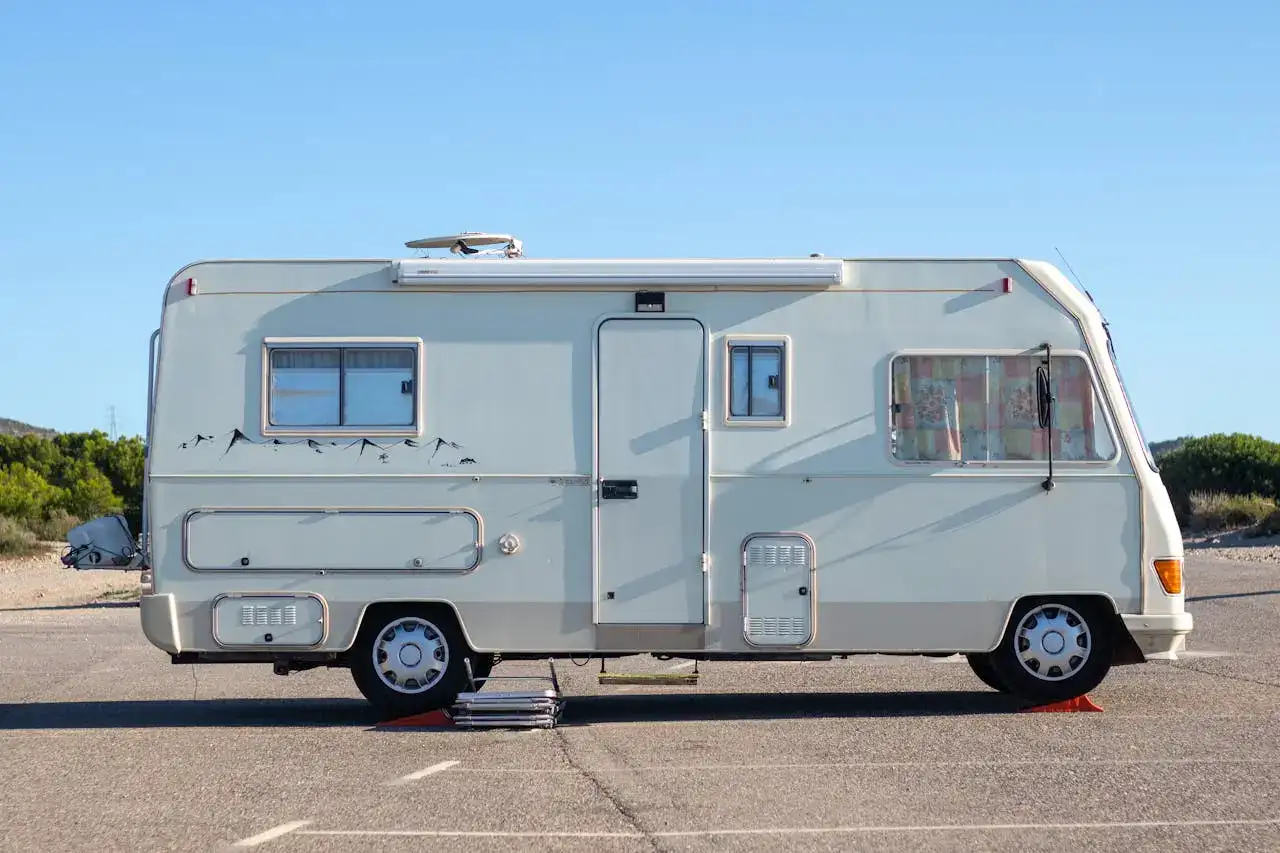
The 10 year rule is a private campground policy that allows certain recreational vehicle (RV) parks and resorts to refuse entry to motorhomes manufactured more than 10 years before the date of arrival. It is not a federal or state law. Enforcement varies widely by park type, and many owners of older motorhomes navigate it without serious problems.
This guide covers which campgrounds enforce it, how strictly, what to do if your unit is over the threshold, and what buyers need to know before purchasing an older coach.
What the 10 Year Rule for Motorhomes Actually Means
The rule functions as a vehicle age policy set by individual park operators. A park that enforces it can turn away any motorhome whose model year falls outside their threshold, regardless of the unit’s actual condition, mileage, or purchase date.
The table below summarizes the core elements at a glance.
| Element | Detail |
| What it is | A private campground admission rule based on motorhome age |
| Who enforces it | Individual park operators, not federal or state agencies |
| How age is measured | Model year to current calendar year |
| What it affects | Class A, B, and C motorhomes; often towable RVs as well |
| What it does not affect | State parks, national parks, BLM land, most county parks |
How the 10-Year Age Calculation Works
Parks measure from model year to the current year, not from the vehicle registration date or purchase date. A 2014 motorhome is over 11 years old in 2026 regardless of when it was bought or how low the mileage is. A buyer purchasing a 2017 model today has roughly one year before most parks consider it over the line. Some parks use a rolling policy tied to the date of arrival; others apply a fixed calendar-year cutoff. Confirm the specific method when calling ahead.
Which Vehicle Types the Rule Typically Covers
Most parks that enforce the rule apply it to all motorhome classes and often to travel trailers and fifth wheels as well. Class B campervans (converted vans) sometimes receive more flexibility because their visual footprint is smaller. If you own a towable RV, ask the park directly whether their vehicle age policy applies to your specific type.
Why RV Parks Enforce the 10 Year Rule
The rule is not arbitrary. Three legitimate business drivers sit behind it, and understanding them helps if you need to make a case for an exception.
Aesthetics and resort image are the most visible reason. Upscale private resorts sell a visual product. A single older unit with faded decals or oxidized siding affects the experience for every other guest. Parks in the Sun Communities and Equity LifeStyle Properties portfolios, for example, compete on the appearance of their grounds.
Safety and maintenance assumptions are the second driver. Older motorhomes carry higher average rates of propane system wear, fluid leaks, and aging electrical components. Parks cannot verify mechanical condition at check-in, so age functions as a rough proxy for a vehicle condition assessment they cannot practically perform.
Insurance and liability complete the picture. Some campground liability policies carry rate adjustments or exclusions tied to the age or condition of guest vehicles. This is the most legitimate business reason and the one competitors rarely mention.
Is the 10 Year Rule Legal?
Private campgrounds in the United States generally have broad authority to set their own admission rules, provided those rules do not violate anti-discrimination statutes based on protected characteristics. Vehicle age is not a protected characteristic. Some states regulate RV parks under lodging or campground licensing statutes.
Florida Statute §513 is the most comprehensive state-level example, but it does not prohibit age-based vehicle restrictions. The rule is almost certainly enforceable at the park’s discretion. If you believe you have been treated unfairly, consult a local attorney.
How Strictly Is the 10 Year Rule Enforced in Practice?
The honest answer: the rule is on the books at a minority of campgrounds, and strict enforcement is less common still. Industry estimates from RV forum aggregations and coverage in RV-focused publications suggest fewer than 30% of private campgrounds actively enforce an age restriction.
Many that have it will waive it for a well-maintained unit. For context on how long motorhomes realistically remain road-worthy, see our guide on the average lifespan of a motorhome.
Enforcement breaks down clearly by venue type:
| Venue Type | Enforcement Level |
| Upscale private resorts | Strictest category; premium, uniform aesthetic means little tolerance for exceptions |
| Independent private campgrounds | Varies widely, since policy is set at the property level by whoever manages the site |
| State parks and public campgrounds | Rarely enforce age restrictions at all, the most actionable fact in this article for owners of older motorhomes |
| BLM land, national forests, dispersed camping | No vehicle age restrictions of any kind |
There’s also a longer trend worth noting. As of 2025 to 2026, RV community discussion increasingly favors relaxing the rule. The overall RV fleet has aged considerably since the pandemic-era buying surge, and parks that enforce strictly are finding a shrinking pool of eligible guests.
How Major Campground Chains Apply the Rule
This distinction is missing from most coverage and is the single most actionable detail for anyone evaluating network access.
KOA franchises are individually owned. KOA corporate publishes no universal age rule, so two KOA properties in the same state may have completely different policies.
Thousand Trails membership parks tend to be stricter, particularly at resort-class properties.
Good Sam Parks is a certification program, not an ownership chain. Member parks set their own campsite restrictions independently. The brand name on the sign tells you very little about whether the 10 year rule applies.
Variations by Motorhome Class
Class A coaches attract the most consistent enforcement because their size makes them highly visible throughout a resort. Class C motorhomes typically fall under the same rules as Class A at parks that enforce strictly. Class B campervans are more likely to receive flexibility or to be evaluated under a separate standard. Towable units sometimes face a less strict interpretation, though this varies by property.
How to Get Approved If Your Motorhome Is Over 10 Years Old
Older motorhomes can still get approved at parks that enforce the rule. The process takes a little preparation, but it is straightforward.
- Call ahead. Do not arrive and hope. Ask the park directly whether they enforce a vehicle age policy and whether they accept exemptions and waivers. Get the name of the person who reviews exception requests.
- Submit exterior photographs. Most parks that grant exceptions use four exterior photos as their primary review tool: front, rear, driver side, and passenger side. Photos should be recent (within 30 days), taken in natural light, and show the unit clean with no visible damage.
- Obtain a professional inspection report. A Certified RV Inspector credentialed through the National RV Inspectors Association can produce a report confirming mechanical and structural integrity. Some parks ask for this specifically.
- Document upgrades. If the motorhome has had significant recent work, such as a new roof membrane, resealed slides, or updated electrical systems, provide receipts. This shifts the frame from “old RV” to “maintained asset.”
- Confirm RVIA compliance if applicable. A unit that still meets Recreation Vehicle Industry Association standards has a stronger case for an exception. No step here guarantees approval. Parks retain final discretion.
What “Good Condition” Actually Means to a Campground Manager
When a manager evaluates an older motorhome for an exception, they’re looking at specific visual and mechanical indicators:
- No visible oxidation or chalking on fiberglass
- No delamination on sidewalls
- No peeling or missing graphics
- Roof seals intact with no visible water staining
- Functional awnings and slide-outs
- Tires with remaining visible tread
- A clean undercarriage
Hitting all of these points in your photos gives the manager what they need to say yes.
What the 10 Year Rule Means for Motorhome Buyers
Here’s a version with bullets applied within each consequence type where there are multiple distinct points:
What the 10 Year Rule Means for Motorhome Buyers
Campground access is only the most visible consequence of the 10-year threshold. Financing and insurance implications are just as real and are largely absent from competitor coverage. Before purchasing an older unit, also read our guides on motorhomes holding their value, what to avoid when buying an RV, and if a 20-year-old RV is worth buying.
Financing changes materially once a motorhome crosses the 10-year mark:
- Many lenders using J.D. Power (formerly NADA) RV guidelines reduce available loan terms from 15 to 20 years down to 10 years or fewer for older units.
- Some lenders set a hard cutoff around 15 years and will not finance at all.
- A buyer purchasing a seven-year-old motorhome today should factor in that refinancing options will narrow as the unit ages.
Insurance is the second inflection point:
- Some carriers shift motorhomes over 10 years old from agreed-value coverage to actual cash value (ACV) coverage.
- Agreed value pays a fixed amount you and the insurer agreed the RV is worth. ACV pays a depreciated value at time of loss, which for a 12-year-old coach can be significantly lower than what you paid.
- Ask your insurer directly whether they offer agreed-value or stated-value motorhome insurance, and compare across at least two specialist RV carriers.
Resale is affected as well. The 10-year mark is a known secondary market inflection point, and units crossing it typically see a steeper depreciation curve and a narrower buyer pool.
Financing an Older Motorhome: What Lenders Actually Do
Get pre-approval before making an offer on any unit over eight years old, not after. Loan terms available for a unit under 10 years may reach 15 to 20 years at a competitive rate. Over 10 years, expect a 10-year term with a higher rate. Some lenders decline entirely on units over 15 years. Knowing your financing ceiling before you negotiate protects you from a deal that falls apart at the last step.
Alternatives If Your Motorhome Doesn’t Meet the 10 Year Rule
(Replaces existing H2: “Alternatives If Your RV Doesn’t Meet the Rule”)
A motorhome that does not qualify at upscale private resorts still has a full range of camping options. None of the following apply vehicle age policies.
BLM land and national forests allow dispersed camping at no charge, typically for up to 14 days per location. There are no hookups, so self-containment is required. BLM dispersed camping rules and seasonal closures vary by area. Start with the BLM’s interactive online map to find legal sites.
State and county parks rarely enforce age restrictions. Reservations through Recreation.gov and individual state park portals involve no vehicle age screening. Some sites have length or height limits based on infrastructure, but those are size-based, not age-based.
Harvest Hosts is a membership program offering RV stays at wineries, breweries, farms, and attractions. No vehicle age policy applies. Hipcamp and Boondockers Welcome are peer-to-peer platforms for private land stays. Hosts set their own rules, but age restrictions are uncommon.
For owners who are not on the road year-round, keeping an older motorhome in secure off-site storage between trips is often more practical than full-time site hunting. RecNation motorhome storage offers covered and enclosed options sized for Class A, B, and C coaches across multiple states. For more on protecting your investment between trips, see our guide on storing an RV long term.
Boondocking and BLM Land: What to Know Before You Go
Most BLM dispersed camping stays are limited to 14 consecutive days at one location before you must move at least 25 miles. Hookups are not available, so a full freshwater tank, functioning holding tanks, and a working generator or solar setup are required. Some BLM areas have seasonal closures and fire restrictions that change year to year. Check the BLM site or call the local field office before committing to a specific area.
State Parks and Public Campgrounds: Usually a Safe Bet
State parks across all 50 states and national park campgrounds managed through Recreation.gov do not apply vehicle age restrictions as standard policy. When campsite restrictions do appear, they are almost always based on RV length or height due to site infrastructure, not on manufacturing year. For owners of older motorhomes, this makes the state and national park system a reliable, low-friction option.
Owning a motorhome past the 10-year mark means planning a little more carefully, knowing which parks will and won’t accept your rig, documenting its condition, and understanding how age affects your financing and insurance options.
For owners who need a secure home base between trips, RecNation motorhome storage provides covered and enclosed storage options across Arizona, Florida, Texas, and other states, with unit sizes suited to the full range of Class A, B, and C coaches.
Frequently Asked Questions
What is the 10 year rule for motorhomes?
The 10 year rule is a private campground policy that allows certain RV parks and resorts to refuse entry to motorhomes manufactured more than 10 years before the date of arrival. It is not a federal or state law. It is a business rule set by individual park operators, and enforcement varies widely. State parks, national parks, and public lands managed by the Bureau of Land Management do not apply this rule.
Do all campgrounds enforce the 10 year rule?
No. Fewer than 30% of private campgrounds actively enforce an age restriction, and many that have it on the books will waive it for a well-maintained unit. State parks, national parks, county parks, and BLM land do not apply vehicle age policies as standard practice. Upscale private resorts are the most consistent enforcers.
Can I get an exception if my older motorhome is in good condition?
Yes, many parks that enforce the rule will grant exemptions and waivers for well-maintained units. The most common process is submitting four exterior photographs showing a clean, undamaged exterior with no visible delamination, oxidation, or peeling decals. Some parks also request a professional inspection report from a Certified RV Inspector credentialed through the National RV Inspectors Association. Always call ahead rather than arriving and hoping.
How does the 10 year rule affect motorhome financing and insurance?
The 10-year threshold is also a lending and insurance inflection point. Many lenders reduce available loan terms on units over 10 years old, from 15 to 20-year terms down to 10 years or fewer. Some decline financing on units over 15 years. Some insurers shift older motorhomes from agreed-value coverage to actual cash value (ACV) coverage, which pays a depreciated amount at time of loss rather than a fixed replacement value. Buyers of seven- to nine-year-old motorhomes should factor this into their decision.
What are my camping options if my motorhome is over 10 years old?
Several practical alternatives do not enforce vehicle age restrictions. BLM land and national forests allow free dispersed camping for up to 14 days with no age policy. State parks and county parks rarely apply age restrictions, though some have site size limits based on RV length or height. Membership programs like Harvest Hosts and peer-to-peer platforms like Hipcamp and Boondockers Welcome offer private land stays with no age requirements. Many independent private campgrounds also have no age rule. Calling ahead or checking Campendium and The Dyrt for reviews will help you identify them.
Does the 10 year rule apply to travel trailers and fifth wheels, or only motorhomes?
Many parks that enforce the rule apply it to all RV types, including travel trailers, fifth wheels, and classic or vintage motorhome classes, not only self-propelled coaches. Some parks apply it more strictly to large Class A motorhomes because of their visual footprint in a resort setting. If you own a towable RV, ask whether the park’s age policy applies to your specific vehicle type when you call ahead.


