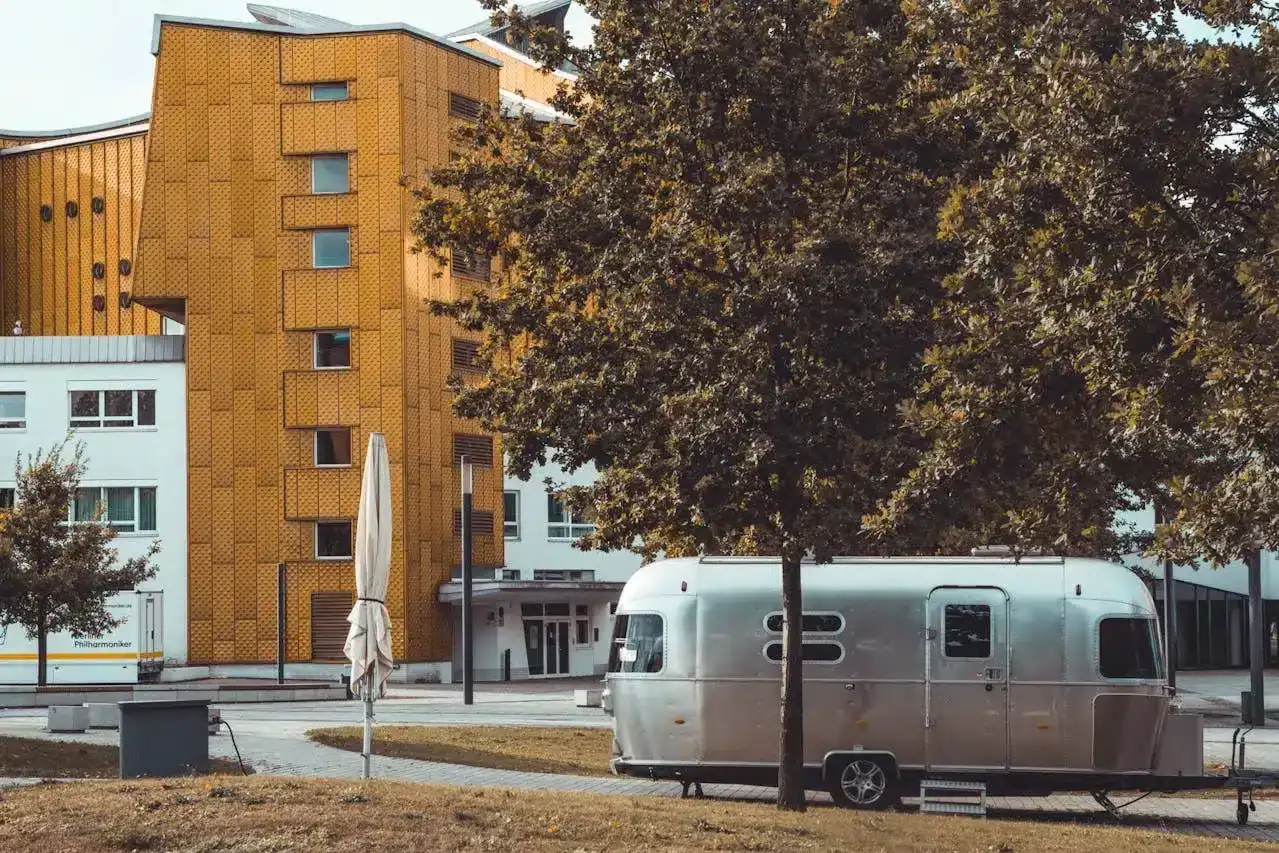
Parking a trailer or recreational vehicle (RV) costs anywhere from free on public land to $150 or more per night at a full-hookup resort park, or $50 to $300 per month at a dedicated storage facility.
This guide covers nightly, weekly, monthly, and long-term storage rates across every major parking type. Costs shift significantly based on hookup type, trailer length, location, and season, so the ranges below are organized to help you build an accurate budget before you commit.
What Does It Cost to Park a Trailer or RV? (Quick Answer)
Here is a complete cost snapshot across every common parking type. For a deeper look at average price for overnight trailer parking, see our full breakdown by park type and region.
| Parking or Storage Type | Typical Cost Range |
| BLM or National Forest dispersed site | Free (14-day limit) |
| State park dry site | $15 to $35/night |
| State park electric site | $25 to $55/night |
| National park campground | $17 to $50/night |
| Private park, full hookup | $45 to $80+/night |
| KOA-style campground | $50 to $100/night |
| Outdoor gravel or asphalt storage lot | $50 to $100/month |
| Covered canopy storage | $100 to $175/month |
| Enclosed indoor storage bay | $150 to $300+/month |
Note: National park campground fees vary widely by park and site type. Great Smoky Mountains, the most-visited national park, runs $17 to $30 per night at its developed campgrounds, while Grand Canyon and Yellowstone run $30 to $50 per night for sites with electric hookups, according to current NPS fee schedules.
These are directional ranges. Your actual cost depends on hookup type, trailer length, location, and season. Each variable is covered in detail below. For more on the average price for overnight trailer parking at different site types, our guide breaks down nightly fees by region and park category.
Nightly vs. Monthly vs. Long-Term Rates
Nightly, weekly, monthly, and storage-facility rates follow different pricing logic, and comparing them directly can be misleading if you don’t account for what’s included.
| Campground (Nightly/Weekly/Monthly) | Storage Facility (Monthly) | |
| Pricing basis | Daily rate, sometimes discounted for weekly/monthly stays | Flat monthly contract |
| Weekly rate vs. 7 nightly charges | Typically 10 to 20% less | Not applicable |
| What’s included | Hookup access (electric, water, sewer, depending on site) | Parking space only, no hookups |
| Best suited for | Active camping and travel | Storing the unit between trips |
If you’re comparing an RV park’s monthly rate to a storage facility’s monthly rate, they are priced completely differently, and the campground’s rate usually includes hookup access that a storage lot does not.
How Hookup Type Affects Your Nightly Trailer Parking Cost
The single largest variable in any campground or RV park nightly rate is hookup level. Two sites at the same park can differ by $30 to $50 per night based on what services they provide. Understanding the tiers before you book prevents budget surprises.
- Dry camping means no hookups at all. Your trailer runs on its own battery bank, water tank, and holding tanks. Dry sites at private campgrounds and state parks average $15 to $35 per night.
- Electric-only sites add 30-amp or 50-amp service. These run $25 to $55 per night at most private parks.
- Full hookup sites add water and sewer connections on top of electric, with campground hookups typically running $45 to $80 or more per night at private parks. State park campsite fees for full hookups tend to be slightly lower, in the $35 to $60 range.
The National Association of RV Parks and Campgrounds (ARVC) tracks rate benchmarks across the private campground industry, and these ranges reflect current market pricing across both private and state-managed systems.
30-Amp vs. 50-Amp Electric Sites
Many parks offer both 30-amp and 50-amp service, and which one you need depends on your trailer’s size and appliance load.
| 30-Amp | 50-Amp | |
| Best suited for | Smaller travel trailers | Larger trailers over 30 feet, or any rig with multiple AC units or residential appliances |
| Typical cost | Standard rate | $3 to $5 more per night at some parks |
| Running the opposite service | N/A | Possible via an adapter, but forces careful power draw management |
Verify what your trailer requires before booking, since guessing wrong can mean either paying for capacity you don’t need or tripping breakers all weekend on underpowered service.
Full Hookup vs. Dry Camping: Real Cost Difference
Over a 10-night trip, the difference between a dry site and a full hookup site adds up fast.
| Dry Site | Full Hookup Site | |
| Average nightly rate | $25 | $65 |
| 10-night total | $250 | $650 |
| Difference | $400 more |
The upgrade makes clear financial sense for longer stays where you need sewer access, or in hot climates where running air conditioning constantly is non-negotiable.
Long-Term Trailer and RV Storage Costs by Facility Type
For trailer owners who cannot keep their rig at home, whether because of a homeowners association (HOA) restriction, limited driveway space, or simple square footage, a dedicated storage facility is the most practical option. For a complete look at where to park your trailer long-term, our linked guide covers facility types, lease terms, and what to look for when comparing options.
Storage facility RV parking typically comes in three tiers:
- Outdoor gravel or asphalt lots. The most affordable option at $50 to $100 per month. These are open-air, fenced lots with gated access and security cameras. They offer no weather protection but cost roughly the same as a single campground night.
- Covered canopy spaces. Add a roof structure over the parking spot, protecting against UV exposure, hail, bird damage, and moderate snow load. These run $100 to $175 per month.
- Enclosed indoor bays. Offer the most protection, with walls and a roof providing full weather and security coverage. Monthly RV lot rental in an enclosed bay typically runs $150 to $300 or more, depending on size and location.
For trailer owners in Arizona, Florida, Texas, and other states where RecNation operates, RV and trailer storage offers outdoor, covered, and enclosed options with flexible monthly terms, without the campground minimums or hookup fees that inflate long-term costs at RV parks.
Outdoor Lot vs. Covered Canopy: Is the Upgrade Worth It?
| Protects Against | Doesn’t Protect Against | |
| Covered storage | UV fading, hail dents, tree debris, bird droppings | Theft, flooding, wind-driven rain from the sides |
Whether the extra $50 to $75 per month is worth it depends on two factors: your local climate and the value of your trailer. In Arizona or Florida, where UV exposure is intense and summer hail is common, covered storage pays for itself in reduced exterior wear. For a $15,000 travel trailer, the math is straightforward. For a $75,000 fifth wheel, enclosed storage is worth pricing out.
Trailer Size Surcharges at Storage Facilities
Many facilities price storage by length tier: under 20 feet, 20 to 30 feet, 30 to 40 feet, and 40 feet or more. A 45-foot fifth wheel may not fit a standard outdoor space at all and may be directed to a premium oversized slot. Per-foot overage pricing of $1 to $3 per linear foot per month is common at facilities that charge by footage rather than tier.
Always confirm your trailer’s total length, including the hitch and any rear rack, before booking.
Free and Low-Cost Trailer Parking Options
Several legitimate, legal options exist for parking your trailer at little or no cost. Our guide on overnight trailer parking options covers short-term free options and what to expect at each one.
Here are the main low-cost options:
- BLM dispersed camping: Free overnight parking on Bureau of Land Management (BLM) land with a 14-day consecutive stay limit under federal regulation 43 CFR Part 8365. After 14 days, the rig must move at least 25 miles before returning to the same area. No hookups, no designated sites.
- National Forest dispersed camping: Free camping on National Forest Service land under 36 CFR Part 261. Same 14-day rule applies. Terrain varies, and not all areas are suitable for trailers with slides or leveling requirements.
- Walmart overnight parking: Some Walmart locations allow overnight stays with permission from the store manager. This is not a corporate policy guarantee, and availability has declined significantly at many locations. No hookups.
- Cracker Barrel lots: Similar to Walmart, permission-based and increasingly limited. Treat this as a fallback, not a plan.
- Peer-to-peer platforms: Sites like Neighbor.com connect trailer owners with private driveways or lots. Pricing varies widely but often undercuts commercial storage rates.
BLM and National Forest Rules You Need to Know
Boondocking on BLM public land means camping on dispersed, non-designated sites with no hookups. The federal 14-day stay limit is a regulation, not a suggestion. After 14 consecutive days, you must move your rig at least 25 miles.
Dispersed camping also comes with leave-no-trace requirements: pack out all waste, avoid creating new roads or clearings, and confirm the specific area allows trailers. BLM land parking works well for short-term stays but is not a viable long-term solution for permanent parking.
Harvest Hosts, Boondockers Welcome, and Peer-to-Peer Options
A Harvest Hosts membership ($99 to $149 per year) gives access to wineries, farms, breweries, and attractions that allow self-contained rigs to park overnight for free. Boondockers Welcome connects members with private homeowners who offer driveway space.
These are low-cost rather than truly free: the annual membership fee and the requirement for a self-contained trailer (no hookup access) limit who can use them effectively.
Hidden Fees That Inflate Your Actual Trailer Parking Bill
The advertised RV park nightly rate is rarely your total cost. RV trailer parking fees often include line items that do not appear in the headline price. Understanding what makes trailer and truck parking different can also help you identify where pricing structures diverge between vehicle types.
Common fees to ask about before booking:
- Length surcharges: Many parks charge $1 to $3 per night per foot over their standard 35 to 40 foot site length.
- Pull-through premiums: Pull-through sites cost $5 to $15 per night more than back-in sites at many private campgrounds.
- Metered electricity: Some parks advertise a base rate but meter electricity separately. Heavy AC use can add $5 to $20 per night.
- Sewer dump fees: At parks without full hookups, dump station use may cost $5 to $20 per use.
- Admin or setup fees at storage facilities: One-time charges of $15 to $50 are standard when setting up a new monthly contract.
- Gate card or access fob fees: Some facilities charge $10 to $25 for the access device, refundable or non-refundable depending on the facility.
- Late payment penalties: Monthly storage contracts typically carry late fees of $10 to $25 if payment is not received by the due date.
If a park or facility cannot provide a complete fee schedule before you book, that is a red flag. Several states require RV parks to disclose all fees upfront under consumer protection statutes.
Trailer Length and Pull-Through Surcharges
The headline RV park nightly rate almost always assumes a standard 30-foot back-in site. If your trailer is longer or you need a pull-through, expect to pay more. A 42-foot fifth wheel at a park with a $65 base rate and a 40-foot standard length would add $2 to $6 per night in overage fees. Over a two-week stay, that is an additional $28 to $84 that never appeared in the booking search results.
Seasonal and Regional Price Variation
Where and when you park matters as much as what type of site you choose. Peak season versus off-season rates can differ by 25 to 50 percent at the same facility. For help finding trailer parking near you, that guide covers search tools and questions to ask when comparing options in your area.
Summer tourist corridors, including coastal regions in the Carolinas and California and mountain destinations like Colorado and Wyoming, see the highest seasonal surcharges. Seasonal RV parking at high-demand campgrounds near national parks often books out months in advance. The America the Beautiful Pass ($80 per year) covers entrance fees at National Park Service sites and can offset some of those overhead costs if you are camping near multiple parks in one trip.
Snowbird and Winter Sunbelt Rates
Florida, Arizona, and Texas are the primary winter destinations for snowbird RV travelers, and demand spikes between November and March. Full-hookup private RV campsites in these markets frequently require two to three month minimum stays during peak winter season and run $700 to $1,500 per month depending on amenities and proximity to services.
KOA campground rates in popular Florida and Arizona markets during winter can reach $80 to $120 per night for full hookup sites. Booking six to twelve months in advance is standard practice in these markets.
Off-Season and Long-Stay Discounts
Shoulder-season rates at campgrounds and storage facilities can be 15 to 30 percent below peak pricing. Storage facilities commonly offer 10 to 20 percent discounts for prepaid three or six month contracts. The KOA Value Kard Rewards program provides 10 percent off nightly rates at participating KOA locations year-round, which compounds meaningfully across multi-night stays. Asking directly about weekly and monthly rates, even for campground stays, often surfaces discounts that do not appear on booking platforms.
Sample Cost Estimates for Different Trailer Parking Situations
The rate data above becomes more useful when applied to real scenarios. Here are three worked examples based on common trailer owner situations.
Weekend Trip Cost Estimate
Assumptions: Three-night trip, 35-foot travel trailer, mix of site types.
| Night | Site Type | Estimated Cost |
| Night 1 | State park electric site | $35 |
| Night 2 | Private park, full hookup, pull-through | $75 |
| Night 3 | Private park, full hookup, pull-through | $75 |
| Total | $185 |
Add a possible length surcharge of $5 to $10 per night at the private park, and the realistic total is $195 to $205 for three nights. Budget $200 as a working estimate.
Monthly Storage Cost Estimate
Assumptions: 30-foot travel trailer, covered canopy facility, first month.
| Cost Item | Amount |
| Monthly covered canopy rate | $130 |
| One-time admin or setup fee | $25 |
| Gate access fob | $15 |
| First month total | $170 |
| Ongoing monthly rate | $130 |
A prepaid six-month contract at 15 percent off would reduce the ongoing rate to approximately $110 per month.
Year-Round RV Living Cost Estimate
Assumptions: Full-time trailer living, mix of campgrounds and free nights, moderate hookup use.
| Cost Category | Annual Estimate |
| Paid campground nights (200 nights avg $55) | $11,000 |
| BLM and free nights (165 nights) | $0 |
| Annual memberships (Harvest Hosts, KOA Value Kard) | $225 |
| America the Beautiful pass | $80 |
| Total annual parking cost | $11,305 |
The full range runs roughly $8,000 to $18,000 per year depending on how many nights are spent at paid full-hookup campgrounds versus free dispersed sites, a range broadly consistent with the RV Industry Association’s (RVIA) consumer ownership and usage data. These are realistic working estimates, not optimistic minimums.
For trailer and RV owners who need a predictable, secure place to park between trips, without committing to a campground’s hookup fees or seasonal minimums, dedicated vehicle storage is often the most cost-effective long-term option.
RecNation RV and trailer storage provides outdoor, covered, and enclosed storage across more than 50 facilities in Arizona, California, Florida, Texas, and other states, with straightforward monthly pricing and no campground surcharges to budget around.
Frequently Asked Questions
How much does it cost to park an RV or trailer per night?
Nightly RV and trailer parking costs range from free on BLM or National Forest dispersed sites to $150 or more at full-hookup private resort parks. State park electric sites typically run $25 to $55 per night, while mid-range private parks with full hookups average $45 to $80 per night. National park campgrounds range from $17 to $50 per night depending on the park and site type.
What is the cheapest way to park an RV or trailer long term?
The cheapest long-term options are free dispersed camping on BLM land or National Forest land, which is legal for up to 14 consecutive days under federal regulations. After that, peer-to-peer driveway rentals through platforms like Neighbor.com and outdoor storage lots at dedicated vehicle storage facilities ($50 to $100 per month) are the next most affordable choices. Prepaying three to six months at a storage facility typically adds a 10 to 20 percent discount over month-to-month pricing.
How much does a monthly RV lot rental cost at a storage facility?
Monthly rates at dedicated RV and trailer storage facilities typically run $50 to $100 per month for outdoor gravel or asphalt spots, $100 to $175 per month for covered canopy spaces, and $150 to $300 or more per month for enclosed indoor bays. Exact pricing depends on trailer length, facility location, and whether the site includes gated access and security monitoring.
What is the difference in cost between full hookup and dry camping?
A dry camping site with no hookups typically costs $15 to $35 per night. Adding electric water sewer hookups at a full hookup site raises that to $45 to $80 or more per night at a private park, sometimes $40 to $50 more per night than a basic dry site. Over a 10-night trip, that difference can add $300 to $400 to your total cost.
Are there hidden fees I should expect at RV parks and trailer storage facilities?
Yes. Common hidden fees include length surcharges ($1 to $3 per night per foot over a park’s standard site length), pull-through site premiums ($5 to $15 per night), metered electricity charges, and one-time admin or setup fees at storage facilities ($15 to $50). Always request a complete fee schedule before booking and ask specifically whether electricity is included or metered separately.
Can I park my trailer for free overnight?
Yes, in several situations. BLM and National Forest Service dispersed sites allow free overnight parking for up to 14 consecutive days under federal regulations (43 CFR Part 8365 and 36 CFR Part 261). Some Walmart and Cracker Barrel locations allow overnight parking with permission, though availability varies by location and is becoming less common. A Harvest Hosts membership ($99 to $149 per year) provides access to farms, wineries, and breweries that allow free overnight stays for self-contained rigs.