Most cars do not need climate-controlled storage. Covered or enclosed storage addresses the conditions that cause the most common damage to everyday vehicles, so standard indoor car storage or a canopy space protects most owners well. This guide explains when climate control is genuinely warranted, what indoor garage and canopy spaces actually do, and how to match your situation to the right option.
The Short Answer: When Climate Control Matters and When It Doesn’t
For a daily driver stored over a winter, a gap between moves, or a military deployment, climate control is not necessary. The real threats to a typical stored vehicle are UV damage to paint and interior surfaces, rain and debris accumulation, and pest access. A covered or fully enclosed space handles all of those without any HVAC system involved.
The exception is vehicles where the original materials are sensitive to sustained humidity and temperature cycling over months or years. The case for climate control becomes more legitimate for classic cars, collector vehicles, and exotic and luxury car storage. Original rubber seals, paint, and leather interiors are difficult to restore once humidity or temperature cycling damages them.
Everyday Cars vs. Long-Term Collector Storage
If you drive the car regularly and are planning seasonal car storage of one season or less, you are most likely in the “standard storage is adequate” category. If you own a classic or collector car with original components that you plan to store for a year or more, and there is no easy path to restoration if something goes wrong, the calculus shifts. Those two situations call for different solutions, and most of this article is about helping you identify which one applies to you.
What Climate-Controlled Storage Actually Does
A climate controlled storage facility uses an HVAC system to maintain a target range for both temperature and humidity inside the space. That is the core distinction: not just keeping a space enclosed, but actively regulating the internal environment regardless of conditions outside.
Temperature and humidity control protect against a specific set of degradation processes:
- Rubber seal deterioration: Sustained temperature and humidity swings wear down the seals.
- Paint oxidation: The paint finish degrades over time without a regulated environment.
- Mold and mildew growth: This shows up on upholstery when humidity stays high.
- Corrosion on metal components: Corrosion accelerates when condensation cycles repeatedly.
Before storing a valuable vehicle at a climate controlled storage facility, ask the operator these questions. Not every facility using the phrase “climate controlled” maintains the same standard, and the answers will tell you quickly whether the system is robust or just a marketing label:
- Temperature and humidity range: What specific range does the system target?
- Monitoring: What monitoring is in place?
- Liability: What does the lease say about liability if the system fails?
Temperature vs. Humidity: Which Causes More Damage?
High relative humidity levels are often the more damaging variable for stored vehicles, because humidity drives condensation, rust and corrosion on metal, and mold on fabric and leather. That makes rust and corrosion prevention, along with mold and mildew prevention, mostly a matter of humidity. Temperature extremes matter more for rubber hardness, fluid viscosity, and battery performance.
Genuine climate control should address both variables. A facility that controls only one is not providing full protection, so ask which one the system actually manages.
When You Probably Don’t Need Climate-Controlled Storage
Standard indoor or covered storage is adequate in a wide range of situations. For a typical stored vehicle, sustained humidity swings and temperature extremes are a smaller concern than sun, rain, and debris.
Seasonal car storage for travel, a deployment, a gap in housing, or a long winter usually falls into this group. These are the situations where covered or enclosed storage addresses the actual risks:
- Daily driver stored for one season or less: UV and rain protection from a canopy or enclosed space is sufficient.
- Vehicle in good mechanical condition: A car with no known rust or moisture issues has less to manage in storage.
- Region without extreme humidity: Lower humidity reduces the cumulative risk of condensation and corrosion.
- Periodic checks planned: Starting the engine and inspecting the vehicle during storage reduces risk in any storage type.
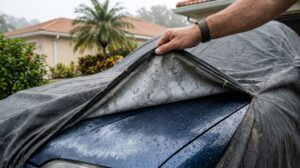
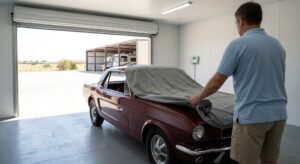
Adding a breathable car cover inside an enclosed or covered space gives your car another layer of paint and upholstery protection, which is why covering a car in storage is worth considering even in a sealed space.
How Long Is Too Long Without Climate Control?
Storage duration is the most important variable in this decision. A car stored for a few weeks or a couple of months in an enclosed or canopy space faces minimal risk, especially with basic preparation done beforehand. The risk profile shifts for long-term vehicle storage that extends past a year with no periodic checks or starts.
The practical answer is that preparation and periodic attention, such as starting the engine and completing pre-storage steps, extend the window where climate control is not strictly necessary. To judge where your own timeline falls, how long a car can sit unused is a useful reference for planning your checks.
When Climate-Controlled Storage Is Worth Considering
A minority of car owners genuinely need climate control, but for those who do, the reasons are concrete. The clearest cases are listed below, and classic car storage is the most familiar example. These situations raise the stakes the most:
- Classic and collector vehicles: Original materials cannot be easily restored once humidity or temperature cycling damages them.
- Long-term vehicle storage in a humid region: Storage of more than a year in a region with high year-round humidity means condensation cycles repeat frequently, and the cumulative effect on bare metal, unprotected rubber, and aged upholstery matters more than in a moderate climate. If you cannot check on the vehicle regularly, the argument for active temperature and humidity control is stronger.
- Extreme-climate regions: Where temperatures swing dramatically between summer and winter, rubber seals and fluid condition face a similar calculation.
The extreme-climate situation does not automatically require climate control, but it narrows the margin that preparation and periodic checks can cover.
Classic Cars and Collector Vehicles
Classic cars are the most common situation where climate control is a reasonable consideration. Original materials are irreplaceable, humidity-driven corrosion can destroy unrestored metal, and the vehicle’s value often justifies a higher monthly storage cost. Combined with agreed-value insurance policies, those factors make the precision of a climate-controlled environment easier to justify for classic car storage.
Even for classics, an enclosed indoor space combined with proper preparation and a quality car cover reduces risk substantially. Owners weighing that route can read about storing a classic car in an unheated garage, since climate control is a higher level of protection but not the only path to vehicle preservation for a collector car.
Indoor Garage and Covered Storage: What They Actually Protect Against
Indoor garage and covered canopy spaces are two distinct products with different protection profiles, and neither one is climate controlled. Understanding what each does makes it easier to match your vehicle to the right choice:
- Indoor garage: Indoor car storage in a fully enclosed garage space is the clearest example of enclosed vehicle storage. It blocks UV radiation, rain, hail, bird droppings, airborne dust, and pest access.
- Temperature: An indoor garage space is not heated or cooled, so the temperature inside will track outdoor conditions over time.
- Condensation and sun: The enclosed structure still prevents condensation from direct precipitation and eliminates direct sun damage.
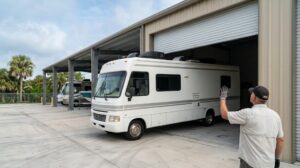
- Covered canopy: A canopy adds an overhead structure that blocks direct sun and rain without full enclosure, allowing airflow. That makes covered parking a practical middle option for owners who want UV and rain protection without paying for a fully enclosed space.
RecNation offers both indoor garage and covered canopy spaces at 70 locations across the US, and the table below shows how monthly storage rates for vehicle and car storage compare by space type as of October 2026.
| Space type | Approximate monthly rate |
| Outdoor uncovered | $57 to $183 |
| Covered canopy | $99 to $351 |
| Indoor garage | $114 to $701 (largest sizes) |
These figures are estimates, and prices vary by location, size, and availability, so confirm current rates with the specific facility. None of these space types is climate controlled.
Covered Canopy vs. Indoor Garage: Which Fits Your Situation?
Canopy storage is the right choice when your main concern is sun and rain protection and you plan to access the vehicle regularly. Indoor garage storage is the better fit when full enclosure matters: keeping the car fully sealed from dust, pests, and airborne debris, or when you will not visit often and want a more secure environment. Neither is a substitute for climate control if that is what your vehicle genuinely requires.
How to Prepare a Car for Storage (Climate Controlled or Not)
Preparation reduces risk whichever space you choose, and a well-prepared car in a covered or indoor space often fares as well as an unprepared car in a climate-controlled unit. These steps work best in this order before drop-off:
- Add fuel stabilizer and run the engine: Run the engine briefly after adding stabilizer so it circulates through the fuel system.
- Check and top off all fluids: Check every fluid level and top off any that are low before the car goes into storage.
- Inflate tires to the upper end of the recommended range: Starting high accounts for the slow deflation that happens during storage.
- Connect a battery tender or maintainer, or disconnect the battery: A battery tender keeps the charge stable if the facility offers power hookups. If power is not available, disconnect the battery.
- Clean the interior thoroughly: Removing food residue keeps the cabin from attracting pests.
- Wash and dry the exterior: Do this before covering the car.
- Use a breathable car cover: Even inside an enclosed space, a cover adds a layer of paint and upholstery protection.
If you are weighing a home garage instead, storing a car in an unheated garage covers that option. If the car will sit for a long stretch, how long a car can sit unused is a useful next read.
Questions to Ask Any Storage Facility Before You Sign
These questions apply at any facility, whether or not it offers climate control, and they make it easier to compare spaces on the same terms before you commit to a vehicle storage unit:
- Space size: Does the space fit your vehicle?
- Power: Is power available at that specific location for a battery tender or maintainer?
- Access hours: What are the access hours, and do they fit how often you plan to check on the car?
- Liability: If the facility claims climate control, what temperature and humidity range does the system maintain, and what does the lease say about liability if the system fails?
Final Thoughts on Climate-Controlled Car Storage
If your car needs protection from sun, rain, and debris but does not require a climate-controlled environment, RecNation’s indoor garage and covered canopy spaces offer a practical alternative at 70 facilities across the US. Neither option is climate controlled, so it is worth matching your vehicle’s specific needs to the right storage type before you book. For owners whose car fits that profile, vehicle and car storage at RecNation is a straightforward place to compare available space types and current rates.
Frequently Asked Questions
How much does climate-controlled car storage cost per month?
Climate-controlled car storage typically costs more than standard indoor or covered storage because of the HVAC systems required to maintain a consistent environment. Rates vary widely by region, facility size, and vehicle footprint, so it helps to contact facilities directly for current pricing. For comparison, indoor garage spaces at facilities without climate control generally run $114 to $216 a month for most sizes as of October 2026, with larger spaces reaching higher.
What temperature should a climate-controlled car storage unit be kept at?
No single temperature applies everywhere, because different facilities target different ranges. The general goal is to avoid sustained extremes that stress rubber seals, fluids, and battery chemistry, while keeping humidity low enough to prevent condensation and mold growth. The operator can confirm the exact range and monitoring in place, so confirm it before you commit a valuable vehicle.
Is climate-controlled storage necessary for classic cars?
Classic cars stored long-term are the main case where climate-controlled storage is worth considering, since original rubber, leather, and paint are hard to restore once humidity or temperature cycling damages them. For shorter periods, a fully enclosed space with fuel stabilizer, a battery tender, and a breathable cover is a reasonable alternative.
What is the difference between climate-controlled and regular car storage?
The difference is whether the space regulates its own environment. Climate-controlled storage holds a target temperature and humidity range through an HVAC system, while regular indoor storage is enclosed and canopy storage is open on the sides under an overhead structure, and neither regulates temperature or humidity. The right choice depends on how sensitive your vehicle is to sustained temperature and humidity swings.
How do I prepare my car for long-term storage?
Long-term storage preparation starts with fuel stabilizer, fluid checks, and tire pressure at the upper end of the recommended range, followed by a battery tender or a disconnected battery. Cleaning the interior and exterior and adding a breathable cover complete the job. Even a climate-controlled unit does not make these steps optional.
Does an indoor storage unit protect a car from humidity?
An indoor garage space eliminates direct rain exposure and reduces airborne moisture from precipitation, but it does not regulate temperature or relative humidity. In a humid climate, condensation can still form inside an enclosed space during temperature swings. For most everyday vehicles stored for a season or less, indoor enclosure with proper preparation is adequate, while classic or collector vehicles in high-humidity regions gain more from a climate-controlled space.