Most Celina residents assume the driveway is the default home for an extra vehicle, recreational vehicle (RV), or boat, because it is close and it looks free. Between homeowners association (HOA) rules, Texas heat and UV exposure, and hail season, that assumption can cost more than it saves.
This guide covers the HOA and city rules that govern your driveway, what Texas sun does to a vehicle left outside, and a cost comparison between the driveway path and a monthly storage rental.
The Celina HOA Reality: Your Driveway May Not Be an Option
Celina has grown mostly through master-planned subdivisions, and many are governed by an HOA. Those agreements often limit or ban RVs, boats, trailers, and oversized vehicles on driveways and streets. Many residents only find out after the vehicle arrives.
The city has its own rules. Celina’s parking ordinance allows an RV or boat on a residential driveway. It bans parking one elsewhere in the front yard. Other storage must go in a screened rear yard. A lot is capped at four recreational vehicles or trailers, and street parking is limited to 72 hours. So the city is often more relaxed than your HOA, and your deed restrictions usually decide.
Not every neighborhood has an HOA, and some older subdivisions don’t. In a newer master-planned community, assume covenants apply. Check before you park. For a broader look at how residential parking rules compare with formal storage, see our ultimate guide to vehicle parking vs. storage.
What Happens If You Ignore the Rules
Texas Property Code Chapter 202 lets an HOA enforce its covenants, and violations can lead to fines that accrue until the problem is fixed. Repeated violations can escalate to legal action by the HOA. In dense subdivisions an RV or boat trailer in a driveway is visible to every neighbor, so reports tend to come quickly.
How to Check Your Own CC&Rs
Your covenants, conditions, and restrictions (CC&Rs) should have come with your closing documents. If you can’t find them, ask your HOA management company for a copy. Subdivision restrictions are also recorded with the Collin County Clerk, and those records are often searchable online. When you read them, look for these:
- Time limits: Many covenants allow a recreational vehicle in the driveway only for short windows meant for loading and unloading.
- Visibility rules: Some restrict trailers, boats, and RVs that can be seen from the street or from neighboring lots.
- Vehicle types: Restrictions often name RVs, boats, trailers, commercial vehicles, and non-operational vehicles.
What Texas Sun and Heat Actually Do to a Vehicle on a Driveway
Damage from Texas heat and UV exposure builds up slowly and often stays hidden until it gets expensive. North Texas summers regularly bring triple-digit highs. Pavement can get far hotter than the air, so asphalt surface damage adds heat to your tires and undercarriage. The EPA UV Index labels readings of 8 to 10 as “very high” and 11 and above as “extreme.” North Texas summers often reach that range. Here is what that does to a vehicle left outside:
- Paint fading and sun damage: This can start within a single outdoor season. UV breaks down clear coat and the gelcoat on boats and RVs, causing chalking, color shift, and oxidation. The fix can cost thousands, and vehicle depreciation speeds up when the exterior shows UV wear.
- Tire dry rot: Sidewalls on a vehicle sitting in direct sun can crack from UV and ozone within a few years. That is a safety issue, and replacement costs hundreds of dollars.
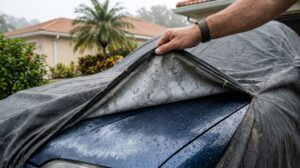
- Cabin heat: A car cover helps with UV, but it doesn’t stop heat building inside a closed cabin. Over repeated cycles, that heat can crack dashboards and degrade adhesives and electronics.
- Roof seals on RVs and boats: Sealant and caulking break down faster in direct sun. Once sealant fails, dew or morning condensation can find a gap even without rain. Resealing a roof is manageable, but replacing water-damaged interior materials is not.
The comparison of covered outdoor storage vs. street parking shows what a basic covered space actually prevents.
Hail Damage Risk in Collin County
North Texas sits in an active hail corridor, and the NOAA Storm Events Database documents repeated hail events across the region. Hail damage risk in North Texas is real for any vehicle in an open driveway, and repairs can run into thousands of dollars. For an RV or boat, fiberglass roofs dent, skylights crack, and slide toppers tear.
Comprehensive coverage typically handles hail, but many owners reduce or drop it on stored vehicles to save money, which leaves a driveway vehicle uninsured for exactly this risk.
The Difference a Covered Storage Unit Makes
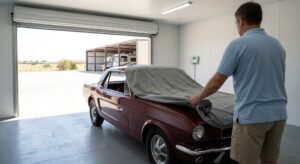
A covered storage unit shields a vehicle from direct UV and keeps it cooler than full sun, and enclosed units remove hail exposure, while an open-sided canopy gives only partial hail protection. In North Texas that measurably slows paint fading and sun damage, preserves tire sidewalls, and protects roof seals. For vehicles stored more than a few weeks at a stretch, the difference in condition at the end is visible.
The True Cost of Driveway Storage in Celina
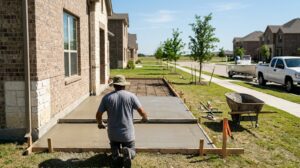
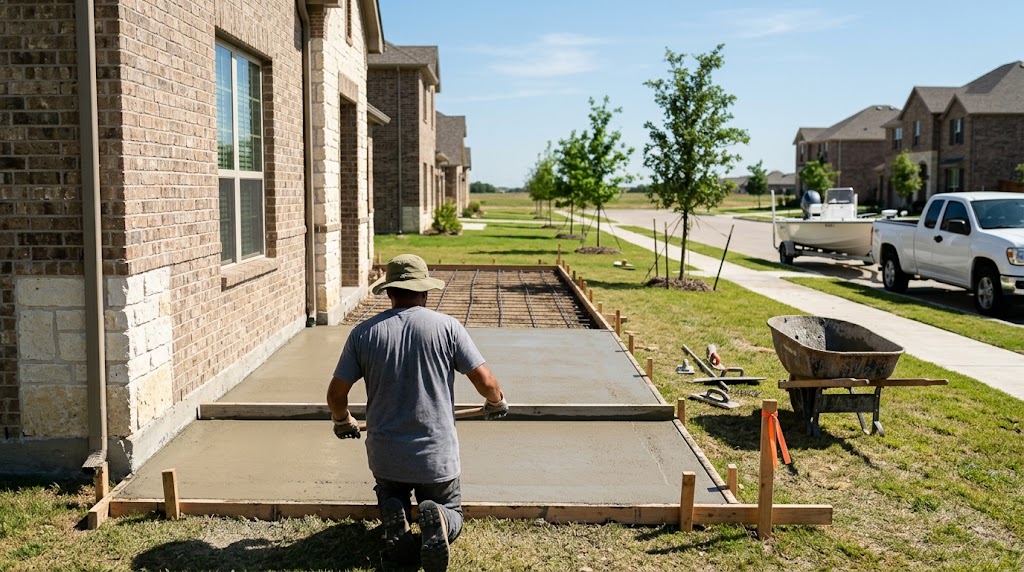
The driveway looks free until you price what it takes to make it work. A concrete pad big enough for an RV or boat trailer, around 12 by 40 feet, can cost several thousand dollars installed, before permits. A carport cover is a structural addition. It usually needs a city building permit and inspections, so check current fees with the City of Celina.
An HOA adds another step. Expect an architectural review before you build anything, and approval isn’t guaranteed. Is vehicle storage worth it walks through the core cost-benefit logic if you’re still weighing it.
Now compare that with a facility. At a Celina-area open-air lot, an uncovered space is often estimated at $90 to $160 per month. Covered spaces are often estimated around $150 or more. These are industry estimates, so confirm current rates with the facility. Even a modest $3,000 driveway improvement would take about 20 months to break even against a $150-per-month covered space. That math leaves out HOA fines, permit fees, and the repair costs that heat and UV create.
When the Driveway Math Actually Works
The driveway can be a smart choice in the right setup. You own a property with no HOA. You already have a garage or covered carport. You’re storing a standard passenger car or motorcycle. In that case, your driveway or existing structure is a legitimate, low-cost option. For shorter stays, weatherproofing and protective covers add useful protection cheaply. Don’t pay for a facility you don’t need.
When a Storage Facility Makes More Financial Sense
If any of these four situations sounds like yours, a storage facility is usually the clearer financial choice. A purpose-built facility gives you what a driveway can’t: a space sized for your vehicle, protection from sun and hail, and no HOA fines.
- The vehicle is too large: It won’t fit a residential driveway safely.
- The HOA prohibits it: Driveway restrictions rule out outdoor storage for your vehicle type.
- Coverage has been reduced: You dropped comprehensive coverage and live in a high-hail area.
- Long stays with no shade: You’re storing an RV or boat for more than a few months with no shaded or covered home option.
In these cases, the monthly storage rental cost is lower than the combined risk. The next section covers what to look for in a facility.
What to Look For in a Celina-Area Vehicle Storage Facility
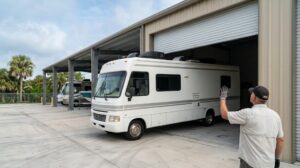
Not all vehicle storage in Celina, TX is built the same, and for RV and boat storage the facility features matter more than the monthly rate. RecNation’s nearest facility, about 10.6 miles away in Anna, is a dedicated RV and boat facility. It offers uncovered, covered canopy, and indoor garage spaces, with 24/7 gate access available on request. You can see what’s open through its vehicle storage near Celina page. Whichever site you consider, check it against the points below, and see our overview of RV and boat storage for the basics.
- Covered vs. open-air spaces: Covered storage protects against direct UV, while an open-air storage lot costs less but leaves the vehicle exposed.
- Paved, level surfaces: These matter for tire health and for leveling an RV, since a gravel lot loads tires unevenly over months.
- Pull-through access: Helpful for RVs and boat trailers over about 30 feet, so confirm lane width and turning radius.
- Access hours: Extended or 24-hour access helps if you pick up and drop off outside business hours.
- Self-storage facility security: Look for perimeter fencing, gated entry, lighting, and cameras.
- Utility connections: Dump stations, water, and 30-amp electrical for battery maintenance are worth having if you use your RV often.
Covered vs. Open-Air Storage: Which Is Worth the Extra Cost in North Texas
For vehicles stored seasonally, such as a boat over winter or an RV between summer trips, covered storage is worth the premium given North Texas hail and UV. For vehicles you use often and store briefly, open-air storage plus a quality cover is an acceptable middle ground. A rule of thumb: if it sits more than about six weeks at a stretch, covered protection pays for itself.
RV and Boat Storage vs. Standard Vehicle Storage
Purpose-built RV and boat storage offers what a standard self-storage lot can’t: wider lanes, pull-through spaces, higher clearances, and vehicle-specific hookups. If your vehicle is over 25 feet, prioritize facilities that advertise pull-through access over standard parking stalls.
Final Thoughts on Driveway vs. Storage Facility in Celina
You’ve done the math, and the driveway isn’t the right long-term answer. RecNation’s nearest facility is about 10.6 miles away in Anna. It offers RV and boat storage near Celina with covered canopy, indoor garage, and uncovered spaces for RVs, boats, and trailers. The facility is gated. Spaces tend to fill up as summer storage season gets going, so check availability soon.
Frequently Asked Questions
Is it bad to leave your car on the driveway in the Texas sun?
For short stays, a driveway is fine. Over weeks, summer UV and heat cause cumulative damage, including faded paint, worn clear coat, cracked rubber seals, and sidewall cracking on tires that sit in one spot. A cover slows surface damage, but it won’t cool the cabin, where heat can crack dashboards and stress electronics.
Are there HOA rules about parking RVs or boats on driveways in Celina, TX?
Often, yes. Many master-planned communities restrict or prohibit RVs, boats, trailers, and commercial vehicles in driveways or on streets, sometimes with short time limits for loading. The City of Celina allows driveway parking under its parking ordinance, so your HOA’s covenants usually set the stricter rule. Check your CC&Rs, or ask the HOA management company for a copy.
How much does outdoor vehicle storage cost in Celina, Texas?
Open-air spaces at Celina-area facilities are often estimated at roughly $90 to $160 per month depending on space size and vehicle type, and covered spaces generally cost more. Demand tends to rise in spring and early summer as boating and RV season ramps up. Rates change, so confirm current pricing directly with any facility.
Does sun exposure on a driveway cause more damage than a covered storage unit?
Yes, in North Texas conditions. An uncovered driveway takes direct UV, heat, and hail, and a covered unit reduces the first two while an enclosed unit also removes hail. Cooler interiors also protect electronics, upholstery, and adhesives from heat cycling. For stays longer than a few weeks, avoided repairs can offset the rental cost.
What are the best vehicle storage options near Celina, TX for long-term use?
For RVs, boats, and trailers, a purpose-built facility with covered or open-air parking is the practical long-term choice, especially in HOA-governed neighborhoods. Look for paved surfaces, gated access, pull-through spaces for longer vehicles, and extended access hours. For a standard passenger car, climate-controlled storage gives the most protection, and covered outdoor parking is a cost-effective middle ground.