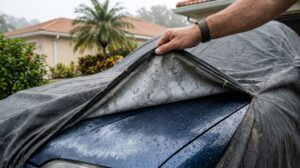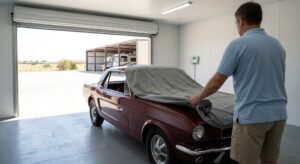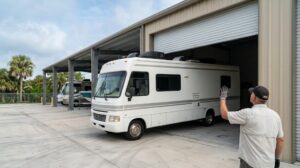
Covered storage blocks direct sun and rain, but in Celina’s climate it may not be enough for every vehicle. Storage comes in three tiers: outdoor (an open lot), covered (a roof with open sides), and enclosed (four walls and a door). Which one you need depends on your vehicle, how long it sits, and how much risk you’ll take with a spring hailstorm.
Weighing the monthly gap between a covered spot and an enclosed unit? This guide gives you a direct answer for your vehicle type.
The Three Storage Types Defined (So the Rest of This Makes Sense)
Covered and enclosed sound alike, but they protect very differently. Getting the definitions straight first keeps you from paying for more or less protection than you need.
What Covered Storage Actually Means
Carport and covered storage puts a roof overhead with open sides. Your vehicle sits under a canopy that blocks direct sunlight and vertical rain. Wind-driven rain, hail blown in from the sides, and radiant heat along the vehicle’s flanks can still reach it, so covered is not enclosed.
What Enclosed Storage Actually Means
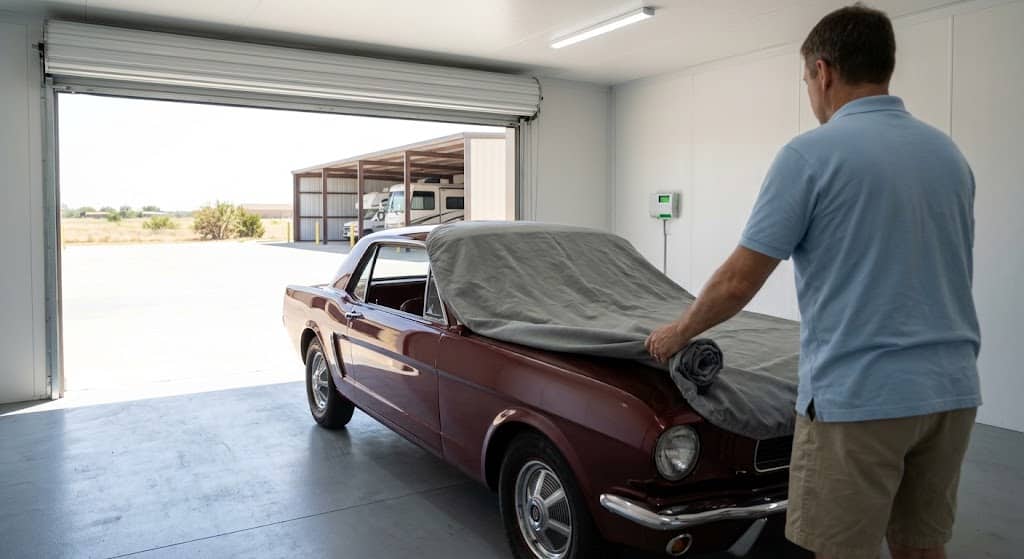
Enclosed storage surrounds the vehicle with four walls and a secured door. It blocks hail, reduces temperature swings, and removes direct UV exposure. Enclosed does not always mean climate-controlled, though. Some units are simple metal buildings with no temperature control. Others are fully conditioned indoor spaces. Climate-controlled storage is an extra feature, so ask which kind you’re getting.
The table below compares the three tiers on what matters most in North Texas.
| Feature | Outdoor (Uncovered) | Covered (Canopy) | Enclosed |
| Overhead protection | None | Yes | Yes |
| Wall protection | None | None | Yes |
| Hail protection | None | Limited | Full |
| UV protection | None | Partial | Full |
| Temperature regulation | None | Minimal | Moderate to full (if climate-controlled) |
| Approx. monthly range (Celina market) | ~$90+ | ~$150+ | ~$186+ |
These are industry estimates drawn from local facility listings at the time of writing. Rates vary by facility and unit size, so confirm current pricing directly before you commit.
What Celina’s Climate Actually Does to a Stored Vehicle
Most storage advice says to protect your vehicle from heat and sun. In North Texas, that advice carries real weight. To see why enclosed vehicle storage can matter here, start with what Collin County actually throws at a stored vehicle.
UV and Heat: The Slow Damage Most Owners Don’t Notice
Summer UV readings in North Texas regularly reach the “Very High” to “Extreme” range on the EPA UV Index, which is where rubber membranes, vinyl seals, and fiberglass gelcoat degrade fastest. Covered storage reduces direct UV exposure meaningfully compared with an open lot. It does not remove reflected UV from paved surfaces or the radiant heat that builds along a vehicle’s sides.
Heat is the second slow threat. A closed vehicle in direct sun can run far hotter inside than the outdoor air, which warps dashboards, cracks leather, and weakens adhesive bonds long before the damage shows. That Texas heat and humidity swing between hot afternoons and cooler nights also stresses seals and slide mechanisms across a full storage season.
Hail in Collin County: Why Covered Isn’t Enough for Impact Risk
A canopy roof stops rain and blocks hail that falls straight down, but North Texas storms often drive hail in at an angle. The NOAA Storm Events Database records repeated hail events in Collin County, so hail and storm damage is a documented, recurring risk here rather than a theoretical one.
For fiberglass hulls, RV slide-outs, and painted finishes, one moderate hail event can produce repair bills that exceed a full year of enclosed storage rent. Covered storage gives limited, unreliable protection from that, and that gap matters in Celina in a way it does not in markets with calmer storm histories.
Temperature Cycling Across the Seasons
Winter lows in North Texas can dip below freezing after hot autumn afternoons, and the repeated swing between warm days and cold nights stresses seals, slide mechanisms, and paint finishes. Enclosed storage dampens those swings, while covered and outdoor spaces feel nearly the full range.
Which Storage Type Is Right for Your Vehicle
Once you know what the climate does, the decision comes down to your vehicle type and how long it sits between uses. The table gives the direct recommendation, and the sections after it explain the reasoning.
| Vehicle Type | Minimum Recommended Storage | When to Upgrade |
| Class A, B, or C motorhome | Enclosed | Always; UV membrane damage is irreversible |
| Travel trailer | Enclosed (3+ months); covered (under 60 days with active maintenance) | Upgrade when the season exceeds 2 months |
| Boat, fiberglass hull | Enclosed | Hail risk alone justifies it in Collin County |
| Boat, aluminum hull | Enclosed | Denting risk is lower, but electronics and upholstery benefit |
| Personal watercraft / jet ski | Covered (frequent use); enclosed (seasonal) | Upgrade for storage over 60 days |
| ATV / UTV | Covered (30 days or less between uses) | Enclosed if stored all season |
| Collector / classic car | Climate-controlled enclosed | Always; paint and leather damage is irreversible |
| Daily-use vehicle, overflow storage | Covered | Enclosed only if long-term |
Once you know the protection level your vehicle needs, look at what’s near you. RecNation’s nearest facility is about 10.6 miles away in Anna, one of nine RecNation facilities serving the Celina area. Each offers uncovered, covered canopy, and indoor garage spaces on month-to-month terms. Across them, uncovered spaces start from $54 a month and indoor garage units from $124. Check dimensions and availability for RV and boat storage near Celina before you sign anything.
RVs and Travel Trailers
Rubber roofing membranes and slide-out seals are the most UV-vulnerable parts of any recreational vehicle (RV). A full roof membrane reseal can run roughly $1,000 to $3,000 or more depending on size. Covered storage slows that degradation and enclosed storage stops it, so for any RV that sits three months or longer, enclosed is the right call.
Boats and Personal Watercraft
Hail chips and crazes fiberglass gelcoat, and it dents aluminum. Both benefit from enclosed storage in a hail-prone market like Celina. Electronics and upholstered seating also degrade faster under repeated temperature fluctuations, so belongings protection matters even for aluminum-hull owners.
Collector Cars and Specialty Vehicles
Clear-coat oxidation and leather cracking from sustained heat are irreversible, and they cut resale value in ways detailing cannot undo. Climate-controlled enclosed storage is the clear recommendation for any collector car where condition and value are tied together.
Cost vs. Protection: How to Think About the Price Gap
Is the enclosed premium worth it? It comes down to a simple risk calculation.
Start with the rates. Local Celina listings at the time of writing suggest roughly $90 a month for outdoor, $150 for covered, and $186 and up for enclosed. Rates vary by unit size and availability, so confirm current pricing with any facility.
Now look at the gap. Covered to enclosed is roughly $35 to $50 a month, or about $420 to $600 a year. Compare that with one preventable event. A hail repair on an RV roof or a membrane reseal after UV damage can each run into the thousands.
For a broader look at how much it costs to store a vehicle by vehicle type and region, see our cost guide.
When Covered Storage Is the Smarter Value
Covered storage is a cost-efficient choice for vehicles you use every month or two. If you inspect the vehicle regularly and apply UV-protectant treatments, the cumulative outdoor storage risks stay manageable because frequent access keeps damage from building unnoticed.
When the Enclosed Premium Pays for Itself
Enclosed storage pays for itself in three situations:
- The finish can’t be repaired: Fiberglass, paint, and leather interiors suffer UV damage that can’t be reversed once it sets in.
- The vehicle sits for months: Three months or longer unused means a long stretch of exposure.
- The repair bill is high: One hail claim’s deductible can exceed several months of enclosed rent. Celina’s hail-active market reaches that point faster than most owners expect.
What to Look for in a Celina Storage Facility Beyond the Roof
Choosing a protection tier is one decision, and choosing a facility that works for your situation is another. If you haven’t committed yet, start by comparing covered outdoor storage vs. street parking, then check these factors at any Celina-area self-storage facility:
- Gate access hours: Can you retrieve the vehicle early for a morning boat launch or a weekend departure? Hours vary a lot by facility.
- Unit dimensions: Many Class A motorhomes need a space around 12×40, and boats on trailers can run 12×50, so confirm interior clearance, not just the listed dimensions.
- 30-amp electrical hookup: Useful for RV battery maintenance during longer storage, so ask whether it’s offered.
- Storage unit security: Look for gated perimeter access, camera coverage, and lighting.
- Dump station access: Handy for RV owners ending a trip before going into storage.
- Drive-up access: Confirms you can load and unload without maneuvering through tight corridors.
- Proximity to US-380 and Preston Road: Relevant if you’re coming from Prosper, Frisco, or McKinney, where much of Collin County storage demand originates.
Dimensions Matter More Than You Think
A common mistake is reserving a space that is technically available but too narrow or short for the vehicle. Check the listed length and width against your rig’s full stored size, including the trailer tongue and any slide-outs.
Celina is growing fast, and new self-storage supply is entering the market, so availability and pricing may shift. If you find a rate you’re comfortable with now, acting on it is the lower-risk move.
Final Thoughts on Covered vs. Enclosed Storage in Celina
If you know what protection level your vehicle needs, the next step is simple. RecNation’s nearest facility is about 10.6 miles away in Anna. It is fully fenced and gated, with continuous video monitoring and 24/7 gate access available on request. It offers covered canopy and indoor garage options for RVs, boats, and trailers, on month-to-month terms. See what’s open at vehicle storage near Celina, and reserve before summer storage season fills the covered and enclosed inventory.
Frequently Asked Questions
What Is the Difference Between Covered and Enclosed Storage in Celina, TX?
Covered storage puts a canopy or carport roof over your vehicle with open sides. It blocks direct sun and vertical rain but leaves the vehicle exposed to wind, side-driven hail, and heat along the flanks. Enclosed storage surrounds it with four walls and a secured door, and it is not automatically climate-controlled, which is a separate upgrade on some units.
Is Covered Storage Enough to Protect My Vehicle from Texas Heat?
It depends on how long the vehicle sits and what finish it has. For vehicles stored under about 60 days with regular maintenance, covered storage reduces UV and heat exposure meaningfully. For stays of three months or longer, or for UV-sensitive finishes, enclosed storage is the safer choice.
Does Covered Storage Protect Against Hail Damage in the Celina Area?
Only partly. A canopy roof blocks hail falling straight down but does little against hail driven in sideways, which is common in North Texas storms. Collin County has a documented hail history in the NOAA Storm Events Database, so fiberglass or painted vehicles need enclosed storage for reliable impact protection.
What Items Require Climate-Controlled Storage in North Texas?
Collector cars with original paint or leather, boats with built-in electronics and upholstered seating, and vehicles holding lithium battery banks benefit most. Most standard RVs and boats do fine in non-climate-controlled enclosed storage, and climate control adds the most value when moisture and condensation or sharp interior temperature swings are the concern.
How Much More Does Enclosed Storage Cost Than Covered Storage in Celina?
Based on local listings at the time of writing, covered spaces start near $150 per month and enclosed near $186 or more. That is a gap of roughly $35 to $50 per month. Starting prices vary by facility, and some list indoor garage units from about $124. Over a year, a $35 to $50 gap is about $420 to $600, which you can weigh against one hail repair. Confirm current rates directly, since pricing varies by unit size and availability.