Florida law prohibits homeowners associations (HOAs) from imposing blanket bans on parking personal vehicles in driveways. A lot of North Port owners take that to mean their driveway is automatically fine for recreational vehicle (RV) or boat storage. It’s more complicated than that, and the climate side of the equation matters just as much as the legal side.
This guide compares driveway parking to storage facility options in North Port, Florida, across the factors that actually matter: what your HOA can still restrict, what coastal humidity and UV exposure do to an unprotected vehicle, and when a facility is worth the cost.
What Florida Law Actually Protects, and What It Doesn’t
Florida gives driveway parking real legal footing, but that protection is narrower than a lot of owners assume, and it’s worth knowing exactly where the line sits before you count on it long-term.
Florida’s protection against blanket HOA parking bans means your association generally can’t prohibit you from parking a personal vehicle in your driveway outright. It doesn’t mean your HOA is powerless, though. Reasonable restrictions can still apply, including:
- Duration limits: How long a vehicle can sit in the driveway before it has to be moved.
- Visibility requirements: Rules that the vehicle not be visible from the street.
- Vehicle-specific rules: Separate restrictions for RVs, boats, and trailers that don’t apply to passenger cars.
Many North Port communities still have these narrower restrictions in place even though the blanket ban itself is prohibited.
Check your specific HOA documentation before assuming state law settles the question. The practical restriction that applies to you may be narrower than a full ban but still enough to rule out long-term driveway storage.
What North Port HOA Covenants Commonly Restrict
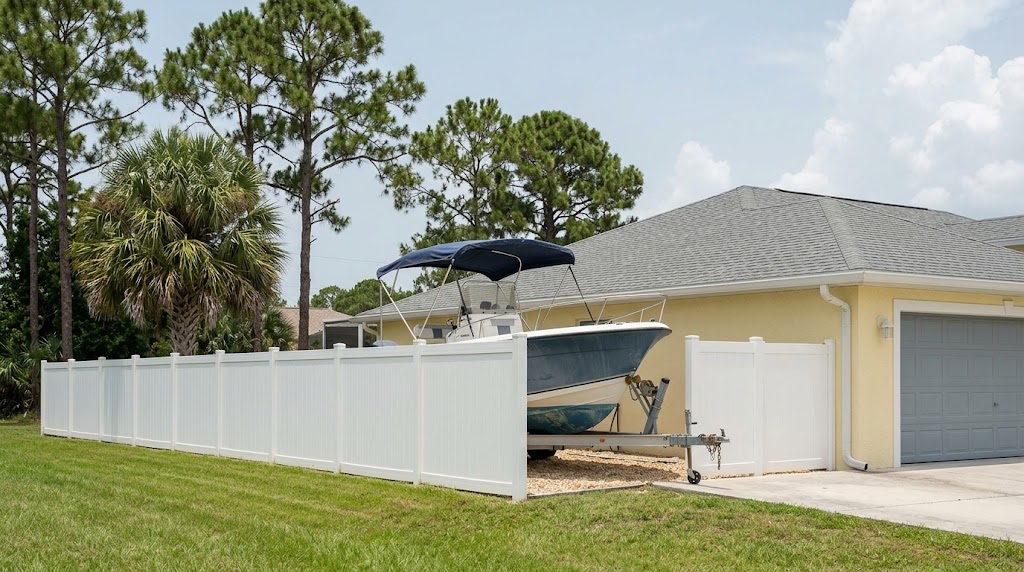
Even where blanket bans aren’t allowed, covenants commonly require RVs and boats to be parked behind a fence or screening, limit visible driveway parking to a short loading window, or set size restrictions that exclude larger RVs. Read your specific document, since these rules vary meaningfully between communities.
What a Driveway Doesn’t Protect Against in North Port
Being legally allowed to park in your driveway says nothing about whether your vehicle can actually handle sitting there. North Port’s climate is the part of this decision a covenant search won’t tell you about.
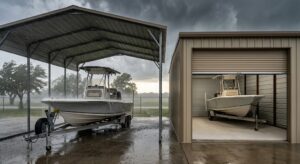
Even where driveway parking is fully permitted, it offers zero overhead protection. North Port’s summer highs run around 88°F with high humidity, roughly 35 inches of rain a year, and a hurricane season from June through November. A vehicle parked in the open faces sustained UV exposure, salt-laden humidity, and, during storm season, wind and debris risk, with no barrier at all.
That combination speeds up the exact failure modes covered and enclosed storage exist to prevent: UV fading and gelcoat oxidation on a boat, rubber seal degradation and interior cracking on an RV, mold growth in soft furnishings, and corrosion on any exposed metal fittings or hardware. A driveway with no cover is the least protective option available in this climate, and during hurricane season specifically, it carries a real storm risk that a facility structure doesn’t.
Security Considerations a Driveway Doesn’t Address
Weather isn’t the only thing a driveway leaves unaddressed. Being visible from the street cuts both ways.
A driveway-parked RV or boat is convenient to access, but that same visibility makes it an easier target than a vehicle behind facility fencing and monitoring. If your vehicle carries meaningful value or has removable equipment like electronics or an outboard motor, that visibility is worth weighing against the convenience of parking at home.
When a Facility Makes More Sense Than Your Driveway
Legal permission and climate exposure are two separate checks, and a few situations make the case for facility storage clear regardless of what your covenant allows.
Signs Your Driveway Has Reached Its Limit:
- HOA restrictions: Your HOA restricts driveway parking beyond what Florida law bans. Most North Port communities have some restrictions in place, even without a blanket ban, and that often rules out home storage as a long-term option.
- Hurricane season storage: You’re storing through hurricane season. Wind-driven rain and storm debris are real risks a driveway does nothing to address, and even a canopy only partially helps since it’s open on the sides.
- Extended storage duration: You’re storing for more than a few weeks at a time. The longer a vehicle sits exposed to North Port’s humidity, the more mold and corrosion risk accumulates.
- Vulnerable materials: Your boat or RV has exposed metal fittings, gelcoat, or a rubber roof. These materials degrade faster under sustained humidity and UV exposure than a driveway can mitigate.
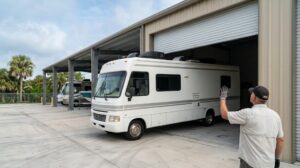
If you’ve confirmed your HOA situation and decided a driveway isn’t the right call, RecNation’s nearest North Port-area facility, about 13 miles away in Punta Gorda, offers outdoor uncovered storage on-site, with canopy and fully enclosed Indoor Garage options available at the Fort Myers facility, so you’re not overpaying for protection you don’t need or underprotecting a vehicle that requires it.
When Driveway Parking Is Genuinely Reasonable
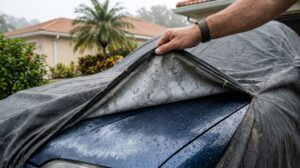
Not every situation calls for a facility. If your HOA allows it, you use the vehicle often enough to inspect and maintain it, you’re storing outside hurricane season, and you’re comfortable with the security trade-off, driveway parking with a quality fitted cover can be a reasonable short-term choice. The math shifts as storage duration stretches from weeks to months, and it shifts hard once hurricane season enters the picture.
A Simple Way to Decide
Driveway parking isn’t a single yes-or-no call, it depends on what your HOA actually permits, how long the vehicle will sit, and what it’s built to withstand once North Port’s climate gets involved. These three questions cut through that:
- Does my HOA actually allow this, beyond just the blanket-ban protection Florida law provides?
- Will the vehicle sit for more than a month, or through any part of hurricane season?
- Does it have gelcoat, a rubber roof, or exposed metal fittings that humidity and salt air degrade over time?
A yes to either of the last two questions is a strong argument for pricing out facility storage rather than defaulting to the driveway.
Ready to Store Your RV or Boat the Right Way?
You’ve checked what your HOA actually allows, weighed North Port’s humidity and hurricane season against your driveway, and worked through whether your vehicle’s materials can take it. The next step is picking the option that actually fits.
For North Port owners who’ve weighed the trade-offs, RecNation RV and boat storage in Punta Gorda offers month-to-month terms and 24-hour gate access available, so you’re not locked into a long commitment if your situation changes.
Frequently Asked Questions
Can my HOA stop me from parking my RV in my driveway in North Port?
Not entirely, but they can still narrow it down. Florida law blocks your HOA from banning RV or boat parking outright, but it doesn’t stop narrower rules like visibility screens, time limits, or size caps specific to recreational vehicles. Pull your community’s actual covenant before assuming the state-law protection covers your situation.
Is a driveway safe for storing a boat or RV during hurricane season?
No, not on its own. Wind-driven rain and flying debris are the real hurricane-season risks, and an open driveway blocks none of it. A canopy roof helps a little with rain from above, but its open sides leave the same debris exposure a driveway has. For a boat or RV sitting through the June-through-November window, only a fully enclosed unit actually closes that gap.
What’s the cheapest way to store an RV if my driveway won’t work?
Outdoor uncovered storage at a facility is typically the lowest-cost option, starting around $57 a month at the Punta Gorda location serving North Port. It still includes fencing, gated access, and monitoring that a driveway lacks.
Does Florida law mean I never need a storage facility?
No. Florida’s protection against blanket HOA parking bans addresses whether you’re allowed to park at all, not whether your driveway offers adequate weather or storm protection. North Port’s humidity, salt air, and hurricane risk are real regardless of what your HOA permits.
How do I know if my vehicle needs a facility instead of my driveway?
If your boat has gelcoat or exposed metal fittings, or your RV has a rubber roof or slide-outs, and either will sit for more than a few weeks or through hurricane season, real protection meaningfully slows the damage that accumulates in North Port’s climate. A driveway provides none of that.