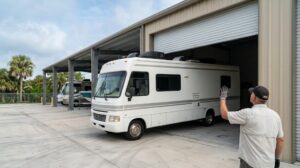
Carrollton (Texas) summers are not a background detail when it comes to vehicle storage. The Dallas-Fort Worth area regularly produces 60 to 79 days per year where the heat index reaches or exceeds 100°F, according to NOAA Climate Normals.
That sustained thermal load has real consequences for rubber seals, gel coats, and roof membranes. For most recreational vehicles (RVs), boats, and collector vehicles stored longer than a month in Carrollton, covered storage slows the damage while enclosed storage stops it. This guide maps each tier to the vehicles it actually protects, so you leave with a decision rather than a framework.
What “Covered” and “Enclosed” Actually Mean at a Storage Facility
Storage facilities use these terms differently, which makes comparison shopping confusing. Before evaluating which tier is right for your vehicle, confirm you are comparing the same things.
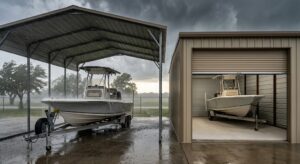
Covered Storage (Canopy/Carport Style)
Here’s what this tier actually is, and isn’t.
- Structure: A roof, typically a metal canopy or carport, with open or partially screened sides.
- What it blocks: Direct rainfall and direct sun, so the vehicle sits shaded, not sealed.
- What it doesn’t block: Ambient outdoor air. On a 105°F Carrollton afternoon, interior temperatures inside a covered RV or boat can still exceed 150°F.
- The takeaway: Shade solves the direct sun problem; it does not solve the heat problem.
If a canopy is the tier you’re weighing, carport and covered storage options show what that actually looks like on the ground, roof structure, open sides, and all.
Enclosed and Climate-Controlled Storage
This tier actually splits into two, and the difference matters for both price and protection.
- Enclosed (non-climate): Four walls and a roof, fully isolating the vehicle from weather.
- Climate-controlled enclosed: Adds active heating, ventilation, and air conditioning (HVAC) that holds temperatures in a stable range, typically 55 to 85°F.
- Why the distinction matters: These are two distinct tiers that are often grouped together, but they carry meaningfully different price points and protection levels.
Understanding what enclosed vehicle storage means helps clarify which option fits your vehicle’s specific vulnerabilities.
The table below maps each tier to what it actually stops.
| Protection Variable | Outdoor (Uncovered) | Covered (Canopy) | Enclosed (Non-Climate) | Climate-Controlled Enclosed |
| Direct sun / UV | None | Yes | Yes | Yes |
| Direct rain | None | Yes | Yes | Yes |
| Temperature regulation | None | None | Partial (no active HVAC) | Yes (55-85°F maintained) |
| Hail protection | None | Partial (vertical only) | Yes | Yes |
| Humidity control | None | None | None | Yes |
What Carrollton’s Climate Actually Does to a Stored Vehicle
North Texas weather is not a theoretical concern for stored vehicles. The damage is documented, specific, and cumulative across a single storage season if the vehicle is not protected at the right tier.
Heat and UV: The Slow Damage You Won’t See Until It’s Too Late
Automotive heat research consistently shows that vehicle interiors under a covered canopy can exceed 150°F on peak summer days. At 140°F and above, RV roof membrane adhesives soften and begin to delaminate from the substrate. At sustained UV exposure, fiberglass gel coat oxidizes and chalks, losing gloss and surface integrity. Leather and vinyl upholstery at 150°F loses elasticity and begins cracking, a process that accelerates with every additional heat cycle through a Carrollton summer.
Covered storage reduces direct UV damage but does not eliminate thermal buildup. Interior temperatures in a shaded vehicle drop compared to a fully exposed one, but not enough to prevent these failure modes during an extended storage window running from May through September. Climate-controlled storage is the only tier that holds temperatures below the threshold where material failure begins.
Humidity and moisture protection matters in this equation too. As temperatures spike and drop, enclosed non-climate-controlled units still experience condensation cycles that can accelerate corrosion on battery terminals and marine electrical connections.
Hail in North Texas: What a Canopy Does and Doesn’t Stop
Hail is where the covered-vs-enclosed decision gets specific, not just a matter of how hot it gets, but which direction the damage comes from. The DFW metro sits squarely in what storm researchers call “Hail Alley,” and the NOAA Storm Events Database confirms the region ranks among the most hail-active in the country, with multiple significant hail events in most years.
A canopy roof stops hail falling straight down, providing real protection for a vehicle’s hood, roof panel, and deck. It does nothing for angled or wind-driven hail, though, and that’s how most North Texas hailstorms actually arrive. Roof-mounted equipment, including air conditioning units, vents, antennas, and skylight covers on an RV, sits exposed to that angled hail even under a canopy. Enclosed storage closes that gap entirely, which is why hail specifically, not just heat, often ends up being the deciding factor for any vehicle with equipment mounted on top.
Covered vs Enclosed Storage by Vehicle Type: A Direct Verdict
Each vehicle type has specific material vulnerabilities that map directly to a storage tier. The verdicts below are not hedged. If the Carrollton summer is the variable, here is where each vehicle lands.
RVs and Motorhomes
The two motorhome categories split differently based on size and how long they sit through a Carrollton summer.
- Class A and Class C motorhomes: Enclosed storage is the right call. Roof membrane replacement runs $3,000 or more, and the DFW heat window is long enough to initiate delamination in a single season. According to the RV Industry Association, Class A motorhomes typically stand 12 to 13.5 feet in height, so confirm storage unit size before you commit. If you’re storing a Class A or Class C motorhome through the Carrollton summer, RV storage near Carrollton with fully enclosed options is the only tier that fully protects the investment.
- Fifth wheels and travel trailers: Covered storage is acceptable for stays under 30 days in spring or fall. Anything stored through a full Carrollton summer belongs in an enclosed unit.
Boats and Personal Watercraft
Hull material, not just boat size, is what drives this decision.
- Fiberglass boats: Covered boat storage reduces direct UV exposure, but gel coat still oxidizes from ambient UV scatter even in a shaded slip. Enclosed storage is worth the monthly cost difference for any boat with significant cosmetic or resale value.
- Aluminum-hull boats: Without a gel coat surface to protect, covered storage handles a Carrollton summer more forgivably, though interior upholstery still faces the same heat exposure risk.
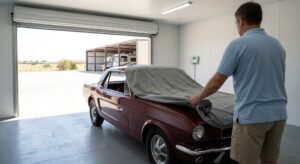
Classic and Collector Cars
Every material on a collector car loses this fight to Texas heat except one storage tier.
- Climate-controlled enclosed storage is the only tier that fully protects a collector vehicle from DFW summer conditions. Paint oxidation, rubber seal cracking, and interior material degradation all accelerate under repeated heat cycling.
- The math: If your vehicle has collector or resale value, comparing monthly storage cost to repair or restoration cost settles the decision quickly.
For detailed guidance on preparation and long-term care, the guide on storing and caring for a classic car covers the specific steps that protect paint and mechanicals in long-term storage.
Daily Drivers and Motorcycles
This is the one category where covered storage is the default, not the exception.
- Daily-driver cars stored short-term: Covered storage is sufficient. A modern production vehicle stored for two to four weeks in a covered stall comes out fine.
- Motorcycles and all-terrain vehicles (ATVs): Covered storage handles most situations, with one exception, models with leather seats and painted fairings stored through the full summer heat window benefit meaningfully from enclosed storage, where cumulative UV damage to leather and clear coat is actually arrested rather than just slowed.
The Practical Decision Filter: Three Questions Before You Choose a Tier
Most owners already know their vehicle and their budget. These three questions are the filter that converts that knowledge into a specific tier decision.
Storage Duration and the Carrollton Summer Window
Question 1: How long will the vehicle be stored, and does that window include June through September?
Short-term storage in Carrollton, Texas, from October through April is genuinely lower risk. Temperatures are moderate. UV intensity drops substantially too. The math changes once storage runs through the core summer window instead. May through September is the period that matters most; that’s when cumulative UV and thermal exposure crosses the threshold where material failure becomes likely rather than just possible.
Vehicle Value and the Cost of Getting It Wrong
Question 2: What does a repair cost compared to the monthly storage cost difference?
A gel coat buff-and-polish runs $400 to $600. A roof membrane replacement on a Class A motorhome runs $3,000 or more. That gap alone makes the case for most vehicles. The monthly cost difference between covered and enclosed storage in the Dallas-Fort Worth market typically falls in the $30 to $80 range, though these are general market estimates, not quoted rates, so confirm current pricing directly with any facility you’re considering.
That math changes significantly at higher vehicle values. Understanding how much it costs to store a vehicle by tier and size helps you calibrate that comparison against your own repair risk.
Insurance and the Garaging Classification Question
Question 3: Does your insurance policy define “covered” and “enclosed” as the same garaging classification?
This is a question most storage guides skip entirely, and it’s worth asking before you sign a storage agreement. Some Texas comprehensive auto and RV policies treat a covered stall and a fully enclosed unit as different garaging locations for hail damage claim eligibility. The Texas Department of Insurance provides consumer guidance on policy terms, but your insurer is the definitive source. Contact your carrier with the specific storage address and ask directly whether the storage tier affects your hail coverage before committing to a facility.
Why Carrollton Residents Need Off-Site Storage in the First Place
For many Carrollton, Texas owners, this is not a choice between driveway storage and facility storage. The City of Carrollton’s zoning ordinance restricts the parking and storage of RVs, boats, and trailers in residential driveways and side yards. You can review the applicable provisions through the City of Carrollton Municipal Code. The practical result is that most RV and boat owners in this market are legally required to use off-site storage.
HOA Rules Add Another Layer
Many Carrollton subdivisions have homeowners association (HOA) covenants that go further than the city ordinance. Some prohibit any oversized vehicle from being visible from the street, regardless of whether it sits in a legal driveway position.
If your HOA applies this kind of restriction, the conversation about where to store the vehicle is already settled. The only remaining question is which tier of off-site storage protection your vehicle actually needs given Carrollton’s climate, and a facility with pest control storage practices in place protects upholstery and wiring that a driveway never would.
Ready to Match Your Storage Tier to Carrollton’s Climate?
Every month your vehicle sits unprotected through a Carrollton summer, the damage compounds. Seals dry out, gel coat oxidizes, roof membranes soften, and at some point, slowing that damage stops being enough. Weigh how long it’ll sit through that window against what a single repair would cost relative to the monthly storage cost difference, and the right tier stops being a judgment call.
If you’re ready to move your RV, boat, or other vehicle into a protected space before the heat window opens, RecNation RV and vehicle storage in Carrollton offers covered and enclosed options with drive-up access and storage facility security, no long-term contract required. Check availability before the season’s worst heat arrives.
Frequently Asked Questions
What is the difference between covered and enclosed storage in Texas?
The short version: covered means a roof only, enclosed means four walls too, and climate-controlled means those walls come with active temperature regulation. Covered storage blocks direct sun and rain but leaves the vehicle in ambient outdoor air. Enclosed storage seals it off from weather and angled hail entirely. Climate-controlled takes it further, holding a stable temperature range that prevents the repeated heating and cooling that causes seal, gasket, and membrane failure in Texas heat.
Is climate-controlled storage worth it in Carrollton, TX?
Yes, if your vehicle has rubber seals, a fiberglass or gel coat exterior, leather upholstery, or onboard electronics, and it’s stored through the Carrollton summer, roughly May through September. The DFW area routinely produces weeks of 100°F-plus heat index days, which generates interior vehicle temperatures high enough to cause material failure across a full season. For short-term storage in cooler months, covered storage is typically sufficient for most vehicle types.
How much does covered RV storage cost in Carrollton, TX?
Covered RV storage in the Carrollton and greater DFW area typically runs $80 to $150 a month, depending on vehicle size and facility amenities; enclosed or climate-controlled storage for the same vehicle generally runs $150 to $300 or more. These are market estimates, not quoted rates, so confirm current pricing directly with any facility before committing.
Does Texas heat damage items stored in a non-climate-controlled unit?
Yes, and the damage accumulates with every season of exposure. A covered canopy alone doesn’t stop cabin temperatures from climbing past 150°F on peak DFW summer days, and at that heat, roof membrane adhesives soften, rubber seals turn brittle, upholstery cracks, and batteries degrade faster than they would in a temperature-regulated unit. Most of this damage isn’t visible until it’s already expensive to fix.
What type of storage is best for protecting a vehicle from hail in North Texas?
Fully enclosed storage is the only tier that provides complete hail protection. A covered canopy intercepts direct vertical hail but leaves roof-mounted equipment, AC units, vents, skylights, and antennas exposed to angled or wind-driven hail, and the DFW metro produces multiple significant hail events most years. If hail protection is a priority, enclosed is the right call regardless of budget, since a single hail event can exceed the annual cost difference between the two tiers.
Do Carrollton’s zoning rules require me to store my RV or boat off-site?
Yes, in most cases. The City of Carrollton restricts RV and boat parking in residential driveways and side yards, and many local HOA covenants add further restrictions on top of that, so most Carrollton owners can’t legally keep these vehicles at home. That makes the covered-vs-enclosed decision about choosing the right protection tier at a facility, not about whether to use one at all. Check the city’s municipal code and your HOA’s governing documents for the rules specific to your property.