Rest area parking limits vary by state, ranging from no posted limit in many states to as little as 2 hours in others. There is no single national rule. This guide covers the state-by-state breakdown, the overnight parking question, and the specific situation facing commercial truck drivers whose federal rest requirements can conflict directly with state time limits.
The Short Answer: What the Time Limit Actually Depends On
The time you’re allowed to stay at a rest area is set by your state’s Department of Transportation (DOT), not by any federal agency. The rules change dramatically depending on where you’re parked, and sometimes depending on which specific facility you stopped at within the same state.
States generally fall into three practical buckets:
- No posted limit, overnight permitted: Alabama, Alaska, Arizona, Arkansas, Georgia, and many others.
- Short-stay limits (2 to 4 hours, not really enough for a full night’s rest): Tennessee, Pennsylvania (at standard rest areas, though its Turnpike service plazas allow 24 hours), Illinois, Maryland, and several others.
- Overnight prohibited outright, regardless of posted hours: Colorado, North Carolina, South Carolina, Virginia, and Hawaii.
Posted time limit signs at the specific facility always govern. A state’s general policy is a starting point, not a guarantee.
Why States Have Different Rules
Interstate highway rest stops fall under 23 U.S.C. § 111, which gives the Federal Highway Administration authority over rest area use as a condition of federal highway funding. States set their own rest area parking limits within that framework, which is why state-by-state parking rules vary so widely and why no single federal time limit applies everywhere.
State-by-State Rest Area Parking Rules
The table below reflects official state DOT policies and posted guidelines where available. Where a state posts no specific limit, that is noted. Always check posted signs at the facility itself, since individual rest areas within a state can post shorter limits.
| State | Time Limit / Overnight Policy | Notes |
| Alabama | No posted limit; overnight permitted | |
| Alaska | No posted limit; overnight permitted | Limited interstate rest areas; rules vary by location |
| Arizona | No posted limit; overnight permitted | Camping and campfires prohibited |
| Arkansas | No posted limit; overnight permitted | Interstate rest areas have 24-hour video surveillance |
| California | 8 hours | Per Cal. Code Regs. Tit. 21, § 2205 |
| Colorado | No overnight parking or camping allowed | Short daytime rest breaks for driver fatigue are informally tolerated |
| Connecticut | No posted limit; overnight permitted | |
| Delaware | 6 hours (car lot) / 8 hours (truck and RV lot) at the Smyrna Rest Area; no limit at the I-95 Welcome Center | |
| Florida | 3 hours (general public); 10 hours (commercial vehicles) | 24-hour security staff on site |
| Georgia | No posted limit; overnight permitted | Overnight parking prohibited at welcome centers specifically |
| Hawaii | No highway rest areas exist; sleeping in a vehicle is restricted 6 p.m. to 6 a.m., plus local ordinances against overnight parking | Most restrictive state by structure |
| Idaho | 10 hours (interstate rest areas); 16 hours (other state highways) | |
| Illinois | 3 hours | Per 92 Ill. Admin. Code § 533.20 |
| Indiana | No posted limit; overnight permitted | A few facilities post restrictions |
| Iowa | 24 hours | Camping prohibited |
| Kansas | 24 hours | Camping prohibited |
| Kentucky | 4 hours | |
| Louisiana | No posted limit; overnight permitted | |
| Maine | No posted limit; overnight permitted | |
| Maryland | 3 hours | Effectively prevents a full overnight stay |
| Massachusetts | No posted limit at most facilities; a minority post a 2-hour limit | |
| Michigan | No posted limit; overnight permitted | The widely-circulated 4-hour limit is not a real MDOT rule |
| Minnesota | 4 hours (general public); 10 hours (commercial vehicles) | |
| Mississippi | 8 hours | Camping prohibited |
| Missouri | No posted limit; overnight permitted | |
| Montana | 12 hours | Camping banned but undefined by MDT |
| Nebraska | 10 hours | Rule language technically prohibits “overnight parking,” though the 10-hour stay itself is expressly permitted |
| Nevada | 18 hours in any two-week period | |
| New Hampshire | No posted limit; overnight permitted | |
| New Jersey | No statewide limit | Some individual facilities restrict overnight parking to commercial vehicles only |
| New Mexico | 24 hours | |
| New York | 3 hours (general public); 10 hours (commercial vehicles); 4 hours at Thruway service plazas | |
| North Carolina | No posted hour limit; overnight parking and camping prohibited by NCDOT rule | Facilities remain open 24/7 for rest stops within that limit |
| North Dakota | No posted limit; overnight permitted | |
| Ohio | No posted limit for occupied vehicles; overnight permitted at standard ODOT rest areas | The 3-hour rule some sites cite applies only to unattended vehicles, not to someone resting inside theirs. Separately, the Ohio Turnpike operates paid overnight RV parking ($20 fee, one-night limit) at select service plazas |
| Oklahoma | No posted limit; overnight permitted | |
| Oregon | 12 hours | Per OAR 734-030-0010 |
| Pennsylvania | 2 hours at PennDOT rest areas; 24 hours at Turnpike service plazas | |
| Rhode Island | No posted limit; overnight permitted | |
| South Carolina | No posted limit; overnight prohibited | |
| South Dakota | 3 hours (general public); 10 hours (commercial vehicles) | RVs may be treated as camping rather than parking |
| Tennessee | 2 hours; overnight parking not allowed | Confirmed directly via TDOT |
| Texas | 24 hours | Per Tex. Transp. Code § 545.411 |
| Utah | No posted limit; overnight generally permitted | Signage states “no overnight camping”; extended stays are monitored by staff and highway patrol |
| Vermont | No posted limit; overnight permitted | |
| Virginia | No posted hour limit; overnight parking not allowed | Unattended vehicles may be towed, per VDOT |
| Washington | 8 hours | Per WAC 468-32 / RCW 47.38.020 |
| West Virginia | No posted limit; overnight permitted | |
| Wisconsin | 24 hours | |
| Wyoming | No posted limit; overnight permitted |
A note on Michigan: a 4-hour limit for Michigan rest areas circulates widely online. Boondockers Bible reviewed MDOT rules and posted signage and found no statutory basis for this claim. Michigan does not post a 4-hour limit at its rest areas, and the figure appears to have spread through websites copying each other without verification. If you see a sign posting a specific limit at a Michigan facility, follow that sign. But the statewide 4-hour limit is not a real MDOT rule.
States That Allow Overnight Parking
“Permitted” means the state’s general policy allows it. Individual facilities may still post shorter limits, so check the signs when you pull in.
States with no posted time limit:
- Alabama
- Alaska
- Arizona
- Arkansas
- Connecticut
- Georgia (except at welcome centers)
- Indiana
- Louisiana
- Maine
- Massachusetts (no limit at most facilities)
- Michigan
- Missouri
- New Hampshire
- New Jersey (statewide, though some individual facilities restrict overnight parking to commercial vehicles only)
- North Dakota
- Ohio (no limit for occupied vehicles at standard rest areas; a 3-hour cap applies only to unattended vehicles)
- Oklahoma
- Rhode Island
- Utah
- Vermont
- West Virginia
- Wyoming
States with a specific posted hour limit generous enough for a full rest:
- California: 8 hours
- Delaware: 8 hours at the I-95 Welcome Center’s truck and RV lot
- Idaho: 10 hours at interstate rest areas, 16 hours on other state highways
- Iowa: 24 hours
- Kansas: 24 hours
- Mississippi: 8 hours
- Montana: 12 hours
- Nebraska: 10 hours, though the rule language technically frames this as an exception to a general prohibition rather than a straightforward allowance
- Nevada: 18 hours within any two-week period
- New Mexico: 24 hours
- Oregon: 12 hours
- Texas: 24 hours
- Washington: 8 hours
- Wisconsin: 24 hours
States That Prohibit or Restrict Overnight Parking
States with the most restrictive rest area policies fall into two groups: those with an outright prohibition, and those with a posted limit too short to support a genuine overnight stay.
Outright prohibition, statewide:
- Colorado: no overnight parking or camping permitted at any rest area; CDOT informally tolerates short daytime breaks for driver fatigue, but there is no posted hour allowance.
- North Carolina: camping and overnight parking prohibited by NCDOT rule; facilities remain open 24/7 for rest within that limit.
- South Carolina: overnight parking prohibited.
- Tennessee: overnight parking not allowed, with a 2-hour parking limit enforced statewide.
- Virginia: overnight parking not allowed; unattended vehicles may be towed.
- Hawaii: has no highway rest areas at all; sleeping in a vehicle is separately restricted between 6 p.m. and 6 a.m., plus local ordinances against overnight parking.
Posted limits too short for a real overnight stay (2-4 hours):
- Florida: 3-hour limit for the general public (10 hours for commercial vehicles).
- Illinois: 3-hour limit statewide.
- Kentucky: 4-hour limit.
- Maryland: 3-hour limit.
- Minnesota: 4-hour limit for the general public (10 hours for commercial vehicles).
- New York: 3-hour limit for the general public at standard rest areas (10 hours for commercial vehicles; 4 hours at Thruway service plazas).
- Pennsylvania: 2-hour limit at standard PennDOT rest areas, though Turnpike service plazas allow up to 24 hours, a meaningfully different rule at a different type of facility along the same corridor.
- South Dakota: 3-hour limit for the general public (10 hours for commercial vehicles); RVs specifically may be treated as camping rather than parking.
In every case above, the posted sign at the specific facility is the final word, and some individual facilities within otherwise permissive states may impose their own shorter restrictions.
Overnight Parking vs. Camping: Why the Distinction Matters
Many travelers see a “No Camping” sign and assume they cannot sleep in their vehicle at all. That reading is almost always wrong, and the distinction matters if you’re an RV and motorhome parking traveler or van lifer planning a long-distance route.
| Overnight Parking | Camping | |
| What it means | Stopping to rest, sleep, or remain stationary in a vehicle for a period of time | Deploying external equipment outside the vehicle |
| Examples | Sleeping in your vehicle, running climate control, lying in a bunk | Tents, awnings used as shelter, outdoor cooking setups, ground tarps, portable furniture |
| What “No Camping” signs prohibit | Not this | This |
“No Camping” signs at rest areas typically prohibit the second category, not the first. Sleeping in your vehicle, running climate control, or lying in a bunk are not camping by the standard definition most state DOTs apply.
What “No Camping” Signs Actually Prohibit
Behaviors that reliably trigger a camping classification at a rest area include: setting up a tent or ground tarp, opening an awning and using it as a shelter structure, outdoor cooking with a stove or open flame, and leaving equipment spread outside the vehicle while you are absent. These are the actions that “No Camping” signs are written to stop.
Gray Area Behaviors to Avoid
Some behaviors sit at the line and draw attention even without a formal camping classification. Individual facility staff or law enforcement may interpret these as camping intent:
- Running a generator at high volume.
- Using slide-outs for what appears to be a multi-day stay.
- Placing chairs outside the vehicle.
- Walking pets on an extended lead in the rest area grass.
Rest area amenities are designed for short stops. Anything that signals you’re treating the location as a campsite rather than a rest stop increases the chance of an enforcement interaction, regardless of what the posted rule technically says.
What Truck Drivers Need to Know About Rest Area Time Limits
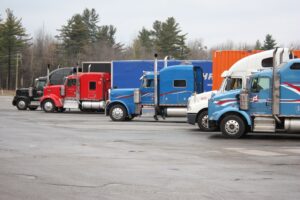
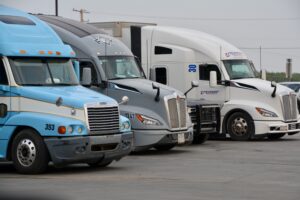
Commercial truck drivers face a specific problem that general travelers do not. FMCSA regulations under 49 CFR Part 395 require property-carrying commercial motor vehicle (CMV) drivers to take a minimum 10 consecutive hours off-duty before returning to service. State rest area parking limits do not adjust for this requirement.
The result is a direct regulatory conflict. A CDL holder who needs to complete a federally mandated 10-hour off-duty break at a state rest area with a posted 2-hour or 4-hour limit is technically in violation of state DOT policy the moment the posted window closes. Federal law says stop. State policy says move.
Enforcement of rest area parking limits against commercial drivers is generally inconsistent. Many state DOTs have acknowledged the national trucker parking shortage as a reason not to aggressively enforce short time limits against HOS-compliant operators. But “generally inconsistent” is not a guarantee, and availability is never guaranteed either.
How Hours of Service Rules Can Conflict With Rest Area Time Limits
Under hours of service regulations, property-carrying CMV drivers may drive up to 11 hours within a 14-hour on-duty window. After that window closes, a minimum 10 consecutive hours off-duty is required before driving again. If a state rest area posts a 2-hour parking rule, a driver who needs a full 10-hour break has no compliant path at that location. The rest area cannot solve the problem the driver legally needs it to solve.
Why Dedicated Truck Parking Is a More Reliable Option
For commercial operators who need a guaranteed space without a posted time limit, dedicated truck parking at a facility designed for commercial vehicles eliminates both problems. Reserved spaces mean no availability gamble, and there is no state DOT time limit to overstay.
Designated truck parking areas within rest areas can help where they exist, but availability is first-come and the same state-posted limits often apply to those zones. For a broader look at the options available, our guide on how truckers find parking covers the full landscape beyond rest areas. A reserved space at a commercial facility is the only option that removes both variables from the equation.
What Happens If You Exceed a Rest Area Time Limit
Enforcement of rest area parking limits typically follows a sequence. Most facilities begin with a welfare check from a patrol officer or rest area staff, followed by a request to move. A citation or fine for a parking violation is possible in states that actively monitor facilities, but is less common than simply being asked to leave.
Ignoring a direct law enforcement request to leave is a separate and more serious matter than passively overstaying a posted limit. Do not treat them as the same situation.
If you are too fatigued to drive safely, remaining at the rest area and addressing any enforcement interaction is the better outcome. NHTSA drowsy driving research confirms that drowsy driving safety risks are significant enough that stopping, even imperfectly, is the right call.
Can You Be Towed From a Rest Area?
Towing from rest areas for standard overstays is uncommon. Towing is typically reserved for vehicles showing signs of abandonment: flat tires, covered windows, no license plates, or no movement over multiple days. A tired driver who overstays a 2-hour limit by a few hours is unlikely to be towed.
Vehicles left at rest areas for several days without any movement are a genuinely different situation and carry real towing risk in states that actively monitor facilities.
Alternatives to Rest Area Parking for Long Stops
When the stop you need is longer than the posted limit allows, or when you are a commercial driver who needs a reliable 10-hour HOS rest break, a rest area is the wrong tool. Several alternatives offer more predictable options.
- Travel plazas and service areas: No time limits, fuel and food access, and dedicated truck parking zones at most locations. The most practical alternative for commercial drivers.
- Truck stops: Similar to travel plazas, designed specifically for commercial vehicle operators on regulated schedules. Showers, fueling, and parking without state DOT time limits.
- Walmart parking lots: Many but not all locations permit overnight parking by policy. Confirm with the specific store before stopping. Policies vary by location and can change.
- BLM and USFS public land: Dispersed camping rules apply, with 14-day stay limits and no facilities. Requires planning and is not useful for a spontaneous stop.
- Casino parking lots: A common overnight option in some regions, particularly in the West. Policies vary by casino and should be confirmed locally.
- Dedicated truck and commercial vehicle parking facilities: Reserved spaces with no state DOT time limits, designed specifically for CMV operators on regulated schedules.
Want a full rundown of free overnight options beyond what’s covered here? See our guide on where you can park a semi truck for free.
Final Thoughts on Rest Area Parking
For commercial drivers who need a predictable, reserved space to complete a mandatory rest break without a posted time limit overhead, RecNation truck parking offers secured facilities designed for commercial vehicle operators across multiple states. A reserved space means no circling a rest area at 2 a.m. hoping a spot opens up, and no risk of being asked to move before your HOS rest requirement is complete. Visit RecNation truck parking to find a facility near your route.
Frequently Asked Questions About Rest Area Parking
Can you sleep overnight at a rest area?
In most states, yes. Sleeping in your vehicle at a rest area is generally permitted as long as you comply with the posted time limit and do not set up external camping equipment. The key distinction is between overnight parking, which means staying in your vehicle, and camping, which means setting up tents, outdoor furniture, or cooking equipment outside. Most rest areas that prohibit camping still permit short overnight vehicle stops. Always check posted signs at the specific facility, since individual locations sometimes post stricter rules than the state’s general policy.
Do rest area parking rules differ by state?
Yes, significantly. Each state DOT sets its own rest area use policies under authority granted by the Federal Highway Administration. Time limits range from no posted limit in states like Alabama and Arizona to a 2-hour parking rule in Tennessee and at most Pennsylvania rest areas. A handful of states, including Colorado, North Carolina, and Virginia, prohibit overnight parking outright regardless of the hour. The posted signs at the specific facility are always the governing rule, even within a state that generally permits overnight stays.
Can you get towed from a rest area?
Towing for a routine overstay is uncommon. Most interstate highway rest stops address overstays with a welfare check or a request to move before any enforcement escalates. Towing is typically reserved for vehicles that appear abandoned, showing signs like flat tires, covered windows, no license plates, or no movement over multiple days. If law enforcement directly requests that you leave and you ignore that request, you are facing a separate legal matter that carries more serious consequences than the original time limit overstay.
Are truck drivers allowed to park longer at rest areas?
There is no universal exemption for commercial drivers at rest areas. CDL holders operating under FMCSA regulations are sometimes legally required to complete a rest break that is longer than a state’s posted rest area time limit. Enforcement against commercial drivers is generally inconsistent, and many state DOTs have acknowledged the trucker parking shortage as a reason not to aggressively enforce short limits on HOS-compliant drivers. Because availability and enforcement are both unpredictable, dedicated commercial truck parking facilities with reserved spaces are a more reliable solution for operators on regulated schedules.
What happens if you park at a rest area too long?
The typical sequence starts with a welfare check from a patrol officer or rest area staff, followed by a request to move on. In states that actively enforce limits, parking violations and fines are possible for a clear overstay, but being asked to leave is the more common outcome. Towing is rare for single overstays and is generally reserved for vehicles showing signs of abandonment. If you are too fatigued to drive safely, remaining at the rest area and dealing with any enforcement interaction is a better outcome than driving fatigued.
Which states have the strictest rest area parking time limits?
The strictest states fall into two groups. Colorado, North Carolina, South Carolina, Virginia, and Hawaii prohibit overnight parking outright, with no posted hour allowance at all. Tennessee, Pennsylvania (at standard rest areas), Illinois, Maryland, Minnesota, and New York post specific limits of 2 to 4 hours, too short to support a real overnight stay. Massachusetts posts a 2-hour limit at a minority of its facilities, though most have no limit. In all cases, the posted sign at the specific facility is the governing rule, and some individual facilities within generally permissive states may post shorter limits based on local conditions.