Winterizing a car for storage means preparing it to sit unused for an extended period, and that is a fundamentally different task from winterizing a car you plan to drive through cold weather.
Most guides on this topic are aimed at drivers. They cover winter tires, tire chains, and driving techniques, none of which matter for a car that won’t move again until spring. If your car is coming off the road entirely, you need a different checklist, one built around the problems that inactivity creates: fuel degradation, battery discharge, tire flat-spotting, and corrosion that keeps working even after the car is parked. This checklist covers every preparation step, in the right order, for a car going into storage rather than onto snow-covered roads.
What It Means to Winterize a Car for Storage
Winterizing a car for storage means addressing every maintenance function that regular driving handles automatically. Stop driving, and all of those functions stop too.
A car stored for weeks or months needs each of them handled manually before it sits. Old oil left in the engine becomes increasingly acidic over time. Fuel left untreated breaks down and leaves varnish deposits in the fuel system. A battery with no charging input gradually discharges to a point where it can sustain permanent damage.
Why Stored Cars Need Different Preparation Than Driven Cars
The core difference is inactivity. A driven car circulates its fluids, keeps its battery topped up through the alternator, and prevents tire flat-spotting through regular movement. A stored car loses all of those self-maintaining properties, so each one needs to be addressed manually before it sits. Every step in the checklist below answers a specific consequence of a car sitting still.
The Complete Winterizing Checklist for a Stored Car
This winter car maintenance routine works best when you follow the steps in order before the car goes into its storage space. Each one addresses a specific failure mode that inactivity creates.
Fluids, Fuel, and Engine Prep
The goal in this group is to remove contaminants and prevent degradation during inactivity, not to service the car for driving. Four steps cover it:
- Change the oil and filter: Do this before storage, not after, so old acidic oil isn’t sitting in the engine all season. Fresh oil of the viscosity your owner’s manual specifies goes in before the car sits.
- Top up and test the antifreeze and coolant: Confirm the mixture gives adequate freeze protection for an unheated space. An engine block can crack if the coolant freezes.
- Add fuel stabilizer to a full tank: Run the engine briefly afterward so the stabilizer circulates through the fuel system. Untreated fuel degrades and leaves varnish deposits during the storage period.
- Check and top up the remaining fluids: This covers brake fluid, power steering fluid, and windshield washer fluid. A brake inspection fits naturally here, since moisture-contaminated fluid shouldn’t be sitting in the lines all season.
Battery and Electrical Care
Even with nothing running, a battery in storage loses charge. A lead-acid battery that sits near zero charge for an extended period can sulfate, a condition where crystals form on the plates and the battery can no longer accept a full charge.
- Charge the battery fully and plan for the storage period: Start with a battery check, charge the battery completely, and consider a battery management device if the car will sit for a long stretch.
If the car will sit for months, how long a car battery can sit unused is a useful next read on how discharge develops and how to manage it.
Tires and Suspension
Flat-spotting happens when a tire sits under load on the same contact patch, especially in cold conditions. That section of the tire can develop a temporary or permanent flat spot.
- Inflate the tires to the correct pressure: Use the tire pressure specified in your owner’s manual. Check tread depth at the same time, so you know whether the tires need replacing before the car returns to the road. For a very long storage period, consider placing the car on jack stands, which removes the load from the tires and addresses flat-spotting.
Exterior, Seals, and Cover
Road salt and rust prevention starts before the car goes into storage, not after it comes out. Salt and deicer residue left on the undercarriage and wheel wells continues to cause corrosion even after the car is parked, so these three steps matter most:
- Clean and wax the exterior: Wash the undercarriage and wheel wells if you can, then apply a fresh coat of wax to painted surfaces. While you’re at the exterior, check the wiper blades and note whether wiper blades replacement will be due before the car is back on the road.
- Treat the door, hood, and trunk seals: This keeps them from drying out and sticking.
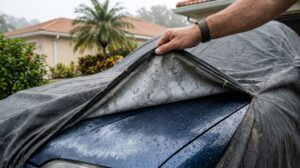
- Place a breathable cover over the car: This applies if you’re storing outdoors or in an unheated space, and it reduces the risk of moisture-related paint damage. Whether a cover is needed depends on where the car will sit, and covering a car in storage helps you make that call.
- Leave a note in the car: Put it on the steering wheel with the storage start date and what was done. It saves guesswork in spring.
Choosing Where to Store Your Car for Winter
Where you store the car determines how much work the checklist above needs to do. A more protective space lowers the demands on your preparation, while a less protective one means your prep carries more of the load.
The table below shows what each storage tier leaves exposed and what your preparation needs to compensate for:
| Storage type | What the car stays exposed to | What your prep needs to cover |
| Outdoor uncovered | Precipitation, UV, wind, and temperature swings all season | A high-quality weatherproof cover and thorough salt and contaminant removal |
| Canopy or carport | Wind-driven moisture and temperature changes, since the sides are open | The full checklist, with a cover for added protection |
| Enclosed indoor garage | Ambient temperature, since the space is not heated or cooled | Antifreeze and coolant at the right concentration |
Enclosed indoor garage storage is the most protective of the three tiers, shielding the car from precipitation, wind, and direct sunlight. It is not climate controlled, though. Without heat, the space follows ambient temperature, so freeze-related fluid damage is still possible if the coolant concentration is insufficient. If your space is an unheated garage, storing a car in an unheated garage goes deeper on what that means for your prep, and what enclosed vehicle storage involves explains the format in more detail if you’re weighing it.
If you’re storing the car at a dedicated vehicle storage facility, RecNation operates 70 locations across the country with outdoor uncovered, canopy, and enclosed garage options, and vehicle and car storage details the space sizes and types available.
What to Ask Any Storage Facility Before You Book
These questions apply to any storage provider, and the answers show whether the space fits both your car and your winterizing plan:
- Clearance: Does the space have enough clearance for your vehicle’s height and length?
- Space types: Is canopy or enclosed storage available, or only outdoor uncovered?
- Power: Do any spaces offer a power outlet for a battery management device? Power hookups are available at select facilities, not all, so ask specifically.
- Rental terms: Is month-to-month rental available for seasonal storage, or is a minimum term required?
Keeping Your Car in Good Shape During Storage
Dropping the car off and walking away until spring is tempting, but a few periodic checks during the storage period catch small problems before they become expensive ones. This is part of winter car maintenance for a stored car:
- Check in periodically: Look for signs of rodent entry, pooling moisture, or tire pressure loss.
- Start the car occasionally: Start the car occasionally; the schedule is covered in how often to start a stored car.
- Check the battery charge state: The section below covers battery care during a long storage period.
- Check the cover and exterior after major weather events: Confirm the cover is still in place and the exterior is in good condition.
Managing the Battery Through a Long Storage Period
A battery left without attention during an extended storage period can discharge to the point of permanent damage. The checklist above covers the initial charge, and this section covers what to do while the car sits.
If your storage space has a power outlet, a battery management device connected during storage keeps the battery at a safe charge level. If you want to know the outer limits of safe inactivity, how long a car can sit unused covers the full vehicle, battery included.
Store It Right This Winter
Once your car is prepped and you have chosen a storage type, the last decision is simply where to put it. RecNation offers outdoor, canopy, and enclosed garage spaces designed for personal vehicles at 70 facilities across the country, so you can find a space that matches how much protection your winterizing plan leaves to the facility.
Frequently Asked Questions
How do I winterize my car at home before putting it in storage?
Winterizing at home comes down to fresh oil, topped-up coolant and other fluids, fuel stabilizer in a full tank, correct tire pressure, a clean waxed exterior with treated seals, and a breathable cover. For storage longer than a few weeks, battery management keeps the battery from discharging and sulfating while the car sits.
What fluids should I check before storing my car for winter?
Check engine coolant, engine oil (replace it if it is due), brake fluid, power steering fluid, and windshield washer fluid before storage. Fresh fluids reduce the risk of corrosion and degradation inside closed systems over a long idle period. Old or moisture-contaminated fluid in the brake lines or coolant system can cause damage that is not visible until spring.
Does a stored car need a battery tender during winter?
A battery tender helps because an unattended battery gradually discharges, and one left fully discharged for months can be permanently damaged. Many owners use a battery management device to maintain a safe charge level during the storage period.
Should I use winter tires on a car I am storing for the season?
Winter tires are not needed on a car stored for the season, since they are built for driving on snow and ice, not for sitting stationary. Inflating the existing tires to the correct pressure and protecting the rubber from cold-related flat-spotting matters more during long storage.
Is an unheated garage adequate for winter car storage?
An unheated garage offers real protection from precipitation, wind, and sun compared with outdoor storage, but it does not hold back freezing temperatures. That makes coolant concentration the deciding factor, so topping up antifreeze and coolant before storage matters most when the space is not heated.
How do I protect my car from road salt damage during winter storage?
Road salt keeps corroding bare metal after the car is parked, so removing it before storage is the main protection. A thorough wash of the undercarriage, wheel wells, and lower panels clears the deicers, and a coat of wax adds protection on painted surfaces. Any exposed metal is worth treating as well.