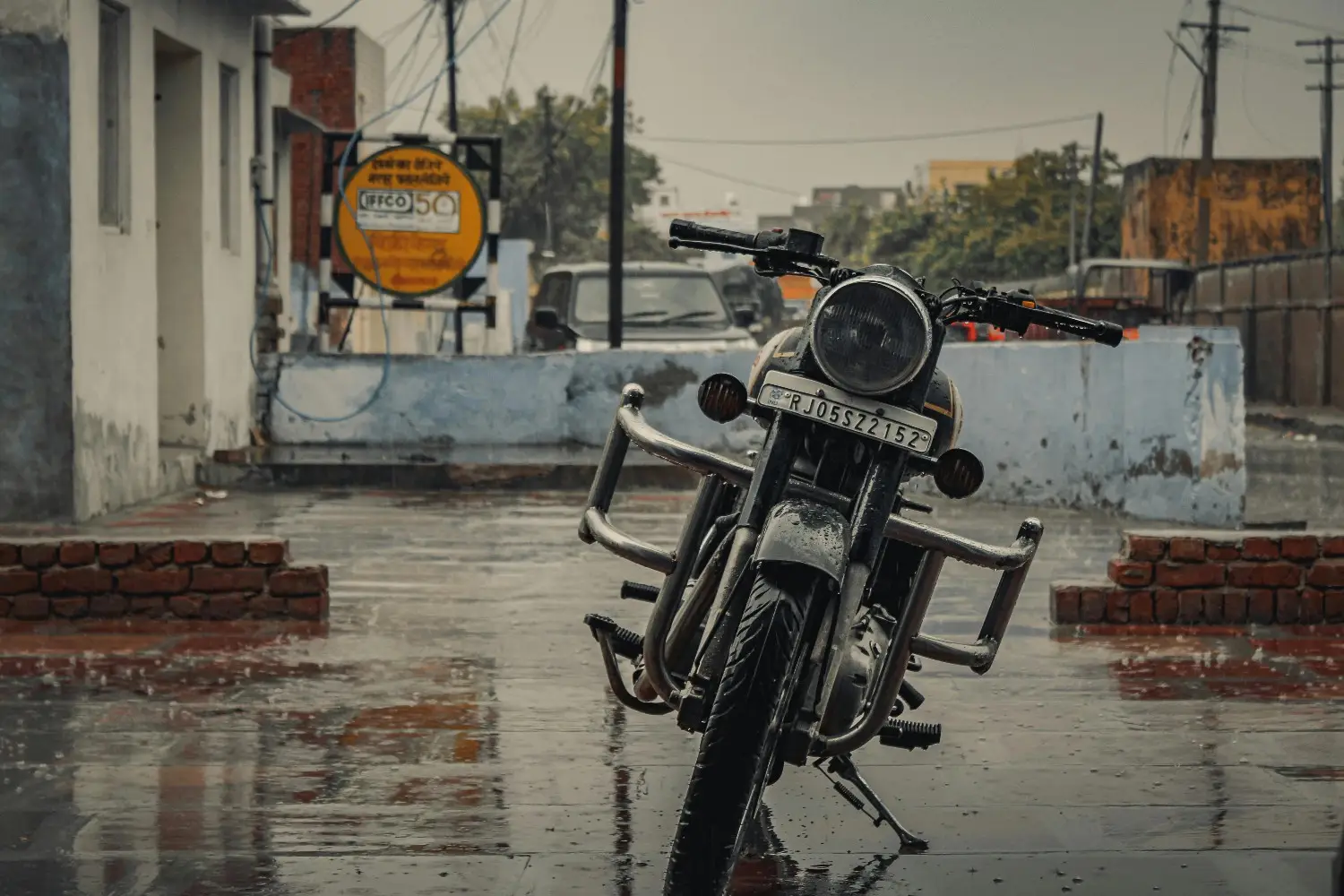
Leaving a motorcycle outside in the rain once or twice is usually fine, but regular exposure can cause wear over time. Moisture can lead to rust, affect electrical connections, and damage parts like the chain, brakes, and exposed hardware.
If indoor parking is not available, use a breathable cover, dry the bike after heavy rain, and keep the chain cleaned and lubricated. A little care helps protect the bike from long-term weather damage.
Does Rain Damage A Motorcycle?
Rain can damage a motorcycle when the bike is exposed often or left wet for long periods. Most modern motorcycles can handle normal rain, but constant moisture can affect performance, electrical parts, and exposed metal over time. These risks become more important when leaving a motorcycle parked outside without proper cover, drainage, or post-rain maintenance.
How Water Exposure Affects Key Components
Water can reach electrical connectors, switches, and wiring points that are not meant to stay wet for long. This may lead to corrosion, weak connections, starting trouble, or power issues.
Moisture can also affect the chain, brakes, fuel system, and air intake if the bike is poorly protected. Regular drying, cleaning, and lubrication help keep these parts working properly after rain exposure.
Short-Term Vs Long-Term Rain Exposure
A short ride in light rain or a brief drizzle usually is not a major problem for a well-maintained motorcycle. The risk increases when the bike sits outside through heavy rain, storms, or several wet days in a row.
Here is how rain exposure usually affects a motorcycle:
- Light drizzle: May leave surface water spots and usually only needs a quick wipe-down.
- Heavy rain: Can increase the risk of water reaching electrical connectors, vents, or exposed hardware.
- Prolonged storm: Can lead to rust, corrosion, and the need for a closer inspection.
- Outdoor storage: Can cause long-term wear if the bike is left uncovered for extended periods.
When Rain Becomes A Serious Problem
Rain becomes a serious issue when moisture stays on the motorcycle long enough to cause rust or electrical problems. Exposed fasteners, frame areas, chains, and connectors are usually the first parts to show damage.
Watch for rust spots, rough idling, starting issues, weak lights, or unusual electrical behavior after heavy rain. These signs mean the bike needs drying, inspection, and better protection before the damage gets worse.
What Parts Of A Motorcycle Are Most Affected By Rain
Rain usually affects the parts that are exposed, electrical, or designed to move. The biggest risks are moisture getting into wiring, rust forming on metal surfaces, and water washing protection away from the chain, brakes, and moving parts.
Electrical Systems And Wiring
Electrical parts are one of the main areas to protect because water can enter loose connectors, switches, or poorly sealed wiring. Once moisture gets inside, it can cause corrosion, weak connections, starting trouble, or sudden power issues.
Aftermarket accessories need extra attention because they may not be sealed as well as factory parts. Check wiring points, connectors, and exposed cables after heavy rain so small moisture problems do not turn into hard-to-find electrical faults.
Metal Components And Corrosion Risk
Metal parts such as the frame, engine hardware, exhaust, fasteners, and brackets can develop rust when moisture sits on them for too long. Paint and fairings help, but they do not fully protect every exposed edge or joint.
Look for early signs like rust spots, bubbling paint, dull metal, or corrosion near bolts and seams. Using a breathable cover and drying exposed areas after rain can help reduce long-term corrosion.
Chain, Brakes, And Moving Parts
The chain, sprockets, brake discs, levers, and pivot points can wear faster when rain washes away lubrication or leaves moisture behind. A wet chain can rust quickly, while brake discs may show surface rust after sitting in damp weather.
After a wet ride or storm, wipe down exposed metal, lubricate the chain, and check that the brakes and levers still move smoothly. Also inspect rubber hoses and visible lines for cracks, since damaged rubber can let moisture reach sensitive areas.
How Duration And Frequency Of Rain Exposure Change The Risk
Rain becomes more damaging when your motorcycle stays wet often or does not dry properly between rides. A short shower is usually easy to manage, but repeated exposure or long-term outdoor parking needs better protection and regular care.
Occasional Rain Exposure
Most motorcycles can handle occasional rain without serious damage. A short shower or wet ride is usually fine as long as the bike dries fully afterward.
After light rain, wipe down exposed areas and check that no water is sitting near the seat, controls, chain, or electrical points. This keeps moisture from turning into a bigger problem.
Repeated Or Daily Exposure
Daily rain exposure creates more risk because moisture can build up in small gaps, wiring points, cables, and moving parts. It can also speed up rust on exposed metal and make the bike harder to maintain over time.
If your motorcycle gets wet often, clean it regularly and keep the chain lubricated. Watch for signs like stiff cables, weak electrical response, surface rust, or damp areas that do not dry quickly.
Long-Term Outdoor Parking In Wet Conditions
Long-term outdoor parking in wet weather needs a stronger plan than a quick wipe-down. A breathable motorcycle cover is important because it blocks rain while still allowing trapped moisture to escape.
If garage parking is not available, park where air can move around the bike and avoid spots where water pools. Good airflow, regular checks, and moisture control help reduce long-term rain damage.
When It Is Safe To Leave A Motorcycle In The Rain
Leaving a motorcycle in the rain is usually safer when the exposure is short, the bike is well-maintained, and water can drain or dry quickly. The risk stays lower when the motorcycle is parked on a hard surface, away from pooling water, and protected with a breathable cover.
Situations With Minimal Risk
Parking motorcycles on streets carries less rain-damage risk when the bike is placed where direct water exposure is limited and airflow can help moisture dry. The goal is to avoid trapped dampness around metal parts, controls, tires, and moving components.
Look for parking conditions that help the bike dry faster after rain:
- Park under partial cover, such as a building overhang, carport, or sheltered curbside area.
- Choose a spot that blocks direct rainfall but still allows airflow around the motorcycle.
- Avoid tight, enclosed spaces where moisture can stay trapped around the bike.
- Park on concrete or asphalt instead of grass, dirt, or soil.
- Avoid soft ground because it can hold moisture around the tires, stand, and lower frame.
- Use a slight incline when possible so water can run off instead of sitting around the seat, chain, brakes, or exposed hardware.
Conditions That Reduce Damage
Rain is less likely to cause lasting damage when the motorcycle dries quickly and does not hold moisture around exposed parts. Basic post-rain care helps reduce rust, stiffness, and wear between rides.
Focus on the areas where water usually collects after wet weather:
- Wipe down the bike after riding in the rain, especially where water sits for long.
- Dry the chain, brake calipers, controls, and exposed metal parts.
- Keep the chain properly lubricated so rain does not leave it dry or more exposed to rust.
- Use anti-corrosion spray on vulnerable metal areas when needed.
- Check hidden or tight areas where moisture may stay trapped.
- Repeat these steps during rainy periods instead of waiting for visible damage.
Differences Between Modern And Older Motorcycles
Modern and older motorcycles do not react to rain in the same way. Newer bikes often have better-sealed components, while older bikes may have worn parts that allow moisture to enter more easily.
The main difference comes down to sealing, age, and exposure:
- Modern motorcycles usually handle light or moderate rain better because many electrical connectors and components are better sealed.
- Better sealing can reduce the chance of quick electrical problems after rain exposure.
- Modern motorcycles are not fully waterproof, so standing water, deep puddles, and long wet exposure can still cause issues.
- Older motorcycles usually need more care because seals, wiring covers, and connectors can wear down over time.
- Exposed wiring or aging connectors can allow moisture to enter areas that should stay dry.
- Riders with older motorcycles should check wiring, connectors, switches, and exposed metal parts more often after wet rides or outdoor parking.
Risks Of Leaving A Motorcycle Outside In Heavy Or Prolonged Rain
Heavy or prolonged rain creates more risk because water has more time to reach sensitive parts and sit on exposed surfaces. A motorcycle can handle normal wet roads, but long storms can lead to electrical issues, rust, faster wear, and reliability problems if the bike is not protected.
Water Ingress And Electrical Issues
Modern motorcycles rely on electrical connectors, wiring harnesses, sensors, and switches that can be affected when water gets inside. Constant rain increases the chance of moisture reaching these areas, especially around loose seals or exposed wiring.
After a heavy storm, signs like flickering lights, weak starting, warning lights, or sudden power issues may point to water exposure. Drying the bike and checking connectors early can help prevent small electrical problems from becoming bigger repairs.
Rust, Corrosion, And Wear Over Time
Long rain exposure can speed up rust on metal parts such as the exhaust, brake discs, engine hardware, fasteners, and frame areas. This can affect both the look of the bike and the strength of exposed components over time.
Rain can also wash lubricant away from the chain, sprockets, levers, and other moving parts. Without cleaning and lubrication, these areas can develop friction, stiffness, and faster wear.
Performance And Reliability Impact
A motorcycle left outside through repeated heavy rain may become less reliable over time. Electrical faults, rusted parts, worn sprockets, and reduced brake performance can all make the bike harder to trust on the road.
The biggest risks usually affect the electrical system, brake discs, engine surfaces, exhaust pipe, chain, and sprockets. Protecting the bike with a breathable cover, proper drying, and regular maintenance helps preserve both performance and resale value.
How To Reduce Damage When Parking In The Rain
Protecting your motorcycle from rain starts with choosing the right parking spot and reducing how long moisture stays on the bike. A sheltered space, breathable cover, and quick post-rain care can help prevent rust, electrical issues, and long-term wear.
Minimizing Direct Exposure
Park under a carport, roof edge, or covered area whenever possible to reduce direct rainfall on the motorcycle. If no shelter is available, use a breathable motorcycle cover that blocks rain without trapping moisture underneath.
Avoid using a tight plastic tarp for long periods because it can hold damp air against the bike. Make sure the cover does not rest on hot parts like the exhaust, and park in a way that prevents water from pooling around the frame or engine.
Drying And Maintenance After Rain
After parking your motorcycle in heavy rain, wipe down the seat, handlebars, controls, and exposed metal parts with a clean towel. Removing standing water early helps reduce rust and keeps moisture away from sensitive areas.
Rinse off road grime before it dries, especially around the lower frame, brakes, fork seals, and chain. A light polish or protective coating can also help water slide off painted surfaces more easily.
Protective Measures For Frequent Rain Conditions
Frequent rain exposure needs more than a quick wipe-down. Regular checks help prevent hidden moisture from building up around electrical areas, moving parts, and drainage points.
Use these protective measures during rainy periods:
- Check the battery area for standing water, corrosion, or loose connections.
- Inspect wiring points and connectors for trapped moisture.
- Look around the air intake to make sure water or debris is not collecting nearby.
- Lubricate the chain more often during wet weather.
- Use silicone spray on electrical connectors where appropriate.
- Keep drain holes clear so water can escape properly.
- Check tires for wear, pressure changes, and reduced grip after repeated wet rides.
- Park on a slight incline so rainwater can run off instead of sitting on the bike.
Common Mistakes When Leaving A Motorcycle In The Rain
Many riders leave their motorcycle in the rain and only think about the damage later. Skipping basic care after wet weather can lead to rust, trapped moisture, electrical issues, and faster wear on exposed parts.
Ignoring Post-Rain Maintenance
After rain, dry the motorcycle with a clean towel, especially around the fairing, frame, seat, and controls. This helps stop moisture from settling into tight areas where it can slowly cause damage.
If the bike is left wet, water can collect near wiring, fork seals, and small gaps around the bodywork. A quick wipe-down after rain is a simple habit that protects the bike over time.
Allowing Water To Sit On Critical Components
Water sitting on metal parts can lead to surface rust, especially around brake discs, levers, bolts, and exposed hardware. Check these areas after heavy rain and remove standing water with a dry cloth or air if needed.
This also helps reduce the chance of moisture reaching electrical points or moving parts. The faster you remove trapped water, the lower the risk of corrosion and performance issues.
Repeated Exposure Without Protection
Leaving a motorcycle outside in repeated rain without any cover increases the risk of mildew, rust, and long-term wear. A breathable cover or garage space gives the bike better protection from constant moisture.
A simple cover can help, but it should not trap damp air against the bike. Keeping the motorcycle dry and protected is one of the easiest ways to avoid costly repairs later.
Final Thoughts
Leaving a motorcycle in the rain once in a while is usually manageable, but repeated exposure can slowly damage the parts that keep the bike reliable. Rust, moisture in electrical connectors, chain wear, and trapped water become bigger risks when the bike stays wet often.
The best approach is simple: reduce direct exposure, use a breathable cover, dry the bike after heavy rain, and keep up with chain lubrication and basic checks.
For longer-term protection, especially during wet seasons, a covered motorcycle storage space from RecNation can help keep your motorcycle protected when you are not riding.
FAQ
How does heavy rain damage a motorcycle’s engine and electrical system?
Heavy rain can let water into parts of the bike that light rain can’t. This can cause issues with starting. Water can also damage the electrical system if it gets into connectors. This can lead to expensive repairs.
Which parts are most vulnerable to water and rust when a bike is exposed?
The chain, sprockets, brake discs, and exhaust pipe are most at risk. These parts are made of metal and can rust if wet. Electrical parts like wiring and handlebar switches can also fail if wet.
Does the frequency of rain exposure change the risk of damage?
Yes, it does. Occasional rain is okay with the right care, but constant rain is a bigger problem. Moisture can get trapped, causing rust and mildew. Using a breathable cover is key if you park your bike outside every day.
Is it safe to leave a modern motorcycle in the rain if I don’t have a garage?
Modern bikes are better sealed than older ones, but they’re not rainproof. If you don’t have a garage, park under a carport or on a paved area. A good tarp or cover can help keep your bike dry.
What should I do to minimize damage after my motorcycle gets wet?
Dry the bike with a clean towel, focusing on the seat, tank, and electronics. Use a hose to clean off dirt and salt. Then, polish and re-lubricate the chain to protect against corrosion.