Parking a motorcycle in a parking lot starts with one goal: pick a spot where the bike is visible, stable, and not exposed to unnecessary vehicle movement. A good parking spot should give drivers enough time to see the motorcycle, while also giving you enough room to enter, park, and leave safely.
Motorcycles are smaller than cars, so they can disappear in blind spots, tight corners, and crowded rows. Before you park, check the ground surface, nearby traffic flow, foot traffic, lighting, and any posted parking rules so your bike stays secure while you are away.
What Makes a Parking Spot Safe?
A safe motorcycle parking spot gives the bike enough visibility, stable support, and protection from avoidable contact. The best option is not always the closest space to the entrance, but the one that keeps your motorcycle easy to see and easy to exit.
Visibility and Foot Traffic Considerations
Your motorcycle should be visible to drivers entering the row, reversing from nearby spaces, or turning through the lot. Strong motorcycle parking safety starts with avoiding hidden spaces where a driver may not notice the bike until they are already too close.
Foot traffic also matters because pedestrians, carts, bags, and open doors can damage a parked bike. A motorcycle’s smaller size can also make it easier to miss in crowded rows, so look for a spot that keeps the motorcycle visible without placing it directly in a busy walking path, doorway, ramp, or cart route.
Lighting and Surveillance Presence
Well-lit areas make your motorcycle easier for drivers and pedestrians to see, especially in the evening or inside covered parking structures. Good lighting can also make the area feel less isolated, which may reduce the chance of tampering or careless contact.
If the parking lot has cameras, security patrols, or an attended booth, try to park within a visible zone without blocking access. A spot near regular activity is usually safer than a dark corner, but it still needs enough space around the bike.
Surface Stability and Ground Conditions
The surface under your motorcycle is just as important as the location of the space. A level, firm surface helps the kickstand or center stand support the bike properly and reduces the risk of tipping.
Soft asphalt, loose gravel, dirt, grass, oil patches, and steep slopes can make the bike unstable. Always check the ground before parking, especially on hot days when asphalt can soften under the kickstand or after leaving a motorcycle outside in the rain, when wet surfaces may reduce grip.
Use these surface checks before leaving your motorcycle parked:
- Concrete: Usually the most stable option and suitable for regular motorcycle parking.
- Hard asphalt: Generally usable, but a kickstand pad can help spread the weight.
- Loose gravel: Risky because the kickstand may shift or sink.
- Soft dirt or grass: Poor choice because the surface can move, soften, or collapse under the bike.
- Oil-stained or wet areas: Avoid these spots because the stand or tires may slip.
Best Places To Park A Motorcycle In A Parking Lot
The best motorcycle parking spot depends on the lot layout, posted rules, and available space. Look for a place that keeps the bike visible, does not interfere with pedestrians or vehicles, and gives you a clear path to leave.
Near Building Entrances and Visible Areas
Parking near a building entrance can work well when the space is legal, open, and not blocking a walkway. These areas usually have more foot traffic, better lighting, and more driver awareness than far corners of the lot.
Do not park directly in front of doors, ramps, fire exits, or marked pedestrian routes. A better option is a nearby marked space or visible edge area where the motorcycle can be seen without creating an obstruction.
Along Curbs and Designated Edges
Curbs and lot edges can be useful when the parking lot allows motorcycle parking there. These spots may reduce exposure to cars moving through center rows and can make it easier to position the bike safely.
Still, the space must not block sidewalks, curb ramps, emergency exits, loading zones, or accessible paths. Park only where the motorcycle stays within a safe boundary and does not force pedestrians or vehicles to move around it.
Near Security Cameras or Attended Zones
Camera-visible or attended areas can be a better choice than isolated rows, especially in large parking lots. These areas often have more activity, which can discourage tampering and make accidental damage more noticeable.
Security visibility should not be the only factor, though. The spot still needs a firm surface, enough clearance, and safe traffic flow so the motorcycle is not exposed to reversing cars or tight turns. When available, marked motorcycle stalls are usually the clearest option because they are designed to separate bikes from regular vehicle movement.
Here’s how common motorcycle parking locations compare:
| Location Type | Visibility Level | Security Benefit | Traffic Risk |
| Near Entrance | High | High Foot Traffic | Low |
| Curb Edges | Medium | Low Obstruction | Low |
| Camera Zones | High | Active Surveillance | Minimal |
| Center Rows | Low | None | High |
Where Not To Park A Motorcycle In A Parking Lot
Some parking spots create more risk than convenience. A motorcycle can be damaged, ticketed, towed, or overlooked by drivers when it is left in the wrong part of a lot.
Before you park, check for signs, surface conditions, vehicle movement, and pedestrian access. A safe spot should protect your motorcycle without blocking anyone else’s path.
Isolated or Low-Visibility Areas
Avoid dark corners, far rows, and spaces hidden behind large vehicles or structures. These areas make your motorcycle harder for drivers, pedestrians, and security staff to notice.
A low-visibility spot can also increase the risk of theft or tampering because fewer people pass through the area. Choose a well-lit, visible area where the motorcycle can be seen from nearby entrances, traffic lanes, or attended zones.
Sloped or Unstable Surfaces
Do not park on loose, soft, or uneven ground if the motorcycle cannot sit securely. Gravel, sand, soft asphalt, wet patches, dirt, and steep slopes can cause the kickstand to shift or sink.
Even a slight slope can create problems if the bike is parked in the wrong direction. Check that the stand is fully planted, the bike is stable, and the tires are positioned so the motorcycle will not roll.
High-Traffic or Tight Vehicle Spaces
Avoid tight spaces where cars, trucks, carts, or pedestrians pass too closely. A motorcycle parked in a cramped area is easier to bump, block, or miss when a driver is reversing.
Do not use sidewalks, fire lanes, loading areas, ramps, or accessible parking spaces unless the space is legally marked for motorcycle use. These areas can lead to fines or towing and may create access issues for other people.
Avoid these parking spots when choosing a place for your motorcycle:
- Spots that block pedestrian walkways, doors, ramps, or crosswalks.
- Accessible parking spaces without the proper permit.
- Fire lanes, emergency exits, loading zones, or marked no-parking areas.
- Tight gaps between large trucks, vans, or SUVs where the motorcycle may not be visible.
- Loose gravel, soft dirt, wet pavement, or sloped surfaces that can affect stability.
How To Position Your Motorcycle In A Parking Space
How you park your motorcycle is key to its safety and your ease of leaving. It’s important to position it right for stability, whether using a center stand or kickstand. By following a few simple steps, you can keep your bike safe and respect others.
Angle and Orientation for Stability
When space and local rules allow it, angle the motorcycle so it is visible to approaching drivers and easy to exit. Near a curb, a slight angle can help keep the bike noticeable while reducing the chance of it being hidden from traffic.
Stability comes first, so check the ground before setting the kickstand or center stand. Parking on hills needs extra care because the wrong angle can let the motorcycle roll, lean too far, or place too much pressure on the stand.
Follow these basic positioning checks before walking away:
- Make sure the kickstand or center stand is fully deployed on firm ground.
- Use an angled position only when the space allows it and the bike does not block traffic.
- Keep the motorcycle visible from the driving lane.
- Position the tires so the bike is less likely to roll forward or backward.
- Use a kickstand pad when parking on asphalt that may soften in heat.
Avoiding Interference With Other Vehicles
Leave enough space around the motorcycle so drivers can open doors, reverse, and move through the lot without hitting it. Parking too close to a car can lead to scratches, handlebar contact, or accidental bumps.
In a standard parking space, keep the motorcycle centered enough that another driver does not mistake the space for empty. This also makes the bike easier to see before a vehicle begins turning into the spot.
Ensuring Easy Exit Without Risk
Park in a way that gives you a clear path to leave without backing into moving traffic or tight corners. When practical, position the front wheel toward the exit so you can move out with better visibility. A quick final check before leaving your motorcycle parked helps confirm the stand, steering, spacing, and exit path are safe.
Many riders also leave the motorcycle in gear on level ground as an added precaution against rolling. Before leaving, check the stand, steering position, nearby clearance, and exit path so the motorcycle stays secure until you return.
How To Reduce Risk When Parking In Shared Lots
Shared parking lots create more movement around your motorcycle, especially near entrances, drive aisles, cart areas, and busy rows. A safer spot gives your bike enough visibility, enough clearance, and a predictable path for leaving.
Avoiding Blind Spots and Tight Corners
Drivers do not always notice motorcycles as quickly as full-size vehicles, especially when they are reversing, turning sharply, or looking for an open space. Avoid corners, end caps, and tight spaces where your bike may sit outside a driver’s normal line of sight.
Look for a space where you can see traffic approaching before you park. If a spot feels hidden behind trucks, pillars, landscaping, or parked cars, it is usually better to choose a more open area.
Minimizing Exposure to Vehicle Movement
Try to avoid spaces where cars constantly reverse, cut across lanes, or turn close to parked vehicles. The less movement around your motorcycle, the lower the chance of accidental contact from doors, bumpers, carts, or pedestrians.
When parking near another motorcycle, leave enough room for both riders to mount, straighten, and exit without touching handlebars or mirrors. A safe space should protect your bike while keeping nearby walking and driving paths clear.
Here are a few checks to make before leaving your motorcycle:
- Leave enough space to move the bike without brushing nearby vehicles.
- Keep the motorcycle out of pedestrian paths, ramps, and doorways.
- Avoid spots where cars frequently reverse in and out.
- Make sure you have a clear exit path before parking.
- Keep the bike visible from the main driving lane.
Choosing Spots With Predictable Traffic Flow
Choose a spot where vehicles move slowly and follow a clear lane direction. Parking in an orderly area makes your motorcycle easier to spot and reduces the risk of sudden turns, shortcuts, or blocked exits.
Avoid areas where motorcycles or cars are parked randomly outside marked spaces. A spot that fits the lot’s normal traffic pattern is usually safer than a shortcut area, corner gap, or crowded edge.
Special Considerations in Different Parking Lot Types
Different lots have different risks, so the best street motorcycle parking choice can change depending on the setting. Commercial lots, parking garages, and residential areas each have their own traffic flow, rules, and visibility concerns.
Open Commercial Parking Lots
Open commercial lots usually have heavy vehicle movement, especially near entrances, cart returns, loading zones, and storefront lanes. Look for marked motorcycle parking or a visible standard space that gives your bike enough room.
Avoid loading docks, delivery lanes, and garden center areas where trucks, carts, pallets, or equipment may move through the space. A legal, clearly marked zone is usually safer than a convenient gap near the door.
Multi-Level Parking Structures
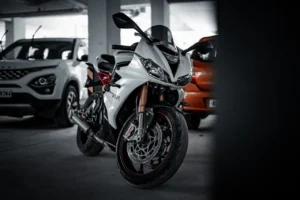
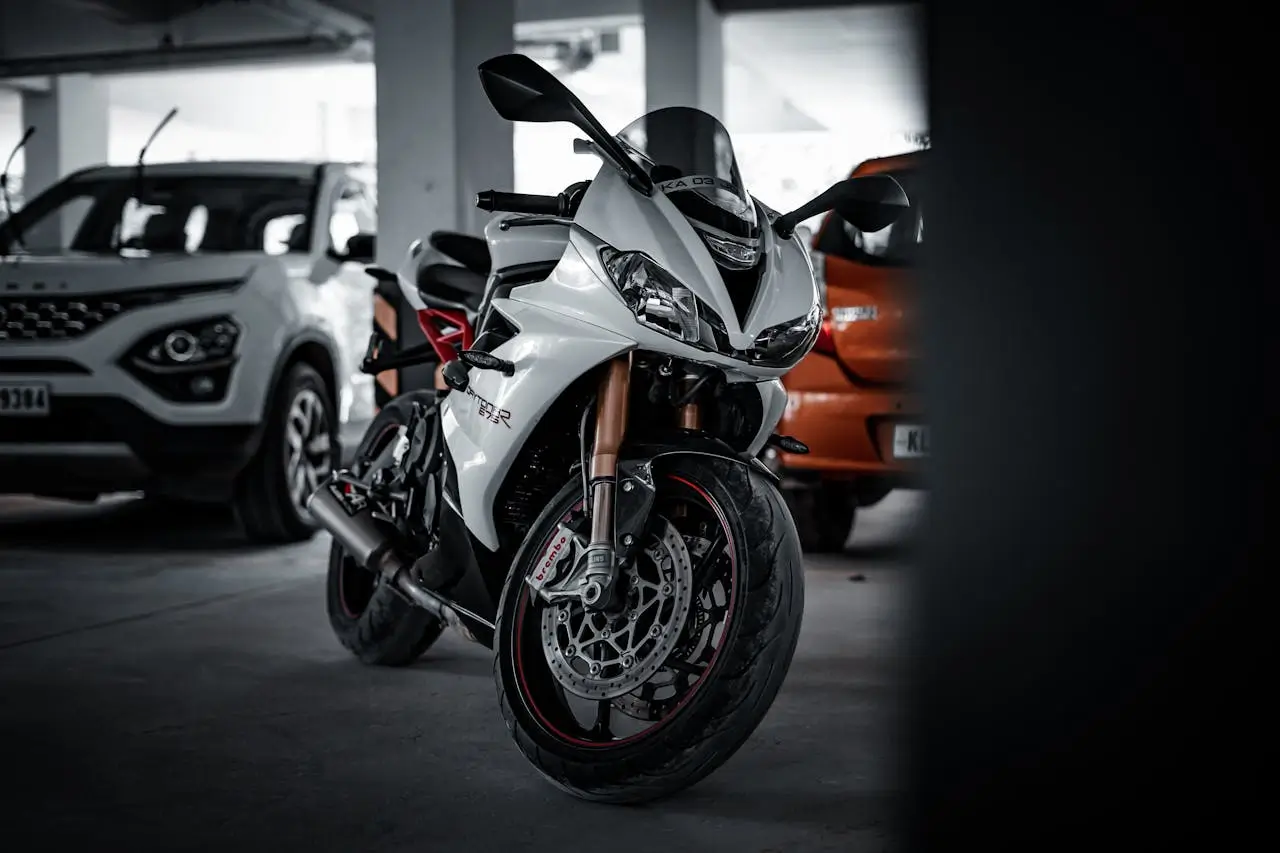
Parking structures often have tighter turns, lower lighting, ramps, pillars, and limited sightlines. Use your lights while moving through the garage and choose a space where drivers can see the motorcycle before turning in.
Look for marked motorcycle areas if the garage provides them. Avoid ramp edges, blind corners, pillar shadows, and spots where the bike may be hidden from approaching vehicles.
Private and Residential Parking Areas
Private and residential lots often have stricter rules because spaces may be assigned, permitted, or controlled by property management. Check posted signs before parking so your motorcycle is not ticketed, moved, or towed.
Some apartments, offices, and private lots require a permit or specific registration for motorcycles. When the rules are unclear, use a marked visitor space or confirm the parking policy before leaving the bike.
Here’s how different parking environments affect motorcycle parking:
| Parking Environment | Primary Concern | Best Practice |
| Big Box Stores | High traffic volume | Use marked zones |
| Parking Structures | Limited visibility | Use lights and caution |
| Residential Areas | Management policies | Check for signage |
Common Mistakes When Parking A Motorcycle In A Lot
Most motorcycle parking mistakes happen when riders focus only on finding an open gap. A safe spot should be legal, visible, stable, and wide enough for nearby vehicles to move without hitting the bike.
Taking Up Unsafe or Improper Spaces
Parking on sidewalks, ramps, fire lanes, loading zones, or accessible spaces can create access problems and may lead to fines or towing. These areas are not safe parking shortcuts, even if the motorcycle fits there.
Use marked motorcycle parking when it is available, or choose a legal vehicle space where the bike is clearly visible. Avoid gaps near entrances, corners, or building edges if they block pedestrians, emergency access, or normal traffic movement.
Ignoring Surface and Stability Risks
Soft asphalt, loose gravel, wet pavement, oil stains, dirt, and sloped surfaces can make a parked motorcycle unstable. Even a small surface issue can cause the kickstand to sink, slide, or sit at the wrong angle.
Before you step away, check that the stand is fully planted and the bike is not leaning too far. A firm, level surface is always safer than a convenient spot that puts the motorcycle at risk of tipping.
Parking Too Close to Other Vehicles
Parking too close to cars, trucks, or other motorcycles increases the chance of scratches, handlebar contact, door bumps, or blocked access. Drivers may also miss a motorcycle if it is tucked tightly between larger vehicles.
Leave enough space for people to open doors, walk around, and move their vehicles without touching your bike. In a standard parking space, position the motorcycle so it is easy to see before another driver turns into the spot.
Final Thoughts
Parking a motorcycle in a parking lot is not only about finding an open space. The safer choice is a spot that keeps the bike visible, stable, legal, and away from unnecessary vehicle movement.
Before walking away, check the surface, lighting, nearby traffic flow, pedestrian paths, and posted rules. Small decisions, such as avoiding blind corners, unstable ground, tight vehicle spaces, and blocked walkways, can reduce the risk of tipping, scratches, towing, or theft.
For riders who need a more secure option than public lots, workplace parking, or uncovered residential spaces, RecNation motorcycle storage offers a practical way to keep motorcycles protected between rides.
FAQs
Can you park on the sidewalk with a motorcycle?
In most places, you should not park on the sidewalk unless local parking laws clearly allow it. Sidewalk parking can block access and may lead to a ticket or towing. Use a marked motorcycle space when possible.
Do motorcycle parking laws vary by location?
Yes, parking laws vary by city, property, and lot type. Some areas allow motorcycles in standard spaces, while others require marked zones or permits. Always check posted signs before parking.
Can you park a scooter in the same place as a motorcycle?
Yes, a scooter can usually use the same legal parking areas as a motorcycle. Keep it visible, stable, and away from sidewalks, ramps, doors, and tight gaps where it may block access or get damaged.
Where should you avoid parking a motorcycle?
Avoid parking in dark corners, fire lanes, loading zones, accessible spaces without a permit, loose gravel, soft asphalt, and tight gaps between large vehicles. Choose a legal, visible, stable space.
Is it okay to park a motorcycle in a regular car space?
Often, yes. A motorcycle can usually use a regular car space if the lot allows it. Park where drivers can see the bike clearly and avoid leaving it too deep inside the space or blocking traffic.