Keeping your recreational vehicle (RV), boat, or trailer at home feels like the obvious move. Then Allen’s climate and your homeowners association (HOA) make that decision for you instead. North Texas heat, UV intensity, and hail exposure do measurable damage to vehicles left outside.
On top of that, city ordinances combined with subdivision rules mean driveway storage is already off the table for many Allen residents. Here’s how to think through the comparison honestly before you commit to either option.
Can You Actually Park an RV, Boat, or Trailer in Your Allen Driveway?
Two separate rule systems govern what you can park in your driveway in Allen, and both can apply at the same time. Satisfying one does not guarantee compliance with the other. Understanding the distinction saves you from an HOA fine or a code enforcement notice after the fact. If you want the fuller picture before diving into Allen’s specifics, vehicle parking vs. storage covers how this distinction plays out more broadly.
What Allen’s City Ordinance Says About Driveway Storage
Allen’s Chapter 6 property maintenance and nuisance standards, enforced through Allen’s municipal code and Development Services, restrict long-term driveway and on-street storage of RVs, trailers, boats, and inoperable vehicles in residential zones. “Long-term” in this context generally means storage that extends beyond temporary loading or unloading.
If your vehicle sits in the driveway for days or weeks at a stretch, it can attract a code enforcement complaint. Verify your specific situation directly with the City of Allen Development Services if you’re unsure whether your vehicle qualifies as a violation.
HOA Rules Are a Separate Hurdle
Even if a vehicle technically clears the city ordinance, subdivision covenants, conditions, and restrictions (CC&Rs) often go further. Allen communities including Twin Creeks, Watters Crossing, and Village at Twin Creeks all carry HOA restrictions that residents sometimes don’t discover until enforcement actually begins. These rules are enforced by the HOA directly, not the city, and fine structures vary by community, though a recurring monthly fine per violation is common practice among Collin County HOAs, with the exact amount set by each community’s own schedule.
What Texas Sun Actually Does to a Vehicle Left Outside
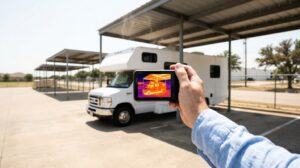
Allen Texas summer temperatures average 97 to 100 degrees Fahrenheit from June through August, and NOAA climate data confirms the Dallas-Fort Worth area exceeds 100 days above 90 degrees in a typical year. UV index readings in this region run in the “Very High” to “Extreme” range from May through September. For a vehicle left in an exposed driveway or open lot, that’s not abstract weather trivia, it’s a direct cause of compounding, often irreversible damage. Here’s how that damage actually shows up:
- Paint oxidation and sun damage: UV rays break down the clear coat on your vehicle’s finish, causing fading and chalking that no detailing product fully reverses. Once the clear coat fails, professional repainting is the only fix, and panel-by-panel repaints run into the thousands. Texas heat and UV exposure accelerate this process faster than in most other states.
- Interior cracking and material failure: Cabin temperatures in a parked vehicle under direct Texas sun can exceed 150 degrees Fahrenheit, causing dashboard cracking, seat material splitting, and adhesive failure on trim components. Rubber and plastic parts that seem fine in spring become brittle by fall after a full Texas summer of thermal cycling.
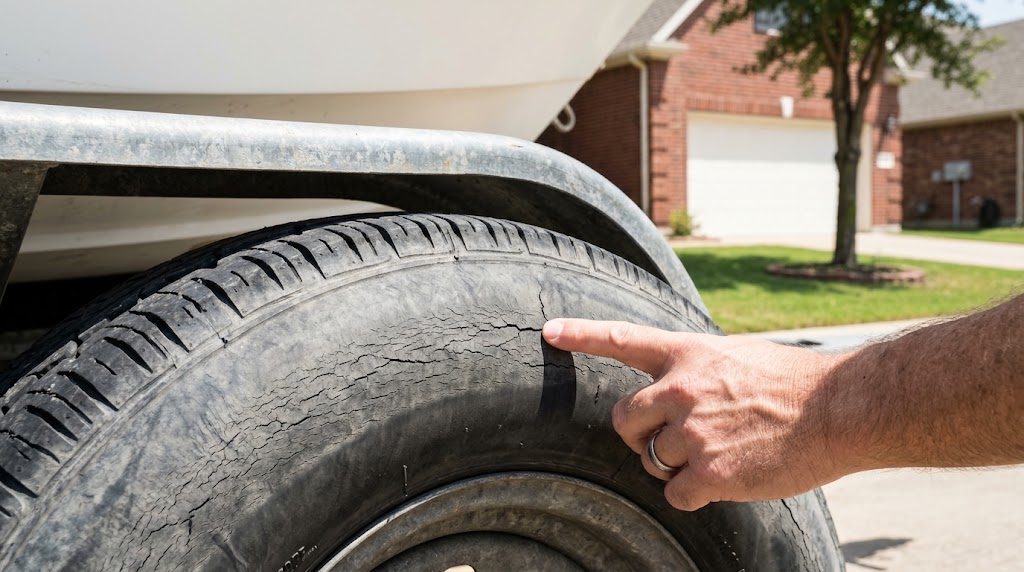
- Tire sidewall degradation: Sidewall cracking from UV exposure can make a tire structurally unsafe even when tread depth looks acceptable, a failure mode that catches most owners off guard.
- Battery discharge: Batteries in RVs and boats with house or marine battery banks discharge faster in sustained heat and shorten their service life significantly when left unused in high temperatures.
For a deeper look at how covered outdoor storage vs. street parking compares on these specific damage vectors, see covered outdoor storage vs. street parking.
Vehicle depreciation from sun exposure is real and priced into resale. A vehicle with oxidized paint, a cracked dash, and dry-rotted tires will lose value relative to a comparable stored vehicle, and buyers notice. The damage is cumulative across seasons, which is why driveway parking limitations that feel minor in year one become expensive by year three.
The Hail Problem Is Real in North Texas
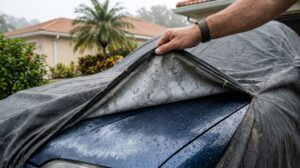
North Texas consistently ranks among the highest-frequency hail zones in the United States. NOAA storm event records for Collin County document repeated hail events, with stone sizes ranging from half an inch to golf ball size and larger. A single moderate hail event can cause $2,500 to $8,000 or more in bodywork damage on a standard vehicle. This isn’t a seasonal edge case for North Texas vehicle owners. It’s a recurring annual exposure. Covered or enclosed storage eliminates it entirely. An open driveway provides no protection at all.
Heat’s Effect on Batteries, Tires, and Interiors
RV owners with house battery banks should know that sustained heat above 90 degrees accelerates battery discharge and shortens overall battery life. A battery left in a hot, idle RV for a Texas summer without a maintenance charger may not hold a full charge by fall. Tire degradation from UV rays is a parallel risk. Sidewall cracking can develop without visible tread wear, and a tire that looks usable may not be safe under load. Heat-driven dashboard cracking is universal across vehicle types, not just RVs. Plastic, vinyl, and rubber components all degrade faster at the temperatures a Texas driveway generates.
The Real Cost Comparison: Driveway Storage vs. a Monthly Storage Unit
The cost comparison between driveway vs. storage unit often looks simple on its face: zero dollars at home versus a monthly storage rental cost at a facility. The actual math is more complicated. Before you decide, it’s worth understanding whether vehicle storage is actually worth it once HOA fines, repair costs, and insurance gaps are added to the comparison, is vehicle storage worth it walks through that math in more detail.
Here is how the two options compare across the factors that matter most. Verify current rates directly with any facility before making a decision, as outdoor storage facility pricing varies by space size, vehicle length, and contract length:
| Factor | Driveway / At-Home Storage | Outdoor Storage Facility |
| Monthly cost | $0 base, plus fine and repair exposure | $50-$175/month (verify current rates with facility) |
| HOA fine exposure | $25-$150/month per violation if restricted | $0 |
| Hail and weather damage | Full exposure | Reduced or eliminated (covered/enclosed) |
| Insurance coverage | May be excluded for non-road-registered vehicles | Tenant protection plans available |
| Long-term vehicle condition | Compounding UV and heat damage | Significantly reduced |
The monthly storage rental cost is usually the smallest number in the real comparison. A single HOA fine cycle or one hail event can exceed several months of storage fees. That’s the context the table above can’t fully show.
What “Free” Driveway Storage Can Actually Cost You
A single HOA fine cycle at $100 per month covers three months of outdoor open-lot storage at most Allen-area facilities. A hail event requiring body shop work erases years of avoided storage fees. Paint oxidation that requires a professional respray before resale is a cost that driveway parking generates silently over multiple seasons. The point is not that driveway storage always costs more. It’s that the driveway parking limitations you don’t account for in advance tend to be the expensive ones.
When the Driveway Option Makes Sense
Driveway storage is genuinely fine in some situations. A vehicle you drive daily or near-daily doesn’t face the same sustained UV and heat exposure as one sitting unused for weeks. A property not governed by an HOA, with city code clearance for the vehicle type, removes the compliance risk entirely. A fully covered carport that shields the vehicle from direct sun and hail is a meaningful upgrade over an exposed driveway. If your situation fits one of these cases, the case for off-site storage is weaker. If it doesn’t, the math tilts quickly toward a facility.
What to Look for in an Allen Area Storage Facility
Once you’ve decided a facility makes sense, the next decision is what kind of space actually fits your vehicle, your budget, and your access needs. Not every outdoor storage facility in the Allen and Collin County area can accommodate every vehicle type, so evaluating options against these factors first saves time.
Here are the five factors that matter most for Allen vehicle owners:
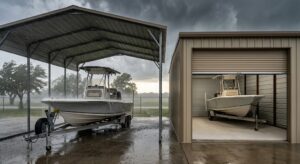
- Cover type: Open lot, covered parking, and enclosed units each protect against different risks. Open lot provides no UV or hail protection. Covered parking shields the vehicle from direct sun and most hail events, and an enclosed unit provides maximum protection. Match the cover type to your vehicle’s value and how long it will sit idle.
- Vehicle size and length clearance: RVs, boats on trailers, and larger vehicles need pull-through or wide-access spaces. Not every Allen-area facility can accommodate a 40-foot Class A motorhome or a boat on a large trailer. Confirm dimensions before reserving.
- Gate access hours: Facilities with extended or 24/7 gated storage facility access are meaningfully more practical if you’re heading to Lake Lavon early or departing on a weekend RV trip. Restricted hours create friction fast.
- Self-storage facility security features: Look for gated access, perimeter fencing, and on-site cameras at minimum. These vary by facility, so ask specifically rather than assuming.
- Contract flexibility: Month-to-month arrangements are common and worth confirming if you only need off-site storage for part of the year. Some facilities offer long-term discounts; others require minimum terms. Know what you’re signing before you commit.
Open Lot vs. Covered vs. Enclosed: Which Makes Sense for Allen’s Climate
Given Allen’s UV intensity and hail exposure, covered parking vs. open lot is the most consequential storage decision an Allen vehicle owner makes. Open lot is the most affordable tier and provides no protection from direct sun or hail. Covered parking significantly reduces UV exposure and blocks most hail events, making it a practical middle ground for RVs and boats that sit unused for months.
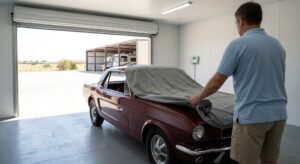
Enclosed units provide the highest level of protection and are worth considering for high-value vehicles or anything stored through a full Texas summer. A daily-driver secondary car can tolerate open lot; an RV or fiberglass boat sitting unused from September through May benefits significantly from covered or enclosed space.
RV and Boat Storage Near Allen, TX
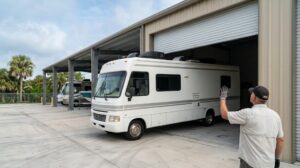
For most Allen RV and boat owners, off-site storage isn’t a preference. It’s the only legally viable path once HOA restrictions and city ordinances are factored in. That reality shapes how you evaluate your options.
Boat Storage Options Near Lavon Lake
Boat owners in Allen have a practical geographic consideration to work around:
- Distance: Lake Lavon sits approximately 10 miles east of Allen, making it a common summer destination for local boaters.
- Access timing: Proximity to the lake and access hours that allow early morning departures matter more than most owners account for when choosing a facility.
- Launch friction: RV and boat storage with pull-through access and extended gate hours eliminates the scheduling friction that makes some facilities impractical for regular use.
RV Storage in Allen and Collin County
For RV owners, the range of use cases is wide, and both ends of that range land on the same conclusion:
- Seasonal campers: Owners who store their RV most of the year need long-term protection from UV and heat.
- Frequent users: Owners who use their RV often need reliable access without appointment restrictions.
Both groups benefit from covered parking over open lot storage. Allen’s summer temperatures are hard on fiberglass, rubber roofing, and exterior finishes over a full season
For Allen owners evaluating RV and boat storage options, RecNation’s nearest facility, located about 9 miles away in nearby Wylie, offers pull-through access and covered parking spaces sized for RVs and boats on trailers, with the gate hours and Collin County storage options that fit both seasonal and frequent-use patterns. Verify current rates and space availability directly with the facility.
Ready to Get Off the Driveway?
Every month your vehicle sits in that driveway is another month the UV clock keeps running and the HOA fine risk stays live. RecNation’s Allen-area vehicle storage offers options from open outdoor spaces to covered parking sized for RVs, boats on trailers, and everything in between, the kind of gated access and security features a driveway was never going to provide in the first place. Space availability and current rates are worth a quick call before you decide the driveway is fine for one more season.
Frequently Asked Questions
Is it bad to leave your car or RV in the driveway during an Allen, TX summer?
Yes, in a lot of Allen subdivisions. Many HOA communities carry CC&R provisions that explicitly prohibit driveway storage of RVs, trailers, boats, and similar recreational vehicles, independent of what city code permits, and those rules come with their own fine structures separate from city enforcement. Check your deed restrictions filed with Collin County or contact your HOA management company directly, since rules vary significantly between Allen subdivisions.
Can my HOA stop me from parking my RV or trailer in my own driveway in Allen, TX?
Yes. Many Allen HOA communities carry CC&R provisions that explicitly prohibit driveway storage of RVs, trailers, boats, and similar recreational vehicles, independent of what city code permits. HOA restrictions Allen Texas communities enforce are separate from city ordinances and carry their own fine structures. To find out what applies to your property, check your deed restrictions filed with Collin County or contact your HOA management company directly. Rules vary significantly between Allen subdivisions.
How much does outdoor vehicle storage cost in the Allen, TX area?
Open lot storage for a standard vehicle typically runs $50 to $100 a month in the Allen and Collin County area, while covered parking for RVs and boats on trailers generally lands between $100 and $175, depending on vehicle size and the facility. These are industry estimates, not quotes, so confirm current rates directly with any facility you’re considering. Month-to-month arrangements are widely available.
What’s the difference between covered parking and an enclosed storage unit for vehicle storage in Allen TX?
Covered parking means a roof or canopy with open sides, blocking direct sun and most hail at a lower monthly cost than full enclosure. An enclosed unit adds four walls and a roll-up door for maximum protection from weather, UV, and unauthorized access. For most Allen owners storing an RV or boat long-term, covered is a strong middle ground; climate-controlled storage goes further still, regulating temperature and humidity for vehicles with sensitive electronics or upholstery.
Is a vehicle stored in my Allen driveway covered by my homeowners insurance?
Usually not. Standard homeowners policies typically exclude motor vehicles from personal property coverage, and non-road-registered vehicles like seasonally stored boats, RVs, or trailers often find that coverage limited or absent entirely. A commercial storage facility’s tenant protection plan can fill some of that gap, but it carries its own limits, so review your specific policies with your insurance agent. The Texas Department of Insurance publishes consumer guidance on where those coverage lines actually fall.
Does Texas sun really damage vehicles faster than other states?
Yes, meaningfully so. Texas sits near the top of the UV-intensity rankings nationally, and Allen’s combination of “Very High” to “Extreme” UV readings with 100°F-plus ambient heat is a harsher combination than most states see even at their own peak. The two factors compound each other, heat softens surfaces and makes them more vulnerable to UV breakdown, which is why identical vehicles age differently depending on climate alone. A vehicle stored in Seattle or Portland simply isn’t fighting the same battle a Texas driveway creates.