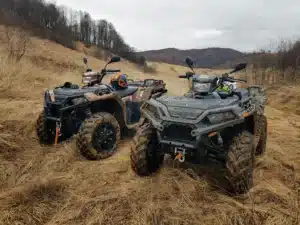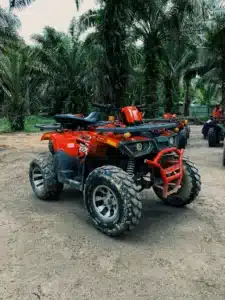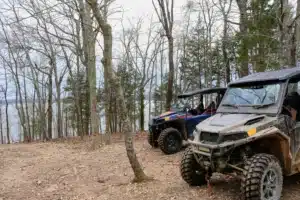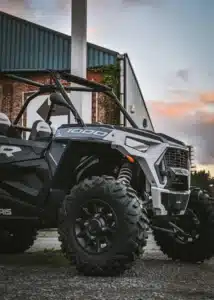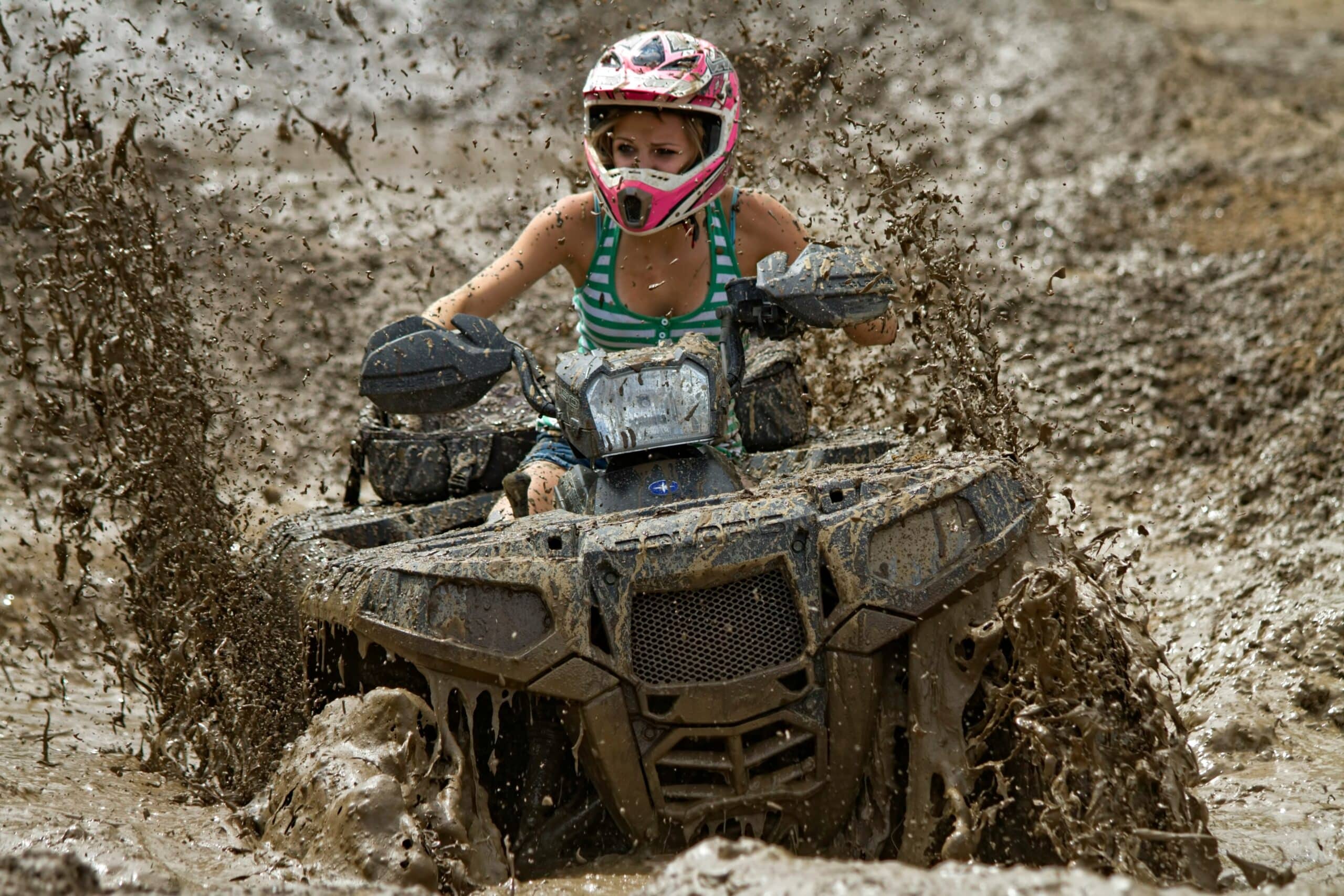
Yes, leaving your all-terrain vehicle (ATV) outside in the rain isn’t safe and can cause real damage. How bad that damage gets depends on how long the machine sits exposed and whether anything is protecting it. A single rainy afternoon is unlikely to ruin a well-maintained ATV, but repeated exposure without drying or inspection creates cumulative problems across electrical components, the fuel system, and mechanical joints.
This guide breaks down the risk by exposure level, names the specific parts that fail first, and walks through what to do before and after rain hits.
The Short Answer: Can Rain Actually Damage an ATV?
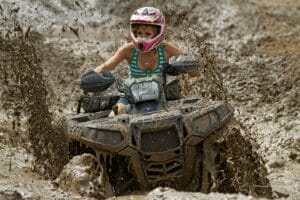
ATVs are built for outdoor use. They handle mud, water crossings, and wet trails without falling apart. But there is a meaningful difference between what the machine experiences on a trail and what happens when it sits stationary in a driveway during a rainstorm.
Rain splash during a ride disperses quickly. The engine stays warm, water moves across surfaces and drains, and the machine keeps moving. A stationary ATV in the rain is a different situation entirely.
Riding in Rain vs. Leaving It Outside Exposed
The core difference comes down to motion and heat.
| Riding in Rain | Parked in Rain | |
| What happens to water | Hits the machine at angles, runs off, rarely pools | Collects in horizontal seams, connector housings, exhaust openings, around bearing seals |
| Engine state | Warm, helps evaporate surface moisture before it settles into connectors or joints | Cold, no evaporation assistance |
| Duration of contact | Brief, water keeps moving | Hours, pooled water sits against rubber and metal |
| Result | Minimal risk | Moisture works into places splash exposure never reaches, where damage begins |
That’s the fundamental distinction driving everything else in this guide: riding in rain and leaving an ATV parked in rain are not the same risk.
Which ATV Parts Are Most Vulnerable to Rain Damage?
ATVs do not fail from rain all at once. Specific components give out first, and knowing which ones helps you focus your post-rain checks where they matter most.
Electrical Connectors and the Wiring Harness
ATV electrical connectors are designed for weather resistance, but not indefinite water exposure. The NEMA enclosure rating system shows why: most outdoor-rated enclosures distinguish between “rainproof” and “submersion-proof” at clear thresholds. ATV connectors fall somewhere in the middle, and prolonged pooling pushes past their limits.
When water sits inside a connector housing, it corrodes the metal contact points. The result shows up as intermittent starts, sensor faults, or total electrical failure. Applying dielectric grease to connectors before outdoor storage is the most effective preventive step for this specific failure mode.
Carburetor, Air Intake, and Fuel System
On carbureted ATVs, water that enters through the air intake or settles in the float bowl causes hard starts, rough running, and clogged jets. Fuel system contamination from water ingestion is a documented failure mode, and it is more likely on older or carbureted machines, which is also worth factoring into whether you should store an ATV with fuel in the tank.
Fuel-injected ATVs handle wet conditions more tolerantly, but are not immune. A waterlogged air filter after an overnight rain can restrict intake enough to affect starting and performance. Checking and replacing the air filter after significant rain exposure is a quick step that prevents engine damage down the line.
Wheel Bearings, Brake Calipers, and Drivetrain Seals
Bearings and seals rely on grease to stay lubricated. Sustained water exposure breaks down that grease over time, and the early symptom is a subtle wobble or grinding sensation from the wheels. By the time you notice it, the bearing already needs replacement.
The brake system has a similar vulnerability. Caliper pistons can seize when moisture works past the seals during long-term exposure. Surface rust on brake rotors is a different story: it looks alarming but usually clears after a few firm brake applications. Seized caliper pistons do not self-correct and require service.
Water pooling in the exhaust is one of the less obvious failure points. It causes internal rusting that builds slowly and eventually degrades exhaust performance. If your ATV sits outside for extended periods, pointing the exhaust downward or using an exhaust plug during storage limits this risk.
How Long Can You Leave an ATV Outside in the Rain Before Damage Occurs?
The question most ATV owners actually have is: how long is too long? The honest answer depends on what is protecting the machine and what maintenance follows. Here is how the risk scales with exposure time.
Short-Term Rain Exposure (One Ride to Overnight)
One rain event, including an overnight exposure without a cover, is unlikely to cause lasting damage to a well-maintained ATV. Surface moisture on metal components evaporates quickly, and a short drying period handles most of the risk.
The key phrase is “well-maintained.” An ATV with cracked connector seals, a worn air filter, or degraded bearing grease is more vulnerable at this tier than a machine that has had regular maintenance. After a single rain event, a quick inspection of the air filter and electrical connectors is enough.
Extended Outdoor Exposure (Days, Weeks, or a Full Season)
After several days uncovered in wet conditions, rust and corrosion begin forming on exposed steel fasteners and unpainted metal surfaces. Electrical connectors accumulate moisture with each wet cycle, and the air filter may be compromised if it has not been checked.
After weeks or a full wet season outdoors without a cover, the damage becomes structural. Bearing grease breaks down, brake caliper pistons become vulnerable to seizing, and rust and corrosion on metal components becomes visible.
Both Polaris owner’s manual guidelines and Honda ATV owner’s manuals specify pre-ride inspection requirements after extended outdoor storage, recognizing moisture exposure as a condition that requires a maintenance check before operation. Long-term exposure without regular maintenance also reduces resale value in ways that are difficult to recover.
How to Protect Your ATV from Rain If You Store It Outside
If outdoor storage is your current situation, the steps below reduce rain damage risk significantly. Storage costs for covered options may be lower than you expect compared to the cost of replacing corroded components.
- Use a waterproof ATV cover, and check the hydrostatic head rating on the label rather than trusting the word ‘waterproof’ alone. The ISO 811 standard measures how much water pressure a fabric can resist before allowing penetration, and ratings vary meaningfully between products marketed as water-resistant versus genuinely waterproof. A cover with no numeric rating listed is the bigger red flag than any specific number, since manufacturers who test to a real standard generally publish the figure.
- Allow ventilation under the cover. A fully sealed cover traps condensation underneath, which promotes mold and mildew growth on seats, plastic body panels, and electrical connections. Look for covers with built-in vents or lift the edges briefly on dry days.
- Apply dielectric grease to electrical connectors before covering. This is especially important before extended outdoor storage. It blocks moisture at the contact point and slows corrosion.
- Wipe down exposed metal components with a protective wax coating or rust inhibitor. A thin coat of WD-40 on unpainted steel surfaces slows the rust formation that accumulates during long-term exposure.
- Keep the ATV elevated off standing water where possible. Ground-level pooling wicks into lower drivetrain components in a way that rain falling on the machine does not. Parking on gravel or a slight slope helps drainage.
- Inspect after every significant rain event. Regular maintenance checks after rain exposure prevent small moisture issues from becoming expensive component failures.
Choosing the Right ATV Cover
A waterproof ATV cover is only effective if it’s rated for the conditions you’re storing in, and fit matters as much as the rating itself:
- Check the hydrostatic head rating on the label, not just the word “waterproof.” The ISO 811 standard measures how much water pressure a fabric resists before penetrating, and ratings vary meaningfully between water-resistant and genuinely waterproof products.
- No numeric rating is the bigger red flag than any specific number. Manufacturers who test to a real standard generally publish the figure; covers marketed as “water-resistant” or “weather-resistant” with no number often handle light drizzle but saturate under prolonged rain.
- Check the fit. A cover with gaps at the bottom channels rain directly under the machine.
- Look for UV-resistant material. It protects plastic body panels from sun degradation between rides, which matters if the ATV sits outside for weeks at a time.
Post-Rain Maintenance Checklist
After any significant rain exposure, run through these checks before your next ride, and if you’re heading into longer-term storage rather than just a quick turnaround, see what to do before putting an ATV in storage for the fuller checklist:
- Electrical connectors: Dry any visible moisture and check for corrosion at contact points.
- Air filter: Inspect and replace if wet or clogged.
- Drive chain: Lubricate after rain exposure to prevent rust buildup.
- Brake function: Test brake response and check rotors for anything beyond light surface rust.
- Exposed metal surfaces: Apply a protective wax coating or rust inhibitor to any bare steel.
When a Cover Isn’t Enough, Long-Term ATV Storage Options
A quality waterproof ATV cover handles short-term rain exposure well. Its limits become clear when an ATV sits outdoors for weeks or months without regular maintenance checks. Condensation cycles, UV rays, and ongoing moisture exposure combine in ways a cover alone cannot fully address.
The practical step-up options, in ascending order of protection, are:
- ATV shed or garage on your property: Fully enclosed, eliminates rain and UV exposure, but requires space and upfront cost.
- Carport or covered outdoor structure: Keeps direct rain off the machine and reduces UV damage, but sides remain open to wind-driven rain.
- Dedicated vehicle storage facility: Full enclosure, no property modification required, typically includes security and lighting. If you are weighing this option, RecNation storage facilities offer enclosed and covered unit sizes suited to ATVs and are worth checking before assuming a facility is out of budget.
Covered and Enclosed Storage Compared
Protection scales up in three clear tiers, from a cover alone to full enclosure.
| Storage Type | Rain Protection | UV Protection | Maintenance Required |
| Open outdoor with quality cover | Handles light-to-moderate rain | Keeps UV rays off the machine | Regular checks and periodic cover replacement as material ages |
| Carport or covered structure | Eliminates direct rainfall; wind-driven rain can still reach the machine from the sides | Reduces UV exposure substantially | Lower than open storage |
| Enclosed indoor unit (shed, garage, or storage facility) | Eliminates rain entirely | Eliminates UV entirely | Lowest; removes outdoor exposure as a risk factor entirely |
The enclosed tier is the only one that removes outdoor exposure as a risk factor rather than just reducing it.
Final Thoughts on Rain Exposure and ATV Storage
An ATV cover handles a rainy weekend reasonably well, but repeated rain exposure without a dry, covered space adds up in corrosion, component wear, and money spent on preventable repairs.
If you do not have a garage or covered structure at home, RecNation ATV storage gives your machine a protected space between rides without the overhead of building a permanent structure. It is a straightforward way to keep rain, UV, and seasonal moisture from becoming a long-term maintenance problem.
Frequently Asked Questions
Can an ATV get wet in the rain?
Yes. ATVs are built for outdoor use and handle rain during a ride without immediate damage. The risk increases when the machine sits stationary in rain for extended periods, especially without a cover, because pooled moisture works into electrical connectors, the carburetor, and bearing seals in ways that trail splash typically does not. A quick post-rain inspection and dry-down reduces the risk of lasting damage significantly.
How do I protect my ATV from rain and weather?
The most effective step is a waterproof ATV cover with a hydrostatic head rating above 1,500mm per the ISO 811 standard. This indicates the fabric can withstand sustained rain, not just light moisture. Make sure the cover allows some ventilation to prevent condensation buildup underneath, which can promote mold and corrosion. For longer storage periods, a carport, shed, or enclosed storage unit provides substantially better protection than a cover alone.
What happens if water gets into an ATV engine?
Water in the engine, typically from a submerged air intake or flooded carburetor, can cause hydrolocking. This happens when water in the cylinder prevents the piston from completing its compression stroke, which can bend or break connecting rods and cause serious internal engine damage. If you suspect water entered the engine, do not attempt to start the ATV. Remove the spark plug, crank the engine briefly to expel water, and inspect before running it.
Is it okay to leave a four-wheeler outside overnight?
One night outside in the rain is unlikely to cause significant damage to a well-maintained ATV. It is worth covering the machine if possible and doing a quick check the next morning. Look at the air filter, dry any visible moisture from electrical connectors, and lubricate the drive chain if it was exposed. The risk from a single overnight event is low. Damage accumulates from repeated or long-term outdoor exposure without any maintenance attention.
What is the best cover to protect an ATV outside?
Look for a cover specifically rated as waterproof, with a hydrostatic head pressure rating of at least 1,500mm per the ISO 811 standard. This rating confirms the fabric can withstand sustained rainfall without soaking through. The cover should fit the ATV snugly without gaps at the bottom, include ventilation to prevent condensation, and use UV-resistant material to protect plastic body panels between rides. Avoid generic tarps without waterproof ratings, as they often pool water and trap moisture rather than shedding it.