The best boat storage starts with one decision: keep the boat in the water, or take it out. Boats used constantly on big water often stay in a wet slip, while most owners who trailer their boat take it out and store it on land, where it costs less and the hull stays dry. Once you are storing on land, the next choice is how much cover to put between the boat and the weather.
This guide covers every option, what each type costs, how to prep a boat for storage, how to size a unit to your boat and trailer, and how to find the right spot near you. Work through it in order and the right choice for your boat becomes clear.
What Makes Boat Storage Good
Before you compare options, it helps to know what separates good boat storage from a spot that just holds the trailer. A few things matter most, whatever type you choose.
1. Security you can verify
A boat is a high-value target, so the site should be secured, not an open lot anyone can reach. Look for a specific set of features:
- Gated, controlled entry so only tenants reach the storage area, ideally with app or keypad access that logs each visit.
- Continuous video monitoring across the lot and entry points, not a single camera at the office.
- A fully fenced, well-lit perimeter that removes easy access after dark.
- Individual unit security for enclosed storage, such as your own lockable door.
RecNation boat storage facilities include 24/7 gated access on request, continuous video monitoring, fenced perimeters, and mobile app gate control.
2. Protection from sun and water
Boats are especially vulnerable to the sun, because prolonged UV oxidizes and fades the gelcoat and dries out upholstery and seals over time. A boat left uncovered in direct sun can lose a meaningful share of its gelcoat thickness over a decade, which is why shade matters so much for a fiberglass hull.
Water and air are the other threats. Trapped humidity feeds mildew inside the cabin, salt air corrodes metal fittings and wiring, and moisture that works into the fiberglass can lead to blistering. How much cover the storage provides, from none to a full enclosure, is the single biggest factor in how well it holds all of this off the boat.
3. Power and ventilation
Boats need two things a lot of storage overlooks. An electrical outlet lets you keep a battery tender or bilge pump running, which matters more for a boat than for most vehicles, and airflow stops the below-deck damp that turns into cabin mildew when a boat is closed up for months. RecNation’s covered and enclosed units include electrical outlets for this, and a breathable cover or a vented enclosure keeps air moving.
4. Trailer-friendly access and flexible terms
You will hitch up and tow out through the season, often at dawn, so the site needs room to maneuver a trailer, not just a car. Look for wide drive aisles you can back a trailer into, 24/7 access for early launches, and month-to-month terms rather than long contracts, so you are not locked in through the off-season.
The Main Types of Boat Storage
Boat storage splits into two broad worlds: keeping the boat in the water, or keeping it on land. Which one fits depends on the size of the boat, whether it trailers, and how often you use it.
In-water storage: wet slips and moorings
A wet slip or mooring keeps the boat in the water at a marina, ready to go whenever you are. It is the most convenient option for larger boats used often on big water, but it is usually the most expensive over a year, and a hull that sits in the water needs bottom paint and more frequent maintenance. It is not the route for a trailerable boat you pull out between trips.
Dry stack: rack storage at a marina
Dry stack storage racks the boat indoors at a marina, and staff launch it with a forklift when you call ahead. It combines weather protection with quick water access and suits coastal powerboats, but it is marina-based, size-limited, and priced at a premium for the service, often $50 to $200 per foot.
Land storage on a trailer
For most trailerable boats, land storage is the flexible, affordable choice: the boat sits on its trailer in a secured facility, and you tow it to the water when you want it. Land storage comes in three protection levels, outdoor, covered, and enclosed, which is where the real decision sits for most owners. RecNation provides all three.
| Storage type | How it works | Best for |
|---|---|---|
| Wet slip or mooring | Boat stays in the water at a marina | Large boats used often, big-water access |
| Dry stack | Boat racked indoors, launched by forklift | Coastal powerboats wanting protection plus access |
| Land on a trailer | Boat on its trailer in a secured lot or unit | Trailerable boats, flexible and lower cost |
The quick way to decide: keep the boat in the water if it is large, hard to trailer, and you use it most weekends on big water, and accept the higher yearly cost and hull maintenance that come with it. Choose land storage on a trailer if your boat trailers, you want the lowest cost, and you would rather keep the hull dry between trips. Dry stack sits in between, for coastal owners who want quick launches without leaving the boat in the water. The rest of this guide focuses on land storage, since that is what most trailerable-boat owners use and what RecNation provides.
Land Storage: Outdoor, Covered, or Enclosed
Once you are storing the boat on its trailer, the decision is how much cover to buy. The three land options protect the boat to very different degrees, and the right one depends on your climate, how long the boat sits, and what it is worth.
Outdoor storage
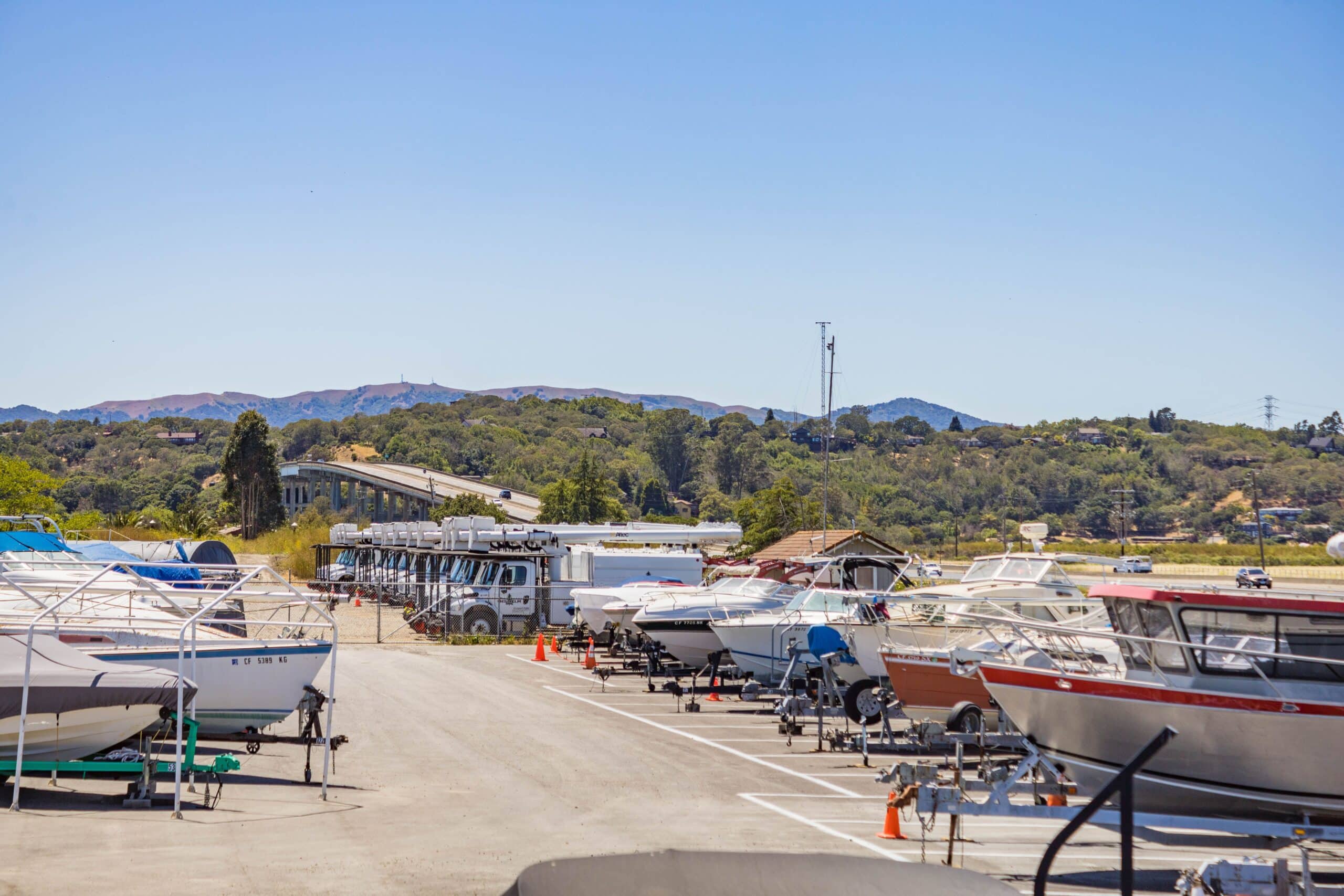
Outdoor storage is an open, paved or gravel space inside a secured, fenced facility. It is the most affordable option and the easiest to access, and it suits shorter-term storage, milder climates, and boats you launch often. Because the boat is exposed, a quality fitted cover or shrink-wrap is worth adding.
Covered storage
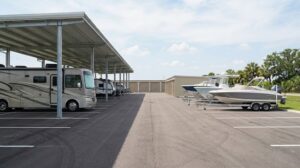
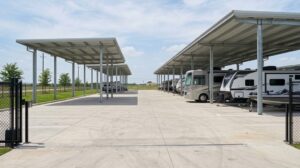
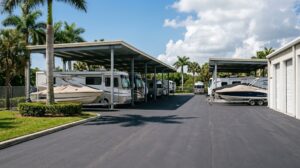
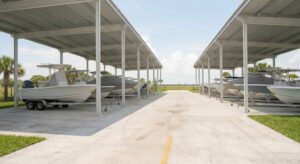
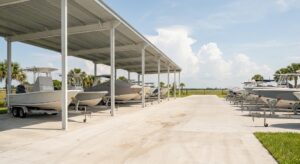
Covered storage adds a roof over the space while leaving the sides open. It blocks direct sun and most rain, which is a meaningful upgrade in high-UV states where the sun does the most damage to the gelcoat, and it is often the balance point between price and protection for a trailered boat.
Enclosed storage
Enclosed storage places the boat inside a fully walled and gated unit, protected from sun, rain, dust, and theft. It is the right choice for higher-value boats, specialty finishes, long off-season storage, and severe-weather markets. It costs more than the other two, but for a boat you want to protect through a full season it usually earns the difference.
How to choose between them
Match the protection level to three things: how long the boat will sit, your climate, and what the boat is worth.
- Choose outdoor for shorter-term storage, milder climates, and frequent launches, paired with a good cover.
- Choose covered in high-UV or high-heat regions, where sun is the main threat and a roof removes most of it.
- Choose enclosed for higher-value boats, long off-season storage, and severe-weather markets, where full protection earns the premium.
When two options seem close, let the boat’s value and your climate decide. The price gap between tiers is small next to the cost of restoring oxidized gelcoat, cracked upholstery, or a weather-damaged interior.
| Storage type | Weather protection | Best fit |
|---|---|---|
| Outdoor | Open to the elements | Short-term, mild climates, frequent launches |
| Covered | Roof overhead, open sides | Sun and rain protection, high-UV states |
| Enclosed | Full four-wall protection | Long-term, high-value boats, severe weather |
How Much Does Boat Storage Cost?
Boat storage costs split along the same wet-versus-dry line as the storage itself, and the gap is large. Across all types, owners spend roughly $500 to $5,000 a year, but where you land in that range depends first on whether the boat stays in the water or comes out onto land.
In-water slips and dry-stack racks at a marina are usually the most expensive, and they are typically billed by the foot, so a longer boat costs proportionally more. A wet slip also carries costs a land space never does: haul-out and launch fees, and bottom paint every year or two to fight growth on a hull that stays submerged. That ongoing overhead is a big reason owners who can trailer their boat store it on land instead.
For land storage on a trailer, the monthly rate follows the protection level you choose:
| Land storage type | Typical monthly range | Best-fit note |
|---|---|---|
| Outdoor (uncovered) | $50 to $200 | Lowest cost, easiest access |
| Covered | $100 to $300 | Roof blocks sun and most rain |
| Enclosed (indoor) | $150 to $500 or more | Most protection, high-value or long-term |
Size is the biggest driver within each tier, because a longer boat and its trailer need a longer unit, so a small fishing boat sits near the bottom of a range while a large cruiser or pontoon sits near the top. Boats also carry a recurring seasonal cost that vehicles do not: professional shrink-wrapping and engine winterizing come around every year, and enclosed storage can offset some of that by protecting the boat without a wrap.
Region is the other lever. Coastal and metro markets, like Tampa or Myrtle Beach, run higher than inland rural ones, and rates vary by facility, so two RecNation locations will not match exactly.
A few things beyond the base rate can affect what you pay, so it is worth asking before you book:
- Access level: 24/7 access is standard at some facilities and a paid upgrade at others.
- Power: covered or enclosed units with an outlet for a battery tender can carry a small utility charge.
- Insurance: some facilities ask for proof of coverage on a stored boat.
- Term: month-to-month keeps you flexible, while a longer commitment sometimes earns a lower rate.
The Best Way to Store a Boat
The best way to store a boat is to match the protection to your climate, prep the boat before it sits, and cover it well. The prep lines up with the winter storage guidance boating groups publish, and the basics apply in any season:
- Clean and dry the hull and deck first, because trapped dirt, salt, and moisture stain gelcoat and invite mildew under a cover.
- Wax the hull and topsides before covering, which seals the gelcoat against UV and oxidation and makes spring cleanup far easier.
- Cover it properly with a fitted cover or shrink-wrap, or store it covered or enclosed, since UV and weather do the most damage to an uncovered boat.
- Winterize the engine and water systems in cold climates, draining water and adding marine antifreeze so nothing freezes and cracks, and fogging the engine to guard against internal corrosion.
- Stabilize the fuel and tend the battery, topping off the tank with stabilizer and keeping the battery on a trickle charger, since both degrade while the boat sits unused.
- Care for the trailer, inflating the tires to their rated pressure, chocking the wheels, and greasing the hubs, then repacking the bearings in spring.
- Remove electronics and valuables and seal openings, so pests and damp do not get into the interior.
For a boat that sits through a full off-season, covered or enclosed storage does much of this work by keeping sun and weather off the boat in the first place, and it is worth checking on it once or twice over a long stretch rather than leaving it until spring.
What Size Storage Do I Need for My Boat?
Size the unit to the boat and trailer together, then add a few feet for access. Measure the full length from the trailer tongue to the outboard or swim platform, and note the height of the boat on the trailer, since a tall bow or a T-top can be close to a door’s clearance. RecNation offers vehicle spaces from 10×10 up to 10×50, so there is a fit from a small fishing boat to a large cruiser.
As a rough guide, small fishing boats and personal watercraft trailers fit a 10×15 or 10×20, most runabouts and bowriders on a trailer suit a 10×25 or 10×30, and larger cruisers, pontoons, and wake boats need a 10×40 to 10×50. If you are close to a size boundary, choose the larger unit so the tongue and motor are not left sticking into the aisle.
You can compare the full range on the boat storage page and read how big a storage unit you need for a boat to confirm the right fit before you book.
How to Find the Best Boat Storage Near You
Once you know the protection level and unit size you need, the last step is finding a secure facility near where you launch. RRecNation operates 50-plus facilities across multiple US states, with high-demand boat storage in metros like Daytona Beach, Kansas City, Galveston, and Sacramento, plus dozens of other locations. Protection levels vary by facility, so confirm outdoor, covered, or enclosed availability on your city’s page before booking.
Because boat storage is a local decision, the most accurate pricing and availability come from your own area rather than a national average. When you compare facilities, a few features separate good storage from a spot that merely holds the trailer:
- Gated, controlled entry with app or keypad access that logs each visit.
- Continuous video monitoring across the lot and entry points, not a single camera at the office.
- Power for battery tenders at covered or enclosed units, so the battery stays charged between trips.
- Month-to-month terms so you are not locked in and can move between protection levels as your needs change.
- Room to maneuver a trailer with wide drive aisles and pull-through access for easier launching days.
Reserve Boat Storage Before Your Next Launch
Once you know your protection level and unit size, lock in a spot before the season fills up. RecNation’s month-to-month terms mean you’re never stuck paying for storage you don’t need.
Search boat storage near you to compare pricing and availability today.
Frequently Asked Questions
What is the best type of boat storage?
Enclosed storage protects a boat best, since it shields the hull and finish from sun, rain, dust, and theft. Covered storage is a strong middle option in high-UV climates, and outdoor storage is the most affordable choice for shorter-term needs. Larger boats kept in the water use a wet slip or a dry-stack rack at a marina instead.
Is it better to store a boat inside or outside?
Inside, or enclosed, storage gives the most protection and is the safer choice for higher-value boats, long-term storage, and severe-weather markets. Outside storage costs less and is easier to access, and it works well for shorter-term storage in milder climates, especially with a quality cover or shrink-wrap.
How much does boat storage cost?
Land storage typically ranges from about $50 to $200 a month for outdoor, $100 to $300 for covered, and $150 to $500 or more for enclosed, which is roughly $500 to $5,000 a year depending on size and region. Wet slips and dry-stack storage at a marina usually cost more and are often billed by the foot.
How much does it cost to store a boat for the winter?
Off-season land storage runs at the same monthly rates as the rest of the year, so budget for the storage type you choose plus any shrink-wrapping or winterizing. Enclosed storage protects best over winter, while a shrink-wrapped boat in an outdoor space is the lower-cost route.
What is the best way to store a boat for winter?
Clean and dry the boat, winterize the engine and water systems with antifreeze, stabilize the fuel, tend the battery, and cover it with a fitted cover or shrink-wrap, or store it covered or enclosed. Removing electronics and sealing openings keeps pests and damp out of the interior.
What size storage unit do I need for a boat?
Measure the boat and trailer together, from the tongue to the motor or swim platform, and add a few feet for access. Small boats and watercraft trailers fit a 10×15 or 10×20, most runabouts suit a 10×25 or 10×30, and larger cruisers and pontoons need a 10×40 to 10×50.
Can I store a boat on its trailer?
Yes. Land storage on the trailer is the most common and affordable option for trailerable boats, and it comes in outdoor, covered, and enclosed protection levels so you can match the cost to the protection your boat needs.