Yes, you can buy a boat and live on it full-time. But doing so legally and affordably requires more than finding the right vessel. Marina permit requirements, liveaboard insurance classifications, and slip availability create real barriers that most first-time buyers do not anticipate.
This article gives you the honest picture across every dimension, starting with legality and ending with what it actually costs each month.
Yes, You Can, But Here’s the Full Picture First
Living aboard a vessel full-time is legal in the United States, but the practical barriers are higher than most people expect. Marinas are not required to offer liveaboard slips, and many explicitly prohibit them. Those that permit it typically require a separate liveaboard slip permit and charge a premium above a standard slip rate.
| Factor | What You Need to Know |
| Legal to live aboard full-time? | Yes, with conditions at the state and marina level |
| Marina permit required? | Usually yes; varies by harbor district |
| Insurance type needed? | Dedicated liveaboard policy, not standard recreational |
| Estimated monthly cost? | $1,500 to $4,000 depending on location and vessel size |
What “Living Aboard” Legally Means
When you use a boat as your primary residence rather than for occasional recreation, the vessel shifts legal categories. Florida Statute 327.02 is a clear example. Florida defines a liveaboard vessel as any vessel used as a primary place of residence and not used solely for navigation. That classification triggers separate rules for sewage management, slip permitting, and insurance.
Other states handle the definition differently, but the pattern holds broadly: recreational use and residential use are treated as distinct legal statuses.
Is It Legal to Live on a Boat Full-Time in the U.S.?
There is no federal law that prohibits full-time residence on a boat. Legality in practice is governed at two levels: state law and individual marina policy. Both matter, and both can override the other in different directions.
| State | Regulatory Framework | Key Detail |
| Florida | Statute 327.02 | Formally defines liveaboard vessels and imposes sanitation requirements that don’t apply to recreational boaters. Most developed regulatory environment for liveaboards. |
| California | California Harbors and Navigation Code | Harbor districts administer their own permit programs. The Berkeley Marina liveaboard application is a representative example of how a district handles permit requirements and eligibility. |
| Washington | Marina-level moorage policies | The Port of Anacortes has a documented liveaboard program with specific terms for live-on tenants. |
| Texas | Generally permissive | Marina policies in the Gulf Coast and inland lake areas vary considerably. |
| Northern states | Varies, but often impractical | Winter ice and limited liveaboard-friendly marinas make year-round liveaboard life impractical in most regions, regardless of state law. |
The takeaway: even in a state with a permissive regulatory framework, the individual marina still has the final say on whether it accepts liveaboards at all.
Marina Rules and Liveaboard Slip Permits
Even in states that explicitly allow liveaboard residency, a marina can legally refuse to offer liveaboard slips. Many do. Those that offer liveaboard programs typically require a separate permit application on top of a standard slip lease. Common requirements include proof of a functioning marine sanitation device (MSD), seaworthiness documentation, and sometimes a minimum vessel length.
Permit fees and waiting lists vary widely. Popular marinas in Florida and California can have waitlists of one to three years. Buying a boat before confirming a liveaboard slip is available is the single most costly mistake first-time liveaboards make.
States Where Liveaboard Living Is Most Accessible
Florida, Texas, and the Pacific Northwest are the most practical regions for year-round liveaboard life. Florida combines a well-established regulatory framework with a large number of marina communities across Fort Lauderdale, Sarasota, Miami, and the Keys. Texas offers accessible options in the Galveston and Clear Lake areas, though hurricane season planning is a genuine requirement.
The Pacific Northwest offers a strong liveaboard culture, particularly in Washington, but winters are wetter and colder than in the South. Anchorage rights and mooring laws also vary by state, and some jurisdictions restrict using anchored-out vessels as permanent residences.
What Kind of Boat Can You Actually Live On?
Not every boat is a practical home. Before you start browsing listings, it helps to understand which vessel categories genuinely support full-time living and which create daily frustrations. Knowing which is the easiest boat to maintain can also shape which direction makes sense for your situation.
| Vessel Type | Headroom | Freshwater Capacity | Sleeping Berths | Typical Used Price |
| Trawler or motor yacht (36-50 ft) | Full standing | Large | 2-3 cabins | $40,000-$400,000 |
| Sailboat (38 ft+) | Full standing | Moderate to large | 2-3 berths | $20,000-$150,000 |
| Houseboat | Full standing | Large | 2-3 cabins | $30,000-$250,000 |
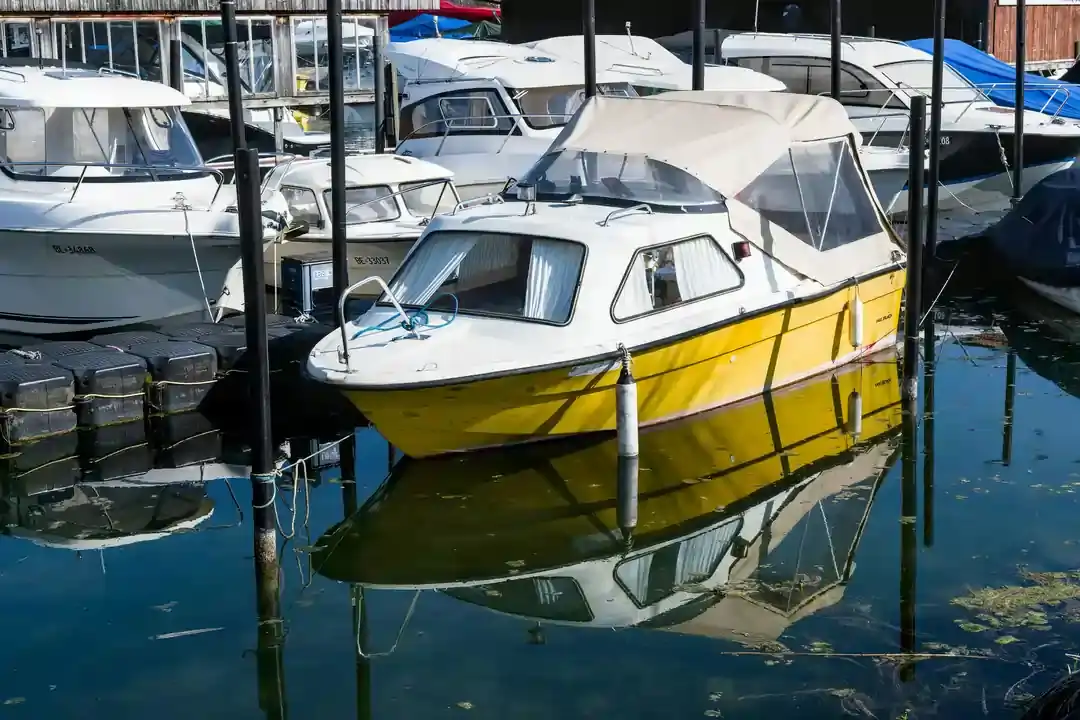
| Cabin cruiser (28-34 ft) | Partial | Small to moderate | 1-2 berths | $15,000-$80,000 |
| Catamaran sailboat (38 ft+) | Full standing | Moderate | 2-4 berths | $50,000-$300,000 |
Beyond the raw numbers in the table above, each vessel type comes with its own practical trade-offs:
- Trawlers and motor yachts are the strongest all-around option for liveaboard comfort. They offer consistent standing headroom, generous tankage, and separation between sleeping and living areas. Used examples in the 36 to 50 foot range are available at a wide range of price points, and a trawler or cruising yacht also tends to have reliable shore power connections and climate control capacity.
- Sailboats come down partly to a cost-of-living question. They have lower fuel costs and greater self-sufficiency at anchor, but require more sailing competence and can produce less predictable maintenance costs. A sailboat under 35 feet is too cramped for full-time use.
- Catamarans have grown in popularity due to their living space, but their beam width often results in higher marina slip fees.
- Houseboats maximize living space but sacrifice mobility. They’re typically limited to one location, which affects both lifestyle flexibility and resale options.
- Cabin cruisers work for a solo liveaboard on a budget but become genuinely difficult for two people over the long term.
Minimum Boat Size for Full-Time Liveaboard Use
Most experienced liveaboards recommend at least 30 feet for a solo occupant and 38-40 feet for a couple. Below those thresholds, problems compound quickly: inadequate freshwater tankage, insufficient headroom in the cabin, poor ventilation in warm climates, and no real separation between the sleeping and living areas. A boat that works for weekend trips will feel punishing after 30 consecutive days aboard.
Key Features to Look for in a Liveaboard Vessel
When inspecting a vessel for liveaboard use, look specifically at these features rather than trusting any broker’s listing description:
- Holding tank capacity: Federal regulations under MARPOL Annex IV prohibit overboard sewage discharge within three nautical miles of shore. A properly sized holding tank is non-negotiable.
- Freshwater tank size: Larger tanks reduce dependence on marina connections and extend range when cruising.
- Shore power hookup: Onboard utilities and hookups for 30 or 50-amp shore power are standard at most liveaboard marinas. Confirm the vessel is wired for it.
- Climate control: Air conditioning or heating capacity matters enormously in Florida summers and Pacific Northwest winters.
- Standing headroom throughout: Many boats offer standing headroom only in the main salon. Confirm it exists in every space you will use daily.
The Real Cost of Living on a Boat Full-Time
The cost of living on a boat is often compared to renting an apartment. In most coastal markets, that comparison holds. It is not a significant savings over renting. It is a different lifestyle that costs roughly the same amount.
| Cost Category | Monthly Low | Monthly High | Notes |
| Marina slip fee | $500 | $2,500 | Location and boat size are the biggest variables |
| Liveaboard slip premium | +15% | +30% | Added to base slip rate |
| Boat loan payment | $900 | $1,000 | $100k vessel, 15 years, 7-9% rate |
| Marine insurance (liveaboard) | $150 | $600 | Higher than recreational policies |
| Maintenance and repairs | $833 | $1,250 | 10-15% of vessel value annually, averaged monthly |
| Utilities and shore power | $100 | $300 | Varies by season and climate |
| Internet and cell data | $80 | $200 | Data plans designed for liveaboards |
| Provisioning and laundry | $300 | $600 | Laundry facilities vary by marina |
| Total estimate | $1,500 | $4,000+ | Excludes major unplanned repairs |
Boat maintenance costs are less predictable than housing costs. A single engine overhaul, haul-out, or hull repair can add $5,000-$20,000 in a single year, with no warning. For a full picture of how these costs stack up, see our guides on the rule of thumb for boat maintenance costs and the average yearly cost of owning a boat.
Boat depreciation and resale value are also worth considering. Boats depreciate, though less sharply than cars. The condition you maintain the vessel in directly affects what you recover when it is time to sell.
Boat Loan and Financing for a Liveaboard Purchase
Liveaboard vessels can be financed through a marine loan. Terms typically run 10-20 years for vessels valued over $25,000, with rates generally in the 7-10% range for well-qualified borrowers. For a $100,000 used vessel financed over 15 years at 8%, you are looking at approximately $950 per month before insurance and slip fees. See our guide on boat financing for a full breakdown of loan structures and term lengths.
Whether to finance or pay cash depends on your specific financial picture. Our guide on paying cash for a boat walks through the trade-offs. U.S. Coast Guard documentation may be required by some lenders for larger vessels, which affects your registration choice.
Liveaboard Insurance: Why Standard Recreational Policies Don’t Cover You
Standard recreational marine insurance covers boat insurance and safety for a vessel used for leisure. It does not cover a boat used as a primary residence. An insurer who discovers a policyholder is living aboard under a recreational policy can deny claims or cancel coverage without warning.
A dedicated liveaboard policy adds personal property coverage, enhanced liability (since the vessel is your home), and in high-risk regions, a hurricane haul-out clause. Premiums typically run 1.5 to 2 times a comparable recreational policy. The coverage difference is material, not cosmetic.
Legal and Practical Complications Most Liveaboards Overlook
The four issues below are the ones no competitor covers in any useful detail. They are also the ones that cause real problems after purchase.
Establishing a Legal Domicile as a Liveaboard
Living aboard a vessel creates legal ambiguity around domicile. Voter registration, your driver’s license, state tax residency, and government mail all require a fixed address. A boat address does not satisfy that requirement in most states.
Practical options include using a family member’s address, a mail forwarding service designed for liveaboards, or the marina’s address where the harbor district permits it. Florida, Texas, and South Dakota are popular domicile choices among liveaboards because they have no state income tax and relatively cooperative administrative processes for non-traditional residents.
USCG Documentation vs. State Titling for Your Liveaboard Vessel
Buyers can choose between U.S. Coast Guard documentation under 46 U.S. Code Chapter 121 or standard state registration and titling. USCG documentation is sometimes required by lenders for larger vessels and can facilitate interstate cruising. Boat registration requirements differ by state for vessels not documented at the federal level.
The point that matters most for liveaboards is the tax treatment. Under IRS Publication 936, a vessel qualifies as a first or second home for the mortgage interest deduction if it has sleeping, cooking, and toilet facilities. Whether the vessel is USCG-documented or state-titled can affect eligibility.
Confirm both your titling choice and your deduction eligibility with a tax advisor before closing. For a broader look at deductions available to boat owners, see our guide on tax benefits of owning a boat. The homestead exemption for boats is a separate question that varies by state and is worth raising with a local tax professional.
Sewage, Sanitation, and Environmental Compliance
Holding tank and sewage regulations are not optional. Federal law under the Clean Water Act and MARPOL Annex IV prohibits discharge of untreated sewage within three nautical miles of shore. Liveaboards must use a Type I, II, or III MSD and pump out at designated stations. Florida and California have expanded no-discharge zones that apply across much of their coastal and inland waters.
Non-compliance can result in federal fines and marina eviction. In freshwater vs. saltwater mooring environments, discharge restrictions apply in both, so location does not change your compliance obligations.
Pros and Cons of Living on a Boat
Before committing, read what are the cons of owning a boat as a baseline. The table below adds the liveaboard-specific dimension.
| Pros | Cons |
| Lower housing cost potential in high-cost coastal markets | Maintenance costs are unpredictable and can spike sharply |
| Flexibility to relocate by water | Liveaboard slip availability in desirable areas is genuinely constrained |
| Built-in liveaboard community lifestyle at most marinas | Insurance and regulatory complexity is higher than most buyers expect |
| Minimalist lifestyle, reduced possessions | Space limitations affect couples and families significantly |
| Recreational boating is accessible immediately | Weather events require preparation and sometimes emergency haul-out |
| Lower overhead than a mortgage in many markets | Basic mechanical competence is a practical requirement, not optional |
This lifestyle suits a self-sufficient person or couple who is comfortable with practical complexity. It is not a low-stress alternative to renting, and it is not automatically cheaper. The liveaboard community lifestyle at most marinas is a genuine upside, but the irregular cost exposure is a genuine downside that requires a financial cushion.
Who the Liveaboard Lifestyle Works Best For
The liveaboard who succeeds is typically comfortable with DIY maintenance, tolerant of limited space, located in a warm-weather state year-round, and financially prepared for large repair costs that arrive without a schedule. Couples can make it work on a 40-foot or larger vessel, but only if both people genuinely accept the space constraints.
Full-time liveaboard life on a budget requires mechanical confidence. If the idea of diagnosing a raw water pump failure at 7am does not appeal to you, that is worth weighing honestly.
Where to Find a Liveaboard Slip in the U.S.
Finding a slip is often harder than finding the right boat. Begin the marina search in parallel with the vessel search, not after.
- Florida. Fort Lauderdale, Sarasota, Miami (including Coconut Grove Sailing Club), and the Keys all have active liveaboard communities, and Florida’s regulatory environment is among the most liveaboard-friendly in the country. Boat owners here who need short-term storage while between slips or preparing for hurricane season can use boat storage in Florida and Texas through RecNation’s covered and enclosed facilities.
- California. Marina del Rey hosts one of the largest liveaboard communities on the West Coast. Berkeley Marina requires a specific permit application for liveaboard tenants. San Diego has active communities but limited slip availability.
- Pacific Northwest. Port of Anacortes and Port of Everett both publish formal liveaboard moorage policies with specific terms for live-on tenants.
- Texas. Galveston and Clear Lake area marinas are viable, but hurricane season planning is a firm requirement.
Start with ActiveCaptain’s marina directory, the Cruising Club of America’s marina listings, and direct calls to harbor district offices in your target region. Do not assume liveaboard permits are available just because a marina has open slips.
What to Ask a Marina Before You Commit
Before signing anything, get direct answers to these questions:
- Do you offer a liveaboard permit program?
- What is the current waitlist length for liveaboard slips?
- What is the liveaboard slip fee premium above your standard rate?
- What sanitation and pump-out facilities are available at the dock?
- Are generators permitted at the dock, and during what hours?
- What is the marina’s hurricane or storm protocol for liveaboard vessels?
Living on a boat and buying a boat are two decisions that sometimes happen out of sequence. Many liveaboards spend weeks or months ashore between slips, during seasonal haul-outs, or while the vessel is under repair.
For those periods, RecNation boat storage offers covered and enclosed options across Florida, Texas, and other warm-weather states where liveaboard communities are most active. It is a practical option for keeping a vessel protected and accessible while the next chapter comes together.
Frequently Asked Questions
How much does it cost to live on a boat full-time?
The realistic all-in monthly cost of living on a liveaboard boat covers slip fees, marine insurance, loan payments, maintenance, utilities, and provisioning. That total typically runs $1,500 to $4,000 per month depending on vessel size, marina location, and whether the boat is financed or owned outright. This is often comparable to renting a one-bedroom apartment in a coastal city. Boat maintenance costs are also less predictable than housing: a single engine overhaul or hull repair can add $5,000 to $20,000 in an unexpected year.
Is it legal to live on a boat permanently in the U.S.?
Yes. There is no federal law prohibiting full-time residence on a boat. Legality in practice is governed at the state and marina level. Florida defines a liveaboard vessel under Statute 327.02 and imposes specific sanitation requirements. Many individual marinas explicitly prohibit liveaboards regardless of state law, and those that permit it typically require a separate liveaboard slip permit in addition to a standard slip lease.
What type of boat is best for living on?
Trawlers and motor yachts in the 36-50 foot range are widely considered the most practical choice for full-time liveaboard use. They offer standing headroom throughout, large freshwater and holding tank capacity, and comfortable separation between sleeping and living areas. Sailboats of 38 feet or more are a strong alternative with lower fuel costs, but require more sailing competence. Houseboats offer the most living space but are limited to a fixed location and often carry higher slip fees.
Can you get a mortgage or loan to buy a liveaboard boat?
Yes. Marine loans are available for liveaboard vessels through marine lenders, credit unions, and some banks. Loan terms typically run 10-20 years for vessels valued over $25,000, with interest rates generally in the 7-10% range for well-qualified borrowers. If the vessel meets IRS Section 163(h) requirements, including sleeping, cooking, and toilet facilities, it may qualify for the mortgage interest deduction as a first or second home. Consult a tax advisor to confirm eligibility before purchase.
What are the pros and cons of living on a boat?
The main advantages are flexibility to relocate, a built-in marina community, lower housing costs in some coastal markets, and immediate access to recreational boating. The primary disadvantages are unpredictable and often high boat maintenance costs, limited liveaboard slip availability in desirable locations, higher insurance and regulatory complexity than most buyers expect, significant space constraints for couples or families, and vulnerability to weather events like hurricanes. It is a rewarding lifestyle for self-sufficient people comfortable with practical complexity.
How do I find a liveaboard slip?
Start by contacting marina managers directly in your target region and asking specifically whether they have a liveaboard permit program and what the current waitlist looks like. Florida, the Pacific Northwest, and Southern California have the most established liveaboard marina communities in the U.S. Useful search resources include ActiveCaptain’s marina directory, the Cruising Club of America, and direct outreach to harbor district offices. Many experienced liveaboards recommend beginning the slip search months before purchasing a boat, since finding the right marina often takes longer than finding the right vessel.