Recreational vehicle (RV) and boat storage for Pearland owners starts from about $90 a month at the nearest facility, with covered and enclosed spaces costing more depending on protection level and vehicle size. If you’re building a real monthly budget before you sign anything, the price spread can look confusing until you understand what drives it, and this guide explains why.
What You'll Pay for RV and Boat Storage Near Pearland
Storage pricing in Pearland depends first on the level of protection, then on your vehicle’s size. There are three tiers: open/uncovered parking, covered canopy spaces, and enclosed indoor garage spaces. Your vehicle’s length decides which tiers are available to you. For wider context, how much vehicle storage costs in other markets helps put the ranges below in perspective.
RecNation’s closest facility is just 8.5 miles from Pearland, at 8750 Galveston Rd in Houston, with rates starting from about $90 a month. That puts secure RV and boat storage within an easy drive of most Pearland neighborhoods.
The ranges below are RecNation’s web rates across all 50+ facilities (checked October 2026), and online web rates run about $20 a month below standard rates. These figures are estimates that vary by location, size, and availability, so it helps to confirm current pricing with the facility for the exact space you want.
| Storage Type | Web Rate Range (October 2026) |
| Outdoor uncovered | About $57 to $183 a month; most RV-size spaces $78 to $126 |
| Outdoor canopy | About $99 to $351 a month; most $108 to $239 |
| Indoor garage | About $114 to $216 a month for most sizes, up to about $701 for the largest units |
Open/Uncovered Parking
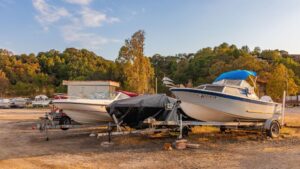
Open parking is exactly what it sounds like: a marked gravel or paved space with no roof and no walls. It suits trailered boats with a quality owner-supplied marine cover, and shorter RV rigs where the owner manages their own exterior protection.
The trade-off is straightforward. You pay the least, and your vehicle takes the most exposure. Gulf Coast sun and Pearland’s persistent humidity accelerate ultraviolet (UV) degradation on fiberglass, painted surfaces, and rubber seals even without a major storm event.
Covered Carport-Style Storage
A covered space adds a roof overhead, with sides that are open or only partially enclosed. That overhead protection handles direct sun, rain, and light debris.
Before assuming a covered space works for your rig, it helps to measure your vehicle’s height and width against the facility’s clearance limits. Taller Class A motorhomes and boats on high-profile trailers don’t always clear standard carport dimensions.
Enclosed Drive-In Units
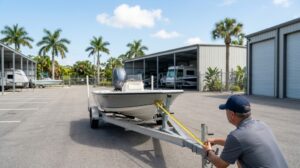
Enclosed units give you four walls, a lockable roll-up door, and full weather isolation. This tier suits high-value RVs, boats with sensitive electronics, and any vehicle where you want genuine security alongside weather protection.
This is also the highest-cost tier, reflecting the additional infrastructure and the stronger security posture most enclosed-unit facilities maintain.
What Drives the Price Difference Between Facilities
Protection level explains the tier gap. These factors explain the gap between facilities at the same tier:
- Gate access hours: Some facilities offer extended or around-the-clock access and some limit it. It helps to ask which applies, especially if you take trips on short notice.
- Security infrastructure: Perimeter fencing, camera coverage, and gated entry all affect what a facility can justify charging.
- Lot type and location: Paved, well-lit lots near major roads carry different overhead than gravel lots farther from residential areas.
- Contract structure: Month-to-month flexibility can cost more than a longer commitment at the same facility, so it helps to ask whether an alternative rate is available.
Access Hours and Security Features
For a boat or RV owner who takes trips on short notice, access hours matter as much as the monthly rate. A facility that closes the gate at 6 p.m. limits your flexibility in a way that a slightly higher-priced 24/7 facility does not.
On security, it helps to look for:
- Camera placement: Coverage of individual spaces, not just the entrance.
- Perimeter fencing: Controlled single-entry points.
- Unit alarms: Whether enclosed units have individual alarms or rely on shared lot security.
Contract Length and Seasonal Pricing
Demand for RV and boat spaces tends to rise ahead of peak boating season and as RV travel picks up in the fall. Month-to-month contracts signed at peak demand may carry a premium, so it helps to ask about timing and terms when you book.
Why Pearland Residents Need Off-Site Storage
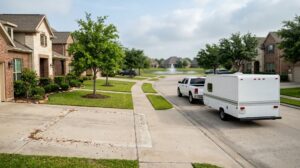
For many Pearland homeowners, off-site storage isn’t a preference; it’s a practical requirement. Local rules, including homeowners association (HOA) deed restrictions and city ordinances, push RVs and boats off residential properties, and understanding what applies to your address is the first step.
The question of vehicle parking vs. storage isn’t purely semantic when local ordinances draw that line for you. Before assuming the driveway is a valid option, it helps to read about long-term street parking and what it involves in practice.
HOA Restrictions in Pearland's Planned Communities
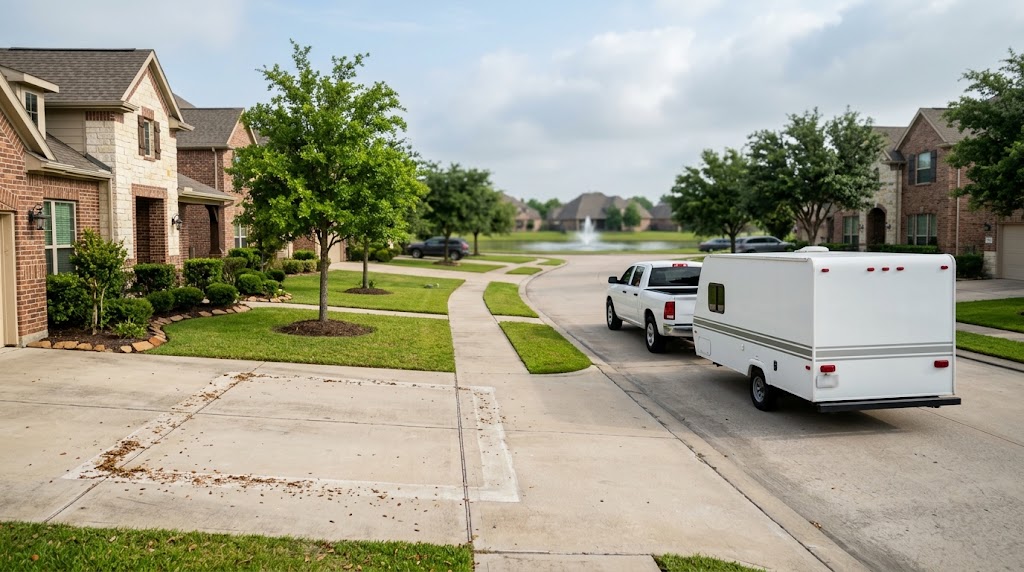
Many master-planned communities in the Pearland area include HOA deed restrictions that prohibit or limit RV and boat parking in driveways and on residential streets. The specific language varies by community.
It helps to check your HOA’s governing documents through your management company or Brazoria County records to confirm what applies to your property.
City of Pearland Parking Ordinances
Municipal rules layer on top of HOA rules and can apply even to residents who aren’t in a formal HOA. City of Pearland ordinances can limit how large vehicles are stored on residential properties.
If your situation is unclear, it helps to call the city’s code enforcement department directly. It also helps not to assume driveway storage is permitted just because a neighbor is doing it.
What Storage Costs Beyond the Monthly Rate
The monthly rack rate is only part of your actual storage budget. Three additional cost categories are worth accounting for before you sign: insurance, vehicle prep, and facility fees.
Insurance During Storage
A facility’s general liability policy covers the facility’s own negligence, not damage to your stored vehicle from weather, theft, or mechanical failure. Your personal RV or boat insurance should stay active during storage. Some policies explicitly require the vehicle to remain insured as a condition of coverage eligibility, meaning canceling to save money during storage can void the policy entirely.
It helps to confirm with your insurer before making any changes, and the Texas Department of Insurance offers guidance on how storage periods affect personal vehicle policy terms. For a full breakdown, see whether stored vehicles need insurance.
Vehicle Prep Before Storage
Proper pre-storage preparation protects both the vehicle and your insurance position. The core steps are:
- Fuel stabilizer: Add to the tank if the engine won’t run for 30 or more days to prevent fuel degradation and carburetor damage.
- Battery maintenance: Use a battery tender or disconnect the battery to prevent discharge damage over a long storage period.
- Tires: Inflate to the manufacturer’s recommended pressure and consider tire blockers for extended storage.
- Exterior covering: Apply a quality RV cover or marine-grade boat cover, or confirm the facility’s covering requirements before delivery.
Some storage facilities require vehicles to be in operable condition and appropriately covered before acceptance. Skipping these steps can complicate insurance claims if damage occurs during storage.
Additional Fees to Ask About
Fees beyond the monthly rate vary by facility, so it helps to ask for the complete fee schedule before signing rather than discovering extra charges on the first invoice. The most common ones are:
- Late fees: Charged when a payment misses its due date.
- Key or fob deposits: Collected for gate access.
- Administrative setup fees: Charged when the rental starts.
Is Covered RV Storage Worth the Extra Cost?
For most RV and boat owners in the Pearland area, covered storage is worth the extra cost. Gulf Coast UV intensity and humidity cause cumulative damage to rubber roofs, vinyl graphics, fiberglass hulls, and sealants over a long storage window. That damage is measurable and adds up faster than the annual price difference between open and covered storage.
For a direct look at how these options compare in practice, see covered outdoor storage vs. street parking. For owners who want more protection than an open lot provides, RecNation’s nearest facility, 8.5 miles away in Houston, offers covered and enclosed spaces, and you can see its options through RV and boat storage near Pearland.
When Open Parking Is Sufficient
Open parking makes sense in a few situations, and it helps not to oversell covered storage for owners who fit them:
- Short storage windows: Stays under three months.
- Quality covers: Vehicles with high-quality owner-supplied marine-grade covers already in place.
- Lower-value rigs: Cases where the covered upgrade doesn’t pencil out financially.
If you’re storing for a few weeks between trips and the boat is fully covered, the open-parking rate is reasonable.
When the Covered Upgrade Pays for Itself
The covered upgrade earns its keep when your vehicle faces more exposure than a typical short stay. In Pearland’s sun, heat, and humidity, a few situations tip the math toward paying the higher monthly rate. The math shifts in these scenarios:
- Extended storage: Six months or more.
- Uncovered fiberglass hulls: Hulls without full shrink-wrap or cover protection.
- Vulnerable finishes: RVs with rubber roofs or vinyl graphics.
- Summer storage: Any vehicle sitting through a Pearland summer.
The UV argument is stronger than the rain argument here. UV-related paint and seal repairs can be expensive, so it helps to weigh the monthly price difference against what a repair would cost you.
Ready to Get Your RV or Boat Off the Driveway?
Choosing a storage facility in Pearland means weighing HOA restrictions, city ordinances, Gulf Coast weather, and the real cost gap between storage tiers. The right choice comes down to how long you’re storing, how much protection your vehicle needs, and whether the facility’s access hours and security fit the way you use your rig.
When you are ready to move your RV or boat off the driveway, RecNation RV and boat storage near Pearland is the next step. RecNation’s nearest facility is just 8.5 miles away in Houston, with covered and enclosed options on a fenced, gated, camera-monitored lot. You can confirm current pricing and availability directly through the facility page.
Frequently Asked Questions
What is the going rate for RV or camper storage near Pearland, TX?
Storage for an RV or camper near Pearland starts at about $90 a month at the nearest facility, in Houston, with outdoor uncovered spaces at the low end. Canopy and indoor garage spaces cost more, with October 2026 web rates reaching about $351 for canopy and about $701 for the largest garage units. These rates are estimates, so it helps to confirm current pricing with the facility.
Is covered RV storage worth the extra cost?
Covered storage tends to pay off for Pearland owners who store for six months or longer, because sun and humidity wear on rubber roofs, vinyl graphics, and fiberglass. The repair bills from that wear can exceed the yearly price gap between open and covered spaces. A short stay with a quality owner-supplied cover is the main case where open parking holds up.
What is the cheapest way to store a boat near Pearland?
The cheapest way to store a boat near Pearland is open-air trailered storage. Asking about longer-term rates instead of month-to-month, and booking ahead of the busy season, lowers the cost further, and a marine-grade cover applied before delivery protects the hull without paying for a covered space.
Does my boat or RV insurance stay active while it’s in storage?
Boat and RV insurance usually stays active during storage, though the terms depend on the insurer. Some policies require continuous coverage, so canceling to save money can leave a vehicle unprotected against theft, weather damage, or fire. The Texas Department of Insurance at tdi.texas.gov explains how storage can affect coverage terms.
Do I need to do anything to my RV or boat before putting it in storage?
Preparing an RV or boat for storage takes four basic steps: fuel stabilizer if the engine will sit for 30 or more days, battery maintenance, tires inflated to the manufacturer’s specification, and a suitable cover. These steps help prevent engine corrosion, battery failure, and flat-spotted tires. Some facilities also require vehicles to be in operable condition before accepting them.
How do Pearland’s HOA rules affect where I can store my RV or boat?
Pearland HOA deed restrictions can prohibit or limit RV and boat parking in driveways and on residential streets, depending on the community. City of Pearland ordinances can add limits that apply even without an HOA. Governing documents are available through the HOA management company or Brazoria County records.