Recreational vehicle (RV) and boat storage cost in Celina, TX runs roughly $50 to $250 per month, depending on how much protection your vehicle needs and how many feet of bay it occupies. Open outdoor parking sits at the low end, fully enclosed units sit at the high end, and covered canopy storage fills the middle for most owners. Two numbers decide where you land: your vehicle’s total stored length and the protection level you need.
What RV and Boat Storage Costs in Celina by Storage Type
The table below shows industry estimates of monthly storage rates for the recreational vehicle storage and boat storage Celina, TX owners are likely to see. Rates vary by facility, so confirm current pricing and availability directly with the facility before you commit.
| Storage Type | Typical Monthly Rate | Common Bay Size |
| Open outdoor (uncovered) | $85 to $130 | Varies by vehicle length |
| Covered canopy / 3-sided | $130 to $230 | 40-foot bays most common |
| Fully enclosed unit | $160 to $285 | 30 to 50 feet depending on vehicle |
The gap between tiers reflects the structure built around your vehicle, not just square footage, which is why the cost to store a vehicle climbs with each level of protection. A covered bay needs framing and roofing that a bare pad does not. An enclosed unit adds four walls, a roll-up door, and a lock.
Open Outdoor Storage
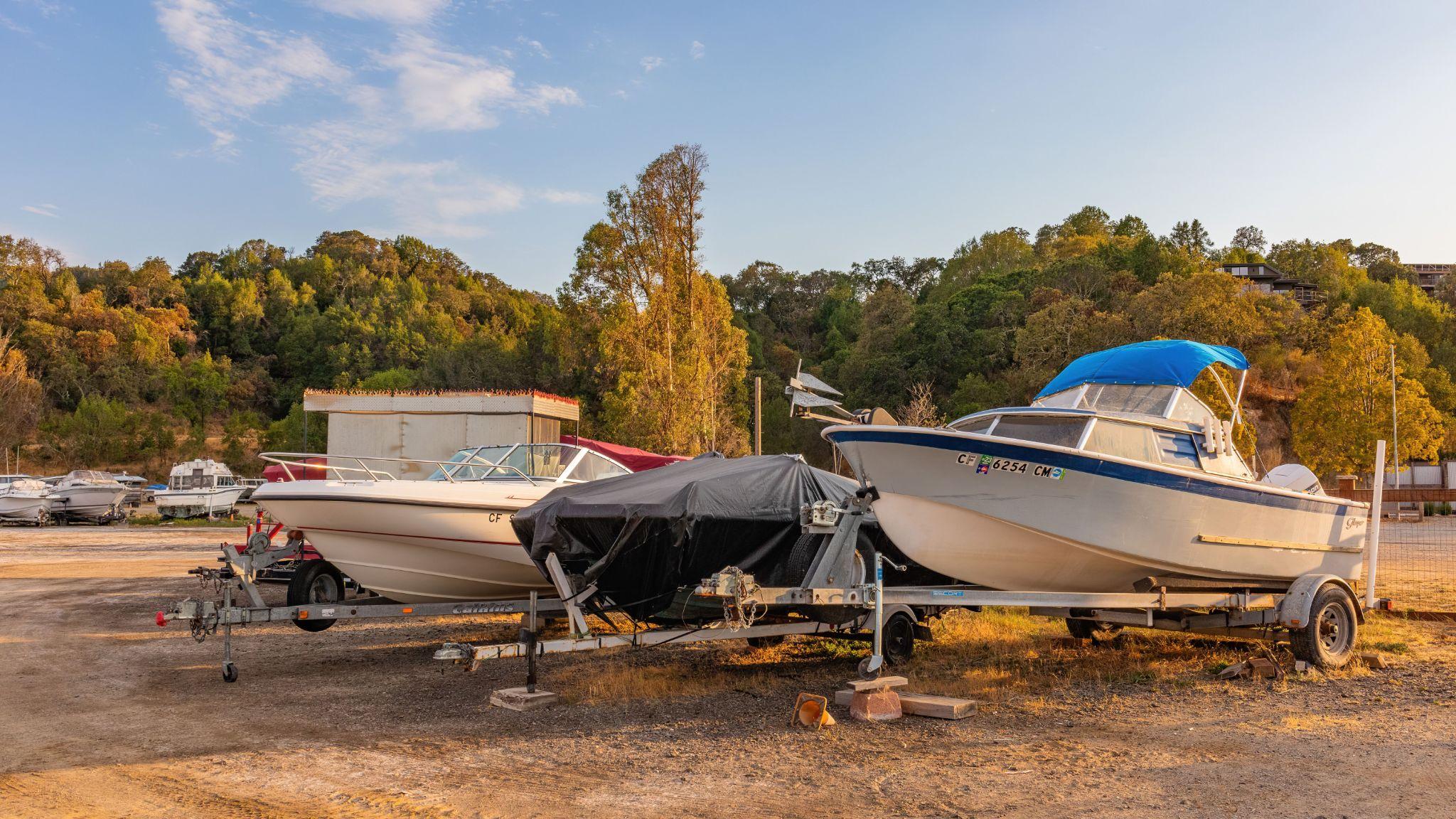
Open outdoor storage space is a gravel or paved pad with no roof and no walls. It carries the lowest rate and suits trailers, older boats, and vehicles you retrieve often. The trade-off in North Texas is hail and sun, since one storm can dent sheet metal and crack fiberglass.
Covered Canopy and 3-Sided Storage
A canopy bay has a roof and open sides. A 3-sided bay adds partial walls that cut wind-driven rain and reduce ultraviolet (UV) exposure. Among covered storage options, 40-foot bays are the most common size, and this tier is the usual pick for boats on trailers and travel trailers.
Fully Enclosed Storage
A fully enclosed storage unit has four walls, a roll-up door, and a lock hasp or cylinder lock. It makes the most sense for high-value vessels, boats with canvas or electronics, and RVs parked for several months. Price rises above the base rate with bay size and add-ons like power outlets for battery maintenance or climate-controlled storage for temperature-sensitive interiors.
What Size Storage Unit Do You Actually Need?
Per-foot storage pricing is common in recreational vehicle storage, so renting a bay that is too short, or paying for length you do not need, starts with knowing your stored length. Your storage unit size should match the full length your rig occupies, not the number on the manufacturer’s spec sheet.
| Vehicle Type | Typical Vehicle Length | Recommended Bay Length |
| Class A motorhome | 35 to 45 feet | 40 to 50 feet |
| Class B camper van | 17 to 24 feet | 25 to 30 feet |
| Class C motorhome | 25 to 35 feet | 30 to 40 feet |
| Travel trailer | 20 to 35 feet | 25 to 40 feet |
| Fifth wheel | 25 to 40 feet | Add 6 to 8 feet if stored hitched |
| Boat on trailer | Hull plus trailer tongue | Hull length plus 4 to 6 feet |
RV Length and Class Guide
Class A motorhomes are the longest common RV type, so plan on a 40-foot bay at minimum. If you store a fifth wheel hitched to its truck, add 6 to 8 feet for the truck bed. Slide-outs do not change stored length, but they do affect width clearance, so check the bay width against your full slide-out extension.
Boat and Trailer Length Guide
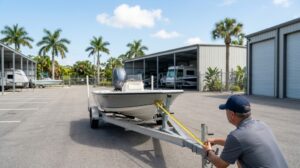
The number that surprises first-time boat renters is the trailer tongue. A 24-foot pontoon on a standard trailer commonly measures 28 to 30 feet overall, and the bay must fit that full length. A beam over 8 feet may also need a wider bay, which some facilities charge extra for.
Can You Store an RV or Boat at Home in Celina?
Sometimes, but your homeowners association (HOA) usually decides. The City of Celina allows an RV or boat on a residential driveway, while an HOA can ban it there. Collin County storage questions often come down to deed restrictions as much as city code.
City of Celina Code Restrictions
Celina’s parking ordinance permits recreational vehicles and boats on a driveway but prohibits parking them elsewhere in the front yard. Anything off the driveway generally belongs in the rear yard, screened from public view, and a residential lot is capped at four recreational vehicles or trailers. Street parking is limited to 72 hours.
HOA Rules in Collin County Communities
Many newer planned communities in Celina restrict or prohibit visible RV and boat storage, and those covenants apply on top of the city’s rules. Texas Property Code Chapter 202 lets an HOA enforce its covenants in court and allows civil damages of up to $200 per day of violation. For many owners in these communities, covered outdoor storage at an off-site facility is the compliant path.
Celina vs. Nearby Markets: Is It Worth Driving Farther for Lower Rates?
Some nearby markets do start lower. Compare the two sides before you assume the cheaper lot wins:
- Celina-area open outdoor: $85 to $130 per month, with covered and enclosed tiers above it.
- Nearby aggregator listings: as low as $10 to $20 per month, usually for basic outdoor storage space in less-developed markets.
Those low figures rarely include covered storage options, so compare North Texas storage options tier for tier.
When Proximity Pays
If you head to the lake most weekends, how often you pull the boat out matters more than the monthly rate. Driving about 13 miles each way to Anna adds roughly 26 miles per round trip, an estimated $4 to $8 in truck fuel. Over 12 monthly pickups, that comes to about $48 to $96 a year on top of your rent.
The same math applies to RecNation’s nearest facility, about 10.6 miles away in Anna, which offers covered canopy and indoor garage units. Check the exact distance and current availability on its Celina storage page before you decide.
When the Drive Is Worth It
Seasonal or infrequent users get a different answer. If you retrieve your RV or boat four to six times a year, fuel and time cost a small fraction of the monthly savings. For Lake Texoma boat storage that sits idle from October through April, saving $30 to $50 per month at a facility 15 miles away easily justifies the occasional longer drive.
What Affects the Monthly Rate Beyond Storage Type?
Two facilities can advertise the same covered storage at different prices because of the factors below. Weighing them against how you use your rig tells you whether a premium is worth paying for carport and covered storage at a given location.
- Gate access and security: A gated storage facility with 24-hour access storage, camera coverage, and lighting typically charges roughly $10 to $30 more per month than an ungated lot.
- On-site amenities: Dump stations, water hookups, propane fill, and power outlets for battery tenders are common at North Texas RV facilities. Some fold them into the rate, while others add separate vehicle storage fees.
- Contract length: Monthly storage rates typically run higher month to month than under an annual storage contract, so ask for both quotes if you plan to store for 10 to 12 months.
- Drive-up access: Wide pull-through lanes for large rigs command a premium, and drive-up storage access matters most for Class A motorhomes and boats on long trailers.
- Unit location: End and corner spots with more swing room often cost more than interior spots, which is worth paying if you have a wide beam or a long hitch overhang.
Security Features and What They’re Worth
Camera coverage, individual unit alarms, and perimeter fencing add to the monthly rate, and their value scales with what you store. These storage security features matter most for a high-value vessel in an enclosed unit, so ask your insurer whether they earn a premium discount. On a well-lit, fenced lot, basic camera coverage is often enough for open outdoor parking.
Amenities That Justify a Higher Rate
A self-storage facility built for vehicles offers dump stations, power outlets, wash bays, and water access that a standard self-storage facility does not. If you maintain house batteries and dump tanks regularly, on-site dump access can replace separate dump station fees of roughly $15 to $25 per trip.
Final Thoughts on RV and Boat Storage Costs in Celina
If you’re ready to stop doing the math and find a space that fits your rig, RecNation’s nearest facility, about 10.6 miles away in Anna, offers RV and boat storage with covered canopy and indoor garage options, gated access, and video monitoring. Checking current availability and pricing directly with the facility takes the guesswork out of the rate ranges covered above.
Frequently Asked Questions
How much does it cost to store an RV per month in Celina, TX?
RV storage in Celina averages roughly $130 to $140 per month, based on current marketplace listings. Entry-level spaces start around $85, while covered and enclosed units generally run from about $160 to $285 for longer bays. These are industry estimates that shift with length, height, and protection level, so ask each facility for a quote based on your measured stored length. Remember that cheaper lots often skip security features like gated access and surveillance, leaving RVs exposed to hail, sun damage, and theft that can cost far more than the savings.
What is the average boat storage cost near Celina, Texas?
Expect boat storage Celina TX rates close to RV pricing, since both are charged mostly by the space the rig occupies. Open spots start around $85 per month, covered bays for a 20 to 26-foot boat on a trailer run about $130 to $200, and enclosed bays of 30 feet or more start near $160. Quote the boat and trailer together, since the bay has to fit both.
What types of RV and boat storage are available in the Celina area?
Facilities typically offer three types of RV storage units and boat bays: open outdoor pads, covered canopy or 3-sided bays, and fully enclosed units. Some also offer pull-through canopy spaces of 60 feet or more for long motorhomes and fifth wheels. Ask which amenities come with the rate, since dump stations, power outlets, and water access vary by facility.
Is covered or enclosed storage worth the extra cost for boats and RVs?
For a vehicle that sits through North Texas summers, repairing hail dents, faded gelcoat, or cracked seals can cost more than the monthly premium for protection. Enclosed storage pays off most for high-value vessels and RVs parked for several months. If you use the vehicle year-round and retrieve it often, open outdoor storage can be the better value.
Can I store my RV or boat at home in Celina?
Often you can, but your HOA usually has the final say. The city allows an RV or boat on your driveway, though not elsewhere in the front yard, and it limits street parking to 72 hours. Many newer communities restrict or ban visible RV and boat storage, so read your deed restrictions before you buy a rig, and confirm anything unclear with the City of Celina in writing. If home storage is ruled out, an off-site RV and boat storage facility is the usual fix.
What should I look for when choosing an RV or boat storage facility in Celina?
Start by matching storage unit size to your total stored length, including trailer tongue and hitch, then compare access hours to when you actually retrieve the vehicle. Ask which security features are standard and which amenities carry separate fees. Request the all-in monthly total rather than comparing advertised base rates.