Most boats last 20 to 30 years. Well-maintained fiberglass and aluminum hulls often push that to 40 or 50. Where your boat lands on that range comes down to four things: hull material, engine type, operating environment, and how consistently it’s been maintained and stored.
This guide gives you realistic year and hour ranges for every common boat type, what actually cuts a boat’s life short, and a practical framework for sizing up any used boat you’re considering.
How Long Do Boats Last? The Direct Answer
Most boats last well beyond a single decade of ownership. The hull is typically the most durable part of the vessel. Engines, upholstery, and electronics usually require replacement before the hull reaches end of life.
It’s worth noting that average ownership duration is 5 to 10 years, even when the boat itself can last 40 years or more. A well-maintained vessel typically passes through four to six owners over its structural lifetime.
| Hull Material | Typical Lifespan | With Proper Maintenance |
| Fiberglass | 15 to 30 years | 30 to 50 years |
| Aluminum | 20 to 30 years | 30 to 40 years |
| Pontoon (aluminum frame) | 10 to 20 years | Up to 25 years |
| Wood | 10 to 20 years | 20 to 30 years |
| Steel | 30 to 50 years | 50 to 70 years |
Why Lifespan Ranges So Widely
Hull material sets the ceiling, but three other variables determine whether a boat actually reaches it: operating environment, maintenance discipline, and storage conditions. Saltwater versus freshwater alone can shift a hull’s realistic lifespan by a decade or more, and a boat that gets its annual maintenance done on schedule ages very differently from one that doesn’t.
A fiberglass boat can last 50 years or fall apart in 15 depending on how those variables play out over time. The gap isn’t random. It’s the accumulated difference between an owner who addresses small issues each season and one who defers them until they compound.
The table above shows potential, not guarantees. Where your specific boat lands on that range is mostly a function of choices made after the purchase, not the hull material itself.
Average Boat Lifespan by Hull Material
If you want to know what is the easiest boat to maintain, hull material is the starting point. Each material has a distinct failure mode, and understanding that failure mode tells you exactly what maintenance actually matters.
Fiberglass Boats
A fiberglass boat hull can last 30 to 50 years when properly maintained, making fiberglass the most common material for recreational boats. Industry sources put the baseline structural lifespan of fiberglass hulls at roughly 15 to 30 years under typical conditions, with well-maintained hulls regularly exceeding that range
The primary threat to a fiberglass hull is osmotic blistering: water penetrates the gel coat and causes delamination between layers of fiberglass. Left untreated, blistering can compromise structural integrity. Regular gel coat inspection, quality bottom paint, and dry storage between seasons are the maintenance practices that prevent it.
The fiberglass hull often outlasts every other system on the boat. If you’re buying a 20-year-old fiberglass boat with a solid hull, you may be looking at another 20 to 30 years of structural life remaining.
Aluminum Boats
Aluminum hulls typically reach 30 to 40 years with regular care, according to BoatTrader research. The primary threat is electrolytic corrosion, particularly in saltwater environments where dissimilar metals in contact with an aluminum hull accelerate galvanic degradation.
Sacrificial zinc anodes are the primary defense. They attract corrosion away from the hull metal and must be inspected and replaced regularly, especially on saltwater boats. Without them, an aluminum hull in saltwater can deteriorate measurably within a few seasons.
One important distinction: aluminum pontoon decks have shorter practical lifespans than solid aluminum hull boats. Pontoon tubes and decking typically reach 10 to 25 years depending on use, water type, and maintenance.
Wood and Steel Boats
Wood boats require the most labor-intensive maintenance of any hull material. With consistent upkeep, including repainting, caulking, and rot treatment, a wooden boat can reach 20 to 30 years. Without it, deterioration accelerates quickly, and 10 to 15 years is a more realistic ceiling for neglected hulls.
Steel hulls are the opposite story. Galati Yachts notes that well-maintained steel vessels regularly reach 50 to 70 years. The primary threat is rust, which requires quality marine coatings, annual inspection, and prompt treatment of any breach in the protective layer.
How Many Hours Is a Lot for a Boat Engine?
Engine hours are the most common reference point when evaluating a used boat, but raw hours mean nothing without knowing the engine type and the maintenance history behind them.
| Engine Type | Typical Reliable Lifespan | Notes |
| Outboard (gas) | 1,500 to 3,500 hours | Varies by brand, size, and maintenance |
| Inboard gas | 1,500 to 3,000 hours | More protected from elements than outboards |
| Marine diesel inboard | 5,000+ hours | Higher upfront cost; longer-lived with proper service |
Recreational boaters average 75 to 150 engine hours per year. That context matters when reading any hour figure on a used boat listing.
Outboard vs. Inboard Engine Lifespan
Yamaha’s outboard maintenance guidance puts outboard longevity at 1,500 to 3,500 hours depending on brand, maintenance, and engine size. Outboards are more exposed to the elements but easier and cheaper to replace when they reach end of life.
Marine diesel inboards can exceed 5,000 hours with proper servicing, according to DieselPro. They cost more to service but offer significantly longer working lives, which is why they dominate commercial and offshore applications.
How to Put Engine Hours in Context
The same hour count means completely different things depending on the boat’s age. At 75-150 hours per year of typical recreational use, 800 hours on a 10-year-old boat is right in line with normal wear. That same 800 hours on a 4-year-old boat means someone was using it two to three times more than average, which is worth knowing but isn’t automatically a red flag on its own.
Low hours aren’t automatically the safer bet, either. An engine that sat mostly unused for several years can have more wrong with it than a higher-hour engine that ran regularly and got flushed and serviced after every use. Idle time causes its own damage: seals dry out, fuel degrades, and moisture works into places that regular operation would keep dry.
This is why the number on its own tells you less than it seems to. Ask for service records before you weigh the hours at all. An engine with documented annual maintenance is a fundamentally different purchase than one with no paper trail, regardless of what the hour meter reads.
What Shortens a Boat’s Lifespan Faster Than Normal
If you want to understand whether owning a boat is high maintenance, the answer lives here. Most boats that fall far short of their structural ceiling do so because of one or more of these four factors.
Saltwater vs. Freshwater: The Impact on Boat Longevity
Where a boat spends its life in the water matters almost as much as what it’s made of. Saltwater accelerates every major failure mode, corrosion, osmotic blistering on fiberglass, and hardware degradation, well beyond what the same boat would experience in freshwater.
| Freshwater | Saltwater | |
| Bottom paint | Every 2 to 3 years | Annually |
| Zinc anodes | Standard inspection schedule | More frequent inspection and replacement |
| Hardware connections | Routine checks | Regular inspection for galvanic damage |
| Aluminum hull risk | Can reach the top of its lifespan range | Without anodes, measurable corrosion within a few seasons |
Aluminum hulls are particularly exposed here. A freshwater aluminum boat, properly maintained, can reach the top of its lifespan range without much drama. The same boat in saltwater without functioning anodes is a different story entirely, since galvanic corrosion doesn’t wait for neglect to start working.
How Poor Storage Ages a Boat Faster
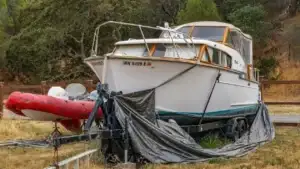
Three storage-related factors cause most premature aging: UV exposure, standing water, and freeze-thaw cycles. A boat stored outdoors without a quality cover in Florida, Texas, or Arizona can lose significant gel coat integrity within three to five seasons of direct sun exposure. Standing water promotes mold, rot, and corrosion in every material type.
Owners who can’t store their boat in a home garage, which is most owners with anything over 20 feet, benefit significantly from covered or enclosed facility storage. RecNation boat storage offers covered and enclosed options across Florida, Texas, and Arizona, where UV intensity makes outdoor storage particularly damaging to gel coat and canvas over time. Learning how to prepare your boat for storage before each off-season is equally important.
Maintenance Gaps That Cost Years of Lifespan
The maintenance tasks most commonly skipped are also the most consequential:
- Annual impeller replacement. Prevents overheating and engine damage. A missed replacement can overheat and seize an engine within a single season.
- Cooling system flushing after saltwater use. Removes corrosive salt deposits before they accumulate.
- Fuel stabilization before off-season storage. Prevents varnish buildup in carburetors and fuel injectors. Skipping it can mean a full carburetor rebuild the following spring.
- Bilge pump inspection. Prevents water accumulation that accelerates interior corrosion and mold.
These are not theoretical risks. Each skipped task has a specific, predictable failure mode, and the ones above are the four that show up most often in boats that fall short of their expected lifespan.
How to Evaluate a Used Boat’s Remaining Lifespan
Before you commit to a purchase, read our guides on what to look for when buying a used boat and the best age to buy a used boat. Then use the framework below to evaluate any specific boat you’re considering.
Hull Condition Red Flags by Material
What to check yourself before calling a surveyor:
- Fiberglass: Press firmly on deck surfaces to check for soft spots, which indicate delamination. Look below the waterline for blistering or bubbling in the gel coat. Check around hardware fittings for crazing or fine surface cracks.
- Aluminum: Look for pitting, white oxidation around welds, and discoloration near any metal hardware. These signal active galvanic corrosion.
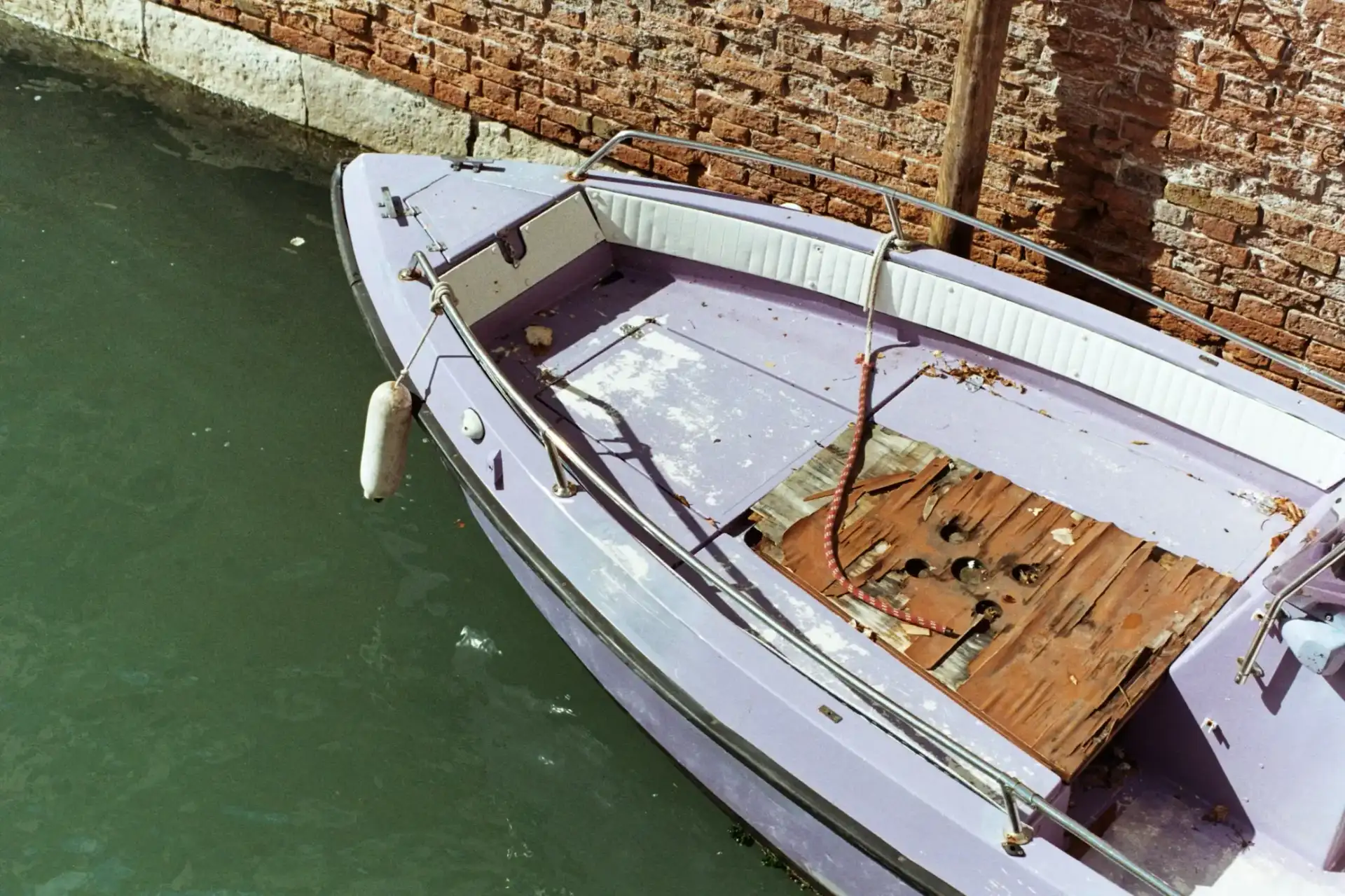
- Wood: Check for soft spots anywhere near joints, the transom, and the floor. Discoloration and a musty smell are early rot indicators.
Why a Marine Survey Matters for Older Boats
For any purchase above $10,000 to $15,000, a professional marine survey is the formal mechanism for getting an expert opinion on remaining structural and mechanical lifespan. Surveys typically cost $15 to $25 per foot of vessel length and are conducted by NAMS or SAMS certified marine surveyors. They cover structural integrity, mechanical systems, and safety equipment compliance.
Insurance companies often require a survey for hulls over 20 years old before issuing or renewing coverage. Some lenders require one as a condition of financing. Even when not required, a survey on a 15-year-old or older boat is one of the better investments a buyer can make.
Practical Limits: Insurance, Financing, and Resale as a Boat Ages
A boat’s practical lifespan is bounded by more than physical condition. Financing eligibility and insurability create real market ceilings on older vessels, regardless of how well they’ve been maintained. Understanding how long is boat financing helps you plan for these limits before they become surprises.
When Age Affects Your Ability to Finance or Insure a Boat
Most marine lenders will not finance vessels older than 20 to 25 years, though some lenders will extend further with a current survey and a strong borrower profile. Some insurers restrict or decline coverage on hulls older than 25 to 30 years without a recent survey confirming seaworthiness. Agreed-value hull policies, which pay replacement cost rather than depreciated value, become harder to obtain as boats age past 20 years.
The practical implication: a structurally sound 35-year-old fiberglass boat may be in excellent condition but difficult to insure affordably or sell to a buyer who needs financing. Plan for this ceiling when evaluating long-term ownership of any boat approaching 20 years old.
Final Thoughts on Boat Lifespan
Whether your boat is three years old or thirty, how and where it’s stored during the off-season is one of the most controllable variables in how long it stays on the water. RecNation boat storage provides open, covered, and enclosed storage options designed for vessels of all sizes, with facilities across the states where recreational boating and the UV and weather exposure that ages boats fastest is most intense. If your boat is worth maintaining, it’s worth storing right.
Frequently Asked Questions
Can a boat last over 30 years?
Yes. Fiberglass and aluminum hulls regularly reach 30 to 50 years when properly maintained. The hull is often the most durable part of the vessel; engines, upholstery, electronics, and mechanical systems typically require replacement well before the hull reaches end of life. A 30-year-old boat with a solid hull and a repowered engine can have decades of useful life remaining.
How many hours is too many on a used boat motor?
It depends on the engine type. Outboard engines are generally reliable through 1,500 to 3,500 hours, while marine diesel inboards can exceed 5,000 hours with proper servicing. More important than the raw hour count is the service history. An engine at 1,800 hours with documented annual maintenance is often a safer buy than one at 800 hours with no service records.
Is a 20-year-old boat a good buy?
Potentially, yes. A 20-year-old boat warrants a professional marine survey before purchase, typically costing $15 to $25 per foot of vessel length. Confirm that the boat can still be financed and insured at standard rates, since some lenders cap financing at 20 to 25 years and some insurers require a recent survey for older hulls. A 20-year-old fiberglass hull in good condition can have 20 to 30 more years of structural life if properly maintained.
Do boats wear out faster in saltwater?
Yes. Saltwater accelerates corrosion, osmotic blistering on fiberglass hulls, and degradation of metal hardware significantly faster than freshwater. Boats operated in saltwater typically need annual bottom paint reapplication, more frequent zinc anode replacement, and thorough freshwater flushing after every use to reach the same lifespan milestones as comparable freshwater boats.
Is 750 hours a lot for a boat?
For most outboard engines, 750 hours represents moderate use, roughly 5 to 10 years of recreational ownership at the average rate of 75 to 150 hours per year. It is not considered high mileage on its own. Context matters more than the number: 750 hours on a well-serviced engine is meaningfully different from 750 hours on one that missed annual maintenance and winterization cycles.
Can proper storage extend a boat’s lifespan?
Yes, significantly. UV exposure, standing water, and freeze-thaw cycles are three of the most common causes of premature aging in boat hulls, canvas, and upholstery, and all three are largely eliminated by covered or enclosed storage. Boats stored outdoors without a quality cover in high-sun climates can show measurable gel coat degradation within three to five seasons. The same boat stored in a covered facility retains its condition much longer.