Texas is enormous, and its state parks match the scale. You can stand on the rim of an 800-foot Panhandle canyon, swim a Hill Country river fed by cold springs, camp on a Gulf barrier island, and hike pine forest without leaving the state parks system, though the drive between some of those stops can take the better part of a day.
That size is what makes Texas RV camping rewarding and what makes it worth planning carefully. The ten parks below cover every major region, and each genuinely earns its place on the list. They range from full-hookup metro parks an hour from Dallas or Austin to remote canyon country with water and electric only. Here is what to expect at each, followed by how to book and where to keep the rig between trips.
Panhandle Canyon Country
Palo Duro Canyon State Park, Canyon
Palo Duro is the second-largest canyon in the United States, and nothing else in Texas looks like it. Eight hundred feet of red, orange, and white rock walls drop below the flat Panhandle plain, and the Lighthouse Trail hike to the park’s signature rock formation is one of the best day hikes in the state. RV sites with water and electric sit on the canyon floor, which means the views start at your campsite. The park also hosts TEXAS: The Musical at its outdoor amphitheater every summer.
- Closest city: Canyon / Amarillo
- Nearest RV storage: no RecNation facility in the Panhandle; search current options along the route.
- Good for: the Lighthouse Trail, canyon-floor camping, the TEXAS musical, stargazing
- Camping fee: $26 a night for RV sites with water and electric, plus $8 per person daily entrance fee
- Max RV: some sites accommodate up to 60 feet
Caprock Canyons State Park, Quitaque
Caprock Canyons sits where the high plains break into rugged red canyon country, and it draws far fewer crowds than Palo Duro despite scenery that rivals it. The official Texas State Bison Herd roams the park, and spotting them grazing the canyon grassland is a genuine highlight. RV sites in the Honey Flat area offer water and electric with shade shelters, a welcome feature in the exposed Panhandle sun.
- Closest city: Quitaque (remote; Amarillo is about 100 miles)
- Nearest RV storage: no nearby facility; search current options before or after the trip.
- Good for: the Texas State Bison Herd, canyon hiking, solitude, dark skies
- Camping fee: $22 a night for 50-amp RV sites, $17 for 30-amp, plus daily entrance fee
Hill Country
Garner State Park, Concan
Garner is the most competed-for campsite in Texas, and the Frio River is the reason. Cold, spring-fed water runs through a limestone canyon lined with bald cypress, and the swimming is as good as anywhere in the state. Summer evenings bring the park’s famous jukebox dances at the stone pavilion, a tradition that has been running for decades. RV sites with water and up to 50-amp electric spread across several loops, some closer to the river than others. The park books out within minutes of its window opening, so set a reminder.
- Closest city: Concan / Uvalde
- Nearest RV storage: San Antonio, about 90 minutes southeast (outdoor, covered, and enclosed options).
- Good for: Frio River swimming, the jukebox dances, tubing, Hill Country scenery
- Camping fee: $26 a night for RV sites with water and electric, plus $8 per person daily entrance fee
- Note: Live Oak loop closes January and February
Inks Lake State Park, Burnet
Inks Lake stays full when other Highland Lakes drop, because the constant-level reservoir feeds from the Colorado River rather than depending on rainfall. That makes it one of the most reliable water parks in the Hill Country, and the swimming, kayaking, and cliff jumping (from a modest ledge, not a real cliff) draw steady crowds. RV sites with water and 30/50-amp electric ring the shoreline, and several sit directly on the water.
- Closest city: Burnet / Marble Falls
- Nearest RV storage: Austin, about 70 miles southeast (outdoor, covered, and enclosed options).
- Good for: reliable lake water, kayaking, cliff jumping, lakeside RV sites
- Camping fee: $23 a night for RV sites with water and electric, plus daily entrance fee
Pedernales Falls State Park, Johnson City
Pedernales Falls is the Hill Country swimming hole elevated to state-park scale. The tiered limestone falls and the river pools below them are the draw, and when the water level cooperates, it is one of the best natural swimming spots in the region. RV sites have water and 30-amp electric, and the park sits about 45 minutes from Austin, so it works as both a weekend trip and a base for exploring the surrounding wine country. Flash floods are a real risk here, so keep an eye on weather.
- Closest city: Johnson City / Dripping Springs
- Nearest RV storage: Austin, about 45 minutes east (outdoor, covered, and enclosed options).
- Good for: the limestone falls, river swimming, Hill Country wine country day trips
- Camping fee: $20 a night for RV sites with water and electric, plus $6 per person daily entrance fee
Close to the Metros
Cedar Hill State Park, near Dallas
Cedar Hill is one of the few Texas state parks with full-hookup RV sites, water, electric, and sewer, which makes it an easy choice for RVers who want the convenience of a developed campground. It sits on Joe Pool Lake, 30 minutes from downtown Dallas, so you can run into the city for a supply run or a restaurant without it being an expedition. The tradeoff is that it feels more suburban than wild, but for a weekend base near a major metro it is hard to beat.
- Closest city: Cedar Hill / Dallas
- Nearest RV storage: Dallas, a direct match (outdoor, covered, and enclosed options).
- Good for: full-hookup convenience, Joe Pool Lake, a weekend base near Dallas
- Camping fee: $30 a night for full-hookup sites, $25 for electric and water only, plus daily entrance fee
- Sites: 339 total, one of the largest campgrounds in the TX system
McKinney Falls State Park, Austin
McKinney Falls is Austin’s backyard state park, and it manages to feel genuinely wild despite sitting inside the city limits. Two waterfalls on Onion Creek are the centerpiece, and the swimming holes below them fill on warm weekends. RV sites have water and electric (some with 50-amp), and downtown Austin is a 20-minute drive, which makes this a strong option for anyone who wants to combine camping with a city visit.
- Closest city: Austin (inside city limits)
- Nearest RV storage: Austin, a direct match (outdoor, covered, and enclosed options).
- Good for: two waterfalls on Onion Creek, swimming, quick access to Austin
- Camping fee: $24 a night for 50-amp sites, $20 for 30-amp, plus daily entrance fee
East Texas Piney Woods
Lake Livingston State Park, Livingston
Lake Livingston is a different landscape from the rest of this list, tall pines, Spanish moss, and a big freshwater lake that draws bass anglers from across East Texas. The campground has full-hookup RV sites with lake views in the Piney Shores loop, which is a rarity in the Texas state park system. It is quieter and less crowded than the Hill Country or Gulf parks, and for an RVer who wants to fish, paddle, or just sit under pines for a few days, it delivers.
- Closest city: Livingston / Conroe
- Nearest RV storage: Houston, about 80 miles south (outdoor, covered, and enclosed options).
- Good for: bass fishing, lake-view full-hookup sites, pine forest, solitude
- Camping fee: $30 a night for full-hookup lake-view sites, $25 for other full-hookup loops, plus daily entrance fee
Gulf Coast
Galveston Island State Park, Galveston
Galveston Island puts you on the Gulf with RV hookups, which is a combination Texas does not offer in many places. Beachside sites sit behind the dunes with water and up to 50-amp electric, and the bay side of the park adds kayaking and birding. It is also one of the more accessible coastal parks, about an hour from Houston, so it works as a weekend trip without a long drive. Winter campers will find mild weather and fewer crowds.
- Closest city: Galveston / Houston
- Nearest RV storage: Galveston or Houston, both close.
- Good for: beachside RV camping, bay-side kayaking and birding, winter mild weather
- Camping fee: $30 to $35 a night for beachside RV sites with electric, plus daily entrance fee
Mustang Island State Park, Port Aransas
Mustang Island is the wilder, less developed Gulf option. RV sites with water and 50-amp electric sit behind the dunes, separated from the beach by about 400 yards of sand, so you walk to the water rather than camping on it. The upside is that the beach itself is more open and less crowded than Galveston, and surf fishing from the shore is a draw. Sites have shade shelters, which matter on a barrier island where shade is otherwise nonexistent.
- Closest city: Port Aransas / Corpus Christi
- Nearest RV storage: no nearby RecNation facility; search current options along the coast.
- Good for: wilder Gulf beach, surf fishing, shade-sheltered RV sites, birding
- Camping fee: $25 a night for RV sites with water and 50-amp electric, plus daily entrance fee
| Park | Region | RV fee/night | Hookups | Sewer? |
|---|---|---|---|---|
| Palo Duro Canyon | Panhandle | $26 | Water + electric | No |
| Caprock Canyons | Panhandle | $17 to $22 | Water + electric | No |
| Garner | Hill Country | $26 | Water + electric | No |
| Inks Lake | Hill Country | $23 | Water + electric | No |
| Pedernales Falls | Hill Country | $20 | Water + electric | No |
| Cedar Hill | Dallas metro | $25 to $30 | Full hookup avail. | Yes |
| McKinney Falls | Austin | $20 to $24 | Water + electric | No |
| Lake Livingston | East Texas | $25 to $30 | Full hookup avail. | Yes |
| Galveston Island | Gulf Coast | $30 to $35 | Water + electric | No |
| Mustang Island | Gulf Coast | $25 | Water + electric | No |
A pattern worth noticing: only Cedar Hill and Lake Livingston offer full-hookup sites with sewer in the Texas state park system. Everywhere else is water and electric, so plan your dump-station stops accordingly.
One park that deserves a mention even though it does not make a camping list: Enchanted Rock, the iconic pink granite dome in the Hill Country, has no RV camping at all. It is walk-in tent sites only. But if you are camping at Inks Lake or Pedernales Falls, it is an easy day trip and worth the drive for the summit hike and the stargazing.
Planning and Booking a Texas State Park RV Trip
Texas gives you a shorter booking window than most states, so the planning matters more, not less. Here is what to know before you start reserving:
- Book as early as the 5-month window allows. Texas opens campsite reservations 5 months ahead on a rolling basis at 8 AM Central, through the TPWD reservation system. High-demand parks like Garner and Palo Duro can sell out the day their window opens.
- Budget the entrance fee separately. Texas charges a daily entrance fee per person (typically $5 to $8 for ages 13 and up) on top of the campsite fee, unlike states that include entrance with camping. A Texas State Parks Pass ($70 a year) waives the entrance fee and pays for itself in a few trips.
- Check hookups before you book. Most Texas state parks offer water and electric only, not sewer. Only a handful, like Cedar Hill and Lake Livingston, have full-hookup sites. The TPWD camping page lists hookup details per park.
- Plan for the distances. Texas parks can be 6 to 10 hours apart. A Hill Country to Panhandle trip is a full driving day, so build your route around clusters rather than trying to hit the whole state in one trip.
- Aim for fall or spring. October through April brings the best camping weather across most of the state. Summer in the Panhandle canyons and the Gulf Coast is brutally hot, and Hill Country rivers can flash-flood after spring and summer storms.
What Texas Heat Does to Your RV Between Trips
Texas camping rewards you most of the year, but between trips the climate works against the rig. Summer heat is the primary threat: sustained UV and triple-digit temperatures crack roof membranes, fade paint, dry out seals, and bake the interior. Dust is the secondary problem, especially if you store near the Panhandle or West Texas, where wind-driven grit scours finishes. And if the RV sits near the Gulf Coast, salt air and humidity add corrosion to the mix.
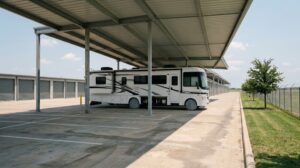
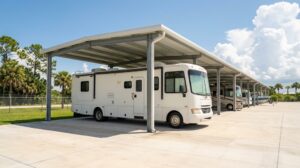
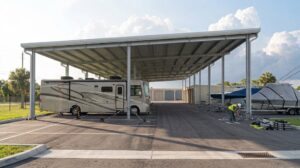
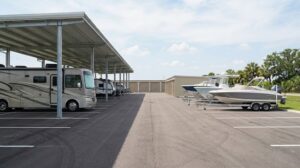
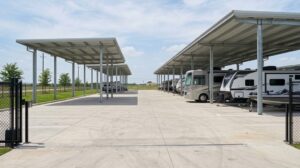
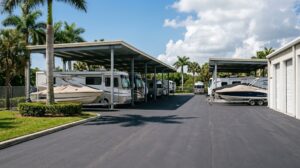
Covered or enclosed storage takes most of that off the table, with outdoor spaces starting around $50 a month, covered from about $100, and enclosed from $150. RecNation offers all three across Texas, so you can keep the rig protected near wherever you base, whether that is Houston for Gulf Coast and East Texas trips, Dallas for the metros, or Austin for Hill Country access.
Store Your RV Between Texas Adventures
Between the Hill Country, the Gulf, and the Panhandle, a Texas RV sees more road than most, which makes where it sits between trips worth getting right. RecNation has secure RV storage across Texas, with outdoor, covered, and enclosed options and month-to-month terms, including San Antonio for the Hill Country, Houston for the coast, and Galveston for barrier-island access.
Search RV storage in your Texas city to compare sizes and pricing near where you camp, and reserve before your next trip.
Frequently Asked Questions
What are the best state parks in Texas for RV camping?
Palo Duro Canyon, Garner, Cedar Hill, Inks Lake, and Galveston Island cover the widest range of terrain and amenities. Cedar Hill and Lake Livingston are the rare Texas parks with full-hookup sewer sites, while Palo Duro and Garner offer the most dramatic scenery. Each fills quickly, so reserve as soon as the 5-month window opens.
How far in advance can I book a Texas state park campsite?
Texas opens campsite reservations 5 months in advance on a rolling basis at 8 AM Central. High-demand parks like Garner and Palo Duro can sell out the morning their window opens, so set a reminder and book right at 8 AM.
How much does it cost to camp at a Texas state park?
RV campsite fees typically range from $17 to $35 a night depending on the park and hookup level, plus a daily entrance fee of $5 to $8 per person ages 13 and up. A Texas State Parks Pass at $70 a year waives the entrance fee for you and your vehicle’s passengers.
Do Texas state parks have full-hookup RV sites?
Most Texas state parks offer water and electric hookups only. Cedar Hill and Lake Livingston are among the few with full-hookup sites that include sewer. Plan your dump-station stops if you are camping at parks without sewer.
When is the best time for RV camping in Texas?
Fall and spring bring the most comfortable weather across most regions. Summer is brutally hot in the Panhandle canyons and the Gulf Coast, and Hill Country rivers carry a flash-flood risk after spring and summer storms. Winter is mild on the Gulf Coast and pleasant in South Texas.
Where can I store my RV in Texas between trips?
RecNation offers outdoor, covered, and enclosed RV storage across Texas on month-to-month terms, in metros from Houston, Dallas, and Austin to San Antonio and Galveston. Search your city to see facilities, unit sizes, and pricing near where you base.
What is the biggest state park in Texas?
Big Bend Ranch State Park, at roughly 311,000 acres in far West Texas, is the largest in the state park system. It’s remote and mostly primitive camping (no hookups at most sites), which is why it’s not part of this list’s RV-focused picks, but it’s worth knowing about if you’re chasing dark skies and don’t need hookups.