In Fort Lauderdale, the covered vs. enclosed storage decision carries more weight than it does almost anywhere else in the country. Year-round humidity above 70%, salt air drifting in from the coast and the Intracoastal Waterway, and a six-month hurricane season from June through November make this a genuinely consequential choice. This guide maps each of those three local threats to what your storage structure can and can’t stop, so you can make the call based on risk, not just price.
What “Covered” and “Enclosed” Storage Actually Mean in Fort Lauderdale
The terms get thrown around loosely by storage facilities, so it’s worth pinning down exactly what each structure does before comparing them. In a vehicle storage context, the physical difference is real, and in South Florida’s weather, that difference ends up being the whole decision.
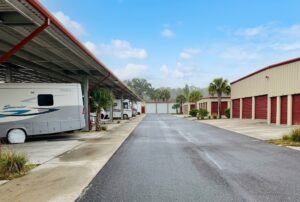
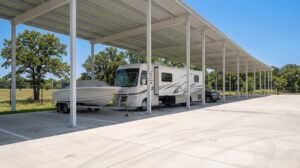
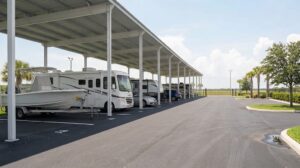
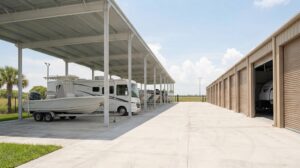
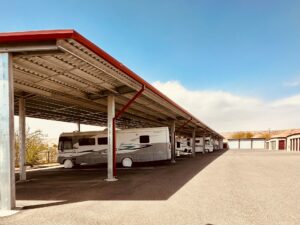
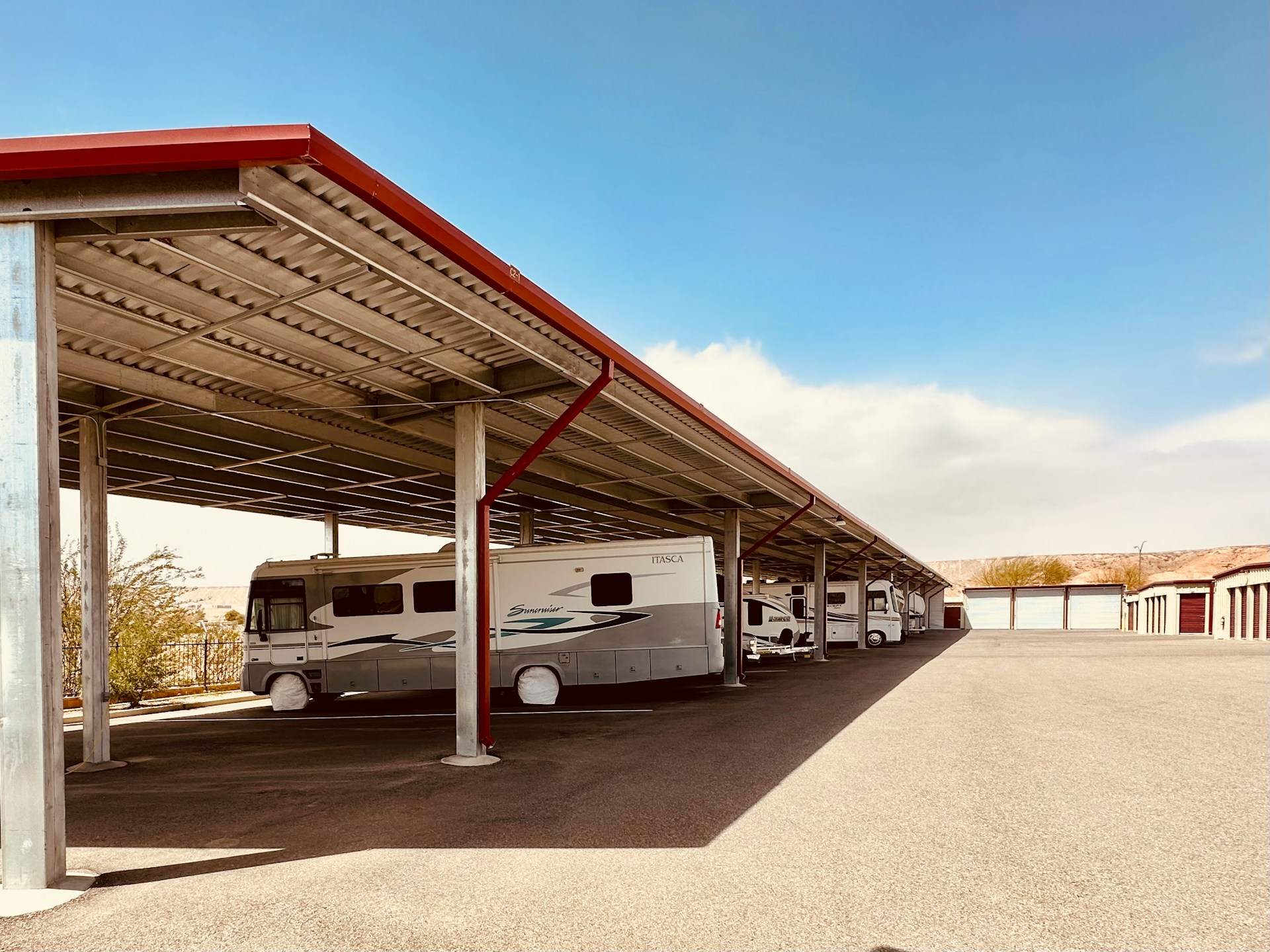
Carport and covered storage is an open-sided canopy or carport structure with a roof, typically metal, that blocks direct sun and rain falling from above. The sides, though, stay open to ambient air, wind, salt air, and blown moisture. When a facility advertises a covered outdoor storage unit, that’s the structure you’re actually getting.
When you’re evaluating any Fort Lauderdale storage facility, ask directly whether their “enclosed” units are fully walled with sealed or controlled ventilation, and whether the structure was permitted as a vehicle storage occupancy under the Florida Building Code, 7th Edition. Partial-wall structures with open vent panels aren’t the same product, even when they’re marketed under the same label.
| Attribute | Covered Storage | Enclosed Storage |
| Structure type | Open-sided canopy or carport | Fully walled and roofed unit |
| Open sides | Yes | No |
| Roof material | Typically metal | Concrete or steel building |
| What it blocks | Direct sun, overhead rain, bird droppings | Ambient air, wind, debris, direct weather |
| What it doesn’t block | Salt air, wind-driven moisture, humidity, pests | Humidity without HVAC, flooding |
| Typical vehicle fit | RVs, boats on trailers, ATVs | Same, plus enclosed car bays |
Covered Storage: What It Blocks and What It Doesn’t
Covered storage delivers UV damage protection and keeps rain off the top of your vehicle, meaningful if the storage window is short. What it doesn’t provide is any barrier against salt-laden air, wind-driven moisture, ambient humidity, insects, or debris blowing in from the sides.
In a dry inland market, those gaps are manageable. In Fort Lauderdale, they’re where the damage actually comes from.
Enclosed Storage: What Changes When the Walls Go Up
A fully enclosed unit limits ambient airflow, reduces direct weather and debris exposure, and adds structural wind protection. For more on what is enclosed vehicle storage and how it differs from a simple carport, that distinction matters more in this climate than in most.
One thing worth understanding: enclosed isn’t the same as climate-controlled. An enclosed unit in Fort Lauderdale without active ventilation or an HVAC system can still reach damaging humidity levels, so if moisture and mold prevention is your main concern, enclosed storage with a dehumidifier or a true climate-controlled option is the only structure that actually handles it.
The Three Fort Lauderdale Threats and Which Storage Type Addresses Each
Every storage decision in Fort Lauderdale comes down to three specific environmental conditions, and each one maps differently to covered versus enclosed storage.
Humidity and Mold: When Ambient Air Becomes the Enemy
Humidity above 70 percent is the baseline threat here, and NOAA climate data confirms Broward County stays above that level for most of the year. At those humidity levels, vehicles stored for more than 30 days begin accumulating interior moisture that puts several materials at risk:
- Fabric seats, carpet, and upholstery.
- Rubber seals.
- Electrical connectors, where corrosion accelerates noticeably.
Covered storage does nothing to block ambient humidity. An open-sided outdoor storage unit is essentially sitting in the same humid air as your driveway. Enclosed storage reduces ambient air exchange and slows moisture infiltration, but it does not eliminate humidity damage without active climate control or dehumidifier use in storage.
Verdict: For boats, recreational vehicles (RVs), and classic cars stored more than 30 days, enclosed plus climate-controlled is the only option that meaningfully defends against this threat.
Salt Air Corrosion: The Threat Covered Storage Can’t Stop
Salt air corrosion within five miles of the coast and the Intracoastal Waterway is a documented, accelerated process, and it doesn’t spare much. The components most at risk:
- Stainless fittings
- Trailer frames
- Outboard motor wiring
- Aluminum rails
- Brake components
- Marine electronics
This is where covered storage fails most clearly for Fort Lauderdale boat storage. The roof blocks rain from above, but salt air arrives from all sides, and open-sided covered storage does nothing to stop it from reaching any of those surfaces. Enclosed storage creates a meaningful barrier; even inside an enclosed unit, corrosion inhibitor sprays and vapor corrosion inhibitor (VCI) bags are worth using for longer storage periods.
Verdict: For boats and marine vehicles stored anywhere near the coast or Intracoastal, enclosed is the minimum. Covered storage is insufficient for addressing corrosion and rust on any marine platform.
Hurricane Season: What Your Storage Structure Is Rated For
A routine South Florida summer squall and a named tropical storm are different events with different structural implications, and your storage type responds to each one differently:
- Canopy and carport structures are typically the first flagged for pre-storm vehicle evacuation under Broward County Office of Emergency Management protocols. A vehicle left in covered storage during a tropical storm faces direct wind load and projectile debris, a real damage risk, not a theoretical one.
- True enclosed concrete or steel facilities may qualify for in-place vehicle storage under a facility’s hurricane plan, depending on the structure’s wind rating and construction classification. Ask any Fort Lauderdale storage facility directly for their documented hurricane plan and whether it requires vehicle removal before named storms.
One important caveat: enclosed is not flood-safe by default. Broward County includes significant areas in FEMA Flood Zone AE, and a ground-level enclosed unit in a Zone AE area may take on more standing water during a surge event than an open-air covered space with better drainage.
Which Storage Type Does Your Vehicle Actually Need Here
Here’s a direct framework by vehicle type and storage duration, calibrated to Fort Lauderdale’s specific conditions.
| Vehicle Type | Minimum Protection Level | Climate-Control Recommended? | Notes |
| Boat over 25 ft, 60+ days | Enclosed | Worth considering | Salt air and hull moisture are primary risks |
| Boat under 25 ft, short-term | Covered (away from coast) | No | Proper prep and a quality cover required |
| RV, full season | Enclosed | Yes | Humidity impacts seals, slide-outs, and interior fabric |
| RV, under 30 days | Covered | No | Quality vehicle cover required |
| Classic or collector car | Enclosed (minimum) | Strongly recommended | Highest combined humidity and salt air risk |
| Motorcycle or ATV | Covered | No (short-term) | Enclosed adds meaningful protection for 60+ days |
| Late-model truck or SUV | Covered | No | Enclosed recommended near the coast or with aftermarket electrical |
Storage duration matters just as much as vehicle type: a boat stored for two weeks in covered storage faces far less risk than one stored for a full season.
Boats and Marine Vehicles
Duration is what decides this one.For boats stored more than 60 days, enclosed is strongly recommended. The combination of Florida humidity, salt air, and UV exposure on hull coatings, wiring, and marine electronics makes covered boat storage a compounding risk over a full season.
For shorter windows with a boat under 25 feet, covered is workable if the facility sits away from direct coastal exposure and the vessel is properly prepped:
- A properly fitted boat cover.
- Corrosion inhibitor on exposed metal.
- A disconnected battery.
Together, these go a long way for a two-to-four-week stay. The risk rises quickly beyond that window.
RVs, Motorhomes, and Travel Trailers
Humidity is the dominant concern for RVs, and it works on the vehicle daily, not just during storms. For RV storage options in Fort Lauderdale, humidity impact on slide-out mechanisms, rubber roof seals, and interior materials is the main issue: an RV sitting in a covered outdoor storage unit for three months in South Florida weather is cycling through daily humidity that degrades those materials progressively.
For full-season or multi-month storage, enclosed with active climate control is worth the premium. Fort Lauderdale area owners can explore RV and boat storage options at RecNation’s Florida facilities, which are built specifically for large recreational vehicles rather than repurposed from general self-storage configurations.
Classic Cars and Collector Vehicles
This is the clearest case for enclosed storage in Fort Lauderdale, full stop. The combination of Florida humidity, salt air, and UV damage makes covered storage a non-option for a classic car with original paint, leather interior, and exposed chrome.
Enclosed is the minimum. Climate-controlled storage is strongly recommended for any vehicle with agreed value. For guidance on how to prepare a collector vehicle for long-term storage, see the full resource on storing and caring for a classic car.
What to Check Before Choosing a Fort Lauderdale Storage Facility
Once you’ve decided on a protection level, you need to vet the actual facility. These questions protect you before you sign anything.
Questions About the Structure Itself
- Is the enclosed unit FBC-compliant? Ask whether it was permitted as a vehicle storage occupancy under the Florida Building Code, not just a carport with walls added.
- What is the facility’s FEMA flood zone designation? Ground-level enclosed storage in Zone AE has real flood exposure. Verify using the FEMA Flood Map Service Center before assuming enclosed means safer.
- Does the facility have active dehumidification or HVAC? Dehumidifier use in storage makes a material difference. Unventilated enclosed units can still reach damaging humidity levels in Fort Lauderdale.
- What does “enclosed” actually mean here? Ask directly: fully sealed walls, or partial walls with open vent panels? Get a specific answer, not a brochure description.
Questions About the Facility’s Weather and Emergency Protocols
- What is the facility’s documented hurricane plan? Does it require vehicle removal before named storms? A covered canopy structure almost certainly will. A rated concrete or steel enclosed facility may not.
- What is the access protocol for regular check-ins? Boat and RV owners should run engines and check battery levels during longer storage periods. Confirm the facility’s access hours support that.
- Does the facility carry liability coverage? And separately, does your own vehicle or marine insurance policy specify a minimum storage type? A mismatch can affect claims.
Insurance and Flood Zone Considerations Specific to Fort Lauderdale
These two factors don’t come up in most storage conversations, but they carry real financial consequences in this market.
How Your Marine or RV Insurance Policy Defines Storage Requirements
Your policy, not just your preference, may already decide this for you:
- Standard marine insurance policies in Florida often specify that a vessel must be stored in a covered or enclosed facility.
- Some agreed-value hull policies for boats over a certain length require enclosed storage as a condition of the policy.
- If you’re storing in covered-only and your policy requires enclosed, a claim could be denied or reduced.
Before committing to a storage type, read the storage section of your declarations page. If it’s unclear, ask your broker directly whether covered or enclosed is required.
Property and marine insurance claims in Florida are governed under Florida Statute Chapter 627 through the Florida Office of Insurance Regulation. For more on what vehicle insurance looks like during a storage period, see the guide on does a car in storage need insurance.
Fort Lauderdale Flood Zones and What They Mean for Ground-Level Storage
Enclosed doesn’t automatically mean flood-safe, and Fort Lauderdale’s flood map proves it:
- Fort Lauderdale and Broward County include significant areas designated as FEMA Flood Zone AE, a high-risk annual flood zone.
- Ground-level enclosed storage in Zone AE is not protected from flooding by virtue of being enclosed.
- In some storm scenarios, a covered open-air space with better drainage and no sealed walls may expose a vehicle to less standing water than a sealed ground-level unit.
Before you sign with any Fort Lauderdale storage facility, check the facility’s address using the FEMA Flood Map Service Center at msc.fema.gov. The tool lets you pull the Flood Insurance Rate Map (FIRM) panel for any address in Broward County.
Enclosed does not mean flood-safe. Know the zone first.
Where the Risk Stops Being Abstract
Choosing the wrong storage type in Fort Lauderdale isn’t an abstract risk. Salt air, year-round humidity, and hurricane season make it a practical one. If you’re storing a boat, RV, or collector vehicle in South Florida and want a facility built specifically for recreational vehicles, RecNation’s nearest facility is in Boynton Beach, about 25-30 miles north, and offers covered and enclosed options sized for large vehicles, worth comparing against closer Broward County options based on your specific drive-time tradeoff.
Frequently Asked Questions
Is covered or enclosed storage better for protecting vehicles in Florida’s humidity?
For Fort Lauderdale vehicles stored for more than 30 days, enclosed storage protects against humidity meaningfully better than covered storage. Fort Lauderdale’s relative humidity stays above 70% for most of the year, enough to promote mold growth on interior materials and accelerate corrosion on exposed electrical components. Adding a dehumidifier inside an enclosed unit further reduces moisture and mold risk for longer storage periods.
What is the difference between covered and enclosed storage in Fort Lauderdale?
Covered storage is an open-sided carport or canopy structure that blocks direct sun and rain from above but leaves the vehicle exposed to ambient air, wind, and salt air on all sides. Enclosed storage is a fully walled and roofed unit, typically concrete or steel, that limits air and weather exposure. In Fort Lauderdale, that distinction matters more than in drier inland markets, since open-sided structures do nothing to stop salt-laden air from reaching metal surfaces and wiring, so ask whether an “enclosed” unit is a true sealed structure or a covered space with partial walls.
Does Fort Lauderdale humidity cause damage to items in covered storage?
Yes: vehicles in open-sided covered storage are exposed to ambient humidity that causes mold and mildew on fabric upholstery, seat cushions, and carpet, corrosion on electrical connectors and battery terminals, and faster degradation of rubber seals and gaskets on RVs and boat hatches. The damage rate increases significantly with storage duration, so a two-week stay carries far less risk than a six-month one.
Is climate-controlled storage worth the extra cost in South Florida?
For boats, RVs, and classic cars stored a full season or longer, climate-controlled storage is worth the extra cost, since South Florida’s year-round humidity is high enough to damage interior materials, marine electronics, leather, and wood components over a multi-month period. For rugged vehicles like trucks or ATVs stored short-term, the cost-benefit is less clear-cut: enclosed storage without active climate control can be sufficient if the vehicle is properly prepped with a battery tender, fuel stabilizer, and a breathable cover.
What types of vehicles should never be kept in covered outdoor storage in Fort Lauderdale long-term?
Classic and collector cars, boats with marine electronics or sensitive hull coatings, and RVs with fabric slide-out seals or wood cabinetry should never be kept in covered outdoor storage in Fort Lauderdale long-term; they’re most vulnerable to the combination of humidity, salt air, and UV damage that covered storage can’t block. For any vehicle in this category, enclosed is the minimum recommended option, and climate-controlled storage is worth considering for anything with a high agreed value or sensitive interior materials.