Leaving a vehicle in your driveway feels like the obvious zero-cost choice. In most cities, it is a reasonable one. But Fort Lauderdale is not like most cities, and the combination of coastal humidity, salt-laden Atlantic air, and UV radiation that regularly hits extreme intensity changes the math in ways most owners don’t account for until the damage is already showing.
This guide is written for Fort Lauderdale vehicle owners who are actively deciding between driveway storage and a paid facility. It covers what the local environment actually does to a parked vehicle, what local regulations say about driveway storage, and the honest framework for when each option makes sense.
Why Fort Lauderdale Is Not a Typical Driveway Storage Market
Fort Lauderdale’s storage risk profile comes down to three environmental variables that operate simultaneously and year-round: coastal humidity from its position along the Atlantic and the Intracoastal Waterway, UV radiation intensity among the highest recorded in the continental United States, and salt air corrosion carried inland on onshore winds. None of these are seasonal problems; they’re present in January the same way they’re present in August.
Broward County’s climate backs this up with real numbers. According to NOAA climate data for South Florida, the county averages over 61 inches of rainfall annually, and that standing moisture combined with high ambient humidity accelerates damage to seals, metal surfaces, and interior materials. A vehicle sitting outside in Fort Lauderdale faces all three stressors every day, at a level inland Florida markets simply don’t match.
That gap between coastal and inland exposure is exactly what makes the storage decision different here. If you’re weighing a residential driveway against a covered or enclosed option, the comparison between covered outdoor storage vs. street parking is worth understanding before you commit either way.
Coastal Humidity and What It Does Inside a Parked Vehicle
Coastal humidity doesn’t stay outside the vehicle; it gets in, and once it’s inside, the damage compounds. It enters through door seals, window channels, and HVAC vents, then creates conditions that support:
- Mold and mildew growth on upholstery, carpet, and wiring insulation.
- Rubber seal deterioration, which accelerates in persistently high humidity.
- Moisture intrusion, a recurring problem once seals soften and crack, regardless of how well the vehicle is otherwise maintained.
A humidity-controlled environment inside a storage facility actively interrupts this cycle. Without it, a parked vehicle in South Florida’s coastal zone is effectively working against its own weatherproofing every week it sits outside.
Salt Air Corrosion and Long-Term Metal Exposure
Salt air corrosion starts with chloride ions depositing on metal surfaces and oxidizing them, and the first places it shows up are:
- Brake components
- Undercarriage steel
- Unpainted fasteners
- Any area where protective coating has worn away
Over a six to twelve month outdoor driveway storage period, salt air corrosion on a vehicle parked in Fort Lauderdale can progress faster than most owners expect. Distance from the water matters, but not as much as people assume: vehicles stored within a few miles of the Atlantic coastline face faster corrosion onset than those stored twenty to thirty miles inland, and most Fort Lauderdale residential addresses fall well within that accelerated-risk zone.
What UV Exposure in South Florida Does to a Parked Vehicle
South Florida’s UV index regularly reaches 11 or above during spring and summer months, placing it in the “extreme” category under the World Health Organization UV index scale, which begins at index 11. At that intensity, UV damage accumulates faster than most owners realize, and it doesn’t stop on overcast days.
That exposure hits the vehicle two ways. Extended sun causes paint oxidation that dulls and chalks the finish, along with interior fading on dashboards and seat surfaces and deterioration of rubber weatherstripping around windows and doors. Florida summer heat compounds all of it: interior temperatures in a parked vehicle can exceed 160 degrees Fahrenheit, accelerating the breakdown of plastics and adhesives that UV radiation alone would take longer to degrade.
For anyone planning long-term vehicle storage, an enclosed or covered facility is the only environment that blocks UV exposure entirely.
Car Covers vs. Enclosed Storage: What Coverage Actually Looks Like
A car cover reduces direct sun exposure and deflects some moisture, which makes it better than nothing for short-term or situational use. What it isn’t is a substitute for a facility once storage stretches into weeks or months in Fort Lauderdale’s coastal environment.
The gap comes down to what each option actually addresses. A cover does nothing for salt air corrosion or interior humidity, and it can even introduce abrasion risk if it shifts in wind or gets applied or removed over debris. Enclosed storage handles all four problems at once, UV, salt air, humidity, and theft, which is the real difference between a cover and a facility, not degree of protection, but how many problems each one actually solves.
Fort Lauderdale Driveway Storage Restrictions You May Not Know About
The driveway option may not be legally available to you. Fort Lauderdale’s Code of Ordinances restricts certain types of outdoor storage at residential properties, and these restrictions exist independently of what your neighbors are doing or whether a complaint has been filed. The vehicle types most affected:
- Boats on trailers
- Recreational vehicles (RVs)
- Inoperable or unlicensed vehicles
- Commercial equipment
For many Fort Lauderdale homeowners, the decision is also shaped by a second layer of rules that the city code doesn’t override.
City of Fort Lauderdale Code Enforcement and Outdoor Storage Rules
Fort Lauderdale actively enforces its outdoor storage rules, particularly in higher-density neighborhoods, and the legal backing for that enforcement is specific. Vehicles that are inoperable, unlicensed, or stored in a manner that violates residential zone requirements can generate citation notices under Florida Statute §162, the statute that grants Florida municipalities authority to issue fines for property maintenance and outdoor storage violations.
Before assuming your situation is fine, verify it directly:
- Confirm your zoning classification with the City of Fort Lauderdale Code Enforcement Division, since it can differ from one residential block to the next.
- Don’t assume a neighbor’s stored trailer means you’re in compliance; their zoning or history may not match yours.
HOA Restrictions and CC&R Provisions in Broward County
HOA rules add a second, independent layer of restriction on top of city code. Most CC&R documents filed with the Broward County Property Appraiser’s Office explicitly prohibit visible driveway storage of trailers, boats, RVs, and similar vehicles beyond a limited window, often defined as 24 to 72 hours for loading and unloading only.
That independence matters in a specific way: a stored vehicle can generate both a city citation and an HOA fine simultaneously, for the same vehicle, on the same property. You can check whether your property falls under an HOA by searching Broward County Property Appraiser records directly.
The Insurance and Financial Risk of Outdoor Driveway Storage
The driveway is not actually free. Outdoor driveway storage generates real costs that don’t appear on a monthly invoice:
- Accelerated vehicle depreciation from UV damage and salt air corrosion.
- Out-of-pocket repair costs for damage not covered by homeowners insurance.
- HOA and code enforcement fines.
- Increased theft exposure from a vehicle sitting visibly on a residential street.
The insurance gap is the most material risk for most owners. A standard HO-3 homeowners policy typically doesn’t cover weather damage to a vehicle classified as in outdoor storage rather than in active use.
Fort Lauderdale sits inside South Florida’s hurricane corridor, and hurricane season runs June through November. A non-direct-hit storm event generating significant wind or hail damage can result in an uncovered total loss for a vehicle sitting in a driveway. Review your homeowners and auto insurance policies with your insurer to confirm your actual coverage position for a stored vehicle before assuming you’re protected.
For a clearer picture of how much it costs to store a vehicle compared to what a single weather or theft event can cost, the comparison often resolves in the facility’s favor faster than owners expect.
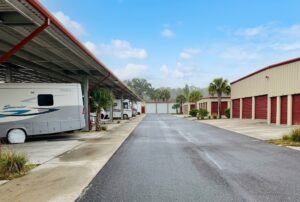
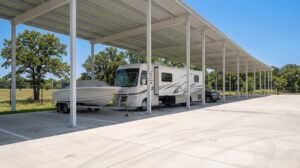
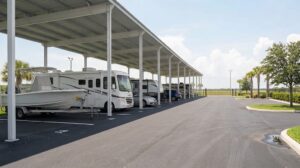
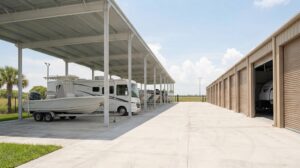
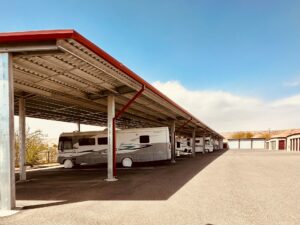
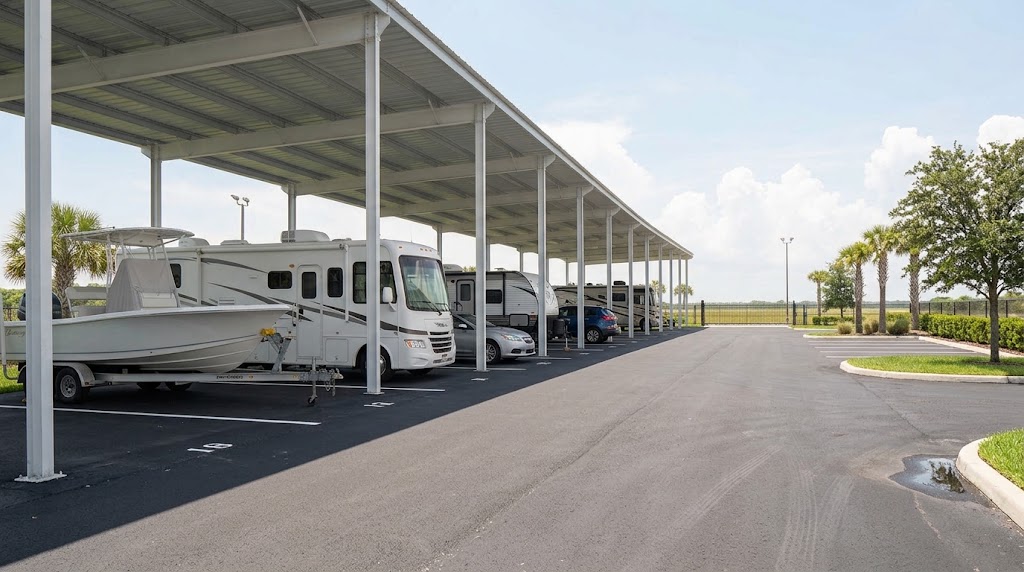
For Fort Lauderdale vehicle owners who want a defined monthly cost instead of an unpredictable repair or replacement exposure, RecNation’s nearest facility, in Boynton Beach about 25-30 miles north, offers covered and enclosed options worth weighing against the drive time for vehicles that don’t belong in a driveway for months at a time.
When the Monthly Storage Cost Is the Cheaper Option
A single professional paint correction for UV-oxidized clear coat can run several hundred dollars. One HOA fine cycle for a prohibited stored vehicle can reach a similar figure within weeks. A theft or storm loss on a vehicle with no active coverage is uncapped.
The monthly storage cost at a covered or enclosed vehicle storage facility is a fixed, predictable expense. For any vehicle with meaningful value stored for more than a few weeks, that fixed cost is typically the lower-risk financial choice when compared against the exposure created by outdoor driveway storage in South Florida’s climate.
When a Driveway Is Actually Fine (And When It Isn’t)
Short-term driveway use of a daily-driver vehicle is not a crisis. If you are parking a commuter car overnight or for a few days, the Fort Lauderdale environment is not going to produce visible damage on that timeline. The problem is duration, vehicle type, and value.
Whether is vehicle storage worth it comes down to a few honest variables. The table below maps the most common scenarios to the option that makes more sense.
| Scenario | Driveway workable? | Facility recommended? |
| Daily-driver car, moved every day | Yes | No |
| Second car stored for 2-4 weeks | Marginal | Preferred |
| Boat on trailer stored for a season | No | Yes |
| RV stored between trips (months) | No | Yes |
| Classic or collector car, any duration | No | Yes |
| Vehicle in HOA community | Verify first | Often required |
The synthesis here is simple. If the vehicle moves regularly and has limited value exposure, the driveway is a reasonable default. If the vehicle is sitting for weeks or months, has collector or resale value, or falls into a category likely to attract code enforcement attention, the facility is the rational choice.
Vehicle Type and Value as the Primary Decision Variable
Vehicle type and value is the single most important factor in the driveway-versus-facility decision. A daily-use commuter car parked in a driveway overnight isn’t the same risk as a $35,000 boat trailer or a vintage car stored through a South Florida summer, the environmental damage is cumulative, and higher-value vehicles have more to lose from each week of UV exposure and salt air accumulation.
Duration of Storage and Environmental Exposure
Storage duration is the second major variable, and Fort Lauderdale’s coastal environment makes it matter faster than it would elsewhere. Long-term vehicle storage lasting more than two to four weeks begins to accumulate measurable UV damage, humidity infiltration, and corrosion risk, while shorter periods carry real but limited exposure. The longer the storage period, the more strongly the cost calculation favors a facility over outdoor driveway storage.
Why This Calculation Comes Out Differently in Fort Lauderdale
Fort Lauderdale’s coastal humidity, salt air, and UV intensity make the driveway-versus-facility question a genuinely different calculation than it would be anywhere else in the country. If your vehicle is worth protecting and you’re planning to store it for more than a few weeks, RecNation’s nearest facility in Boynton Beach offers covered and enclosed vehicle storage built for exactly this environment, worth comparing against your specific drive-time tradeoff. It’s a straightforward way to stop paying for damage you don’t have to absorb.
Frequently Asked Questions About Driveway vs. Storage in Fort Lauderdale
Is it bad to leave your car in the driveway in Fort Lauderdale’s humidity?
For short-term parking, leaving a car in a Fort Lauderdale driveway is fine. For storage lasting weeks or months, the coastal humidity creates conditions that accelerate mold and mildew growth inside the vehicle, soften and crack rubber seals, and allow moisture intrusion into the interior. The combination of humidity, salt air, and intense UV exposure makes outdoor driveway storage in this market measurably harder on a vehicle than in most other U.S. cities. If you’re storing a vehicle for more than a few weeks, a covered or enclosed facility significantly reduces these risks.
How much does a climate-controlled storage unit cost in Fort Lauderdale?
Climate-controlled storage unit pricing in Fort Lauderdale varies by unit size, facility, and access tier. Small climate-controlled self-storage units start around $24 to $60 per month, while larger vehicle-appropriate spaces, including covered parking and enclosed units sized for cars, boats, or RVs, typically range from $120 to $300 or more depending on size and enclosure type. Check individual facility websites for current rates, as pricing shifts with demand and promotional availability.
Does coastal air cause rust and corrosion on cars stored outside in Florida?
Yes, coastal air causes measurable rust and corrosion on cars stored outside in Florida. Salt-laden air from the Atlantic deposits chloride ions on metal surfaces, accelerating oxidation of exposed steel in the undercarriage, brake components, unpainted fasteners, and any areas where protective coating has worn away. Vehicles stored within a few miles of the coastline face faster corrosion onset than vehicles stored farther inland, and enclosed or covered storage eliminates salt air exposure entirely.
What are the benefits of using a storage facility over a driveway in South Florida?
A vehicle storage facility eliminates the four primary risks of outdoor driveway storage in South Florida: UV damage to paint and interior materials, moisture and humidity infiltration, salt air corrosion, and theft or vandalism exposure. Facilities also remove the risk of HOA violations and municipal code enforcement citations, which can generate fines that exceed several months of storage costs. For vehicles with meaningful market value, the monthly storage cost is typically the lower-risk financial choice.
How does UV exposure in Fort Lauderdale affect a vehicle stored outdoors long-term?
UV exposure in Fort Lauderdale degrades a vehicle stored long-term through compounding damage outdoors. The UV index regularly reaches the “extreme” classification, index 11 or above, during spring and summer months, and radiation remains elevated year-round at South Florida’s latitude. Over months of exposure, clear coat and paint break down faster than the same vehicle would show in a milder climate, and cabin materials facing direct sun fade and crack sooner than owners expect, effects that accumulate gradually and are often not obvious until the damage is costly to reverse. An enclosed or covered facility blocks UV exposure entirely, stopping this damage cycle for vehicles stored over weeks or months.