The driveway feels like the obvious answer when you first bring home a boat or recreational vehicle (RV). It’s free, it’s right there, and plenty of Rockwall neighbors do the same thing. But Rockwall, Texas, sits in one of the most weather-stressed vehicle storage environments in the country, and the costs that come with driveway parking aren’t always visible until the damage is already done.
Why Rockwall Owners Keep Asking This Question
Rockwall County is one of the fastest-growing counties in Texas, and that growth comes with a specific set of storage problems. Newer subdivisions in Rockwall, Heath, and Fate are heavily deed-restricted and built on smaller lots, which means less room for a boat trailer and more active homeowners association (HOA) enforcement than owners expect. Proximity to Lake Ray Hubbard compounds all of that, and it’s worth understanding why.
The Lake Ray Hubbard Effect on Vehicle Ownership
Lake Ray Hubbard sits directly on Rockwall County’s western edge, and that access drives boat and personal watercraft ownership rates well above the inland Texas average. Many buyers acquire a boat or jet ski without a clear storage plan, assuming the driveway will work as a temporary solution. That temporary solution has a way of becoming permanent.
What a Rockwall Driveway Actually Does to Your Vehicle Over Time
Most owners think about weather in terms of dramatic events. The slow accumulation of UV damage and heat stress gets ignored because it doesn’t show up all at once. In Rockwall, that accumulation happens faster than it would in almost any other American city.
North Texas summers regularly push air temperatures above 100°F, and surface temperatures on an asphalt driveway under direct sun can reach 130°F or higher. At those levels, a driveway causes specific, compounding damage:
- Rubber seals degrade well ahead of schedule.
- Tire sidewalls crack under sustained heat exposure.
- Interior materials break down faster than in milder climates.
The garage vs outdoor storage comparison shows how much that difference in environment actually matters over a storage season, and Rockwall’s own numbers explain why. According to NOAA’s National Weather Service Fort Worth office, North Texas experiences some of the most intense summer solar radiation in the continental United States, with UV indices regularly reaching 10 to 11 from June through August.
Paint Oxidation and Interior Fading
A UV index of 10 to 11, which falls in the Very High to Extreme range, causes paint oxidation and interior fading to become measurable within one to two seasons, not gradually over a decade. A car cover can slow the process, but it doesn’t eliminate it on a vehicle that sits outside for months at a time.
RV exteriors and boat gel coats are especially vulnerable, their larger unprotected surface areas absorb more UV load than a standard passenger car, and gel coat degradation is expensive to restore. Depreciation accelerates with visible oxidation, which directly affects resale value.
Hail Damage on an Open Driveway
Hail damage is where open lot storage gets genuinely dangerous for a vehicle’s value. North Texas hail season runs from March through June, and Rockwall County sits in a corridor that records multiple significant hail events most years, and a single storm can generate $2,000 to $10,000 or more in bodywork damage on a boat, RV, or car stored outdoors without cover.
A vehicle on a driveway has no physical protection when hail hits. Covered storage eliminates that risk entirely.
Rockwall HOA Rules and City Ordinances on Driveway Vehicle Storage
Weather damage is one reason the driveway breaks down as a storage plan. Local rules are the other, and they’re usually why owners start looking for alternatives urgently, once you’re on the wrong side of them, there’s a fine or a notice attached, not just a slow accumulation of damage.
Rockwall regulates this on two levels, and both apply whether or not your subdivision has an HOA. The City of Rockwall Code of Ordinances, Chapter 26 (Motor Vehicles and Traffic), Article VII, restricts the type and duration of vehicles that can remain visible on a driveway or front yard. RVs, boats on trailers, and inoperable vehicles must sit at least 10 feet back from the front corner of the house, be screened from the street on smaller lots, and be parked on an approved surface, not bare dirt or grass.
On top of that, most Rockwall subdivisions layer on their own HOA deed restrictions. Under Texas Property Code Chapter 202, property owners’ associations have enforceable authority to prohibit visible vehicle storage on residential lots. Common HOA restrictions in Rockwall County subdivisions include:
- Boats, RVs, and trailers may not be visible from the street for more than 24 to 72 hours.
- Commercial vehicles and equipment are typically prohibited from front-yard or driveway parking.
- Violation fines vary by HOA, commonly in the $100 to $500 per occurrence range based on typical Texas HOA governing documents, with repeat violations escalating to legal action. The specific amount is set by each HOA’s own governing documents, not by state statute.
The practical problem is that many buyers don’t discover the restriction until they receive a notice. Checking before you assume the driveway is a long-term option saves that headache entirely.
How to Check Whether Your Subdivision Has Restrictions
Start with your closing documents. The deed restrictions or HOA governing documents should be included in the title package you received at closing. If you can’t find them, contact your HOA management company directly or search property records through the Rockwall County Appraisal District at rockwallcad.com.
The Insurance Gap Most Driveway Storers Don’t Know About
This is the part of the driveway equation that surprises owners the most. A standard HO-3 homeowner’s insurance policy typically excludes boats, motorized watercraft, and motor vehicles stored outside a structure from personal property coverage. That means hail damage to a $40,000 boat on your driveway, or theft of an RV from your front yard, may not be covered at all without a separate policy.
The Texas Department of Insurance recommends reviewing policy language specifically around off-premises personal property and vehicles stored outside attached structures. Most owners haven’t done that review.
Storage location can also affect how insurers classify risk. Some carriers apply lower risk classifications to vehicles kept in gated, camera-monitored facilities versus residential driveways. That can translate to better coverage terms or lower premiums on a standalone policy.
What a Separate Watercraft or RV Policy Covers
Standalone boat and RV insurance policies are widely available in Texas. They typically cover physical damage, theft, and liability during both active use and off-season storage periods, including storage at a third-party facility. If you’re storing a vessel or RV on your driveway and relying on your homeowner’s policy, call your insurer and confirm what’s actually covered before the next hail season.
Side-by-Side: Driveway Storage vs. a Storage Facility in Rockwall
The honest comparison here doesn’t automatically favor a storage facility on every dimension. Driveway storage wins on two things: cost (free) and access (immediate). A facility wins on everything else that affects the long-term condition and legal status of your vehicle.
| Criteria | Driveway Storage | Storage Facility |
| UV/Weather Protection | None | Covered or enclosed options available |
| Hail Risk | Full exposure | Significantly reduced or eliminated |
| HOA Compliance | High violation risk | Fully compliant |
| Security | None | Gated access, perimeter cameras |
| Monthly Cost | Free | $50 to $150/month depending on type |
| Insurance Implications | Often excluded under HO-3 | Better positioning for standalone policies |
| Convenience | Immediate access | Requires a short drive |
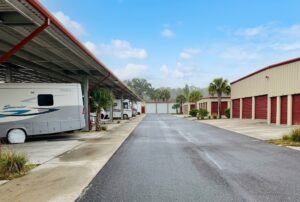
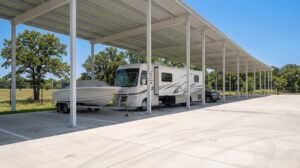
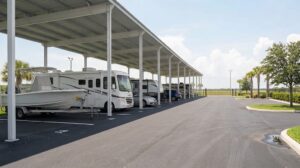
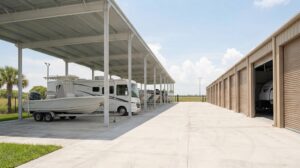
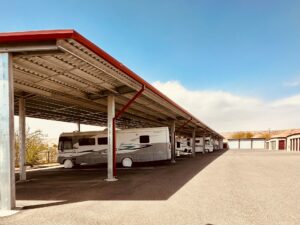
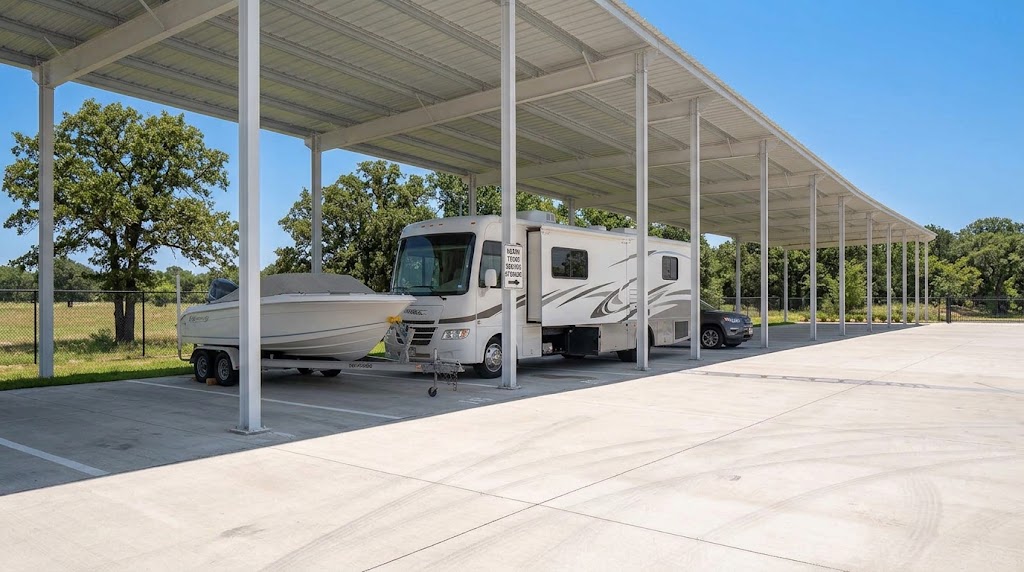
For the full breakdown of how much it costs to store a vehicle across different facility types and regions, that guide covers it in more depth. In the Rockwall area specifically, covered carport storage generally runs $75 to $150 per month depending on vehicle size. RecNation’s nearest facility, about 6.3 miles away in Wylie, offers outdoor and covered options with gated access and perimeter security included in the monthly rate.
When the Driveway Is Actually Fine
Short-term parking on a driveway is reasonable in specific situations: a lower-value vehicle stored for 30 days or fewer, comprehensive insurance that explicitly covers outdoor storage, and a subdivision with no restrictions on visible vehicle parking. Meet all three, and the driveway works fine as a temporary solution, the risk profile at that duration and value level is genuinely manageable.
When a Facility Is the Smarter Call
The calculation flips once any of these conditions show up: storage extending beyond 60 to 90 days, a vehicle worth more than $20,000 to $25,000, hail season approaching (March through June in Rockwall), a subdivision with deed restrictions, or no standalone insurance coverage for outdoor storage. At that point, the monthly storage cost is almost always less than one hail claim deductible or a series of HOA fines.Our Is Vehicle Storage Worth It guide walks through that exact calculation in more detail if you want to run the numbers for your specific situation
Past the Tipping Point? Here’s Where Rockwall Owners Land
If the driveway isn’t the right long-term answer for your boat, RV, or extra vehicle, RecNation’s nearest facility, about 6.3 miles away in Wylie, offers outdoor and covered vehicle storage with gated access and camera monitoring included. It’s a practical option for owners who want their vehicle protected between uses, without an HOA notice or a hail season surprise deciding the timeline for them.
Frequently Asked Questions
Is it bad to leave your car on the driveway in Texas heat?
Yes, leaving a car on a Rockwall driveway is bad for it long-term. Rockwall driveways can reach surface temperatures above 130°F during summer, and the UV index in North Texas hits 10 to 11 from June through August. Over one to two seasons, that level of sun exposure causes measurable paint oxidation, cracking in rubber seals, and interior fading on an unprotected vehicle.
How much does vehicle storage cost in Rockwall, Texas?
Vehicle storage in Rockwall typically starts around $50 to $75 per month for outdoor uncovered space. Covered carport spaces, which protect against direct UV damage and hail, generally run $75 to $150 per month depending on vehicle size. Many owners find the monthly storage cost is less than a single HOA fine or one hail-damage deductible.
Does the Texas sun damage cars parked outside long-term?
Yes, Texas sun causes measurable, lasting damage to cars parked outside long-term. North Texas UV index levels during summer reach the Very High to Extreme range (10 to 11), the threshold at which paint oxidation and interior fading become measurable within a single season. Boats and RVs are especially vulnerable because their larger surface areas, including gel coat and roof membranes, accumulate more UV damage than a standard car.
What are the benefits of using a storage facility over a driveway in Rockwall?
A storage facility in Rockwall offers several advantages over a driveway: UV and hail protection, gated secure storage, HOA compliance, and better insurance positioning for standalone vehicle policies. The monthly cost is typically less than a single HOA violation fine or the out-of-pocket expense on one hail damage claim.
Can HOA rules in Rockwall, Texas affect where I park my vehicle?
Yes, HOA rules in many Rockwall County subdivisions do affect where you can park your vehicle, and they’re enforceable under Texas Property Code Chapter 202. These restrictions commonly prohibit parking boats, RVs, or trailers in driveways or front yards for more than 24 to 72 hours. Fines for violations typically range from $100 to $500 per occurrence, and repeated violations can escalate to legal proceedings.
What type of storage is best for a boat or RV in Rockwall between seasons?
Covered outdoor storage is the best option for a boat or RV in Rockwall between seasons for most owners, since it offers a meaningful improvement over a residential driveway by blocking direct UV exposure and reducing hail risk. Enclosed storage offers maximum vehicle protection for higher-value vehicles. Either option at a secured facility also removes the vehicle from a deed-restricted residential property, eliminating the risk of HOA violations during a multi-month storage period.