Mice cause some of the most expensive damage an RV can sustain during storage, chewing through wiring, shredding insulation, and contaminating upholstery before you ever notice they’re there. Keeping them out requires a layered approach that combines physical sealing, targeted repellents, and smart storage habits, applied in the right sequence.
This guide covers what actually works, what’s overhyped, and exactly what order to do it in, whether you’re preparing for your first winter storage or you opened your rig last spring to an unwelcome surprise.
Why Mice Target Stored RVs
Mice are looking for three things: warmth, shelter from predators, and access to food and nesting materials. A stored recreational vehicle (RV) offers all three, especially once fall temperatures push mice to actively search for winter shelter, right as most RVs head into storage.
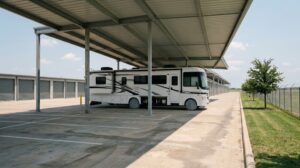
The goal isn’t just to block entry. It’s to make your RV an unattractive target in the first place. Covered storage reduces ambient pest pressure by putting your RV in a more controlled environment, one of several reasons storing an RV outside year-round comes with tradeoffs worth weighing.
How Mice Cause Damage Inside an RV
Mice chew through electrical wiring to wear down their continuously growing teeth, and gnawed wiring in an RV is a documented fire hazard. They also destroy foam insulation and ductwork, contaminate upholstery and soft furnishings with droppings and urine, and pack nesting materials into appliance cavities.
A single season of rodent infestation in a stored RV can cost thousands of dollars in repairs, and some damage, particularly to wiring hidden inside walls, may not be obvious until the problem has already progressed significantly.
Where Mice Actually Enter an RV
Most prevention articles stop at “check for gaps,” which isn’t useful if you don’t know where to look. RVs have specific construction features that create recurring mouse entry points, and sealing them requires knowing what you’re inspecting.
The five most common entry points are:
- Tire and wheel well pathway: Mice are capable climbers and use the tire sidewall to reach the underbelly of the RV, where gaps around plumbing and wiring conduits provide direct interior access. This is the most common initial entry route.
- Slide-out seals: The rubber seals around slide-out rooms compress unevenly with age, leaving small gaps at the corners. Even a gap the size of a dime is enough for a mouse to squeeze through.
- Underbelly plumbing and wiring penetrations: Factory-cut holes in the RV underbelly allow plumbing pipes and wiring conduits to pass through. Manufacturers typically fill these with standard foam rather than rodent-resistant materials, which mice can chew through.
- Compartment door gaskets: The rubber gaskets sealing exterior storage compartments crack and pull away from the frame with UV exposure. Gaps along the bottom edge of compartment doors are a common and overlooked entry point.
- Roof penetrations: Gaps around roof vents, antenna mounts, and air conditioning units allow moisture in and mice up. Inspect the sealant around every roof penetration during pre-storage prep.
The Tire Pathway: Why It’s the Primary Access Route
The tire is the most common first step in a mouse’s path into an RV. Mice climb the tire sidewall, reach the wheel well, and from there access the underbelly where utility penetrations provide entry to the interior.
Tire shields, including commercial products like Mouse D-Fence and DIY versions fabricated from aluminum flashing, interrupt this pathway by placing a smooth barrier the mouse cannot grip. A tire shield is one important layer of protection, but it addresses only one of the five entry points listed above.
How to Seal Your RV Before Storage: In the Right Order
Physical sealing is the foundation of any effective pest control plan for a stored RV, and it’s worth doing alongside the rest of your long-term RV storage prep rather than as a separate task. Repellents and mouse traps placed in an unsealed RV are working against a stacked deck. No rodent repellent can compensate for an open gap in the underbelly or a cracked compartment gasket.
Follow these steps in order:
- Clean the interior first. Remove all food sources and nesting materials before doing anything else. Mice enter for warmth but stay because of food and fabric. Start here.
- Inspect the underbelly and identify all penetrations. Get underneath the RV with a flashlight and locate every point where plumbing pipes, wiring conduits, or other utilities pass through the floor. Mark each one for sealing.
- Pack open gaps with steel wool or copper mesh, then seal with rodent-resistant foam. Both steel wool and copper mesh resist chewing, unlike standard foam. Stuff the gap completely, then cover it with a rodent-resistant expandable foam sealant. Standard spray foam is not sufficient on its own because mice can chew through it. Copper mesh has one practical advantage over steel wool: it doesn’t rust, so it stays structurally intact throughout long-term storage.
- Inspect and replace weatherstripping on compartment doors and slide-out seals. Cracked or compressed weatherstripping on compartment doors is easy to overlook and easy to replace. Check slide-out seals at the corners, where gaps form first.
- Install a tire shield or barrier. If the RV will be stored on the ground, install a smooth tire guard around each tire or wheel well. DIY versions can be cut from sheet metal or aluminum flashing. Make sure any jack stands used during storage are also covered, since mice will use them as an alternative climbing route.
If your RV is stored outdoors in your driveway or on your property, pest pressure is higher. Enclosed RecNation RV storage facilities reduce exposure to the open environment where mice forage and nest, adding one more layer of protection to everything you’ve done to seal the RV itself.
Materials That Actually Block Mice (and What to Avoid)
Not all sealing materials are equal when it comes to rodent resistance.
- Steel wool: Effective at blocking entry when packed tightly into a gap. Mice cannot chew through it, but it will rust over time in damp conditions. Best used as a short-term or seasonal fill, covered with foam or caulk to hold it in place.
- Copper mesh: The more durable option for long-term RV storage. It resists chewing and won’t corrode. Pack it firmly into gaps and seal the surface with rodent-resistant foam.
- Wire mesh: Useful for larger underbelly openings where mesh needs to cover a broader area. Secure edges tightly so mice cannot push underneath.
- Rodent-resistant expandable foam sealant: Products labeled specifically for pest control use a harder cure formula. Standard foam, including general-purpose spray foam from a hardware store, can be chewed through and is not a reliable standalone barrier.
- Standard caulk: Only effective at hairline gaps. Any opening wide enough to admit a pencil tip needs metal fill before caulk is applied.
Installing a Tire Shield
A tire shield works by placing a smooth, slick barrier the mouse cannot grip between the ground and the wheel well. Commercial options are available, and DIY versions cut from sheet metal or aluminum flashing are widely used in RV owner communities. The shield must be sized to the specific tire diameter to be effective.
If the RV is raised on jack stands during storage, fit smooth collars around the stands as well, since mice will climb them just as readily as a tire.
Repellents: What the Evidence Actually Says
Repellents work best as a secondary layer on top of physical sealing. No rodent repellent can compensate for an unsealed entry point. That framing matters because the RV community has a long list of folk remedies that circulate online, and not all of them hold up.
Peppermint oil has some evidence behind it at high concentrations. It may discourage initial exploration in an enclosed space. However, mice habituate to persistent scents relatively quickly, and effectiveness drops significantly as the oil evaporates over weeks of storage. Products like Grandpa Gus’s peppermint spray are popular and worth using as a secondary layer after sealing, not as a replacement for it. Refresh applications regularly throughout the storage period.
Dryer sheets and Irish Spring soap are among the most frequently cited folk remedies in RV forums. They are also among the most frequently reported as ineffective. The soap does not deter mice after the novelty of the scent fades, and the tooth marks visible in RV community photos suggest mice interact with the bars rather than avoiding them. Do not rely on either as part of your prevention plan.
Fresh Cab botanical pouches are worth distinguishing from homemade peppermint applications. Fresh Cab carries an actual EPA pesticide registration (EPA Reg. No. 82016-1) for use in enclosed spaces, which you can verify through EPA’s pesticide product label system, which gives it more documented standing than essential oil applications. Place pouches inside the RV as a secondary layer after physical sealing is complete.
Fox or coyote urine follows a sound biological logic: predator scent triggers avoidance behavior in prey animals. Practical effectiveness in an enclosed stored RV is variable, and the application is unpleasant. If you use it, apply it as a perimeter deterrent around the storage area rather than inside the RV itself.
Ultrasonic pest repellers deserve honest treatment here. The FTC has taken enforcement action against ultrasonic device manufacturers for making unsubstantiated efficacy claims. Peer-reviewed research has documented that rodents habituate to ultrasonic frequencies within days of initial exposure. These devices are widely sold for RV use and widely purchased. The current evidence does not support them as reliable mouse prevention, and they should not be treated as a primary or secondary layer in your pest control plan.
Eliminating Food Sources and Nesting Materials: The Most Overlooked Step
Mice enter an RV for warmth. They stay and breed because of food and nesting materials. Before storage, remove all food items from the RV, including anything in cardboard or paper packaging. Mice can smell through and chew through those materials readily. Transfer remaining dry goods to hard-sided airtight containers, or remove them from the RV entirely.
Also remove paper goods, towels, fabric scraps, and anything that could serve as nesting material. Clean crumbs from appliance cavities, drawers, and under cushions. This step applies equally to pet food, birdseed, and fishing bait. Leaving any of these behind makes the interior a destination, not just a shelter.
What to Do If Mice Have Already Gotten In
Before you start cleaning, read this section in full. Mouse droppings in a stored RV present a documented hantavirus exposure risk, particularly in an enclosed space where viral particles can concentrate in dust.
The CDC recommends ventilating the space for at least 30 minutes before entering, wearing disposable gloves and an N95 respirator, and cleaning mouse droppings only with a wet disinfectant solution. Never dry-sweep or vacuum without a HEPA-rated vacuum. Disturbing dry droppings in an enclosed space can aerosolize viral particles.
Once the RV has been ventilated and you have appropriate protective gear, follow these steps:
- Ventilate fully before entering. Open windows, vents, and doors and allow at least 30 minutes of airflow before you begin working inside.
- Document all evidence. Photograph droppings, nesting sites, and any chewed wiring before disturbing anything. This documentation supports an insurance claim if the damage warrants one.
- Wet-clean all surfaces. Apply a disinfectant solution to droppings and surrounding surfaces, allow it to soak in, and wipe clean. Do not sweep dry.
- Set snap traps for any remaining mice. Place mouse traps perpendicular to walls and in cabinet corners where mice travel. Snap traps are the most reliably effective trap type for active infestations in enclosed spaces.
- Dispose of all cleanup materials in sealed bags and remove them from the RV immediately.
- Return to the sealing steps above before putting the RV back into storage. Cleaning without sealing ensures the same problem returns.
Choosing the Right Trap
Snap traps remain the most field-verified option for a rodent infestation inside an enclosed space. They are inexpensive, effective, and disposable. Place them perpendicular to walls along evidence of travel, not in the open center of the room. Electronic traps are effective but cost more per unit. Glue boards are less humane and can allow partial escape in larger mice. Avoid poison bait stations inside the RV.
If a mouse dies inside a wall or appliance cavity after taking bait, the odor and decomposition create a separate problem that is difficult to resolve without opening the interior walls.
Final Thoughts on Keeping Mice Out of Your RV
Mice do the most damage in RVs that sit undisturbed in open environments for months at a time. That’s exactly the scenario that a secure storage facility helps reduce. RecNation RV and boat storage offers enclosed and covered options across multiple states, giving your RV a more controlled environment between seasons. Combining the sealing and prevention steps above with a secure storage location is the most complete approach to keeping mice and the repair bills they bring out of the picture.
Frequently Asked Questions
What scent will keep mice away from my RV?
Peppermint oil is the most commonly cited scent deterrent, and there is some evidence it discourages initial mouse exploration in enclosed spaces. However, mice habituate to scent-based repellents quickly, and effectiveness drops as the scent fades over weeks of storage. Botanical repellent products like Fresh Cab, which carry EPA registration for use in enclosed spaces, have more documented standing than homemade peppermint applications. No scent-based deterrent should be used as a standalone prevention method. It works best as a secondary layer after physical entry points have been sealed.
How do mice get into a parked RV?
Mice most commonly enter via the tire and wheel well pathway, climbing the tire sidewall to reach the underbelly of the RV, where gaps around plumbing and wiring penetrations provide interior access. Other common entry points include slide-out seals that have cracked or compressed unevenly, compartment door gaskets degraded by UV exposure, and roof penetrations around vents and air conditioning units. Because mice can fit through an opening as small as a dime, even small gaps that appear cosmetic can be functional entry routes.
Does peppermint oil really keep mice out of an RV?
Peppermint oil has some deterrent effect at high concentrations, but it is not a reliable standalone prevention method for a stored RV. Mice habituate to persistent scents relatively quickly, and effectiveness diminishes as the oil evaporates, often within a few weeks in an enclosed space. Used in combination with physical sealing of all entry points, it may offer marginal additional deterrence. Used alone on an unsealed RV, it is unlikely to prevent a rodent infestation over a full storage season.
What is the best mouse repellent for an RV in storage?
No single repellent is reliably effective on its own. The most effective approach combines physical sealing of all mouse entry points using steel wool or copper mesh packed into gaps and covered with rodent-resistant foam, with a botanical repellent like Fresh Cab placed inside the RV as a secondary layer. Ultrasonic pest repellers are widely marketed for RV use but are not well-supported by independent research. Eliminating food sources and nesting materials from the RV interior before storage is equally important and often more impactful than any repellent product.
How do I mouse-proof my RV before winter storage?
Start by removing all food, paper goods, and fabric items that could attract or shelter mice. Next, inspect the underbelly, slide-out seals, compartment door gaskets, and roof penetrations for gaps, and seal any openings with copper mesh packed into the gap and covered with rodent-resistant expandable foam sealant. Install a tire shield or smooth barrier around the tires to block the most common access route. Place EPA-registered botanical repellent pouches inside the RV and set a few snap traps as a last line of defense. Doing these steps in order, clean first, seal second, and repel third, gives you the most complete protection. This sequence applies equally to motorhome winterization and any extended storage period.
Is it safe to clean up mouse droppings in a stored RV?
Mouse droppings in a stored RV carry a documented hantavirus exposure risk, especially in an enclosed space where the virus can concentrate in dust. The CDC recommends ventilating the RV for at least 30 minutes before entering, wearing disposable gloves and an N95 respirator, and cleaning droppings only with a wet disinfectant solution. Never dry-sweep or vacuum without a HEPA-rated vacuum, as this can aerosolize viral particles. Seal all cleanup materials in plastic bags and dispose of them immediately. If the infestation is extensive, professional pest remediation may be the safer option before you attempt cleaning yourself.