Boat insurance typically costs between $200 and $500 per year for small recreational boats valued under $20,000. For larger vessels, expect to pay roughly 1 to 5% of the boat’s value annually. The exact number depends on your type of boat, where you operate it, your experience as an operator, and the coverage level you choose.
This guide breaks down average costs by vessel category and explains what drives your specific rate, one piece of the average yearly cost of owning a boat overall.
What Does Boat Insurance Cost on Average?
Most small boat owners pay somewhere between $200 and $500 per year for a basic policy covering liability and physical damage. For larger, higher-value boats, the 1 to 5% of boat value rule is a reliable starting estimate. A $60,000 cabin cruiser, for example, could run anywhere from $600 to $3,000 annually depending on coverage and location.
The table below breaks down average annual premiums by vessel type to help you identify your likely cost tier.
| Vessel Type | Typical Boat Value | Est. Annual Premium | Primary Cost Driver |
| Small fishing boat / runabout (under 20 ft) | $5,000 to $20,000 | $200 to $400 | Low replacement cost, inland use |
| Pontoon boat | $20,000 to $50,000 | $300 to $700 | Passenger capacity, size |
| Bowrider / deck boat (20 to 26 ft) | $25,000 to $60,000 | $400 to $900 | Horsepower, hull construction |
| Sailboat | $15,000 to $100,000+ | $300 to $1,500 | Navigation area, rigging complexity |
| Cabin cruiser / express cruiser (26 to 40 ft) | $50,000 to $200,000 | $1,000 to $3,000 | Replacement cost, offshore territory |
| Personal watercraft / jet ski | $8,000 to $20,000 | $150 to $500 | Speed, accident frequency |
| Luxury yacht (40 ft+) | $200,000+ | $3,000 to $10,000+ | Full replacement value, crew liability |
Note: Premium ranges are sourced from Progressive boat insurance cost data and publicly available carrier guides.
How Boat Type and Size Drive the Baseline
Vessel category is the single most influential starting point in any rate calculation. A 14-foot aluminum fishing boat and a 38-foot cabin cruiser have entirely different risk profiles, replacement costs, and navigational territories. Getting a boat insurance quote without knowing your vessel class means you’re comparing apples to anchors.
What Major Insurers Typically Charge
Progressive boat insurance, GEICO, and Protective are among the most widely used carriers for recreational vessels. Each uses slightly different rating models filed by state and vessel class, so the same boat can produce meaningfully different premiums across carriers.
- USAA is worth considering for military members and veterans, offering competitive rates on watercraft policies.
- Direct comparison requires a boat-specific quote from each carrier, since rates aren’t publicly posted by vessel category.
What Factors Affect Your Boat Insurance Rate?
Understanding the factors that affect boat insurance rates helps you estimate whether your quote will land above or below the average for your vessel class. Some of these you can control before you even contact a carrier. Others are locked in at the time of purchase.
- Boat value and replacement cost. The 1 to 5% rule scales directly with boat value. A $15,000 fishing boat and a $150,000 express cruiser are in fundamentally different premium tiers. Higher-value boats require more coverage, which increases the annual premium proportionally, following a similar logic to the rule of thumb for boat maintenance costs.
- Type of boat, horsepower, and construction. Higher horsepower engines are associated with greater accident severity and cost more to insure. Fiberglass hulls are more expensive to repair than aluminum, which also pushes premiums higher. Sailboat vs. powerboat insurance pricing reflects these differences directly.
- Navigational territory. Inland freshwater coverage costs less than coastal coverage, which costs less than offshore or bluewater policies. Operating in international waters typically requires a separate offshore endorsement and can add significantly to the annual premium.
- Usage type. Recreational use is the standard rating category. Using your boat for charter trips, fishing guide services, or any commercial activity triggers a commercial policy requirement. That shift can double or triple your annual premium compared to a recreational rate.
- Operator experience and record. Years of experience, boating safety certifications, and prior claims all affect pricing. A boating under the influence (BUI) conviction is one of the most damaging factors on your record. According to U.S. Coast Guard boating statistics, alcohol is the leading contributing factor in fatal boating accidents, which is why insurers treat BUI convictions seriously. Surcharges of 25 to 100% are common after a BUI, and some standard carriers will decline coverage outright.
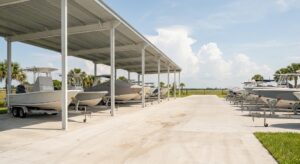
- Location and storage. Where your boat is kept between uses is a documented rating factor. A boat stored in a covered, secured facility is less exposed to weather, theft, and vandalism than one sitting in an open driveway or marina slip. Some insurers explicitly reduce the physical damage component of your annual premium for boats in enclosed or monitored storage.
- Coverage level and deductible. A liability-only policy costs significantly less than full comprehensive coverage. Increasing your deductible from $500 to $1,000 typically reduces the annual premium by 10 to 15%. Choosing the right coverage structure matters as much as which carrier you use.
Factors You Can Control
Four levers are worth adjusting before you request a boat insurance quote, since each directly reduces what you’ll pay:
- Storage location
- Safety course completion
- Deductible level
- Navigational territory limits
These can all be optimized before or after you purchase a policy.
Factors That Are Fixed or Hard to Change
Four factors are largely locked in at the time of purchase or established over time:
- Boat value
- Hull type
- Horsepower
- Prior claims history
If you’re evaluating which boat to buy, factor these into the purchase decision, not just the insurance comparison. A higher-powered boat with a fiberglass hull will cost more to insure every year you own it.
Agreed Value vs. Actual Cash Value: Why This Matters More Than the Premium
Two policies on the same boat can produce very different outcomes at claim time. The difference comes down to how your insurer calculates what they owe you after a total loss.
| Feature | Agreed Value Policy | Actual Cash Value (ACV) Policy |
| Payout at total loss | Full stated value, no depreciation deducted | Current market value after depreciation |
| Annual premium | Typically 10 to 20% higher | Lower upfront cost |
| Best for | Boats over 3 years old or valued above $20,000 | Low-value boats where depreciation exposure is minimal |
| Lender acceptance | Usually required by lenders | May not satisfy lender requirements |
An agreed value policy pays the full insured amount if your boat is declared a total loss, regardless of how old it is. An actual cash value policy pays what the boat is worth at the time of the claim, after depreciation is applied.
Here is why the distinction matters in financial terms. A boat purchased for $35,000 may have a market value of $24,000 to $27,000 after three years of depreciation, according to valuation tools like J.D. Power (which acquired the former NADA Guides valuation data). An ACV policy would pay that depreciated amount. An agreed value policy would pay the full $35,000 you insured it for.
The ACV policy costs less annually, but that gap works against you as the boat ages. On a vessel more than three years old, the depreciation exposure often outweighs the annual premium savings within a single claim event.
Which Policy Type Should You Choose?
- Choose agreed value if: your boat is over three years old or valued above $20,000. The additional annual cost is modest compared to the payout difference at claim time.
- ACV may be acceptable if: your boat is low-value and older, where the premium savings are meaningful and the vessel’s remaining market value is close to what you’d collect anyway.
If your boat is financed, your lender will likely make this decision for you: lenders almost always require agreed value or replacement cost coverage because they’re protecting their collateral, not your equity.
Is Boat Insurance Required by Law?
Most U.S. states do not legally mandate boat insurance for recreational vessels. NASBLA state boating law data tracks requirements by state, and the majority impose no liability coverage requirement for recreational use. A small number of states require liability coverage for motorized vessels above a certain horsepower threshold. Arkansas and Utah are common examples where motorized vessel requirements apply above a specific horsepower level.
The more common real-world mandate comes from lenders and marinas, not state law. If you financed your boat, your lender contractually requires physical damage coverage for the life of the loan. Some marina slip leases also require proof of minimum liability coverage as a condition of docking.
When Your Lender or Marina Requires Coverage
Lender-required coverage is a practical mandate even where state law is silent. Most lenders require comprehensive physical damage coverage at minimum, and some specify agreed value policies to protect the full collateral value. If your policy lapses, the lender can force-place coverage on your behalf, typically at a much higher rate than you’d find on your own.
What Happens If You’re Uninsured on the Water
Operating without coverage leaves you personally liable for third-party injuries, property damage, and your own repair or replacement costs after an accident.
Florida is a useful example of what that exposure actually looks like:
- Premiums run higher than national averages due to hurricane exposure, heavy coastal traffic, and elevated repair costs.
- Florida does not legally require boat insurance, but the uninsured financial exposure in that environment is substantial.
- Most Florida boat owners with mid-size vessels pay $400 to $1,000 or more annually, depending on vessel type, coverage level, and whether the policy includes hurricane haul-out conditions.
How to Lower Your Boat Insurance Premium
Several of the factors that affect boat insurance rates are within your direct control. These steps can reduce your annual premium before or after you purchase a policy.
- Complete a NASBLA-approved boating safety course. Most major carriers discount 5 to 15% for documented course completion. The BoatUS Foundation maintains a network of approved courses that most insurers recognize.
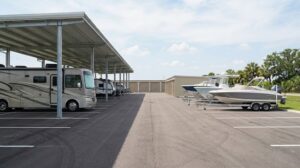
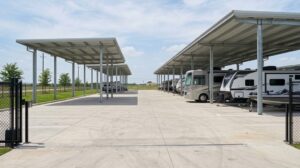
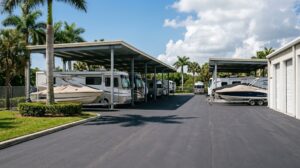
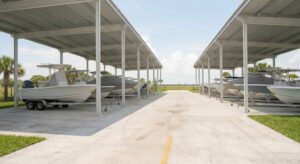
- Store your boat in a covered, secured facility. Boats kept in covered storage are less exposed to weather, theft, and vandalism than those in open slips or driveways, and it’s a documented rating factor that can reduce your physical damage premium when disclosed to your insurer. RecNation boat and RV storage offers covered and carport storage options across multiple states, and our breakdown of how much it costs to store a boat per year can help you weigh the storage cost against the premium savings.
- Increase your deductible. Moving from a $500 to a $1,000 deductible typically reduces the annual premium by 10 to 15%. A higher deductible lowers carrier exposure on small claims and rewards owners who don’t file frequently.
- Bundle with your homeowners or auto policy. Multi-policy insurance discounts are standard at carriers like Progressive and GEICO. Bundling a boat policy with an existing homeowners insurance policy can reduce the total cost of both.
- Restrict your navigational territory. Limiting your coverage to inland or coastal waters costs less than an offshore or bluewater endorsement. If you don’t operate offshore, don’t pay for that territory.
- Maintain a claims-free record. Most carriers apply a claims-free discount after three to five years without a filed claim. Filing small claims resets this clock, so consider paying minor damage out of pocket if the cost is close to your deductible.
- Pay annually instead of monthly. Monthly payment plans typically add 5 to 10% to the effective annual cost. Paying the full annual premium upfront avoids that surcharge.
Discounts Most Boat Owners Don’t Know to Ask For
Two underutilized insurance discounts are worth asking about directly:
- Boating organization membership: Membership in a recognized boating organization such as the U.S. Power Squadrons, BoatUS, or the U.S. Coast Guard Auxiliary can qualify you for additional reductions beyond the standard safety course discount.
- Layup period credits: Apply when you formally declare a seasonal out-of-water period for your vessel. Many policies credit owners who declare a layup window, reducing the exposure period the insurer covers and lowering the annual rate accordingly.
This credit is rarely applied automatically, so you need to request it.
Final Thoughts on Boat Insurance Costs
Where you store your boat between seasons has a direct impact on both its condition and your insurance costs. Boats stored in covered, secured facilities are less exposed to weather damage, theft, and the depreciation that comes from extended outdoor exposure.
If you’re looking for a storage solution that works in your favor at renewal time, RecNation boat and RV storage offers covered and enclosed storage at facilities across Arizona, Florida, Tennessee, Texas, and other states where boat ownership is a year-round consideration.
Frequently Asked Questions About Boat Insurance Costs
What is the average cost of boat insurance per year?
Most boat owners pay between $200 and $500 per year for a basic policy on a small recreational boat valued under $20,000. For larger or higher-value vessels, expect to pay roughly 1 to 5% of the boat’s value annually. A $60,000 cabin cruiser might run $600 to $3,000 per year depending on coverage level and location. Personal watercraft insurance typically falls in the $150 to $500 range annually.
Is boat insurance required by law?
Most U.S. states do not legally require boat insurance for recreational use, though a few states impose liability coverage requirements for motorized vessels above a certain horsepower threshold. Even where it isn’t legally required, lenders financing a boat purchase almost always mandate physical damage coverage as a loan condition. Some marinas also require proof of liability coverage before issuing a slip.
What does boat insurance typically cover?
A standard policy covers liability coverage for third-party bodily injury and property damage, physical damage to your vessel from collision or weather events, medical payments for injuries on board, and often uninsured boater coverage. Optional add-ons commonly include on-water towing coverage, personal property coverage for gear and electronics, and fuel spill liability. Coverage limits and exclusions vary by carrier and policy type.
How can I lower my boat insurance premium?
The most reliable ways to reduce your annual premium include completing a NASBLA-approved boating safety course (typically saves 5 to 15%), increasing your deductible, bundling your boat policy with an existing homeowners or auto policy, and storing your boat in a covered and secured facility. Formally declaring a seasonal layup period and maintaining a claims-free record for three or more years also qualify for discounts with most carriers.
Does boat size affect the cost of boat insurance?
Yes, significantly. Larger boats have higher replacement costs, more complex systems, and often operate in riskier navigational territories, all of which increase the annual premium. A 14-foot aluminum fishing boat might cost $200 to $300 per year to insure, while a 35-foot cabin cruiser could run $1,500 to $3,000 or more annually. Horsepower is also a direct rating factor, as higher-powered engines are associated with greater accident severity.
How much does boat insurance cost in Florida?
Florida does not legally require boat insurance, but premiums in the state tend to run higher than the national average. Hurricane exposure, high boat traffic, and elevated theft rates in coastal areas all push rates up. Most Florida boat owners with mid-size recreational vessels can expect to pay $400 to $1,000 or more per year depending on the vessel and coverage level. Insurers operating in Florida may also impose mandatory layup or out-of-water storage conditions during hurricane season as a coverage requirement.