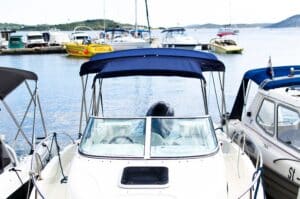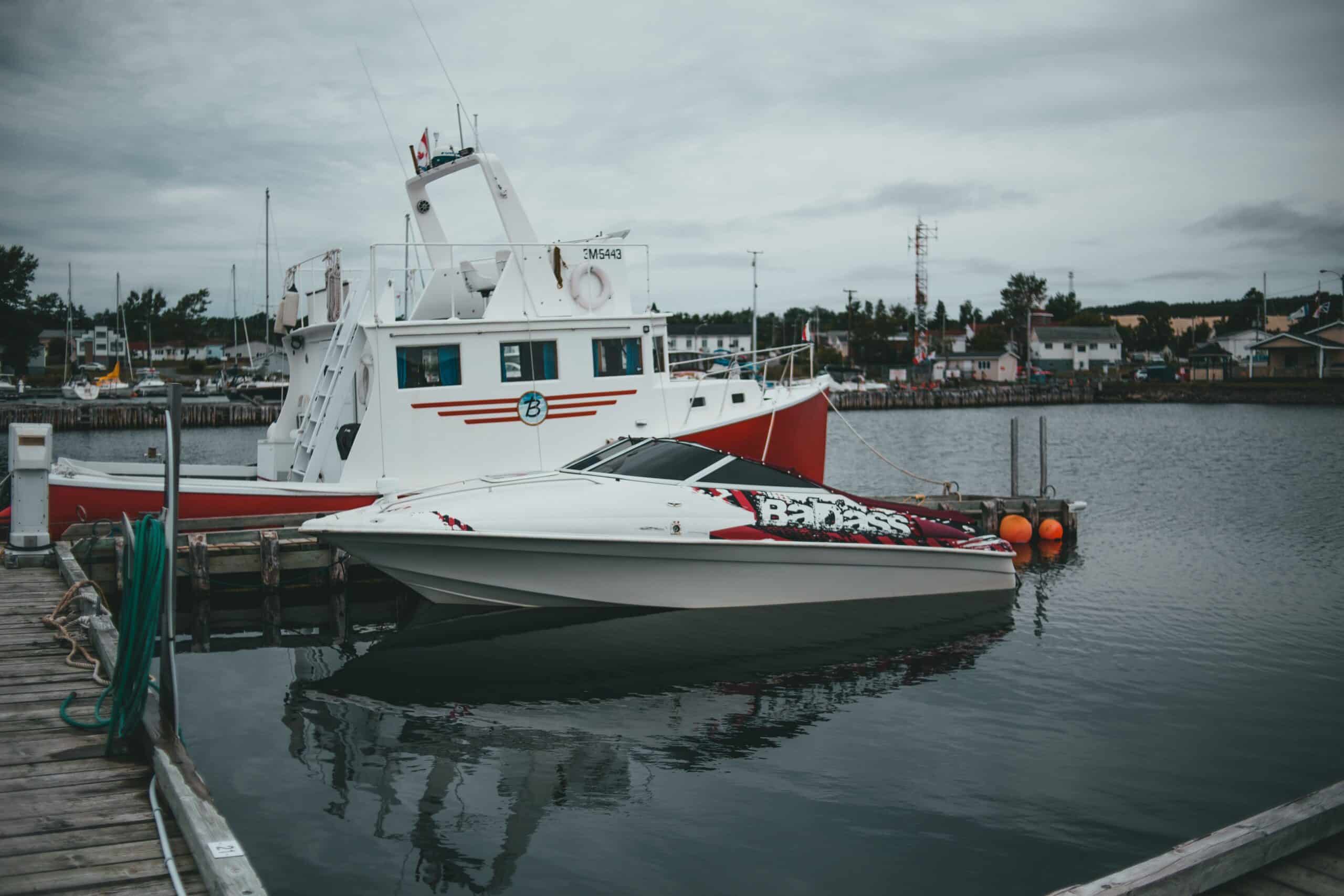
The best boat for most beginners is a 17 to 22 foot bowrider or pontoon boat with a single outboard motor. Both types are forgiving to handle, easy to trailer, and widely available under $30,000 new.
This guide covers specific model recommendations organized by use case, the right size range for new owners, what beginner-friendly actually means in mechanical terms, and what first-time ownership will realistically cost you, including the licensing and storage realities most other guides skip entirely.
What Makes a Boat Beginner-Friendly?
Not every boat marketed as “entry-level” is actually easy to operate. Before you commit to a model, it helps to have a concrete checklist of what separates a forgiving beginner boat from one that will frustrate you in the marina, and to know what red flags to watch for when buying a boat regardless of which model you land on.
The National Marine Manufacturers Association (NMMA) certifies boats that meet recognized construction and systems standards. Buying an NMMA-certified boat gives you a meaningful quality filter as a first-time buyer. It won’t tell you whether a boat is easy to dock, but it confirms the builder followed consistent safety and construction benchmarks.
Hull Design and Stability
Hull deadrise is the angle of the hull measured from the keel to the outer edge. A flat or low-deadrise hull, like those found on pontoon boats and jon boats, provides excellent stability at rest and at low speeds. The trade-off is a rougher ride if you push into choppy water.
A modified V-hull, common on bowriders and center console boats, cuts through chop more smoothly but offers slightly less initial stability. For beginners using calm inland lakes, a stable hull design with low deadrise lowers the learning curve. For coastal or mixed-condition boating, a modified V is the better long-term fit.
Engine Configuration and Docking Control
The engine type has a bigger impact on beginner boat handling than most buyers expect. An outboard motor pivots to steer, meaning it provides direct thrust in whatever direction you point it. That makes low-speed maneuvering and backing into a slip far more forgiving than any fixed-propeller setup.
Stern drives, also called inboard/outboard configurations, are common on bowriders and runabouts but require more spatial awareness. Inboard engines, found on larger cruisers and dedicated wake boats, are the hardest configuration to dock solo. For a first-time owner, outboard-powered boats are the clear recommendation.
Best Beginner Boats by Use Case
The right first boat depends on how you plan to use it. A boat that excels at fishing is a different machine from one built for pulling skiers. Use the sections below to find the category that matches your plans, then work from the specific models named.
Best Boats for Family Day Trips and Leisure
For mixed-skill groups, casual cruising, and days on the lake with kids aboard, a pontoon boat is hard to beat. The wide, flat deck creates a stable platform that minimizes the anxiety of having passengers moving around, and pontoon boats forgive beginner mistakes at the dock because their wide beam is predictable and their outboard motor gives good low-speed control.
The Sun Tracker Party Barge 18 DLX is a strong entry point:
- Runs approximately $31,000 to $34,000 new (base price).
- Carries a single outboard motor, typically 40 to 75 horsepower.
- Seats up to nine passengers comfortably.
- Widely available through Bass Pro Shops and Sun Tracker dealerships nationwide.
One honest limitation: pontoon boats aren’t built for rough water or offshore conditions, so plan to stay on protected lakes, rivers, and calm bays.
If you want more versatility from a leisure boat, a Bayliner Element E18 covers light watersports alongside family cruising. It measures 18 feet, uses a single outboard, and the bowrider layout seats up to seven, with a hull that handles moderate lake chop better than a flat pontoon.
Best Boats for Beginner Anglers
Freshwater vs. saltwater boating creates two meaningfully different equipment decisions.
For calm freshwater lakes and rivers, a jon boat is the lowest-cost entry point and more than adequate. The Alumacraft 1436 or Tracker Grizzly 1448 run $2,000 to $6,000 new, handle flat water reliably, and require minimal maintenance. Their flat-bottom hull is unsuitable for open water or significant chop, so keep them on sheltered water.
For coastal or saltwater fishing, bays, inlets, and nearshore areas within a few miles of shore, a center console boat with a single outboard motor is the right tool. The Boston Whaler 170 Montauk is one of the most frequently recommended models for beginners in this category, though it sits at the higher end of the beginner price range:
- New MSRP runs approximately $56,000 to $63,000, depending on engine package and options.
- Buyers focused on price may want to weigh a used Montauk or a comparably-sized aluminum center console against the brand premium.
- Its foam-filled hull is genuinely unsinkable, a verifiable, meaningful safety feature for someone still developing their water confidence.
A fiberglass vs. aluminum boat decision also surfaces in this category:
- Aluminum (like the Alumacraft): lighter, cheaper, and resistant to denting.
- Fiberglass (like the Whaler): smoother ride in chop and better long-term durability in saltwater.
If you’re fishing saltwater regularly, additional rinsing and corrosion maintenance steps are needed after every outing, regardless of hull material.
Best Boats for Watersports
For pulling a tube, skier, or wakeboarder, a bowrider is the most practical beginner choice. The Chaparral 21 H2O is a well-regarded entry point in this class, though it’s worth confirming current availability before recommending it as new: the model appears to have been discontinued in recent years, with most current listings being well-maintained used units in the $22,000 to $43,000 range.
It handles light towing tasks without the complexity or cost of a purpose-built wake boat, its single outboard or sterndrive keeps docking manageable for a new owner, and the 21-foot length stays within easy trailering range.
Purpose-built wake boats from brands like MasterCraft and Malibu produce better wakes and offer ballast systems, but they typically start above $50,000 new, not the right starting point for most first-time buyers. Staying under 21 feet for your first season simplifies both trailering and marina docking until your boat handling skills catch up to a larger platform.
What Size Boat Should a Beginner Buy?
For most beginners, 17 to 22 feet is the right range. Boats in this range are large enough to handle moderate lake and coastal conditions safely, while remaining manageable to dock, trailer, and store. Go smaller and you limit where you can safely operate; go larger and you add trailering and docking complexity that takes experience to manage.
Real-world boaters with local knowledge frequently recommend a minimum of 23 feet for bay and harbor conditions with regular chop, and 26 feet or more for offshore use. These are practitioner-sourced thresholds worth taking seriously. For a first boat, treat offshore or open-ocean boating as a future goal after a few seasons of experience, not a starting scenario.
Freshwater vs. Coastal vs. Offshore Sizing
Water type should drive your sizing decision as much as intended use. Here is a practical guide by environment:
| Water Type | Recommended Length | Appropriate Boat Type |
| Calm freshwater lakes and rivers | 14 to 18 ft | Jon boat, small pontoon |
| Larger inland lakes with some chop | 17 to 20 ft | Pontoon boat, bowrider |
| Coastal bays and inlets | 18 to 22 ft | Center console, bowrider |
| Open ocean / offshore | 24 ft minimum (28 ft preferred) | Offshore center console, cabin cruiser |
Hull design matters as much as length in open water. A flat-bottom jon boat is unsafe in ocean conditions at any length. If your goal is saltwater fishing, start with a coastal center console boat in the 18 to 22 foot range and build experience from there.
How Boat Length Affects Trailering and Storage
Boats under 22 feet are straightforward to trailer with a standard half-ton pickup truck. Boats over 24 feet typically require a one-ton truck or a dedicated tow vehicle, and the trailer itself becomes harder to manage in tight ramps and parking areas.
Boat storage and trailering are closely connected costs. A trailerable boat gives you the option to store on land rather than paying for a marina slip year-round. If you want to explore your covered storage options before committing to a storage plan, staying in the 17 to 22 foot range keeps the most options open.
What Does It Actually Cost to Own a Beginner Boat?
Purchase price is only the beginning. First-time buyers consistently underestimate annual ownership costs, and the gap between sticker price and total first-year spend can be significant. For a detailed breakdown of how much storage costs as one component of ownership, that resource covers the full cost spectrum. Here is the complete picture for a beginner boat:
- Purchase price: $5,000 to $35,000 for the boats covered in this guide, depending on type, size, and engine package. What time of year you buy can meaningfully shift where you land in that range.
- Registration and licensing fees: Typically $50 to $150 per year depending on state. Budget for the first registration when you take delivery.
- Insurance: $300 to $800 per year for a beginner-owned boat under 22 feet. Variables include hull type, horsepower rating, engine configuration, and operator experience.
- Fuel: Roughly $50 to $150 per outing for a single outboard motor at normal recreational use, depending on fuel prices in your area.
- Annual boat maintenance: Engine service for a single outboard runs $150 to $400 per year. Add $200 to $600 for winterization if you are in a northern climate.
- Storage: The widest variable in annual costs. See the section below for a full comparison.
A realistic first-year total: a $20,000 entry-level boat will cost approximately $23,000 to $26,000 all-in during year one once insurance, storage, registration, gear, and a service visit are included. The BoatUS Foundation provides consumer-facing cost guidance that aligns with these ranges.
Insurance Costs for First-Time Boat Owners
Insurance is calculated based on several variables that first-time buyers should understand before shopping. Insurers consider vessel type, hull material, engine configuration (outboard motor generally carries lower premiums than inboard), horsepower rating, and your experience record as an operator.
Completing a NASBLA-approved or BoatUS Foundation safety course before your first policy can reduce premiums with many carriers. It is one of the most cost-effective new boater tips available.
Most states do not legally require liability coverage, but financing a boat almost always requires full coverage as a loan condition, and how long boat financing typically runs affects your total interest cost over the loan term.
Storage Costs: Marina vs. Dry Stack vs. Land Storage
Storage is the cost variable with the widest spread and the most options. Here is how the three primary models compare:
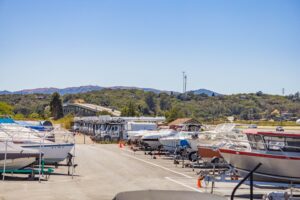
- Marina slip: Most convenient because the boat stays in the water and is ready when you are. Cost runs $500 to $2,000 per month depending on region and slip size. Slip availability can be limited in popular boating markets, with waitlists measured in months.
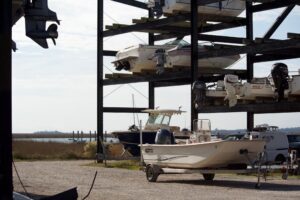
- Dry stack: The boat is racked in a covered facility and launched by forklift on request. Cost runs $200 to $600 per month. Offers good protection and requires advance planning for launch days.
- Land storage / trailer storage: Lowest cost at $75 to $250 per month. Requires a capable tow vehicle and a place to keep the trailer when not in use.
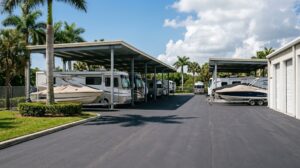
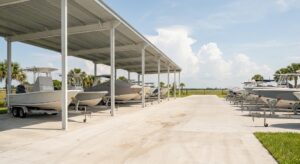
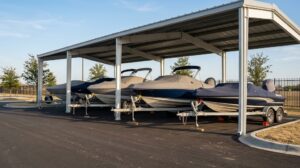
For beginners who have purchased a trailerable boat in the 17 to 22 foot range, land storage is the most practical and cost-effective option. Boat and RV storage facilities designed specifically for vehicles offer secure, covered land storage built for boats and trailers, often at a significant cost advantage over marina slips and without the waitlist.
Do You Need a License to Operate a Boat?
There is no federal boating license in the United States. However, every state has some form of boating safety education requirement, and most are governed by the NASBLA model act. This is separate from what’s required to buy a boat in the first place, like registration and titling, which you’ll need regardless of your state’s licensing rules. In most states, the requirement is tied to your birth year rather than your experience level.
Completing a safety course is a one-time obligation in most states, typically an online course costing $25 to $50 that takes a few hours to finish. Do not let the word “license” make this feel more complicated than it is.
State Boating Safety Requirements
Requirements differ by state on three axes: which birth years trigger the education requirement, what equipment must be aboard, and whether you must carry the safety card on the vessel while operating.
A few state examples to make this concrete:
- Florida: Anyone born on or after January 1, 1988 must complete an approved boating safety course before operating a motorboat.
- California: Anyone born on or after January 1, 1988 operating a motorized vessel must hold a valid boater card.
- Texas: Anyone under 18 must complete an approved safety course; adults over 18 are not currently required to complete education but are encouraged to.
The requirement applies regardless of whether the boat is new or used. Completing the free BoatUS Foundation online course is worth doing even if your state does not require it. It covers docking, navigation rules, and emergency procedures that no amount of reading replaces.
What Equipment Does the Coast Guard Require?
US Coast Guard safety requirements apply to every boat regardless of state certification status. The mandatory equipment list by vessel category includes:
- Life jackets: One Coast Guard-approved personal flotation device per person aboard. Boats over 16 feet must also carry one throwable Type IV device.
- Fire extinguisher: Required on boats with an enclosed fuel or engine compartment.
- Sound-producing device: A horn or whistle is required for all boats.
- Navigation lights: Required for any operation between sunset and sunrise.
Every boat must also display a capacity plate showing boat capacity and weight limit. Maximum persons and maximum weight are federally regulated figures, not manufacturer suggestions. Exceeding either puts you outside legal and safe operating parameters.
Final Thoughts on Choosing Your First Boat
Once you have chosen the right boat, confirmed your total ownership costs, and completed your safety certification, the last piece is where the boat lives between trips. Most neighborhoods restrict open-air boat parking to a short window, and marina slip waitlists can stretch for months in popular boating markets.
RecNation boat and RV storage offers covered and enclosed storage built for boats and trailers across facilities in Florida, Texas, Arizona, and other states, keeping your boat protected, accessible, and out of the driveway year-round.
Frequently Asked Questions About Beginner Boats
What type of boat is easiest to drive for a beginner?
A pontoon boat is widely considered the easiest boat for a beginner to operate. Its wide, flat deck provides exceptional stability, and its single outboard motor makes low-speed maneuvering forgiving. Bowriders are a close second as they handle well, trailer easily, and are available at entry-level price points. Both types avoid the docking complexity of inboard or stern-drive configurations.
How much does a good beginner boat cost?
A capable first boat typically costs between $15,000 and $60,000 new, depending on size, type, and engine package. Entry-level pontoon boats and bowriders in the 17 to 20 foot range often fall in the $28,000 to $34,000 range, while a center console with the safety features many beginners want, like an unsinkable hull, can run considerably higher. A jon boat can be purchased new for as little as $2,000 to $8,000. Keep in mind that first-year ownership costs including insurance, storage, registration, and gear typically add $3,000 to $6,000 on top of the purchase price.
Do I need a boating license to operate a boat as a beginner?
The US has no federal boating license, but every state has some form of boating safety education requirement, typically tied to the operator’s birth year. In most states, anyone born after a specific cutoff year, often 1988 or 1993 depending on the state, must complete a NASBLA-approved course before operating a motorboat. Check your state’s specific requirements at NASBLA.org and consider completing the free BoatUS Foundation course regardless of whether your state requires it.
Is a pontoon boat good for beginners?
Yes. A pontoon boat is one of the best choices for a first-time boat owner. The wide, flat deck creates excellent stability at rest and at low speeds, which helps new boaters build confidence in marinas and around other vessels. Pontoon boats are best suited to calm inland lakes, rivers, and protected bays. They are not designed for rough water or offshore conditions.
What size boat should a beginner buy?
For most beginners, a boat between 17 and 22 feet is the right starting range. Boats in this range are large enough to handle moderate lake and coastal conditions safely, while remaining manageable to dock, trailer, and store. Boats under 17 feet are practical for calm freshwater use only. Anything over 24 feet introduces trailering and docking complexity that most first-time owners should work up to gradually.
What is the best boat for beginner ocean fishing?
A center console boat between 18 and 22 feet with a single outboard motor is the most practical choice for a beginner who wants to fish in coastal saltwater, covering bays, inlets, and nearshore areas within a few miles of shore. True offshore fishing in open ocean requires a minimum of 24 to 26 feet and significantly more experience. The Boston Whaler 170 Montauk, new for around $56,000 to $63,000, is a frequently recommended entry point in this size class because its unsinkable foam-filled hull provides a meaningful safety margin for new boaters in coastal conditions, though buyers on a tighter budget may prefer a used Montauk or a comparably-sized aluminum center console.