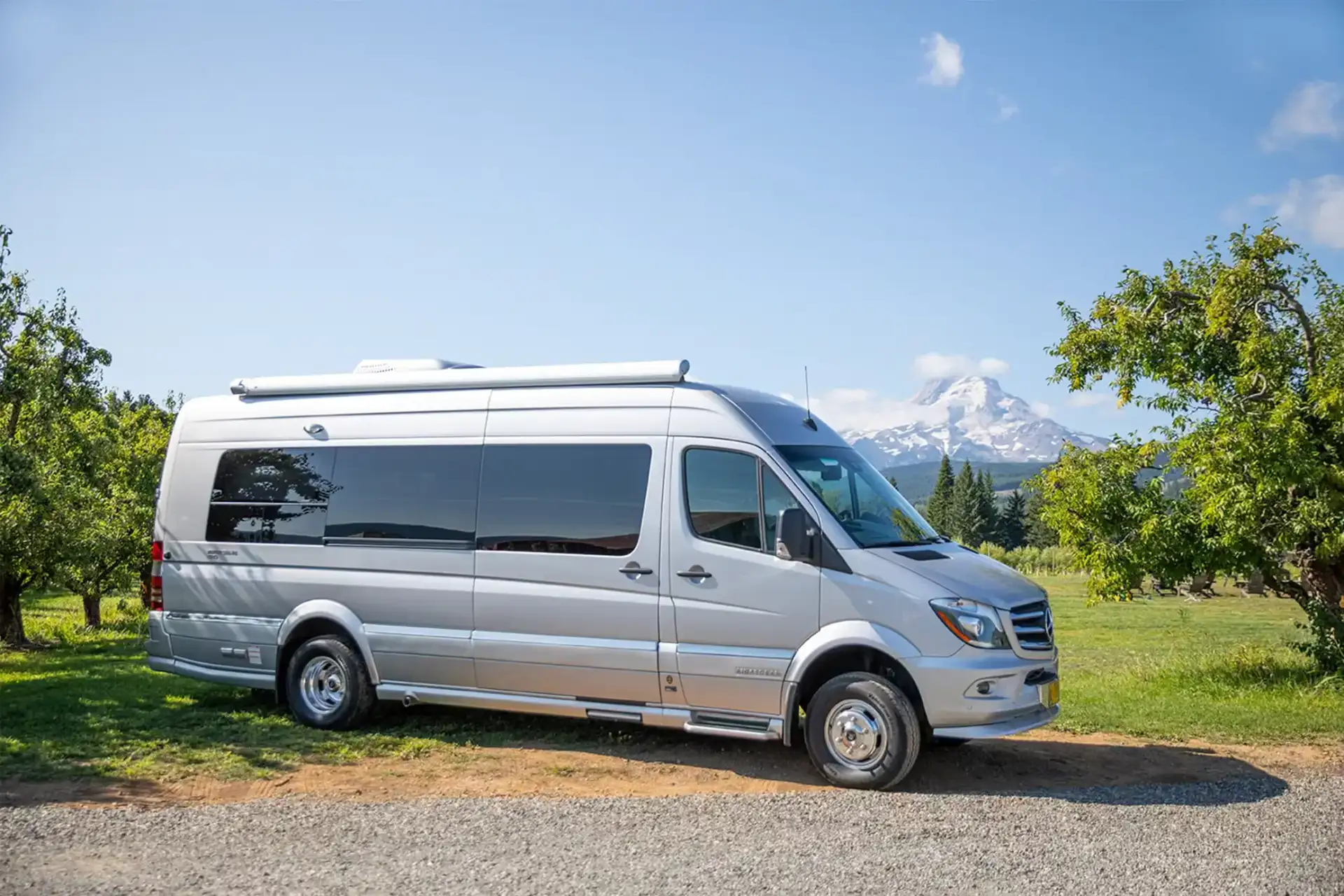
The leading Class B RV manufacturers in North America include Airstream, Winnebago, Pleasure-Way, Roadtrek, Thor Motor Coach, Coachmen, Leisure Travel Vans, and Jayco. This guide goes beyond a name list to cover the chassis platform, quality tier, price range, and warranty terms behind each brand, the details that actually separate a good fit from a bad one at this price range ($80,000 to $300,000-plus). If you’re building a shortlist before a dealership visit, start here.
What Is a Class B RV? A Quick Definition Before You Compare Brands
A Class B motorhome is a van-based RV built on a commercial van chassis, typically the Mercedes-Benz Sprinter, Ram ProMaster, or Ford Transit. Most models run 18 to 24 feet long with a gross vehicle weight rating (GVWR) of 8,000 to 11,500 lbs. Inside that compact footprint, you get a self-contained kitchen, bathroom, and sleeping area for two adults. They are the most maneuverable motorhome class available, which is why they attract couples, retirees, and solo travelers who want to park anywhere a large van can go.
If you have seen slightly wider or longer models labeled “Class B+,” those use an extended or widened chassis to gain interior space while staying smaller than a Class C. Not all manufacturers use the term consistently, so measure the specific model before assuming it fits your garage or campsite. See our guide on Class B Plus RV for a full breakdown.
Class B vs. Class C: The Key Size and Price Difference
Class C motorhomes are built on a truck cutaway chassis rather than a van chassis, which changes the size, price, and drivability equation considerably.
| Factor | Class B | Class C |
| Chassis | Van chassis (Sprinter, ProMaster, Transit) | Truck cutaway chassis |
| Typical length | 18 to 24 feet | 20 to 33 feet |
| Entry-level price | Baseline | Roughly 15% to 40% more |
| Sleeping capacity | Lower | Higher |
| Storage volume | Lower | Higher |
| Drivability | Van-like, easy to park and maneuver | Larger, less nimble |
If you’re weighing both options, the Class B vs. Class C motorhome comparison covers the tradeoffs in detail.
Complete List of Class B RV Manufacturers in North America
The leading Class B motorhome manufacturers available in North America include Airstream, Winnebago, Pleasure-Way, Roadtrek, Thor Motor Coach, Coachmen, Leisure Travel Vans, and Jayco. Beyond those mainstream names, a second tier of boutique and specialty builders, including Grech RV, Advanced RV, Coach House, Chinook, Midwest Automotive Designs, and Sportsmobile, serve buyers with specific needs.
Before you visit a dealership, it is worth knowing which chassis each brand builds on and where they sit on the price spectrum. If you are still weighing whether this vehicle category is right for you, our guide on buying an RV and the investment is a useful starting point.
Mainstream and Mid-Range Class B Manufacturers
- Coachmen RV builds the Galleria and Crossfit models on the Ram ProMaster chassis. These are among the most affordable new Class B options from a major manufacturer, with an MSRP price range of roughly $90,000 to $130,000. The ProMaster’s front-wheel-drive layout opens up floor plan options that rear-wheel-drive vans cannot match. Coachmen is a solid first-choice brand for buyers who want a wide dealer network and manageable entry cost.
- Thor Motor Coach produces the Sequence on the Ford Transit chassis, typically priced from $128,000 to $155,000. The Transit platform gives buyers a diesel vs. gasoline engine choice and a growing service network. Thor’s scale as a parent company means parts and warranty support are generally accessible. RVIA certification is standard across the Sequence lineup.
- Winnebago offers three distinct Class B motorhome lines. The Winnebago Travato is built on the Ram ProMaster and starts around $140,000 to $165,000. The Solis is available on both ProMaster and Mercedes-Benz Sprinter platforms, depending on configuration. The Revel uses a Sprinter 4×4 chassis and is priced from roughly $190,000 to $254,000, making it Winnebago’s off-grid-focused flagship. All three lines carry strong dealer coverage across the U.S.
- Roadtrek is a Canadian manufacturer with a long history of Sprinter-based builds and historically strong build quality. The brand has gone through ownership transitions in recent years, including a bankruptcy filing in 2019 and subsequent relaunch under new ownership. Availability has stabilized, but buyers should confirm current dealer status in their region before making plans around a specific model.
- Jayco is the newest major entrant in the Class B space. The Comet and Terrain models are built on the Ford Transit chassis and start around $131,000. Jayco’s large dealer network gives new buyers an advantage on warranty service and parts access. For buyers who want a recognizable brand with Transit-platform availability, Jayco is worth adding to any shortlist.
Premium Class B Manufacturers
- Airstream builds the Interstate line on the Mercedes-Benz Sprinter, with current MSRP pricing from approximately $290,000 to $314,000. The Airstream Interstate carries the strongest brand recognition in the Class B segment and leads on resale value. If fuel efficiency is a priority, the Sprinter’s diesel engine delivers meaningfully better highway mileage than gasoline-powered ProMaster or Transit alternatives.
- Pleasure-Way Industries is a Canadian builder producing the Tofino and Plateau on the Sprinter chassis. Pricing runs from roughly $175,000 to $230,000. Pleasure-Way models are known for large solar array options, strong fresh water tank capacity, and refined interior finishes. The brand’s Canadian production and long warranty track record make it a consistent recommendation in the premium segment.
- Leisure Travel Vans builds the Unity and Wonder on the Sprinter chassis. Also Canadian-built, these models are priced in the $175,000 to $230,000 range and are distinctive for their slide-out floor plans, which are uncommon in a van-based RV. Sleeping capacity benefits significantly from the slide-out configuration. Leisure Travel Vans are not always easy to find at U.S. dealers, so buyers should contact the manufacturer for regional dealer availability.
Boutique and Specialty Class B Manufacturers
- Grech RV produces the Strada Ion on an all-wheel-drive Mercedes-Benz Sprinter. Pricing typically runs $230,000 to $280,000. The Strada Ion is aimed at buyers who want luxury finishes with genuine AWD capability. Grech sells through a limited dealer network, so expect a longer lead time.
- Advanced RV builds fully custom Class B motorhomes using aluminum construction on Transit or Sprinter platforms. No standard MSRP applies because each unit is built to order. Advanced RV is a strong option for buyers who want a custom off-grid lithium battery system, specific floor plan options, or lightweight construction that maximizes payload.
- Coach House builds on both the Mercedes-Benz Sprinter and Chevrolet Express chassis. The brand is known for towing capacity that exceeds most Class B competitors. If towing a dinghy vehicle or small trailer matters to your use case, Coach House is one of the few manufacturers to specifically engineer for it.
- Chinook produces lightweight compact models on the Ford Transit chassis. The brand targets buyers who prioritize fuel efficiency and easy maneuverability over maximum interior space. Chinook models are a practical option for full-time RV living where parking ease matters daily.
- Midwest Automotive Designs (MAD) builds on the Ram ProMaster platform and is best known for handicap-accessible interior layouts through its MADI Lounge series. For buyers with mobility considerations, MAD is one of very few Class B manufacturers to address accessibility as a core design priority.
- Sportsmobile is a long-running camper van conversion shop offering custom builds on Transit and Sprinter platforms. The brand has a legendary reputation among serious boondockers. Sportsmobile builds are a more involved purchase process, often requiring direct contact with the manufacturer and patience with production timelines.
Boutique and specialty builders typically have waitlists and limited dealer networks. Contact manufacturers directly rather than relying on a local lot to have stock.
Class B RV Manufacturer Comparison: Chassis, Price, and Warranty at a Glance
No competitor in this search result currently publishes this data in a single table. Use it to narrow your shortlist before visiting a dealer. Warranty figures below are approximate; manufacturers update terms periodically, so request the written limited warranty document at point of sale.
| Manufacturer | Chassis Platform | Entry MSRP (approx.) | Coach Warranty | Best For |
| Coachmen | Ram ProMaster | ~$90,000 | 1-year limited | Budget-conscious first-time buyers |
| Thor Motor Coach | Ford Transit | ~$128,000 | 1-year limited | Transit platform, wide dealer access |
| Jayco | Ford Transit | ~$131,000 | 1-year limited | New buyers, large dealer network |
| Winnebago Travato | Ram ProMaster | ~$140,000 | 1-year limited | Mid-range, strong resale |
| Roadtrek | Mercedes-Benz Sprinter | ~$145,000+ | 1-year limited | Sprinter buyers, verify dealer availability |
| Pleasure-Way | Mercedes-Benz Sprinter | ~$175,000 | 1-year limited | Off-grid capability, Canadian quality |
| Leisure Travel Vans | Mercedes-Benz Sprinter | ~$175,000 | 1-year limited | Slide-out floor plans, sleeping capacity |
| Airstream Interstate | Mercedes-Benz Sprinter | ~$290,000 | 1-year limited | Resale value, brand recognition |
The underlying van chassis carries its own separate manufacturer warranty. Mercedes-Benz Vans warranty, Ford Transit, and Ram ProMaster each typically offer 3 years or 36,000 miles on the base vehicle. That chassis coverage is independent of the coach warranty and often longer. Most coach warranties exclude appliances, which carry their own 1- to 2-year manufacturer warranties.
Sprinter dominates the premium tier. ProMaster delivers the lowest entry cost. The Ford Transit chassis is the newest entrant with growing adoption among brands like Jayco, Thor, and Chinook.
Which Chassis Is Best for a Class B Motorhome?
Choosing between the three main platforms is a practical ownership decision, not just a spec sheet exercise.
- Mercedes-Benz Sprinter: Widest and tallest interior, best diesel fuel efficiency, strongest resale value, and the only platform with a true 4×4 drivetrain option. Service is concentrated at authorized Mercedes-Benz Vans dealers, which are more common in metro areas than rural ones.
- Ram ProMaster: Lowest entry cost, front-wheel-drive layout that frees up rear floor plan options, and the largest general dealer network of the three. Gasoline engine is standard. Less common in serious off-grid builds due to FWD and lower payload compared to the Sprinter.
- Ford Transit chassis: Mid-range pricing, available in both gasoline and diesel configurations, and growing adoption among newer brands. Parts availability is strong and improving as more Class B manufacturers adopt the platform.
What to Look for Beyond the Brand Name
Once you have a shortlist of two or three manufacturers, the brand name matters less than five specific evaluation points. Use these before any dealership visit.
- Chassis platform and local service availability. Ask the selling dealer which chassis the model uses. Then search for the nearest authorized van service center in your home zip code. A Sprinter-based model is a better choice on paper, but not if the closest authorized dealer is four hours away.
- Floor plan and sleeping capacity. A rear-bed layout, a convertible dinette, and a wet bath versus dry bath each make the vehicle feel dramatically different in a 20-foot space. Floor plan options are not interchangeable between models, even within the same brand’s lineup. Walk the actual floor plan before deciding.
- Off-grid capability. Fresh water tank capacity, lithium battery system size, and solar panel wattage vary widely even within a single brand’s lineup. A buyer planning serious boondocking should ask for documented specs, not marketing language. See the off-grid section below for which brands lead here.
- Warranty terms and what they actually cover. Most RV manufacturer warranty coverage is a one-year limited policy that excludes appliances. Ask specifically what the structural coverage includes and whether roadside assistance is part of the package. The chassis warranty from Mercedes, Ford, or Ram is separate and typically longer.
- Dealer network density. A manufacturer with 300 U.S. dealers is a meaningfully different ownership experience than one with 12. When you need warranty service 600 miles from home, the number of nearby authorized service locations is a real variable. Use the RV inspection checklist before any purchase to make sure the unit is in the condition you expect.
Off-Grid and Boondocking Capability by Brand
For buyers planning to camp away from hookups regularly, off-grid specs separate the pretenders from the genuine options. The Winnebago Revel leads here with a Sprinter 4×4 chassis and a lithium battery system as standard equipment. Pleasure-Way offers large solar array configurations that support extended off-grid stays.
Advanced RV and Sportsmobile build custom off-grid platforms that can exceed what any production manufacturer offers. ProMaster-based models are less common in serious off-grid builds because front-wheel drive and lower payload limit both the terrain they can access and the gear weight they can carry.
Resale Value and Depreciation: Which Brands Hold Their Value Best
Sprinter-based models from Airstream and Pleasure-Way are consistently listed at stronger used prices than ProMaster equivalents of the same age and mileage. The Airstream Interstate brand premium is real on the resale market.
Buyers who treat their Class B as a long-term asset should weight chassis platform and brand reputation alongside purchase price. For a broader look at how recreational vehicles hold their value over time, see our guide on RVs holding their value.
GVWR, Weight, and Licensing: What Class B Buyers Need to Know
Most Class B motorhomes carry a GVWR of 8,500 to 11,500 lbs. In most U.S. states, vehicles under 10,001 lbs GVWR register as recreational vehicles using standard passenger-vehicle licensing. Once GVWR exceeds 10,001 lbs, some states reclassify the vehicle for registration purposes. That reclassification can affect annual registration fees and weight permits for certain roads.
Commercial vehicle weight rules under FMCSA 49 CFR Part 383 define CDL thresholds, but those typically apply to commercial operation, not personal RV use. For private buyers, the more relevant concern is state-level registration category and how it affects fees and campground access.
Check your state DMV’s weight classification schedule before committing to a heavier model. For the full breakdown of what RVs weigh by class, see our guide on RV weights.
Why GVWR Matters When Comparing 4×4 Class B Models
The Winnebago Revel on the Sprinter 4×4 chassis has a higher base weight than standard two-wheel-drive Class B models. That reduces available payload and can push the vehicle past weight thresholds that affect insurance ratings, some campground restrictions, and certain ferry or bridge limits. Verify the specific GVWR of any 4×4 model you are comparing, not just the chassis’s rated capacity.
Class B RV Storage: What to Expect When You’re Not on the Road
A Class B motorhome’s compact size, typically 18 to 24 feet at standard van width, makes it easier to store than a Class A or Class C. Some models will even fit in a residential garage if the door clearance is sufficient. That said, home storage is often off the table because of:
- HOA restrictions that prohibit RVs or oversized vehicles in driveways
- City parking ordinances that limit how long a vehicle can sit on the street
- Apartment or condo living, where there’s simply no dedicated space for a vehicle this size
For owners who can’t keep a motorhome in their driveway or neighborhood, RV storage at RecNation offers covered and enclosed options sized for van-based motorhomes, with locations across Arizona, Florida, Texas, and other states where Class B ownership is heaviest. Covered and enclosed storage protects the vehicle from:
- UV exposure, which fades paint and degrades seals over time
- Weather, including rain, hail, and temperature swings
- Theft, since the vehicle isn’t sitting exposed on a street or driveway
For Sprinter-based models, where paint and body work carry a significant replacement cost, that protection matters more than it might for a standard cargo van.
Storage Options by Class B Size and Configuration
Most Class B motorhomes fit a 20- to 25-foot storage unit with standard van height clearance. Pop-top models such as the Winnebago Revel and certain Pleasure-Way configurations may need additional overhead clearance, so confirm the unit’s interior height before reserving a space.
Open-air storage is the most affordable option and works well in mild climates. Covered storage adds a roof to block UV and rain without the cost of a fully enclosed unit. Enclosed storage provides the highest level of protection from weather, pests, and opportunistic theft, and is the recommended option for Sprinter-based models that sit unused for weeks at a time.
Once you have found the right Class B motorhome, figuring out where it lives between trips is the next practical question. Most van-based RVs are compact enough to fit a standard motorhome storage unit, but not every driveway or neighborhood allows it. RecNation RV storage provides covered and enclosed storage designed for motorhomes, with facilities across the Sun Belt states where Class B owners are most concentrated, so your investment is protected until the next trip.
Frequently Asked Questions About Class B RV Manufacturers
What are the best Class B RV brands for first-time buyers?
For first-time buyers, Winnebago and Coachmen are the most practical starting points. The Winnebago Travato, built on the Ram ProMaster, starts around $140,000 and offers a wide dealer network with strong resale value. Coachmen’s Galleria and Crossfit models are among the most affordable new Class B options from a major manufacturer, starting around $90,000 to $110,000. Both brands have large dealer networks that make warranty service and parts support more accessible than boutique alternatives.
Which Class B motorhome manufacturers build on the Mercedes-Benz Sprinter?
Airstream (Interstate line), Winnebago (Revel, Solis), Pleasure-Way (Tofino, Plateau), Roadtrek (most current models), Leisure Travel Vans (Unity, Wonder), and Grech RV (Strada Ion) all build on the Mercedes-Benz Sprinter. The Sprinter is the dominant chassis in the premium Class B segment because of its diesel fuel efficiency, payload capacity, high-roof availability, and 4×4 drivetrain option. Buyers should note that Sprinter service is concentrated at authorized Mercedes-Benz Vans dealers, which are more common in urban and suburban areas than in rural regions.
How do Class B RV warranties compare across manufacturers?
Most Class B manufacturers offer a one-year limited coach warranty covering workmanship and structural components. Appliances such as the refrigerator, stove, and water heater carry separate manufacturer warranties of one to two years. The underlying van chassis carries its own warranty, typically three years or 36,000 miles for Mercedes-Benz Sprinter, Ford Transit, and Ram ProMaster. Buyers should request the written limited warranty document before signing a purchase agreement and confirm specifically what the structural coverage excludes.
What is the difference between a Class B and a Class B+ RV?
A Class B motorhome fits within the standard dimensions of a commercial van chassis, typically 18 to 24 feet long and seven to eight feet wide. A Class B+ uses an extended or widened chassis, sometimes with a body extension, to gain additional interior width and length while remaining more maneuverable than a Class C. Class B+ models cost more and are slightly harder to park in standard spaces, but they offer noticeably more living room. Not all manufacturers use the “Class B+” designation consistently, so measure the specific model and compare it to your intended use before categorizing it.
Which Class B RV brands hold their resale value best?
Airstream consistently leads the Class B segment on resale value. Interstate models depreciate more slowly than most comparable-price alternatives, driven by strong brand recognition and sustained demand in the used market. Pleasure-Way and Leisure Travel Vans, both Canadian-built Sprinter-based brands, also hold value well relative to their purchase price. ProMaster-based models from Coachmen and Thor generally depreciate faster than Sprinter-based equivalents, reflecting the market’s premium on the Sprinter chassis and its associated brand recognition.